Connect with us

News

Flash Back: How Kwame Nkrumah died in Bucharest in 1972

Published

on

ADVERTISEMENT
Zoom Ad
ADVERTISEMENT
Zoom Ad

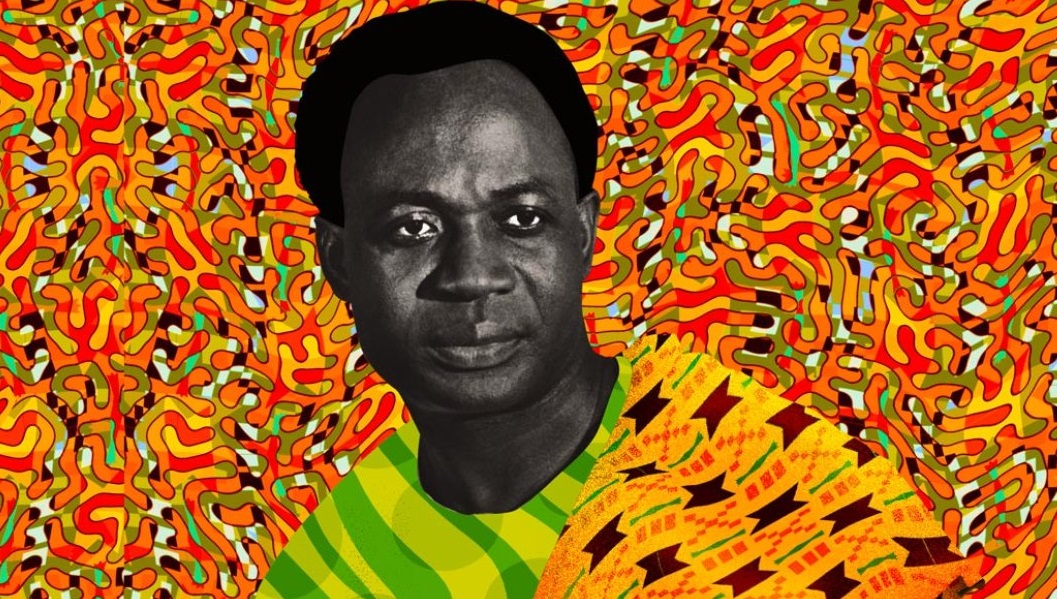
On April 27, 1972, exactly 52 years ago, Kwame Nkrumah, Ghana’s first president, who led the Big Six to gain independence for the nation, died in Bucharest.

He, the pan-Africanist, played a pivotal role in the formation and development of the African Union (A.U.).

Kwame Nkrumah died in Bucharest, Romania, after six years in exile in Guinea, far away from his birthplace of Nkroful, at the age of 62.

Kwame Nkrumah played a pivotal role in the formation of the African Union (A.U.), previously called the Organization of African Unity (O.A.U.), and led his country to independence in 1957.

Advertisement

Kwame Nkrumah was unconstitutionally ousted from office through a military coup. The Coup was launched by the National Liberation Council (NLC) with the code name “Operation Cold Chop” on February 24, 1966, while he was in Peking (today’s Beijing) en route to the Vietnamese capital, Hanoi, with plans to end the American war in Vietnam.

Kwame Nkrumah arrived in Conakry, Guinea, after being invited by Sekou Toure just after the military coup that unconstitutionally ousted his government from power.

He is said to have died of cancer.

His death, of cancer, was announced by President Sekou Toure of Guinea, one of the militant nationalist’s closest friends. Mr. Nkrumah had been living in Guinea since his overthrow in a military coup in 1966.

Advertisement

Several African Heads of State and the representatives of 25 other countries paid their last tributes to Ghana’s former President, Dr. Kwame Nkrumah, on Saturday, May 13, 1972, after a funeral ceremony in Conakry, the Guinean capital.

Also represented at the funeral ceremony was Ghana’s new ruling military body, the National Redemption Council. But in Accra, there was no word of when Dr. Nkrumah’s body would be flown back for burial, and there were some misgivings that it would not be returned by the Guineans.

The return of his body to Ghana followed lengthy negotiations between Ghana’s military rulers and the government of Guinea. Dr. Kwame Nkrumah was buried in his hometown of Nkroful, on July 9, 1972. While the tomb still remains in Nkroful, his remains were transferred to a large national memorial tomb and park in Accra, Ghana.

Today, the place is known as Kwame Nkrumah Memorial Park and Mausoleum and has become a tourist destination for Ghanaians and those in the Diaspora.

Advertisement

The idea of erecting a monument in honour of Nkrumah dates back to 1972 when the African Students Union sent a memorandum asking the Government of Guinea, then under President Sekou Toure, to send the mortal remains of the Ghanaian leader to Ghana only if the military leaders at that time denounced coup d’état and re-erected the statue of Nkrumah, which was destroyed during the 1966 coup.

Although the remains were later returned to Nkroful, his birthplace, it was not until 1992 that the image of Nkrumah was restored on the Old Polo Grounds, during which the erstwhile Provisional National Defence Council (PNDC) decided to build the Kwame Nkrumah Memorial Park and Mausoleum.
Continue Reading
Advertisement
Click to comment

Warning: Undefined variable $user_ID in /home/naijuinz/public_html/wp-content/themes/zox-news/comments.php on line 49

You must be logged in to post a comment Login

Leave a Reply

News

Angry protesters lockdown Ibadan, want immediate rescue of abducted Oyo teachers, pupils

Published

on

ADVERTISEMENT
Zoom Ad
ADVERTISEMENT
Zoom Ad

Angry protesters lockdown Ibadan, demand urgent rescue of abducted Oyo teachers, pupils
Hundreds of teachers and civil society activists marched through Ibadan on Friday, demanding immediate action to free colleagues and pupils kidnapped in Oriire Local Government Area.

The protest, led by the Oyo State Teachers Action Group and the Nigeria Teachers Congress, NTC, followed the May 15 abduction of victims in Esiele and Yawota communities near Ogbomoso.

—“Do more to rescue them”—

NTC National President Rev. Bunmi Thomas told protesters the rally was lawful and necessary. “We are demanding pragmatic action from government to secure the release of the abducted teachers and students,” he said.

Advertisement

Advertisement

While acknowledging ongoing rescue efforts, Thomas insisted more must be done: “If the government is trying and the result is not there, then efforts must be intensified.”

He raised alarm over the children’s condition: “We have kids as young as two and three years old in the bush, exposed to rain and harsh weather.”

Thomas also called for security in all public schools: “We cannot continue to work while living in danger. Government must attach security personnel to every government school.”

Advertisement

He stressed the protest was not against Governor Seyi Makinde: “No reasonable teacher in Oyo State is against Governor Makinde because he has performed excellently well.”

—Government responds–,

Executive Assistant on Security Matters, retired CP Sunday Odukoya, addressed protesters on behalf of the state government. “It is your constitutional right to protest and let government know your concerns,” he said, assuring that rescue operations were ongoing.

Odukoya also promised no teacher would be victimized for joining the protest.

Advertisement

Protesters said their only demand is the safe and swift return of the kidnapped teachers and pupils.

[ Channels TV]

Continue Reading

News

How NDC Senatorial primary was conducted in closed room-Aisha Yesufu

Published

on

ADVERTISEMENT
Zoom Ad
ADVERTISEMENT
Zoom Ad

A Federal Capital Territory, FCT, senatorial aspirant under the platform of the Nigerian Democratic Congress, NDC, has revealed how the primary election was allegedly manipulated by some party leaders.

Recall that the activist-turned politician contested for the FCT Senate but pulled out over alleged misconduct by officials.

In a lengthy statement detailing how the primary election was conducted, Aisha alleged that the exercise was conducted in a closed room with “predetermined outcome dressed in procedural formalities”.

She said after the exercise was “repeatedly postponed”, the venue was also “changed at the last minute”.

Advertisement

Aisha alleged that the “guidelines of the party were not followed. Delegate based process was introduced to be conducted at a central location instead of the direct primaries to be conducted at Local Government headquarters.

“When the moment came, the contest was not decided by delegates in the open; it was affirmed in a closed room, away from the people whose voices it was supposed to reflect.

“The party will indeed go on to release statements upon statements about the free and fair nature of the Abuja FCT primaries.

“They are entitled to their voice, but the facts that transpired when litigated by conscience and the guidelines of the electoral act do not reflect justice and fairness”.

Advertisement
Continue Reading

News

CJ Reassigns Nafiu-Bala’s Case Against ADC Leadership To Justice Lifu

Published

on

ADVERTISEMENT
Zoom Ad
ADVERTISEMENT
Zoom Ad

The Chief Judge of the Federal High Court, Justice John Tshoho, has transferred the suit challenging the leadership of the African Democratic Congress (ADC) to a new judge for an accelerated hearing.

The lawsuit, which was filed by Nafiu-Bala Gombe, a former National Deputy Chairman of the party, was moved from Justice Emeka Nwite to Justice Peter Lifu following Justice Nwite’s recent promotion to the Court of Appeal.

In the lawsuit, marked FHC/ABJ/CS/1819/2025, Gombe is seeking an order to stop the embattled National Chairman, Senator David Mark, National Secretary Ogbeni Rauf Aregbesola, and other members of the interim National Working Committee (NWC) from parading themselves as leaders of the ADC.

Gombe contends that the current leadership setup violates both the party’s internal constitution and the Electoral Act. The case names the ADC, Mark, Aregbesola, the Independent National Electoral Commission (INEC), and former party chairman Ralph Nwosu as defendants.

Advertisement

The reassignment follows a directives from the Supreme Court, which intervened in the internal party dispute on April 30. The apex court set aside an earlier Court of Appeal order that had caused INEC to derecognize the David Mark-led faction, and instead ordered all parties back to the Federal High Court for a swift and conclusive trial.

Before the case was transferred, it had faced a series of delays. Justice Nwite had previously halted the matter indefinitely while waiting for the Supreme Court’s decision.

When the case resumed on May 8, Gombe’s legal team, led by Luka Haruna (SAN), requested that the Chief Judge reassign the case to another courtroom.
Defense lawyers representing the ADC, Mark, Aregbesola, and Nwosu strongly opposed changing judges at the time. They argued that the court should instead wait for a certified true copy of the Supreme Court judgment to guide the lower court’s proceedings.

Consequently, the case was briefly paused again before the Chief Judge eventually made the decision to reassign the file to Justice Lifu.

Advertisement
Continue Reading

Trending

Copyright © 2024 Naija Blitz News