News
Africa using AI to tackle development challenges, says data analyst
- /home/naijuinz/public_html/wp-content/plugins/mvp-social-buttons/mvp-social-buttons.php on line 27
https://naijablitznews.com/wp-content/uploads/2025/06/Screenshot_20250626-115903-510x600.jpg&description=Africa using AI to tackle development challenges, says data analyst', 'pinterestShare', 'width=750,height=350'); return false;" title="Pin This Post">
- Share
- Tweet /home/naijuinz/public_html/wp-content/plugins/mvp-social-buttons/mvp-social-buttons.php on line 72
https://naijablitznews.com/wp-content/uploads/2025/06/Screenshot_20250626-115903-510x600.jpg&description=Africa using AI to tackle development challenges, says data analyst', 'pinterestShare', 'width=750,height=350'); return false;" title="Pin This Post">
By Kayode Sanni-Arewa

As global powers race to dominate Artificial Intelligence (AI) for economic and geopolitical gain, Africa is quietly but deliberately charting its own course, one rooted in necessity, resilience, and inclusive development.
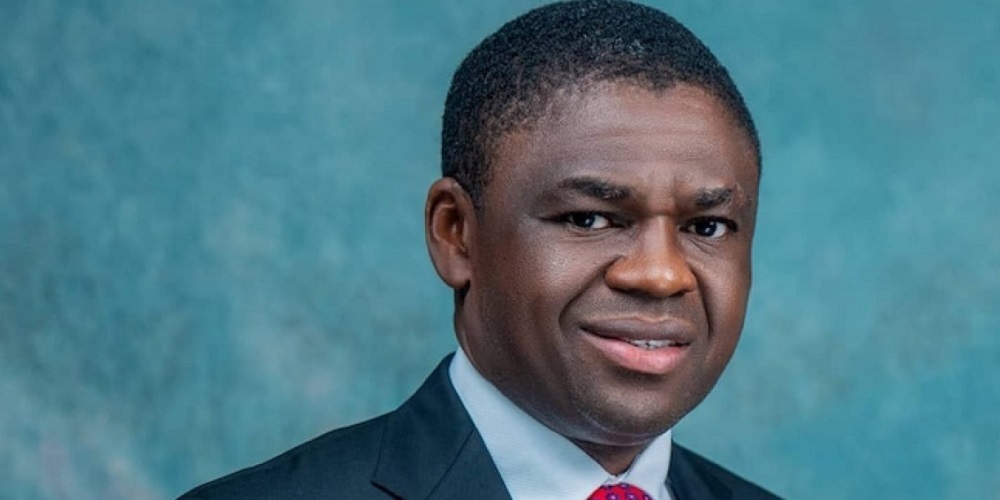
According to Mr Oluwasesan Adedeji David, who is an experienced data analyst, he
gave a detailed insight where he stated that Africa’s engagement with AI reflects a pragmatic and people-centred response to developmental challenges, not a bid to outpace the West in technological supremacy.
According to the tech expert, while countries like the United Kingdom are leveraging AI to boost GDP, enhance global competitiveness, and maintain technological sovereignty, Africa’s vision is different and no less strategic.
He explained that despite infrastructure gaps, limited funding, and inconsistent government policy, African innovators often working from community tech hubs, with support from the diaspora and development agencies are creating solutions that reflect the continent’s realities.
He said: “As Artificial Intelligence (AI) continues to redefine global innovation and power dynamics, nations are crafting distinct strategies based on their unique contexts and capacities. The United Kingdom, leveraging its robust digital economy and institutional sophistication, views AI as both an economic catalyst and geopolitical asset.
“In contrast, Africa’s approach to AI is pragmatic and socially responsive, prioritizing inclusive growth and grassroots impact over global competitiveness. While both regions recognize AIs transformative potential, their divergent motivations, infrastructural realities, and socio-political values have led to contrasting implementation pathways.
“The UKs AI strategy is driven by its ambition to be a global leader in innovation, economic growth, and regulatory governance. The UK National AI Strategy emphasizes on sustained investment in research and development, ethical innovation, and global influence. Institutions such as The Alan Turing Institute and regulatory bodies like the Centre for Data Ethics and Innovation play pivotal roles in shaping this vision, while priority sectors include healthcare, finance, cybersecurity, and defence.
“In comparison, Africa’s AI landscape is rooted in pressing developmental needs. With infrastructure gaps, economic disparities, and limited institutional support, countries across the continent are innovating within constraints. AI adoption is being catalyzed by necessity solving real-world problems in agriculture, healthcare, education, and public service delivery. While government support is growing, much of the momentum comes from startups, community labs, diaspora networks, and international development partnerships.
The tech expert cited instances of AI-powered crop diagnostics helping smallholder farmers in Kenya; drone technology enabling faster medical deliveries in Rwanda; machine learning tools supporting triage and early diagnosis in Ghana’s hospitals; and chatbot-based education platforms delivering content in low-resource schools in Nigeria.
He further referenced initiatives like the Smart Africa Alliance, which are helping to create a policy environment for cross-border digital innovation, and pointed to the rise of natural language processing (NLP) in indigenous African languages as a breakthrough in inclusion.
While dismissing the notion that Africa is merely a passive consumer in the global AI race, he noted that African programmers, researchers, and entrepreneurs are pushing back against the idea that innovation is the sole preserve of the global North.
He stressed that AI development in Africa is not a replication of Western frameworks but an emerging ecosystem with its own philosophy: one that prioritises impact over profit, usability over complexity, and inclusion over centralisation.
His words: “The UKs success metrics are quantitative GDP contributions, patents, venture capital, and skills pipelines. Post-Brexit, AI is seen as a pillar for economic resilience and international relevance. AI sector revenues have exceeded £10 billion, driven by high-value use cases and regional innovation hubs.
“Africa, meanwhile, focuses on qualitative impact. Success is measured by improved healthcare delivery, education access, and socio-economic empowerment. Examples include Rwandas use of drones for medical logistics and Ghanas AI-assisted triage tools. Considering this, we can say that Africa is not simply replicating Western AI models, but forging an inclusive path grounded in cultural relevance and human-centered design.
“The UK and Africa exemplify two instructive AI modelsone infrastructural, formalized, and growth-oriented; the other creative, decentralized, and development-focused. Together, they illustrate that there is no one-size-fits-all approach to AI. The global community stands to benefit from embracing both structured innovation and responsive ingenuity.
“As AI continues to shape our shared digital future, mutual learning and collaboration between regions with different priorities could create more equitable, resilient, and human-centered technologies. This convergence of visions combining power with purpose could redefine what it means to innovate in the 21st century.”
News
Finally, PDP Faction Presents 2027 Certificate of Return to Jonathan at Abuja Convention
By Kayode Sanni-Arewa

Ex-Minister of Information, Prof. Jerry Gana, on Saturday collected the Peoples Democratic Party, PDP, Certificate of Return on behalf of ex-President Goodluck Jonathan during the party’s National Convention in Abuja.
The certificate was handed over by the PDP Interim National Working Committee led by Kabiru Turaki, SAN. The presentation has renewed focus on the party’s preparations for the 2027 presidential election.
The event was held at the convention venue in Area 10, Garki, with party leaders, delegates, former ministers, state officials, and supporters in attendance.
Gana received the certificate on Jonathan’s behalf before the crowd. The moment quickly became a major talking point and put the former president back at the centre of political discussions as the PDP debates strategy and possible candidates for 2027.
Speaking to supporters and journalists after receiving it, Gana drew significant attention from attendees and political observers tracking developments in the opposition party.
The development comes as PDP continues internal discussions on leadership structure and future direction. Many members believe decisions in the coming months will shape the party’s chances in the 2027 presidential race.
Political watchers are closely following events in the PDP as it works to strengthen its position ahead of the next election cycle.
More details are expected as the convention proceeds.
News
Angry protesters lockdown Ibadan, want immediate rescue of abducted Oyo teachers, pupils
Angry protesters lockdown Ibadan, demand urgent rescue of abducted Oyo teachers, pupils
Hundreds of teachers and civil society activists marched through Ibadan on Friday, demanding immediate action to free colleagues and pupils kidnapped in Oriire Local Government Area.
The protest, led by the Oyo State Teachers Action Group and the Nigeria Teachers Congress, NTC, followed the May 15 abduction of victims in Esiele and Yawota communities near Ogbomoso.
—“Do more to rescue them”—
NTC National President Rev. Bunmi Thomas told protesters the rally was lawful and necessary. “We are demanding pragmatic action from government to secure the release of the abducted teachers and students,” he said.
Advertisement
While acknowledging ongoing rescue efforts, Thomas insisted more must be done: “If the government is trying and the result is not there, then efforts must be intensified.”
He raised alarm over the children’s condition: “We have kids as young as two and three years old in the bush, exposed to rain and harsh weather.”
Thomas also called for security in all public schools: “We cannot continue to work while living in danger. Government must attach security personnel to every government school.”
He stressed the protest was not against Governor Seyi Makinde: “No reasonable teacher in Oyo State is against Governor Makinde because he has performed excellently well.”
—Government responds–,
Executive Assistant on Security Matters, retired CP Sunday Odukoya, addressed protesters on behalf of the state government. “It is your constitutional right to protest and let government know your concerns,” he said, assuring that rescue operations were ongoing.
Odukoya also promised no teacher would be victimized for joining the protest.
Protesters said their only demand is the safe and swift return of the kidnapped teachers and pupils.
[ Channels TV]
News
How NDC Senatorial primary was conducted in closed room-Aisha Yesufu
A Federal Capital Territory, FCT, senatorial aspirant under the platform of the Nigerian Democratic Congress, NDC, has revealed how the primary election was allegedly manipulated by some party leaders.
Recall that the activist-turned politician contested for the FCT Senate but pulled out over alleged misconduct by officials.
In a lengthy statement detailing how the primary election was conducted, Aisha alleged that the exercise was conducted in a closed room with “predetermined outcome dressed in procedural formalities”.
She said after the exercise was “repeatedly postponed”, the venue was also “changed at the last minute”.
Aisha alleged that the “guidelines of the party were not followed. Delegate based process was introduced to be conducted at a central location instead of the direct primaries to be conducted at Local Government headquarters.
“When the moment came, the contest was not decided by delegates in the open; it was affirmed in a closed room, away from the people whose voices it was supposed to reflect.
“The party will indeed go on to release statements upon statements about the free and fair nature of the Abuja FCT primaries.
“They are entitled to their voice, but the facts that transpired when litigated by conscience and the guidelines of the electoral act do not reflect justice and fairness”.
-
Metro10 hours agoPolice Arrest Mother, Daughter Over Alleged ₦18m Romance Scam Targeting Malta-Based Victim
-
News10 hours agoThe Politics Of Maturity: Why Rivers May Need Healing More Than Victory
-
News10 hours agoAkpabio Hails Tinubu’s Reforms, Endorses Re-Election as President Marks Three Years in Office
-
Politics10 hours agoNollywood Actress Gets 2027 Presidential Ticket
-
News10 hours agoNigerian Governors Propose ₦100,000 New Minimum Wage
-
News10 hours agoSouth African Lawmaker, MK Party Chief Whip Arrested Over Alleged R233,000 Salary Fraud
-
News10 hours agoLawyer Petitions NBC, Seeks Suspension of BBNaija Over Alleged Indecent Content
-
Sports10 hours agoBrazilian Teenager Fonseca Knocks Djokovic Out Of French Open

Warning: Undefined variable $user_ID in /home/naijuinz/public_html/wp-content/themes/zox-news/comments.php on line 49
You must be logged in to post a comment Login