Connect with us

News

Atiku Condemns Proposed N50,000 WAEC, NECO Examination Fees

Published

on

ADVERTISEMENT
Zoom Ad
ADVERTISEMENT
Zoom Ad

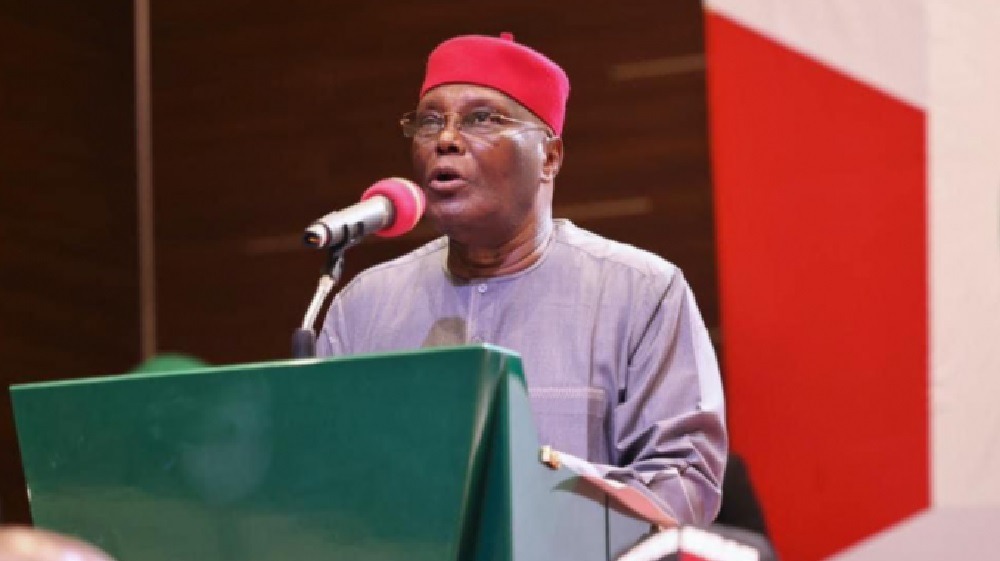
Former Vice President Atiku Abubakar has criticised the Federal Government’s decision to approve a uniform N50,000 registration fee for the Senior Secondary School Certificate Examinations (SSCE) conducted by the West African Examinations Council (WAEC) and the National Examinations Council (NECO), warning that the policy could further limit access to education for millions of Nigerian students.


The Federal Government, through the Federal Ministry of Education, approved the adoption of a uniform N50,000 registration fee for WAEC and NECO SSCE internal examinations, effective from 2027.

Under the new arrangement, NECO’s registration fee will increase from N30,000 to N50,000 per candidate, while WAEC’s fee will rise from N27,000 to the same amount.

The approval was contained in a memo dated June 18, 2026, signed by the Director of Senior Secondary Education at the Federal Ministry of Education, Adeniji Ibrahim, on behalf of the Minister of Education. The memo, addressed to the Registrar of NECO, stated that the decision followed a meeting between the ministry and examination bodies held on March 31, 2026, where stakeholders agreed to adopt a harmonised fee structure.

Advertisement

Reacting in a statement issued by his Senior Special Assistant on Public Communication, Phrank Shaibu, Atiku described the planned increase as “cruel, economically insensitive and fundamentally incompatible” with the government’s obligation to make education accessible to every Nigerian child.

He argued that the policy comes at a time when many households are grappling with rising inflation, escalating food and transportation costs, higher electricity tariffs, unemployment and declining purchasing power.

“It is unconscionable that at a time when Nigerian families are battling record inflation, soaring food prices, rising transportation costs, crippling electricity tariffs, stagnant incomes and widespread unemployment, the Tinubu administration has chosen to make education even more expensive,” Atiku said.

The former vice president maintained that education remains one of the most important pathways to social mobility, warning that higher examination fees could force more children out of school and deny qualified students the opportunity to pursue higher education.

Advertisement

“Every additional financial burden imposed on parents translates into another child being denied the opportunity to learn, dream and contribute meaningfully to society,” he said.

He noted that Nigeria already has one of the world’s largest populations of out-of-school children and argued that government efforts should be focused on reducing educational barriers rather than introducing policies that could worsen the situation.

“Nigeria already bears the painful distinction of having one of the largest populations of out-of-school children in the world. Any government confronted with such a national emergency should be investing aggressively to bring these children back into school,” he added.

Atiku further warned that the increase in WAEC and NECO fees, alongside the recent hike in fees for Federal Unity Colleges, would disproportionately affect low- and middle-income families already struggling to meet basic needs.

Advertisement

According to him, many academically qualified students may be unable to sit for the qualifying examinations required for admission into tertiary institutions due to financial constraints.

“The recent increase in WAEC and NECO examination fees represents far more than another financial burden on parents. It is a systemic filter that will inevitably restrict access to tertiary education for thousands of indigent but academically qualified Nigerian students,” he stated.

He also criticised the Federal Government’s reliance on the Nigerian Education Loan Fund (NELFUND), arguing that student loans cannot solve the challenges facing children who are unable to complete secondary education or afford examination fees.

“A university loan offers little comfort to a child who has already been priced out of secondary education or cannot afford the qualifying examination required to secure admission,” he said.

Advertisement

Atiku called on the Federal Government to prioritise investment in educational infrastructure, recruit more qualified teachers, expand the capacity of public tertiary institutions and implement policies that ensure poverty does not determine a child’s access to education.

He urged President Bola Tinubu’s administration to immediately reverse the increase in Unity School fees and the proposed N50,000 WAEC and NECO examination fees, while convening stakeholders to develop sustainable funding mechanisms for public education.

Continue Reading
Advertisement

News

Aviation labour bodies give airline operators 72hrs deadline over unionization, TSC

Published

on

ADVERTISEMENT
Zoom Ad
ADVERTISEMENT
Zoom Ad


The National Union of Air Transport Employees (NUATE) and the Air Transport Services Senior Staff Association of Nigeria (ATSSSAN) have issued a three-day notice of strike to Nigeria’s domestic airlines, accusing the operators of blocking workers from unionising and non-remittance of ticket sales charges owed to the Nigerian Civil Aviation Authority (NCAA).

‎In a statement issued at the weekend, the unions said they were escalating the issue after the warning they gave on August 4, when the unions announced a notice of picketing and declared they were prepared to strike “at any time without further notice.”

Describing the latest move as a gesture of restraint, the unions said they were giving the airlines a further three days to address their grievances before industrial action begins. In the statement, the unions accused airlines of two major infractions.

They alleged that airlines have made it impossible for members of staff to join unions freely, despite repeated efforts by the aviation unions to secure that right.

Advertisement

They said workers are too afraid to even express interest in union membership for fear of discrimination.

The unions also accused the airlines of withholding a 5% charge on ticket sales that is meant to fund the operations of aviation agencies. According to the statement, the non-remittance of these funds has stalled the implementation of collective bargaining agreements already negotiated on behalf of union members.

The statement read: “In relaxing the notice of picketing, dated 4th August 2026 by our unions, with a statement that we were ready to strike at anytime without further notice, we hereby magnanimously issued a 3-day Notice of Strike upon the defaulting domestic airlines principally for the following infractions:

‎”Making unfettered unionization of staff in their organisation impossible after several efforts by the aviation unions. Their workers dare not even express the intention to belong to unions of their choices.

Advertisement

‎”Non-remittance of the already collected, but withheld 5% ticket sales charge, which is the operational fund of the aviation agencies, thereby rendering our members negotiated collective bargaining agreements at the aviation agencies nugatory so far. This continues to breed disgruntled air transport workers; the implication of which is an accident in the waiting!

“We want unequivocal declarations through circulars and other direct means of communication to their staff that they are free to join unions of their choices without fear of victimisation.

We want an immediate remittance of the seized operational funds of the aviation agencies to allow for the implementation of the conditions of service of our members in the various aviation agencies.”

Advertisement
Continue Reading

News

NERC dissolves Kaduna Disco’s board over N456bn debt

Published

on

By

ADVERTISEMENT
Zoom Ad
ADVERTISEMENT
Zoom Ad

The Nigerian Electricity Regulatory Commission (NERC) has assumed direct control of Kaduna Electricity Distribution Plc (Kaduna DisCo), dissolving the utility’s board and stripping its core investor of management authority over a N456 billion debt.

NERC said in an order dated August 10 that Kaduna Electricity, known as Kaduna DisCo, is in a “grave situation” marked by prolonged default, weak commercial performance and a balance sheet where liabilities have outrun assets.

The regulator invoked its intervention powers under sections 75 to 79 of the Electricity Act 2023, the strongest tool available to it short of revoking the company’s license outright.

“The commission therefore is obliged to act in the public interest and to safeguard continuity of distribution services in KAEDC’s network area,” the order states, citing the risk that further delay could trigger an unplanned collapse of service and expose Nigeria’s electricity market to systemic risk.

Advertisement

Kaduna DisCo’s cumulative market debt had climbed to roughly N456.5 billion as of May, split between N415.5 billion owed to the Nigerian Bulk Electricity Trading Plc and N41 billion owed to the system operator, according to the order.

The utility has also built up N14.26 billion in other statutory and third-party obligations, and has racked up more than N118.6 billion in additional market debt since ASI Engineering Limited took over operations in June 2024.

Kaduna DisCo paid just 41.93 percent of its adjusted market invoices in the year through December, leaving a shortfall of about N46.71 billion, the regulator’s data show.

That underperformance tracked losses across the network; aggregate technical, commercial and collection losses averaged 71.88 percent for the year, meaning the utility billed for barely more than a quarter of the power it received.

Advertisement

Capital investment lagged even further behind commitments. Actual spending in 2025 came to about N2.48 billion against a required minimum of N24.51 billion, a shortfall the regulator pinned largely on the commission’s own forbearance rather than any acceleration by the investor.

Meter coverage, meanwhile, stayed below 36 percent of customers throughout the year despite repeated industry-wide pushes to close the metering gap.

NERC had conditionally cleared ASI’s plan to acquire 60 percent of Kaduna DisCo in January 2024, working alongside a technical partner, Akanksha Power and Infrastructure Limited.

That approval carried a list of conditions, proof of the partner’s operating capacity, a compliance roadmap, bank guarantees to the market operator and trading company, and management vetting, among others, that the regulator said were never fully satisfied even after ASI assumed day-to-day control.

Advertisement

In a letter dated August 25, 2025, ASI told the commission it had met and was sustaining the approval conditions, pointing to restructured technical teams, loss-reduction and metering projects, and efforts to arrange equity and debt financing. Regulators found the supporting evidence insufficient. “The supporting submissions… did not provide adequate evidence of compliance with the conditions,” the order says, adding that documentation for planned infrastructure and technical-advisory work was missing.

Talks came to a head after the commission warned Kaduna DisCo’s shareholders and the Africa Export-Import Bank in a formal notice that an intervention was imminent unless a credible financial rescue plan materialised.

Representatives of the investor group met regulators, the Bureau of Public Enterprises, Afrexim and Fidelity Bank at Afrexim’s offices on June 11. All parties agreed at that meeting that ASI had not met the original takeover conditions or separate requirements set by the Bureau of Public Enterprises for finalising the share sale.

ASI asked for as much as 24 months more to stabilise cash flow and reach full market remittance. The commission, working with the Bureau of Public Enterprises and Afrexim, rejected the request, concluding that a further extension of similar length was not justified given the continuing risk to customers and the market, and that ASI had failed to back the request with a credible plan.

Advertisement

Under the order, KAEDC’s board is dissolved and its directors removed, with a seven-member interim board of special directors, chaired by Abdullahi Garba and including a representative from the Bureau of Public Enterprises, installed for an initial six-month term.

The utility’s incumbent managing director, Abubakar Umar Hashidu, has been retained as administrator to run day-to-day operations, while background-clearance approvals for the wider management team have been withdrawn pending revalidation.

Afrexim will lead a competitive process, coordinated with the regulator, to find a replacement core investor within 12 months, with interim milestones for transaction documents, bidder shortlists and financing terms due at 60, 180 and 270 days. Prospective bidders will need to show working capital, a five-year turnaround plan and bank guarantees covering at least three months of market invoices.

Advertisement
Continue Reading

News

Visa processing shift won’t affect Abuja embassy operations – US

Published

on

By

ADVERTISEMENT
Zoom Ad
ADVERTISEMENT
Zoom Ad

The United States Mission in Nigeria has clarified that the ongoing realignment of routine visa processing in Africa will not affect the operational status of the US Embassy in Abuja.

The clarification followed the United States Department of State’s announcement that routine visa services in Abuja would be realigned to a regional visa hub with effect from August 1, 2026.

The US Mission Nigeria, in a post on its official X handle on Monday, said the change was limited to routine visa processing and would not result in the closure of the embassy.

“The realignment of routine visa processing does not change the operating status of any of the embassies and consulates or the important work they continue to conduct on behalf of the American people,” the mission said.

Advertisement

The Department of State had, in a notice published on its website on July 15, said it was realigning visa operations in Africa to regional hubs as part of efforts to strengthen national security, improve efficiency and promote more uniform screening, vetting and adjudication standards.

It said the measure was part of a long-standing practice and that similar realignments had previously been implemented in several African countries and in Europe.

“Effective August 1, 2026, the Department of State will realign routine visa services in Antananarivo, Abuja, Asmara, Bamako, Banjul, Brazzaville, Bujumbura, Conakry, Cotonou, Durban, Freetown, Gaborone, Harare, Juba, Libreville, Lilongwe, Lusaka, Maputo, Maseru, Mbabane, N’Djamena, Niamey, Nouakchott, Ouagadougou, and Windhoek to a regional visa hub,” the department said.

Under the new arrangement, citizens and residents of affected countries seeking US visas on or after August 1 are required to schedule appointments and pay the applicable visa fees at designated nonimmigrant or immigrant visa locations.

Advertisement

For Nigeria, Lagos is listed among the US posts that will serve as a regional visa hub.

The State Department listed Abidjan, Accra, Addis Ababa, Cape Town, Dakar, Dar es Salaam, Djibouti, Johannesburg, Kampala, Kigali, Kinshasa, Lagos, Lomé, Luanda, Malabo, Monrovia, Nairobi, Port Louis, Praia and Yaoundé as the regional visa hubs for routine visa services.

It explained that all routine visa services were affected by the realignment, covering both nonimmigrant and immigrant visas.

“These include tourist and business-related nonimmigrant visas, as well as petition-based nonimmigrant visas,” the department said.

Advertisement

It added that immigrant visa services being realigned include immediate relative, family preference and employment-based categories, as well as fiancée/fiancé visas, adoptions, Diversity Visas and follow-to-join asylee and refugee cases.

The department, however, said the realignment would not affect existing valid visas.

“This does not affect any currently valid visas,” it said.

It also advised applicants who already have appointments scheduled at posts where routine visa services are being discontinued to check their email for specific guidance.

Advertisement

The department said applicants who had paid the Machine Readable Visa fee at a post where only limited nonimmigrant visa services would remain should schedule their appointment by July 31.

“By July 31, you should schedule an appointment at the post where you paid the fee,” it said.

The Mission added that the fees would not be refunded if applicants failed to schedule an appointment by the deadline.

The US also said affected immigrant visa applicants could undertake their mandatory medical examinations in their home countries where panel physicians were available or at their designated regional visa hubs.

Advertisement

The department stressed that visa suspensions under Presidential Proclamation 10998, visa bond requirements and immigrant visa pauses affecting certain nationalities remained in force.

The clarification by the US Mission Nigeria means that while routine visa processing is being moved from Abuja to the designated regional hub in Lagos, the US Embassy in Abuja will continue to operate and provide other diplomatic and consular functions.

Continue Reading

Trending

Copyright © 2024 Naija Blitz News