Connect with us

News

LG Autonomy: ‘Fed Govt Sued Lagos In Error’–Sanwo-Olu

Published

on

ADVERTISEMENT
Zoom Ad
ADVERTISEMENT
Zoom Ad

..…CJN Hails Lagos For Setting Good Example In Justice Dev

By Kayode Sanni-Arewa

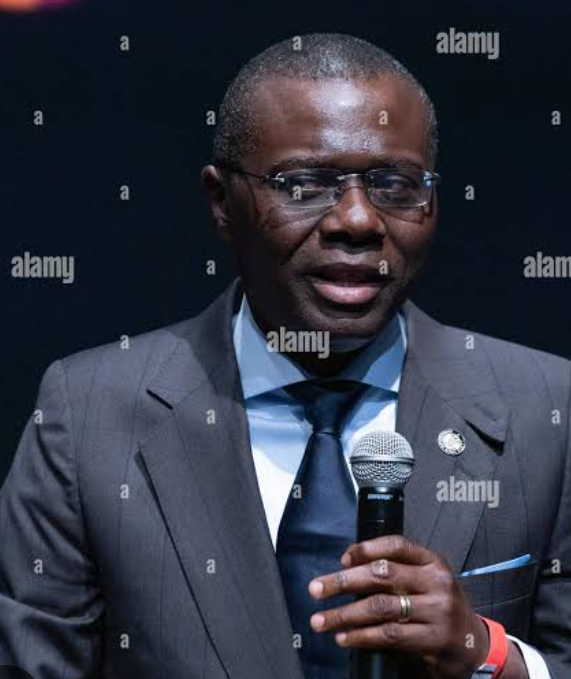
Lagos State should have been left out of the legal action instituted by the Federal Government against Governors at the Supreme Court over alleged misconduct in the administration of Local Governments, Governor Babajide Sanwo-Olu said yesterday.
To Sanwo-Olu, it was a legal anomaly for the Federal Government to join Lagos in the Supreme Court matter, decades after the Local Governments in the State had been enjoying full autonomy.

Sanwo-Olu, who spoke in support of the suit, however said the Attorney General of the Federation should have identified those that were not in compliance with the law before filing a blanket lawsuit against all states.

Advertisement

The Governor spoke at the on-going Justice Reform Summit organised by Lagos State Judiciary with the theme: “Enhancing the Administration of Justice for Economic Growth, Investment Protection and Security in Lagos”.

The summit, attended by the Attorney General of the Federation and Minister of Justice, Mr. Lateef Fagbemi, is being held at Marriott Hotels, Ikeja.

Sanwo-Olu said infringement on the local council autonomy was an affront to the spirit of the constitution to which the judiciary must make a clear interpretation for equity and fairness.

He said a better justice system would protect the interests of parties and discourage actions limiting efficiency of any government entity.

Advertisement

He said: “It is interesting to read the news that the Honorable Minister of Justice and Attorney General of the Federation has sued all the 36 states because Governors did not give autonomy to the third tier of government. The only mistake, which I am going to tell our Attorney General, is that some of us are in compliance.

“The Attorney General should have done his due diligence to identify which states are not in compliance, so that we don’t sue all the 36 states together. You can determine which states are not violating the Constitution. If it is three, four or five states are in compliance, then you can sue the 31 states violating autonomy of the Local Governments. That is part of the back work that we need to do.”

Sanwo-Olu said the judicial reform must remain on the agenda in a functional society in order to improve administration of the justice system and make the court the last hope of the common man.

The Governor said the judiciary in Lagos had remained a beacon in protecting the rule of law and setting good examples for other jurisdictions in dispensation of justice. But he challenged judges and law officers to change the status quo in order to raise the standard of the justice system.

Advertisement

Drawing a parallel with Singapore – a fishing village with environmental similarities with Lagos, Sanwo-Olu said Singapore’s faith in rule of law and fairness transformed the efficiency of the country’s justice system, leading to the country’s rapid economic growth and prosperity.

He said: “Just like Lagos, Singapore has no resources. Singapore is what it is today because of Ease of Doing Business. It takes less than 30 minutes to register a business in Singapore, which makes it to surpass many countries in Ease of Doing Business. Singapore has one of the best judiciary system in the world; they have quick turnaround time in mediation and dispute resolution.”

Sanwo-Olu said Lagos needed strong judicial system to attain all its investment potential, while promoting transparency and accountability.

The Governor urged the Bench and the Bar to collaborate to promote an efficient justice system.

Advertisement

Chief Justice of Nigeria (CJN), Justice Kayode Ariwoola, represented Justice Iyabode Yerima of the Supreme Court, hailed Lagos judicial system for being “a forerunner” in justice development, stressing that other jurisdictions usually borrowed from examples set by Lagos.

The CJN listed some of landmark examples set by Lagos judiciary in the justice system to include Administration of Criminal Justice laws, which after implementation, set the template for the designing of Criminal Justice Act at the National Assembly.

Fagbemi, SAN, represented by Mr. Fernandez Marcos-Obiene, said robust and transparent reforms embarked on by Lagos in the justice system had promoted economic growth, pledging that the Federal Government would continue to provide platforms for reforms that would improve public trust in the judiciary.

Chief Justice of Lagos, Justice Kazeem Alogba, commended Gov. Sanwo-Olu for his non-interference stance in judicial matters in Lagos.

Advertisement

Alogba said: ”No society thrives without robust justice system. The essence of any society is to have justice, without which there will be no peace and order. Security is an integral element of a robust justice system. When you have judges who are incompetent and corrupt in the system, the society will suffer for it.”

Other speakers at the two-day event included the President of the Nigerian Bar Association (NBA), Mr. Yakubu Maikyau, SAN, and Lagos State Attorney General and Commissioner for Justice, Lawal Pedro, SAN, among others.
Continue Reading
Advertisement
Click to comment

Warning: Undefined variable $user_ID in /home/naijuinz/public_html/wp-content/themes/zox-news/comments.php on line 49

You must be logged in to post a comment Login

Leave a Reply

News

CBN Imposes N100M Penalty On Inadequate Processing Of Forex Documents

Published

on

By

ADVERTISEMENT
Zoom Ad
ADVERTISEMENT
Zoom Ad

The Central Bank of Nigeria (CBN) has introduced stricter sanctions for banks that process foreign exchange transactions without proper documentation, imposing penalties that could run into hundreds of millions of naira.

Under the revised foreign exchange regulatory framework, authorised dealer banks found to have completed forex transactions with insufficient supporting documents will pay a N100 million fine. They will also incur an additional N10 million penalty for each affected transaction.

The sanctions are contained in the fourth edition of the Foreign Exchange Manual released by the apex bank. The document serves as the operational guide for participants in Nigeria’s foreign exchange market.

According to the CBN, the updated manual is designed to strengthen regulatory compliance, improve transparency and reinforce confidence in the country’s foreign exchange system.

Advertisement

The regulator classified the offence as the execution of foreign exchange transactions without adequate documentation. It stated that any authorised dealer found culpable would be liable to the prescribed penalties.

The revised guidelines place greater emphasis on documentation requirements for all categories of foreign exchange transactions. These include spot transactions, forward contracts, swap arrangements, imports and export-related dealings.

Banks are now required to obtain, verify and retain all relevant supporting documents before foreign currency can be released to customers. Similar requirements apply to forward and swap transactions, where evidence of the underlying trade or obligation must be available before settlement.

The manual also retains existing documentation requirements for imports. Importers are expected to provide Form M, invoices, certificates of origin, packing lists and shipping documents, among other mandatory records.

Advertisement

In addition, importers must submit Exchange Control Documents within 90 days after negotiating shipping documents through overseas correspondent banks.

Failure to comply with the documentation requirements attracts progressively stiffer sanctions.

A first violation will result in a 90-day suspension from foreign exchange transactions. A second offence carries a 180-day restriction, while a third attracts a one-year suspension.

The CBN warned that a fourth violation could lead to a complete prohibition from participating in foreign exchange transactions.

Advertisement

Banks that fail to report cases of default to the regulator will also face sanctions under the new framework.

The apex bank further tightened reporting obligations for authorised dealers. Institutions that fail to submit required daily or monthly returns will be fined N500,000 for late submission.

Where returns are not rendered at all, the offending institution will pay a minimum penalty of N5 million. An additional N500,000 daily fine will apply until the breach is corrected.

The revised manual also strengthens oversight of banks’ foreign currency exposure levels.

Advertisement

Financial institutions that exceed approved Net Open Position limits will receive a warning for the first offence. A second violation will attract a 10-working-day suspension from the Nigerian Foreign Exchange Market.

A third breach will result in a 90-day suspension from market activities.

The CBN also imposed sanctions on unauthorised reallocation of foreign exchange funds. Any bank found engaging in such practices will pay N10 million for each transaction involved.

Beyond the monetary penalty, affected institutions may be referred to the Bankers’ Committee ethics framework for further disciplinary action.

Advertisement

The central bank said the new measures form part of ongoing efforts to deepen transparency, promote market discipline and establish a more rules-based foreign exchange regime.

According to the regulator, stronger compliance standards and stricter enforcement will help improve market integrity, reduce abuses and enhance investor confidence in Nigeria’s foreign exchange market.

Continue Reading

News

Umahi Threatens To Delist Road Contractors Over Non-Compliance

Published

on

By

ADVERTISEMENT
Zoom Ad
ADVERTISEMENT
Zoom Ad

The Minister of Works, Engr. David Umahi, has threatened to delist contractors who fail to comply with federal government construction guidelines on road projects across the country.

He also warned that ministry officials who fail to enforce compliance would be removed or redeployed.

Umahi issued the warning on Saturday during an inspection of the Mararaba–Keffi road project.

He said the federal government would begin a cleanup of non-performing contractors from next week.

Advertisement

“From next week, we are going to weed out contractors—whether indigenous or expatriate—who are not committed. Some of them have up to 25 jobs awarded before we came on board. If you are not ready to invest while awaiting federal government payments, then you are not part of the progress of this country,” he said.

He added that contractors who only depend on advance payments before mobilising to site would be removed, noting that some had benefitted from government jobs for over 30 years without adequate performance.

Umahi, however, commended JRB Construction Company for its quality of work and commitment to road infrastructure development despite funding challenges.

“I declare JRB as the best indigenous contractor because of the quality of work he does, the amount of equipment he has, and his partnership with the Federal Government,” he said.

Advertisement

He explained that the contractor was selected for intervention works when funding delays slowed down the dual carriageway project and immediately mobilised without receiving advance payment.

“Where we are facing challenges is identifying true partners in progress. JRB, I commend you,” he added.

Also speaking, the chairman of the House Committee on Works, Hon. Akintola Alabi, criticised some foreign contractors for collecting mobilisation fees without moving to site.

He commended JRB for demonstrating that Nigerian contractors can deliver quality infrastructure projects.

Advertisement

“There are some contractors from abroad who collect mobilisation and go back without working, then return for variations. But you are different. You continue working because you understand this is your country,” he said.

He further praised the contractor for his consistency and contribution to national infrastructure development.

Continue Reading

News

Households groan as cooking gas price hits N2,400/kg

Published

on

By

ADVERTISEMENT
Zoom Ad
ADVERTISEMENT
Zoom Ad

Nigerians in major cities are groaning under the rising cost of Liquefied Petroleum Gas, commonly called cooking gas, as the price has surged to as high as N2,400 per kilogramme in some retail outlets.

The sharp increase has worsened the hardship faced by households already battling soaring food prices and other living costs, pushing many to revert to less environmentally friendly alternatives such as firewood and charcoal.

Sunday PUNCH observed that while some filling stations sold the product at between N1,650 and N1,900 per kilogramme, neighbourhood retailers and black market operators charged significantly higher, up to N2,400 per kg depending on the location.

A housewife in Ibadan, Mrs Deborah Akintola, expressed frustration over the relentless hikes.

Advertisement

“Last week, I bought gas at Iyana Church Gasland at N1,600 per kilogramme. Now I hear it is N1,900 and even over N2,000 in some shops. In May, it was N1,000. This increase is just too much. Everything, including foodstuffs, is expensive,” she said.

At Bovas Filling Station in the Gbagi area of Ibadan, cooking gas was sold at N1,650 per kilogramme on Thursday.

A mother of two, Mary Dada, lamented the frequent fluctuations.

“I don’t understand why the price keeps going up. Every month, there is one increase or another. It’s just annoying,” she said.

Advertisement

In Lagos, residents shared similar complaints. Ibrahim Ozigis, who bought gas at Enyo Filling Station, Iju-Ishaga, said he paid N1,650 per kg this month compared to N1,100 in May.

Desire Billy, a resident of Isheri-Osun, said the rising cost was forcing many households to change their cooking habits.

“It has got to a point where you buy gas and cannot use it to cook beans. Last week, I bought it at N1,500 at AP Filling Station, whereas in February I bought it for N1,200. It keeps increasing,” she lamented.

In Ilorin, Kwara State, some residents have switched to charcoal.

Advertisement

Kemisola Nitta said some dealers had even suspended sales due to unstable prices.

“We have stopped using gas and opted for charcoal. I think it is cheaper,” she said.

Why prices remain high

Despite a significant increase in domestic production of LPG and reduced reliance on imports, prices have continued to climb.

Advertisement

Data from the Nigerian Midstream and Downstream Petroleum Regulatory Authority showed that local production from refineries and gas processing plants accounted for the bulk of supply between April 2025 and April 2026.

However, this has not translated into lower costs for consumers.

The Nigerian Association of Liquefied Petroleum Gas Marketers raised the alarm over erratic supply and rising costs, warning of possible scarcity.

In a statement signed by its National President, Edu Inyang, and Executive Secretary, Bassey Essien, the association said marketers now pay between N25.2 million and N26.2 million for 20 metric tonnes of the product.

Advertisement

“The citizens of Nigeria now have to buy cooking gas, which should be a social commodity, at a prohibitive cost of over N1,500 per kilogramme,” the association stated.

NALPGAM warned that the situation could trigger public unrest and undermine years of government efforts to promote clean cooking energy through increased LPG penetration.

A gas reseller in Ibadan, Opeyemi Olaire, attributed the high retail prices to transportation and operating costs.

“I sell at N2,400 per kilogramme. If I buy from Gasland at N1,700 and use an okada to transport it for N600, how much do you want me to sell it for? The government should look for a way to bring the price down,” she said.

Advertisement

The persistent rise in cooking gas prices is compounding the cost-of-living crisis, with many low-income families and small businesses struggling to cope.

Continue Reading

Trending

Copyright © 2024 Naija Blitz News