News
Hon. Dennis Agbo Honoured For Roles In 2023 New Nigeria Project.
- /home/naijuinz/public_html/wp-content/plugins/mvp-social-buttons/mvp-social-buttons.php on line 27
https://naijablitznews.com/wp-content/uploads/2024/06/Screenshot_20240603-131611-539x600.png&description=Hon. Dennis Agbo Honoured For Roles In 2023 New Nigeria Project.', 'pinterestShare', 'width=750,height=350'); return false;" title="Pin This Post">
- Share
- Tweet /home/naijuinz/public_html/wp-content/plugins/mvp-social-buttons/mvp-social-buttons.php on line 72
https://naijablitznews.com/wp-content/uploads/2024/06/Screenshot_20240603-131611-539x600.png&description=Hon. Dennis Agbo Honoured For Roles In 2023 New Nigeria Project.', 'pinterestShare', 'width=750,height=350'); return false;" title="Pin This Post">
By Kayode Sanni-Arewa

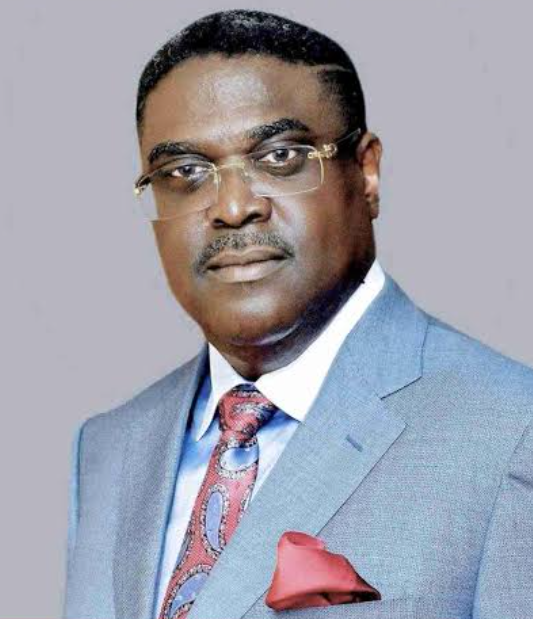
Right Honourable Dennis Nnamdi Agbo was among the eminent Nigerians honoured at the weekend in Abuja for their various courageous roles to enthrone a new Nigeria and effect a positive change in the nation’s democracy.
Rt. Honourable Agbo who was elected into the current 10th House of Representatives under the platform of the Labour Party, (LP) to represent Igbo-Eze North/Udenu Federal Constituency of Enugu State, was very vocal and influential in the Presidential Campaign of the candidate of the party, Peter Obi in 2023 election.

Honourable Agbo, a businessman a philanthropist and great grassroots politician of immense influence and capacity deployed material resources as well as human contacts to help raise the profile of the Party in South East.
The Nigerian-American Coalition for Justice and Democracy (NACJD), organisers of the award called 2024 Courageous Citizens Award, described Agbo as one of the few Nigerians who against the run of play, and without consideration of personal safety, staked their lives during the 2023 elections to effect a positive change in the country.
The Chairman of the organization, Professor Eddie Oparaoji in his address at the occasion noted that Agbo was being awarded Courageous Citizen’s Medal of Valour, (CCMV) for being one of those who have proven that with resilience and determination a change could be effected.
“It is obvious that with the way the deck was stacked in the country then in 2023, and the reality of our lived experience in Nigeria at this time, a positive change is not only an imperative but imminent and ominous”.
Hon. Agbo described the award as an impetus for him to engage in more selfless battles to rescue Nigeria from the oppressors and the enemies of Nigeria adding, “l am heartened to know that our little efforts in 2023 journey did not go unnoticed”.
“The events that happened during the 2023 general elections were signs that a change to a new Nigeria is possible. I therefore urge those Nigerians and indeed the youths who desire this change not to despair because change does not come without a struggle. Indeed, according to John Philport Curran, the condition under which God has given liberty to man is eternal vigilance, which condition if he breaks, servitude is at once the consequence of his crime and the punishment of his guilt”.
Dennis Agbo is not your run of the mill politician. He brings Integrity, peace, humility, vigorous engagement, and candour, in a strong character, into the conduct of public service. This style of governance is beginning to catch up among his people, albeit after a season of inertia, resistance, suspicion, but persistent education, enlightenment and orientation.
He is not just a political activist but also a vibrant parliamentarian and compassionate representative who, within the first six months in the current Green Chamber, has churned out impactful motions and completed landmark projects reminiscent of his performance in the 8th Assembly.
He had within the short period completed one block of 5 Classrooms, one 500 students capacity Examination Hall, two rural electrification projects and several solar Street lights projects, in various communities around his Federal Constituency.
A brand new Technical College which he built at Igugu town within his Constituency was his flagship project in education during his first tenure in the 8th Assembly.
The school has admitted the 6th stream of students for technical education, and is now considered one of the best in the State. He has built and upgraded other School buildings in many towns within his Federal Constituency.
He has used his scholarship programme to encourage the study of Medicine and related courses, and provide access to education for indigent constituents.
News
Akinboro seeks probe into NBA election as Badejo-Okusanya urges unity
A former General Secretary of the Nigerian Bar Association (NBA), Olumuyiwa Akinboro (SAN), has called on the Department of State Services, Economic and Financial Crimes Commission (EFCC) and other relevant security agencies to investigate the conduct of the recently conducted NBA national officers’ election, describing the exercise as a “sham” riddled with constitutional breaches.
In a 41-page statement, Akinboro, who was also a presidential candidate, urged the agencies to probe alleged infractions, including possible violations of the Cybercrimes Act and the Data Protection Act.
Akinboro said he declined to approach the NBA appeals committee, saying that the legitimacy of the election itself was in question.
He alleged that the election was compromised by irregularities, such as migration between voting portals, failure to conduct integrity tests and non-compliance with stipulated guidelines.
“Immediately the election was migrated to a different portal, it became a different election altogether that would require strict compliance with the step-by-step requirements as provided in our constitution,” he said.
He maintained that the absence of mandatory trial runs and integrity checks undermined the credibility of the process, adding that he would not “legitimise” the jurisdiction of the appeals committee under such circumstances.
The senior advocate further demanded an independent forensic audit of the entire electoral process, recommending that reputable firms be engaged to determine issues, such as the authenticity of reported cyber-attacks, compliance with electoral guidelines, and whether unqualified persons participated in the voting.
He also called for scrutiny of the use of multiple voting links, the failure of some voters to receive authentication codes, and the role and qualifications of service providers.
Akinboro, who urged the NBA leadership to make public reports of the election observers, including those from international bodies and local institutions, further called for the immediate reconstitution of the Electoral Committee of the NBA to conduct a fresh election in line with constitutional provisions, as well as an urgent stakeholders’ meeting involving the Body of Benchers, General Council of the Bar, and past NBA leaders.
He warned that failure to address the concerns raised could compel him to explore further legal options.
Meanwhile, President-elect of the NBA, Oyinkansola Badejo-Okusanya, has pledged to heal divisions within the legal profession and unite members of the Association as she prepares to assume office at the end of August.
Badejo-Okusanya, while speaking with journalists after paying a courtesy visit to President Bola Tinubu at the Presidential Villa, Abuja, said her immediate priority was to engage members and stakeholders across the Bar with a view to fostering reconciliation, addressing grievances and strengthening institutional cohesion.
She assured members that her administration would be inclusive and committed to carrying every segment of the Association along.
The NBA president-elect said she would spare no effort in restoring confidence and ensuring the Association remained united and effective in discharging its responsibilities to the legal profession and the wider society.
News
State police will address emerging threats, says IG
The Inspector General of Police (IGP), Olatunji Disu, yesterday reiterated his support for ongoing debate on state policing, saying it would bring practical solutions to Nigeria’s evolving security challenges.
Disu spoke at the Force Headquarters, Abuja while playing host to the Commandant and participants of Course 34,National Defence College (NDC), who presented a research paper on state policing, police reforms, and command and coordination protocols.
The IGP said the recommendations on state police provided a useful foundation for future reforms, adding that comparative analysis of countries with decentralised police systems offers valuable lessons for Nigeria.
Disu reaffirmed the Nigeria Police Force’s commitment to sustained reforms and closer collaboration with the college and other strategic institutions. He said this would strengthen policing, enhance internal security and support national development.
He described the research as timely, insightful and relevant to the country’s current security realities. He praised the officers for blending academic scholarship with practical policing experience.
The delegation was led by the Commandant of the College, Rear Admiral Abdullahi Ahmed. He said the study was undertaken by police officers on the course as part of efforts to contribute to national security policy and community policing.
Ahmed said the research was carried out independently by the officers. Faculty members only provided academic guidance and methodological support.
He said the participants relied on their professional experience, critical thinking and research to produce recommendations for strengthening Nigeria’s internal security architecture through 2035. He expressed optimism that the findings would improve the Nigeria Police Force’s operational effectiveness against emerging security threats.
Separately, a broad consensus for state police emerged at the First Daily Sixth Anniversary National Dialogue on Security in Abuja, where former Chiefs of Defence Staff (CDS), Generals Martin Luther Agwai (retd.) and Lucky Irabor (retd.); former Bayelsa State Governor, Senator Henry Seriake Dickson; Bayelsa State Governor, Senator Douye Diri, joined other stakeholders in calling for state police, emergency funding for security agencies and far-reaching security reforms.
The dialogue, held at the Shehu Musa Yar’Adua Centre, was themed “Declaration of State of Emergency on Security: Matching Words with Action”.
Delivering the keynote address, Irabor said the declared state of emergency on security must be backed by decisive action and not a mere statement of intent.
He urged the Federal Government to substantially increase funding for the armed forces and other security agencies, establish state police based on global best practices, and develop Nigeria’s military-industrial complex to reduce dependence on foreign defence capabilities.
Civil society organisations (CSOs) also advised the Federal Government to ensure ongoing reforms addressed governance, economic and social problems driving violence across the country in order for state police to have meaningful effect.
The rights groups made the call during a webinar titled “Insecurity and State Policing in Nigeria: The Way Forward,” organised by the Corporate Accountability and Public Participation Africa (CAPPA), with the Rule of Law and Accountability Advocacy Centre (RULAAC) and Africana League also taking part.
Irabor also called on Nigerians to support security agencies through vigilance, accountability and active citizenship.
Dickson blamed the collapse of Nigeria’s internal security system for the military’s overstretch across the country, saying the armed forces had been drawn into responsibilities beyond their primary constitutional mandate of defending Nigeria’s territorial integrity.
“The military’s primary responsibility is territorial integrity. Internal security was only meant to be a subsidiary mandate, but it has now become the main focus because the military is deployed everywhere,” he said.
He argued that Nigeria’s security challenges could not be solved through military deployment alone, calling instead for comprehensive security reforms and stronger legislative measures.
“It’s not just military, military, military. It’s better to fight the causes of criminality,” he said, adding that Nigeria needed more robust national dialogue on security.
Agwai, co-chairman of the dialogue, said the country’s security challenges had evolved into complex internal threats requiring a whole-of-society response involving government, the media, communities and citizens, not just the military and security agencies.
Representing Diri, the Secretary to the State Government (SSG), Prof. Nimibofa Ayawei, renewed the governor’s call for constitutional reforms to give state governors greater authority over security. He noted that governors were held accountable by citizens despite lacking operational control over the police. He described the ongoing constitutional amendment process as an opportunity to establish state police and devolve security responsibilities to states.
Development lawyer, Frank Tietie, called for emergency funding for security institutions, saying extraordinary threats demanded extraordinary financial commitment, while backing legislative efforts to establish state police with strong accountability mechanisms.
Political analyst, Mojeed Dahiru, stressed that national unity, and respect for Nigeria’s multi-religious character, were critical to security.
First Daily Publisher, Dr Daniel Iworiso-Markson, said the dialogue was designed as a non-partisan platform to generate practical solutions to Nigeria’s security crisis, urging participants to embrace intelligence-led, technology-driven reforms against terrorism, kidnapping and banditry.
Participants agreed that reversing Nigeria’s security challenges would require stronger institutions, increased investment, constitutional reforms, better intelligence gathering and sustained collaboration between government, security agencies and citizens.
During the webinar, the CSOs argued that policing reforms would achieve little without addressing poverty, unemployment, corruption, weak institutions and political exclusion.
RULAAC’s Executive Director, Okechukwu Nwanguma, said insecurity should not be viewed merely as a policing problem, adding that governance failures were the root causes of crime and violence. He said decentralising policing could improve the response to local security threats but would not resolve Nigeria’s security crisis without broader governance reforms.
“Police can respond to crime, but they cannot eliminate the structural conditions that produce it. No restructuring of police institutions alone will solve Nigeria’s security crisis,” Nwanguma said.
He warned that state police could become another tool for abuse without strong accountability measures, calling for national standards on recruitment, training and discipline, operational independence from partisan political influence, independent civilian oversight, transparent complaints mechanisms, sustainable funding, and legal safeguards against the use of state police for electoral intimidation or political repression.
The Executive Director, Africana League, Dr Glory Ukwenga, said any state policing framework that excludes young people would be incomplete, noting that youths make up over 70 per cent of Nigeria’s population and were among the groups most affected by insecurity. She called for youth representation on state police service commissions, police-community relations committees and security advisory councils, alongside structured consultations with youth organisations during the reform process.
She also recommended youth-focused recruitment, civic education programmes and digital platforms to let young people report security concerns.
CAPPA’s Executive Director, Akinbode Oluwafemi, said discussions on state police should focus not only on decentralisation but on the type of policing Nigeria intends to build, arguing that policing should be community-oriented, rights-based and accountable to citizens rather than an instrument of political control. He said poor access to education, healthcare, water, electricity, roads and employment continues to fuel insecurity, stressing that these challenges must be addressed alongside security reforms.
He warned against rushing constitutional amendments, saying Nigeria should first address weaknesses in existing security agencies before creating new policing structures.
The speakers agreed that establishing additional police forces would not, on its own, resolve Nigeria’s security challenges. They urged the Federal Government and the National Assembly to ensure that any state policing arrangement strengthens democratic governance, protects human rights and promotes accountability, instead of creating fresh opportunities for political interference and abuse.
News
TETFund bars Institutions with abandoned projects from new interventions
The Tertiary Education Trust Fund, TETFund, has barred tertiary institutions with delayed or abandoned projects from accessing new intervention projects under the 2027 allocation cycle.
The Chairman of the TETFund Board of Trustees, Aminu Masari, announced this in a statement issued on Wednesday by the Fund’s Head of Public Relations, Abdulmumin Oniyangi.
Masari said the decision followed persistent delays in the completion of TETFund-funded projects across beneficiary institutions, despite previous measures introduced to address the problem.
He explained that fluctuations in the prices of construction materials, including cement, reinforcement bars, sanitary and electrical fittings, had initially contributed to delays in project execution.
According to him, TETFund introduced a special intervention line in 2023 specifically to assist institutions in completing affected projects.
The TETFund chairman said a recent assessment showed that the intervention had recorded significant success, with many of the affected projects now completed.
However, he expressed concern that new cases of delayed projects were still emerging, attributing the situation largely to institutional leadership and administrative bottlenecks rather than funding constraints.
Masari identified lack of continuity by successive heads of beneficiary institutions and delays in processing payments to contractors as some of the factors responsible for the delays.
He said TETFund-funded projects would no longer be allowed to suffer because of internal bureaucracy or politics within beneficiary institutions.
Under the new directive, all beneficiary institutions are required to compile comprehensive lists of projects that have exceeded their completion timelines by more than six months.
They are also expected to identify the reasons for the delays, propose practical solutions, rank the projects according to priority, and provide detailed estimates of the funds required for completion.
The institutions are further expected to strengthen project supervision through their Physical Planning and Maintenance Departments.
TETFund directed institutions with delayed projects to prioritise their completion using their annual, zonal, and high-impact intervention allocations.
To ensure compliance, TETFund says monitoring teams comprising members of the Board and technical staff will conduct physical inspections of affected projects nationwide in August and September 2026.
The inspection reports and proposals submitted by the institutions will then be reviewed at the Board’s statutory meeting in October, where projects eligible for inclusion in the 2027 disbursement guidelines will be considered.
TETFund is responsible for providing intervention funding for infrastructure, research, academic staff development, library enhancement and other capital projects in public universities, polytechnics and colleges of education.
The latest measure is aimed at ensuring that intervention funds are translated into completed and functional facilities that will improve teaching, learning and research, while preventing public resources from being tied down in abandoned or distressed projects.
-
News18 hours agoTinubu’s 3rd Year Anniversary: Wike Approves Promotion Of 3,592 FCT Civil Servants
-
News14 hours agoWe Are Already Campaigning With Performance, Elections Won’t Slow Projects, Says Wike(Photos)
-
News18 hours agoMabushi bus terminal kick-starts(Watch)
-
News18 hours agoBEWARE: Finance Ministry Disowns Fraudulent Message Demanding N50k From Newly Recruited Staff
-
News13 hours agoFinally, FG endorses herbal medicines to treat cancers, hepatitis B, others
-
News17 hours agoCivil War Row: Plateau Govt Insists Mutfwang Spoke in Spirit of Reconciliation Engagement
-
News14 hours agoFake Presidential Council: HCSF Reveals Establishment Act Submitted is Fake
-
News17 hours ago2027 election: We’ll all battle to the finishing point, I won’t just surrender -Tinubu tells Atiku, others

Warning: Undefined variable $user_ID in /home/naijuinz/public_html/wp-content/themes/zox-news/comments.php on line 49
You must be logged in to post a comment Login