Connect with us

News

Opposition Reps propose over N100,000 minimum wage

Published

on

ADVERTISEMENT
Zoom Ad
ADVERTISEMENT
Zoom Ad

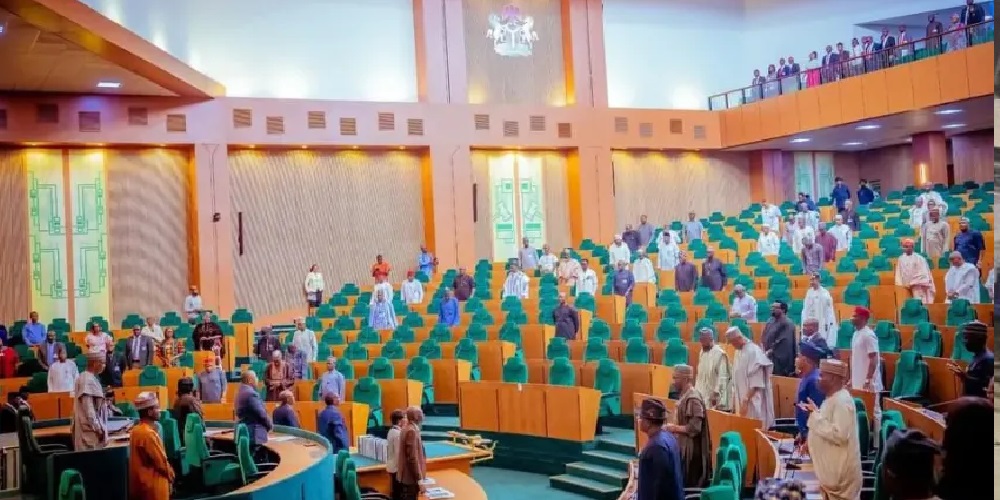
Lawmakers in the House of Representatives elected on the platform of opposition political parties have called on the Federal Government to implement a new minimum wage of more than N100,000 to assuage organised labour.


Organised labour, made up of the Nigeria Labour Congress and the Trade Union Congress, is demanding N494,000 minimum wage as opposed to N60,000 proposed by the Federal Government.

After a series of meetings ended in stalemate last week, organised labour embarked on a nationwide strike on Monday, which grounded economic activities across the country.

In an interview with The PUNCH on Tuesday, the Minority Leader of the House of Representatives, Kingsley Chinda, lamented the condition of the average Nigerian worker, stressing that failure to pay a living wage was a constitutional breach.

Advertisement

He said, “In Nigeria today, any wage below $200 (N298,800) is ridiculous. The Nigerian worker is heavily underpaid and it is the responsibility of the government to ensure the security and welfare of its citizens. Failure to pay a living wage is unconstitutional as the welfare of citizens is neglected.

“Public and government officers should have their monthly wages while we consider the hourly rate for private or casual employees. The earlier the government concludes this matter with labour unions, the better.”

Like Chinda, a member of the Peoples Democratic Party and lawmaker representing Obokun/Oriade Federal Constituency, Osun State, Oluwole Oke, said only the payment of a living wage would enable the majority of Nigerians to cope with the current economic realities.

“The minimum wage the Federal Government should pay should be N120,000. I say this because wage increase has its linkages, effects and consequences. Nigerian workers deserve living wages.”

Advertisement

Oluwole, who chairs the House Committee on Judiciary, urged the private sector to be taken into consideration.

“We need to look at productivity in the private sector. Would the private sector that feeds the government survive? We have a serious issue at hand,” he added.

On his part, the lawmaker representing Abuja Municipal/Bwari Federal Constituency of the Federal Capital Territory, Chinedu Obika said the minimum wage should not be less than N150,000 “based on the current reality.”

Obika, a member of the Labour Party, further urged the Federal Government to take into consideration the inflation rate in the past few years, when considering the new wage for the Nigerian workers.
Advertisement
Continue Reading
Advertisement
Click to comment

Warning: Undefined variable $user_ID in /home/naijuinz/public_html/wp-content/themes/zox-news/comments.php on line 49

You must be logged in to post a comment Login

Leave a Reply

News

French Embassy ends €750,000 plastic recycling initiative

Published

on

ADVERTISEMENT
Zoom Ad
ADVERTISEMENT
Zoom Ad

By Francesca Hangeior

The French Embassy in Nigeria has ended its €750,000 Plastic Waste Management Project in eleven universities after three years of implementation.

The embassy hinted of plans to expand the initiative to more Nigerian universities following the successful pilot phase.

The embassy disclosed this on Tuesday in Abuja during the project’s closeout session attended by representatives of participating universities, development partners and other stakeholders.

Advertisement

The initiative, funded by the French Embassy, was implemented in 11 Nigerian universities to promote plastic waste management, environmental sustainability, research, innovation and entrepreneurship through plastic recycling technologies.

Some of the universities include: University of Port Harcourt; University of Lagos; Yaba College of Technology; Alex Ekwueme Federal University, Ndufu-Alike, Ebonyi State; Nile University of Nigeria; Obafemi Awolowo University, Ile-Ife; University of Delta, Agbor and University of Calabar.

Speaking after the event, the French Embassy’s Deputy Head of Cooperation, Pierre Andriamampianina, said the project had exceeded expectations, with participating institutions implementing activities beyond those initially planned.

He said France invested more than €750,000 in the project, adding that its impact had gone beyond the financial commitment through improved capacity building, youth engagement, innovation and job creation.

Advertisement

“The return on investment for Nigeria is much more than the money invested. The gains are enormous in terms of capacity building, public participation, youth mobilisation and innovation,” he said.

According to him, the project’s final evaluation showed that participating universities demonstrated exceptional commitment by introducing additional activities independently.

“It is a huge success in terms of student mobilisation, job creation, production using recycled plastics and improved university governance through better plastic waste management,” Andriamampianina said.

He said the embassy intends to build on the project’s success by expanding participation to more tertiary institutions across the country.

Advertisement

“Our expectation is that this project will create a strong network of universities, academics and innovators that will continue to grow and bring more universities on board. We currently have 11 universities in the project, but we hope many more institutions will join,” he added.

Also speaking, the Vice-Chancellor of Nile University of Nigeria, Prof. Dilli Dogo, described the initiative as evidence of the impact of strategic international partnerships on higher education and sustainable development.

He said the project had strengthened practical learning, research and entrepreneurship at the university, noting that discussions with the French Embassy in 2023 led to the establishment of a fabrication laboratory and a plastic recycling micro-factory.

According to Dogo, the project has demonstrated that plastic waste can be converted into valuable products while equipping students with practical and entrepreneurial skills.

Advertisement

“Everything is possible in this country. All we need is to harness the necessary resources, talents, motivation and encouragement. We can achieve a lot,” he said.

He urged universities to prioritise practical skills and entrepreneurship to enable graduates to create jobs rather than depend solely on paid employment.

A representative of the Vice-Chancellor of the University of Lagos, the Deputy Vice-Chancellor (Development Services), Prof. Afolabi Leshi, said the project had enriched teaching, research and entrepreneurship within the institution.

He disclosed that the university plans to use its plastic recycling micro-plant to manufacture household and office furniture from recycled plastic waste before expanding into commercial production.

Advertisement

Leshi said the institution also plans to partner with formal and informal waste collectors to ensure a steady supply of recyclable materials, creating jobs while improving waste management.

He added that the initiative had strengthened research in environmental sustainability, material science and climate action and inspired students to pursue careers in environmental engineering and related fields.

Stakeholders at the closeout session said the project demonstrated how collaboration among governments, universities and development partners can address environmental challenges while creating sustainable economic opportunities for young Nigerians.

Advertisement
Continue Reading

News

NUC approves unbundling of UNN Mass Comm programme

Published

on

ADVERTISEMENT
Zoom Ad
ADVERTISEMENT
Zoom Ad

By Francesca Hangeior

The National Universities Commission (NUC) has approved the unbundling of the Department of Mass Communication, University of Nigeria Nsukka (UNN) into five new undergraduate programmes with effect from the 2026/2027 academic session.
This is contained in a statement issued on Thursday in Nsukka by Mr Inya Egwu, the acting Public Relations Officer of UNN.
According to him, the newly approved full-time programmes are B.Sc. (Advertising), B.Sc. (Broadcasting), B.Sc. (Development Communication Studies), B.Sc. (Journalism and Media Studies), and B.Sc. (Public Relations).
The statement said the approval was conveyed to the university in a circular dated June 19, 2026.
“The decision followed a comprehensive resource verification visit conducted by a panel of experts to assess the human and material capacity available for the proposed programmes.
“The approval, according to NUC, strictly applies to full-time mode of delivery; any plan to introduce part-time or postgraduate components for these programmes will require further notification and approval by the commission.
“The programmes should retain their approved titles and nomenclature, as any modifications will be subjected to regulatory clearance,” Egwu said.
He said the Head of the Department of Mass Communication, Prof. Michael Ukonu, expressed gratitude to the Vice-Chancellor for his support throughout the NUC resource verification.
He also thanked the Director of Academic Planning, Prof. Anthony Attama, for guiding the department throughout the verification.
According to him, the unbundling will align the university’s ambition to maintain its world-class standards and transformational vision.

Continue Reading

News

Navy arrests member of vehicle theft syndicate in Abuja

Published

on

ADVERTISEMENT
Zoom Ad
ADVERTISEMENT
Zoom Ad

By Francesca Hangeior

The Nigerian Navy has nabbed a member of a motor theft syndicate linked to more than 50 stolen vehicles across the Federal Capital Territory (FCT).

This is contained in an operational report made available to journalists on Thursday in Abuja by the Director of Naval Information, Capt. Abiodun Folorunsho.

Folorunsho said Naval Base Abuja operatives carried out the operation as part of ongoing efforts to strengthen the FCT’s security architecture through intelligence-led operations in collaboration with sister agencies.

Advertisement

According to him, the suspect was intercepted while attempting to leave the FCT.
“Preliminary investigations reveal that he allegedly impersonated an Inspector of the Nigerian Correctional Service (NCos) to facilitate his criminal activities.

“He has confessed to his involvement in a vehicle theft syndicate responsible for stealing vehicles from different parts of the FCT.”

The Director of Naval Information also said that investigations revealed that the criminal network operated across state boundaries with stolen vehicles reportedly disposed of through accomplices outside the FCT.

He said that efforts were ongoing in collaboration with other relevant security agencies to apprehend other members of the syndicate.
“The suspect, together with relevant exhibits and evidence, has been handed over to the Nigeria Police Force, FCT Command, for further investigation and prosecution in accordance with established inter-agency procedures,” he said.

Advertisement

The naval spokesperson reaffirmed the Navy’s commitment to strengthening inter-agency cooperation to support national security and ensure a safe and secure environment for all Nigerians.

Continue Reading

Trending

Copyright © 2024 Naija Blitz News