Connect with us

News

Tinubu’s First Anniversary: Era Of Pain – Punch Editorial 

Published

on

ADVERTISEMENT
Zoom Ad
ADVERTISEMENT
Zoom Ad

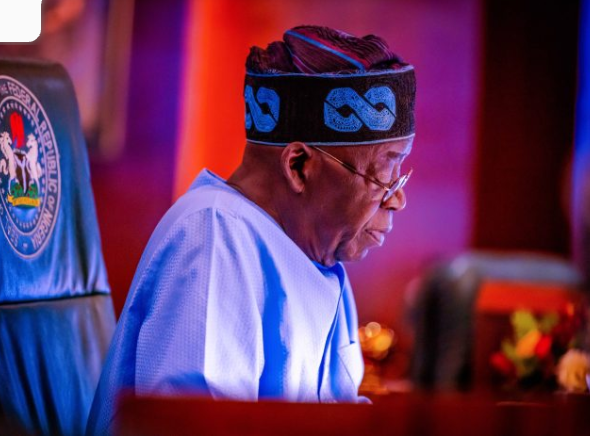
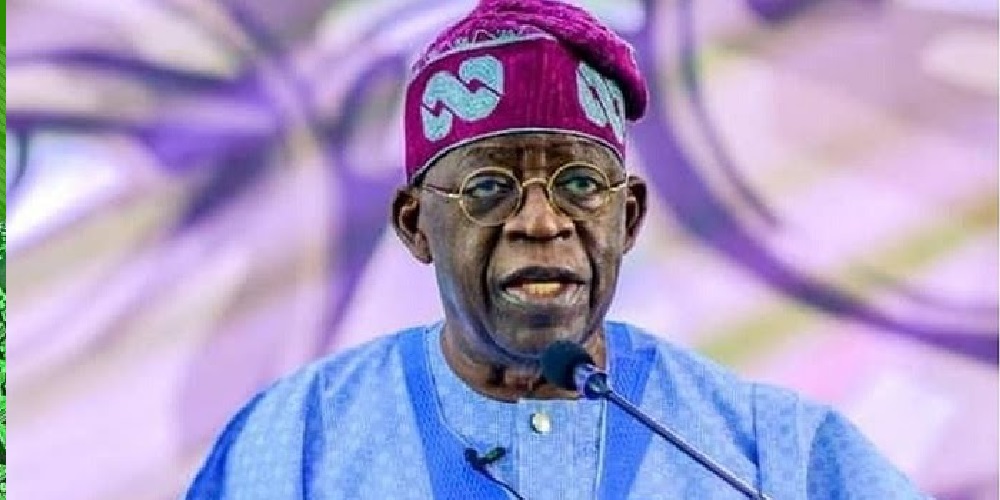
A year into President Bola Tinubu’s tenure, the infectious optimism of liberty, economic progress, security, and well-being heralding his inauguration on May 29, 2023, has turned to dying embers. In the President’s first year, all Nigerians see is hopelessness, misery, privations, and pain. The despair is evident in the numbers: the cost-of-living crises, hyperinflation, joblessness, and naira depreciation.


Amidst the supercilious backslapping in government circles, poverty, and bloodshed are intensifying. Tinubu should retrace his steps in the remaining years of his tenure to bequeath a redoubtable legacy to the country.

Under Tinubu, Nigeria is a harsh contrast to Abraham Lincoln’s “Democracy is the government of the people, by the people, for the people.” Instead, only a tiny band of politicians, their families, and sycophants are laughing all the way to the bank. From his “subsidy is gone” pronouncement on Inauguration Day, which cancelled petrol subsidies, chronic hardship has defined his tenure.

From N187 per litre pre-Tinubu, petrol now sells between N568/l and N800/l. Without well-implemented safety nets, most citizens have found it difficult to cope with the astronomical rise in transportation and food costs. This has heightened poverty. It stood at 46 per cent in 2023 or 104 million citizens, per the World Bank.

Advertisement

Two other policies have combined to bankrupt citizens. The first is the merger of the naira rates through floatation. The second is the cancellation of subsidies for Band A electricity consumers in April.

Consequently, the naira has depreciated significantly. It exchanged at N464 per $1 in May 2023, plunged to N1,900/$1 early in 2024 before trading at around N1,400/$1 currently despite a raft of artificial policies to shore up its value. By February, it had lost 68 per cent of its value.

The impact goes beyond Nigeria. Formerly reckoned as Africa’s largest economy, Nigeria has ceded the top three continental slots to South Africa, Egypt, and Algeria respectively. It is now fourth in Africa with a GDP of $252.73 billion on the back of currency depreciation.

From N68 per kilowatt-hour, the tariff for the Band A segment climbed to N225/kWh before dropping to N206.80/kWh in May.

Advertisement

On the monetary policy side, the Central Bank of Nigeria has moved the benchmark interest rate from 18.50 per cent in May 2023 to 26.25 per cent, after three consecutive hikes in 2024.

All this has jerked up prices, though the Tinubu government is yet to implement a wage review. He met the national minimum wage of N30,000 per month. Businesses are complaining about the increased costs of borrowing funds.

In April, inflation spiked to a 28-year high of 33.69 per cent. Food inflation worsened to 40.63 per cent. Imports are priced steeply because of the depreciation of the naira. This is devastating to everyday living. Medicines are out of reach of citizens.

Tinubu, who has fulfilled his lifelong ambition to govern Nigeria, assumed office during the economic downturn. But there was hope initially of a revival after a largely successful eight-year tenure in Lagos State (1999-2007). In truth, that optimism is blowing in the wind.

Advertisement

Under him, governance is not much different from the preceding era of locusts supervised by the clueless Muhammadu Buhari (2015-2023). Abductions and killings are an epidemic. This is reminiscent of the Biafra Civil War (1967-1970).

While 63,111 died in violence on Buhari’s watch, 6,931 were killed in Tinubu’s first 10 months. Beacon Security and Intelligence counted 2,583 killings in the first quarter under Tinubu. SBM Intelligence reported 4,777 abductions when Tinubu assumed office to early May 2023. The worst-hit states are Plateau, Benue, Kaduna, Niger, Zamfara, Kogi, Katsina and Borno.

refineries, the airports, seaports, the Ajaokuta Steel Company, and the railways. This will save the government on running costs and boost foreign direct investment.

The President should redirect focus on security. Without this, farming and business will continue to depress. There is a growing trend of brutality among the security agencies. They are abducting journalists with impunity. This is against the rule of law. Nigeria is no longer under a military regime so Tinubu should rein in their excesses.

Advertisement

His cabinet is bloated. He should have a compact team of performers to reduce the cost of governance.

Tinubu is toeing the path of his predecessors on restructuring. This is ludicrous. It is wishful thinking to believe that Nigeria will make progress without restructuring. The President should make restructuring a priority. It will unleash Nigeria’s productive capacity, rebuild trust in governance, improve security, and de-escalate inter-ethnic tensions.

Punch

Advertisement
Continue Reading
Advertisement
Click to comment

Warning: Undefined variable $user_ID in /home/naijuinz/public_html/wp-content/themes/zox-news/comments.php on line 49

You must be logged in to post a comment Login

Leave a Reply

News

Osun DECIDES:INEC starts distribution of reprinted ballot papers to party agents in 30 LGAs

Published

on

ADVERTISEMENT
Zoom Ad
ADVERTISEMENT
Zoom Ad


The Independent National Electoral Commission (INEC) on Thursday began the distribution of reprinted ballot papers and result sheets to agents of all participating political parties across the 30 Local Government Areas (LGAs) of Osun State ahead of Saturday’s governorship election.

The exercise commenced at the Commission’s state office in Osogbo on Thursday night, following INEC’s compliance with a Federal High Court judgment ordering the inclusion of the Social Democratic Party (SDP) governorship candidate, Dr. Francis Olugbenga Ajala, and his running mate, Faseke Babajimi Oladipo, in the election.

The Federal High Court, Abuja, had on July 22, 2026, delivered judgment in Suit No. FHC/ABJ/CS/344/2026, directing INEC to recognise, accept, upload, process and publish Ajala’s candidature for the August 15 governorship election.

Advertisement

INEC complied with the judgment on Wednesday, August 12, 2026, leading to the reproduction of the ballot papers and relevant result sheets to reflect the inclusion of the SDP candidates.

The reprinted materials were subsequently moved to the Osun State INEC office in Osogbo, where agents of the participating political parties gathered on Thursday night to witness the distribution process.

Addressing journalists at the venue, the Osun State Resident Electoral Commissioner, Mrs. Oluwatoyin O. Babalola, explained that the exercise would commence with the signing of the result sheets by the party agents before the distribution of the materials to the respective Local Government Areas.

Babalola said the materials had already been customised according to the polling units for which they were intended, with the names of the polling units clearly indicated on the documents.

Advertisement

“Everything is going to be customised. Believe it. All the results, they already have the name of the polling units on them,” the REC told journalists.

She explained that the customisation was intended to ensure that the materials could be properly identified and matched with their designated polling units during the electoral process.

According to her, the signing by party agents was an important part of the documentation process preceding the distribution of the materials.

“If you are signing, you see what happened,” she said, while explaining the procedure to the agents and journalists at the venue.

Advertisement

The REC also indicated that the materials had been prepared in a manner that would allow the Commission and the political parties to keep track of the documents allocated to the various areas.

The exercise was not, however, a distribution of the materials directly to polling units.

Rather, the reprinted ballot papers and result sheets were being distributed to agents of the participating political parties for the respective 30 Local Government Areas of Osun State.

The party agents were present at the INEC office to witness the process, beginning with the signing of the result sheets before the materials were handed over for the respective Local Government Areas.

Advertisement
Continue Reading

News

Osun election: INEC records 1.9million PVC collections

Published

on

ADVERTISEMENT
Zoom Ad
ADVERTISEMENT
Zoom Ad


The Independent National Electoral Commission (INEC) has disclosed that 1,906,390 Permanent Voter Cards (PVCs) have been collected ahead of Saturday’s governorship election in Osun State.

The figure represents 81.50 per cent of the 2,339,233 registered voters in the state, according to a statement issued on Thursday by INEC National Commissioner and Chairman of the Information and Voter Education Committee, Mohammed Haruna.

Haruna said the remaining 426,842 PVCs, representing 18.50 per cent of the registered voter population, had been securely deposited with the Central Bank of Nigeria (CBN), in line with the Commission’s established procedure.

Advertisement

INEC also disclosed that 6,101 voters whose PVCs were damaged, defaced or lost applied for replacement and subsequently printed downloadable copies of their voter cards.
The Commission said it had published a polling-unit-by-polling-unit breakdown of the collected PVCs on its official website.

INEC further assured political parties, civil society organisations, the media and residents of Osun State of its preparedness to conduct a free, fair, credible, transparent and inclusive election on Saturday, August 15, 2026.
Police deploy thousands for election security
Meanwhile, security agencies have intensified preparations for the governorship election, with the Nigeria Police Force deploying thousands of personnel across the state’s 30 local government areas.
Police sources and official statements indicate that at least four police officers will be deployed to each of the 3,673 polling units across the state.
The deployment, however, excludes personnel from other sister security agencies expected to participate in the election security operation.
With the election just hours away, political parties and candidates are making final preparations while voters await the outcome of what is expected to be a closely watched governorship contest.

Continue Reading

News

Uncovered: N24bn Ghost Workers’ Pension Remains Unclaimed Two Years After ICPC Seizure

Published

on

ADVERTISEMENT
Zoom Ad
ADVERTISEMENT
Zoom Ad


Two years after the Independent Corrupt Practices and Other Related Offences Commission (ICPC) uncovered and seized N24 billion allegedly meant for the payment of ghost workers’ pensions, no individual or organisation has come forward to claim ownership of the funds or challenge the seizure in court.

ICPC Chairman, Dr Musa Aliyu, disclosed this on Thursday in Abuja while delivering a lecture titled, “Anti-Corruption Reforms, Economic Stability and Effective Communication,” organised by Economic Confidenti.

Aliyu said investigations by the commission had uncovered cases in which unpatriotic civil servants allegedly enrolled their children and other family members as ghost workers on government payrolls.

Advertisement

According to him, one individual was found to have enrolled 14 members of his family on the payroll and was allegedly collecting 13 salaries.

“Up till now, no single person has come out to claim the N24 billion or gone to court to claim ownership of the money,” Aliyu said.

He said the commission would continue to investigate payroll fraud and other financial irregularities in government institutions to protect public funds.
The ICPC chairman described corruption as one of the greatest challenges confronting Nigeria, stressing that the menace must be tackled with seriousness if the country is to achieve sustainable economic progress.

He called for stronger enforcement of anti-corruption laws, noting that the country continues to lose significant amounts of money through bribery and other corrupt practices.

Advertisement

Aliyu also expressed concern over the involvement of some public officials in economic crimes, despite their responsibility to serve as role models for younger Nigerians.
He said some officials allegedly use consultants as intermediaries to facilitate corrupt activities and conceal the movement of illicit funds.
Recalling a major case uncovered by the ICPC in 2012, Aliyu cited an alleged diversion of $65 million released for the construction of houses for public officers to address accommodation challenges.

He said instead of using the funds for the intended purpose, those involved allegedly diverted the money and abandoned the housing project.
The ICPC chairman warned that pervasive corruption could discourage both local and foreign investment, stressing that investors would be reluctant to commit their resources to an environment where corruption thrives.
He said the commission would henceforth place greater emphasis on strengthening weak government systems that create opportunities for fraud and undermine economic growth.
Aliyu also referred to the recent discovery of a fake government agency, saying such an organisation should have been detected earlier if the country’s institutional systems were sufficiently robust.

He further identified the insertion of unexecuted projects into government programmes as another consequence of weak systems, saying the practice deprives Nigerians of value for money.

According to him, contractors found to have been awarded such projects would be compelled to execute them once identified.
To build a stronger culture of integrity, Aliyu urged Nigerians to begin anti-corruption campaigns from the primary school level, saying children should be taught early about the dangers and consequences of corruption.
He said such efforts would help raise a generation that would reject corrupt practices and demand accountability from public officials.
“Nigeria can capture corruption and a solid foundation will come up for the country on integrity. The damaging effect of corruption is too much and must not be allowed to thrive,” he said.
Aliyu added that the ICPC would focus on addressing systemic weaknesses that facilitate corruption in areas including constituency projects and payroll management, while working to sanitise the public sector.

Advertisement
Continue Reading

Trending

Copyright © 2024 Naija Blitz News