

News
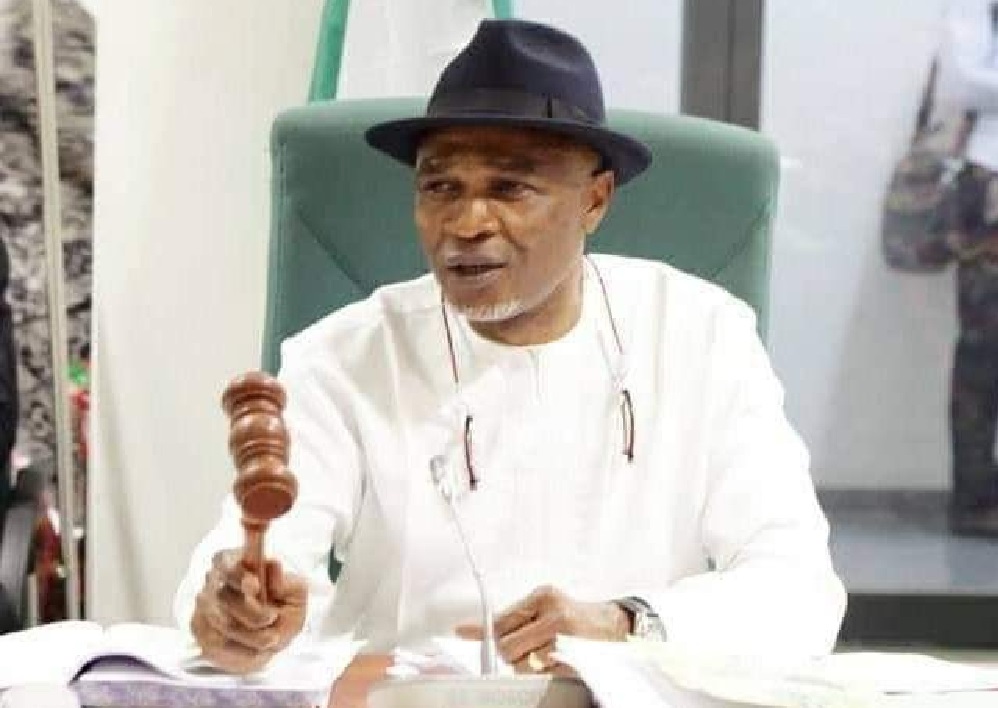
Shift to Parliamentary system of govt: We’re advocating for an homegrown system that’ll benefit all Nigerians-Rep Chinda+Video
- /home/naijuinz/public_html/wp-content/plugins/mvp-social-buttons/mvp-social-buttons.php on line 27
https://naijablitznews.com/wp-content/uploads/2024/04/KINGSLEY-CHINDA-998x600.jpg&description=Shift to Parliamentary system of govt: We’re advocating for an homegrown system that’ll benefit all Nigerians-Rep Chinda+Video', 'pinterestShare', 'width=750,height=350'); return false;" title="Pin This Post">
- Share
- Tweet /home/naijuinz/public_html/wp-content/plugins/mvp-social-buttons/mvp-social-buttons.php on line 72
https://naijablitznews.com/wp-content/uploads/2024/04/KINGSLEY-CHINDA-998x600.jpg&description=Shift to Parliamentary system of govt: We’re advocating for an homegrown system that’ll benefit all Nigerians-Rep Chinda+Video', 'pinterestShare', 'width=750,height=350'); return false;" title="Pin This Post">
By Gloria Akiba
…says we’ve studied all the demerits and merits of our past parliamentary system
…insists cost of governance will be drastically reduced if we have our own model govt

…the situation now is motion without movement
One of the advocates of a shift from Presidential to Parliamentary system of government in Nigeria, the minority parties caucus leader, Rep Kingsley Chinda has said what is being proposed is an home grown system of government that will benefit all Nigerians from all walks of life.
The Rivers born federal lawmaker representing Obio/Akpor federal Constituency made this disclosure in an interactive session with fellow proponents at the weekend in Abuja.
Hear him:
On recent reactions against the proposed shift by 2031, Chinda said:
“I am one of the strong proponents of the shift from presidential to a homegrown parliamentary system of government.
“Now, yes, we have listened to some criticisms, particularly that of Governor Fashola, who is of the opinion that we should tell Nigerians why the first republic failed and that should be the starting point.
“But I want to assure you that we are not building castles in the air. We took our time to look at the system of government, to look at the problems within the polity, and how, as parliamentarians, we can assist in resolving some of these problems through legislative intervention.
“And then we felt that the entire system that we are practicing is skewed towards failure, one, considering our background, our experiences, our diversity, which, of course, should be an advantage to us.
“And then if you look at the places where systems of government are copied from, they consider their culture, they consider their beliefs; they consider their society in adopting a system of government.
But in Nigeria, we either copy from the United Kingdom or we copy from the United States, without recourse to our background. And that is why we are asking for a homegrown system of government.
“But because we don’t have, perhaps, the proper word to describe it, what we envision is closer to a parliamentary system. And so today, we are asking that we amend our constitution to introduce a homegrown parliamentary system of government.
Now, what led to the failure of the First Republic, whether we had studied it? I will answer Governor Fashola by saying, yes, we have studied it. We have studied deeply the First Republic, the conduct, the successes, and the failure.
“And in doing that, we have even moved to Kano to meet with the only surviving member of the First Republic, Alhaji Dandata and we asked him this question directly. Why did it fail?
And some of his responses were, one, that during the First Republic, many of them were not very well informed as to the system, the rudiments, and the practice. And so to him, that one of the reasons why the parliamentary system failed was ignorance.
“Two, our various tribes and religion and belief in them and then the individual attitude of politicians of that day, which is still in place till today, concerning the issues of power and exercise of power and abuse of discretion.
“And then the constitutional provision that has to do with the sharing of power between the centre and the region. That all these culminated, mainly the power tussle and struggle, culminated into the crisis we had in the South West, which led to the failure of the First Republic.
“And so having heard this, we have also taken into consideration these issues and that’s why we keep saying that it would be wrong for you to introduce a system of government without taking cognizance of your background, where you’re coming from.
“I give you an example. Ask a Nigerian public office holder to exercise discretion today on an issue. He will be influenced by either religion or tribe. Very few public officers in Nigeria will exercise discretion with a neutral background, dispassionately.
“Now, the same public officer, if he is a Briton, asks him to exercise the same discretion, or an American, most often they will look at the nation first in exercising that discretion, most often.
So because we have this inherent issue, it will be difficult for us to import laws that have to do with discretion and bring them hook, line, and sinker to Nigeria and expect it to succeed. It will not succeed.
“We must tweak it to consider our peculiar background. And that’s why we say the time has come for us to move forward.
We’re talking about cost of governance, and government after government has been making attempts to take care of that, either by merging agencies of government or by slashing allowances and salaries of public office holders. How far has that taken us?
“As far as we are concerned, it’s motion without movement. We’re still at the same spot. And so we must do something fundamental if we want to move forward.
And what is that? We have an unwieldy government that is too large for us as a nation to make progress.
“You have the Office of the President and the Office of the Vice President. You have the Office of the Senate President and Deputy Senate President. You have the Speaker and Deputy Speaker. These offices, all of them, come with different budgets.
“You have 360 members of National Assembly. You have the senators. You go down to the states, the same. You have Executive arm, very large.
I can tell you as a parliamentarian today that, well we can decide to say 50% of the salary of every member of parliament will be saved. That will not change much in terms of cost of governance in the country.
“But if we have a situation which we are proposing, commencing from the local government, we try it and see the problems and the successes. If we succeed at the local government level, we move to the next stage, to the state.
And as we are doing this, we will make consequential amendments to relevant laws and then end up at the national. You elect Legislators. There will be no election for the Executive. First, you have saved so much money.
“You can calculate how much we spend on presidential, governorship, and council chairmanship elections.
Now, amongst the councilors, they will elect a chairman and perhaps an assistant, the deputy chairman, amongst themselves. The implication is that any ward that is sending anybody as a councilor will send a chairmanship material as a councilor, unlike what we have today.
“Anybody that is sending any member to the National Assembly will send a member that has the capacity to be the prime minister of the country.
And so you cut down one, number of elections, cost of election, which is the foundation first.
And if you go into governance, as we propose that we have a prime minister who will be the head of the government and a president from Senate who will be ceremonial head.
“What it means is that as a prime minister, you earn the salary of a parliamentarian that you elected as, and you only have perhaps the allowance to function in the office of the prime minister.
Accountability and stewardship is one big problem in our country today, not just corruption.
“You have a situation where different arms of government, the Parliament and the Executive, will appear not to be on the same trajectory. We don’t even know what the other arm is doing.
Recent example, the issues of Central Bank movement to Lagos, Parliamentarians who are not fully informed and aware of the need for that government policy.
“If you have the minister in Parliament and you have a prime minister that will brief the parliament at least every week or once a month, every Parliamentarian will be part and knowledgeable in government policies.
“And then it will be easier and faster for government policies to be executed. It will be less expensive.
When it comes to issues of accountability, we still felt that, look, our laws today, the Nigerian constitution, can allow you exercise discretions that are not morally correct but legally correct. It’s not unlawful, but morally it is wrong.
You have a situation where our president can govern this country for four years without talking to Nigerians. And there is no constitutional provision against that.
“And that’s why in the last government you had the Garba Shehu talking to us. Today you have Ngelale talking to Nigerians. Even during the COVID era, this country was virtually begging her president to address her.
“Other nations hear from their president every month, some weekly. We were begging for it. That is the laws that we have, the system of government that we have.
“And yet people say the Nigerian president is about the most powerful in the world because of the type of presidential system that we are practicing.
Even the American system that we have copied from, you are aware that the Vice President of the United States is the President of the Senate. So why do we have all these offices?
“We spend so much on them. And then we at the same time say that we want to cut down the cost of governance.
Look at our budget. What percentage do we have for capital projects? And what percentage do we have for recurrent? It’s difficult for us to make progress.
“Yes, as difficult as it might appear, as new as it will sound, we think that if we are serious minded, we should be ready to make the sacrifice and leave our comfort zone for the country to make progress.
And that’s why we believe that the time has come for us to start considering a homegrown parliamentary system of government that will suit our country without looking at what others practice outside because the circumstances are not exactly the same.
“So in answer to that question, whether we have considered the reasons why the First Republic failed, yes, we have. And we still believe that a homegrown parliamentary system is the best for us as it stands today.
But we have to take it grade by grade, step by step, from the lowest until we get to the presidential level.
On former President Olusegun Obasanjo’s advocacy for Afro democracy, Chinda said: Obasanjo agreed with us that the current presidential system will not help us much.
And so he is calling for Afro-Democracy, that is African democracy and it is still the same idea, the same ideology that we are proposing.
“What President Obasanjo is saying is that we need an African-grown democratic system that will put into consideration the African culture, the African circumstance, African condition.
But for us, charity begins at home. And that was what we exactly told him. We believe in the Afro-democracy, yes, but charity begins at home.
In that Afro-democracy, we need a Nigerian-grown democratic system.
” And so whilst he is looking at it from the African perspective, perhaps because of his level, he’s no longer a Nigerian leader, he’s an African leader, he’s a universal leader. So he could look at it from that perspective.
“We are representing Nigerians. We are bringing it down home. So we are on the same note, because when we had an interaction with him, we understood ourselves.
And we told him that for us, as parliamentarians of Nigeria, let us start from Nigeria. And then if it works, no doubt other African countries will want to copy. Their system might not be exactly the same with the Nigerian system, but it should be a home-grown democratic system.
On whether the homegrown system has capacity to pull down corruption, he said: “No doubt, it’s not going to be a magic wand that once you introduce it, all the ills of society will be gone. But then it is a better system to check corruption compared with what we have presently.
Now I give you an example. The issues where you have ministers, permanent secretaries, members run after them on oversight function, every now and then, and then you get little or no result.
What is the whole idea of oversight function? You need to monitor expenditure to ensure that monies budgeted are used for the purpose. If you have them amongst you, accountability is higher. It is easier to check them. They know that they are there every week.
“And so again, one of the criticisms that people talk about is that it will lead to instability of government. But if the society is better, there is stronger check. And I tell you that it will also not lead to instability because the whole fear of instability is that it is easy to remove the prime minister.
“The prime minister should do the writing and he will not be removed. And so if you find a prime minister that is corrupt, he knows that it is easy to remove him, unlike the situation we have now.
You can be corrupt and still remain in your office. Nigerians can criticize, Nigerians can complain, but they cannot do much to remove you.
“But this system is self-cleansing. It doesn’t take much to remove you if you are corrupt. And so that will make people in public office to sit up.
And it’s a system that will be a hands-on for all public office holders. It’s not going to be a place for retirement and all that, you know people who are tired, you want some rest, you come up here and from here you can retire. It’s not going to be that kind of place.
Asked whether the proponents have verified documents of past republis, Chinda affirmed saying: “Yes, we have also looked at the copies of the constitution or the laws that were used in the First Republic. There are some, if you look at the conference report, which is very comprehensive, there are some of those laws that you need to reintroduce, but you’re not going to bring back the entire constitution. It will not work.
“There are some laws in our current constitution that are still valid. That’s why I said that over time we’ll be having consequential amendments of our laws. So some laws will go, some new ones will come. Some of the old laws that are fit for purpose could also come in and you tweak them to consider our local circumstance.
News
Presidency, National Assembly Renew Alliance on Reforms as Abbas Defends 10th NASS Record
By Gloria Ikibah
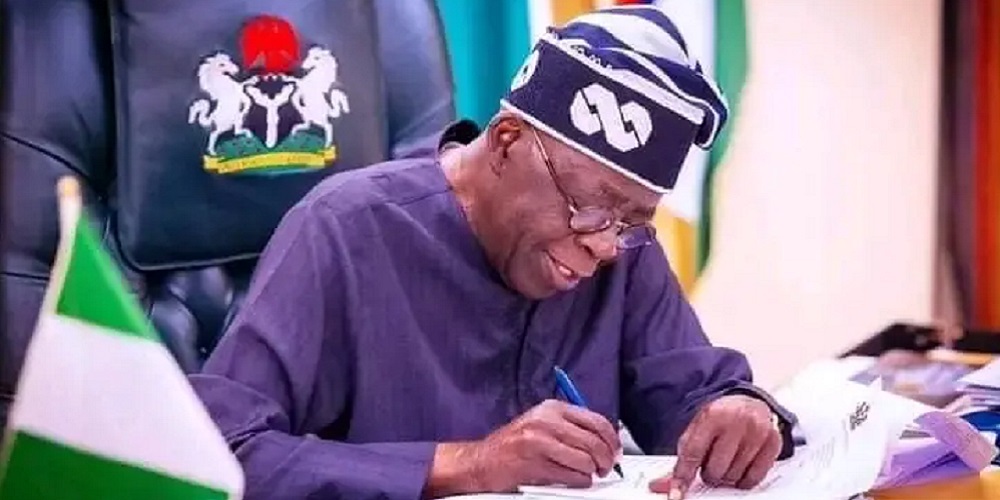
The Presidency has reaffirmed its commitment to working closely with the National Assembly to advance security, economic recovery and good governance, insisting that cooperation between both arms of government is essential to delivering the Renewed Hope Agenda.
The assurance came on Tuesday as the House of Representatives opened its National Assembly Open Week in Abuja, an initiative aimed at showcasing the work of parliament and strengthening public engagement under the theme, “Three Years of the 10th National Assembly: Advancing Transparency, Inclusion and Reform.”
Representing President Bola Tinubu, the Chief of Staff, Rt. Hon. Femi Gbajabiamila, said Nigerians expect government institutions to work together in the national interest, while stressing that the Open Week should serve as more than a ceremonial event.
He said: “An Open Week must be more than the ceremonial opening of the gates of Parliament. It should be an invitation to scrutiny, dialogue and partnership.
“Citizens should be able to follow how laws are made, understand how public resources are appropriated and see how legislative oversight protects the national interest.
“Equally, the legislature must continue to hear from young Nigerians, women, persons with disabilities, civil society, the private sector, professional bodies and communities across the federation.”
Gbajabiamila praised the leadership of the National Assembly, led by Senate President Godswill Akpabio and Speaker of the House, Tajudeen Abbas, for reforms undertaken since the inauguration of the 10th Assembly.
He emphasised that collaboration between the Executive and Legislature strengthens, rather than weakens, democracy.
“While the Executive and the Legislature are separate arms of government, they share one ultimate mandate which is to improve the lives of the Nigerian people. Constructive cooperation does not diminish legislative independence, nor does robust debate amount to institutional conflict. Our democracy is strengthened when both arms engage with mutual respect, constitutional fidelity and a clear focus on results.
“As we reflect on the first three years of the 10th Assembly, I encourage us to look beyond the record of activities to the measure of impact: laws that solve real problems; budgets that translate into visible development; oversight that improves performance; and representation that renews citizens’ confidence in government.
“The Presidency remains committed to a productive relationship with the National Assembly in pursuit of security, economic renewal, social justice and shared prosperity under the Renewed Hope Agenda. Nigerians expect their institutions to work together.
“I congratulate the 10th National Assembly and all partners who have made this Open Week possible. May this gathering deepen public trust, strengthen democratic accountability and remind us all that public office is, above all, a public trust”, he added.
In his keynote address, Speaker Abbas Tajudeen defended the performance of the House over the past three years, revealing that lawmakers had processed 2,747 bills, with 363 passed by the National Assembly and 72 already signed into law by President Tinubu.
He said the figures represented the most productive legislative record since the return to democratic rule in 1999.
He said: “These were not lines upon a page but measurable and lasting change. Those figures represent the highest for any Assembly since 1999.”
According to the Speaker, one of the landmark laws guarantees interest-free student loans, while others have overhauled revenue administration and created regional development commissions.
“One of those laws now offers young people interest-free student loans, so that no Nigerian student is turned away from a lecture hall for want of means.
“Another has reformed how the nation raises and shares its revenue. Others have created commissions to carry development into every region of the Federation.
“The landmark statutes are only part of our work: more than 800 citizens have petitioned this House, and we have already brought hundreds of those matters to resolution. That, in my estimation, is this House at its most faithful.
“Where we have served the nation well, the Scorecard records it. Where we have fallen short, it records that also. At our inauguration in 2023, we asked to be measured against our own promises, and we meant it”, Abbas added,
The Speaker described the Open Week as an opportunity for direct engagement between parliament and the public.
“This week was designed not as a lecture but as a national conversation, and at every table, a place has been reserved for the citizen.”
The Speaker also defended the Assembly’s support for the Tinubu administration’s economic reforms, saying parliament had provided the legal framework required to implement key policies.
“President Bola Tinubu asked us to accept a difficult but necessary course of reforms. They reached into the very foundations of our economy, into how it is financed, how our currency is valued, and how our common revenue is shared and invested in our people.
“Every policy of the Executive still had to become law, to pass through appropriation, and to withstand legislative scrutiny. That is the indispensable work this House has performed.
“We laid the legal foundation for the tax reforms that will render our revenue fairer for generations to come.
“We enacted budgets directing resources toward infrastructure, toward power, and toward the human capital upon which all else depends.
“We gave statutory force to the reform of student financing. The President furnished the vision; the National Assembly furnished the laws that render the vision enforceable. That is the true measure of legislative support, and it is worth far more than applause”, he stated.
On security, Abbas maintained that progress was being made despite continuing challenges.
“Nothing tests a government, or a parliament, so severely as the safety of the citizen.
“Let me speak plainly: our security forces are gaining ground, and we will not rest until every Nigerian is safe.”
The Speaker also dismissed claims that the National Assembly merely rubber-stamps Executive proposals.
“Some assume, in good faith, that when a President signs a Bill quickly, then the legislature is a rubber-stamp. That is not how the work is done.
“Swift assent is usually the reward of months of committee work, completed long before the cameras arrive.
“Even the Congress of the United States has, in urgent moments, passed sweeping legislation in a single day, and no serious observer called it surrender.
“Speed built on hard preparation is the mark of a Parliament that is working, not one that has stopped thinking.”
He urged Nigerians to become more involved in the legislative process.
“My appeal to the citizen who observes us today is therefore a simple one: draw closer. Acquaint yourself with the true workings of your Parliament.
“Read a Bill before you pass judgement upon it. Submit your memoranda when we call for them. We take your submissions seriously and consider your input in amending laws”, he added.
Senate President Godswill Akpabio said the National Assembly remained focused on supporting government through legislation and budget approvals that improve the economy.
“I also insist that any sort of finance or those running our economy also take care of our contractors across the board so that money will be released to the society for things to function”, he said.
He also praised President Tinubu’s relationship with the legislature.
“He has visited us more times than any president. Whether it is June 12th or whether it is time of budget, he comes here in person and always very excited.
Executive Director of the Policy and Legal Advocacy Centre (PLAC), Clement Nwankwo, acknowledged the Assembly’s progress in areas including constitutional amendment, electoral reform and citizen engagement, but challenged lawmakers to strengthen oversight of the Executive.
“The Legislature is at its strongest not when it agrees with the Executive, but when it faithfully discharges its constitutional duty to scrutinise executive action, protect public resources and ensure that government remains accountable to the people”, he said.
Nwankwo urged lawmakers to conclude the constitutional review process, strengthen Nigeria’s electoral laws, pass the Special Seats Bill for Women, deepen transparency and ensure oversight delivers measurable benefits for citizens.
Former Speaker Aminu Masari commended the Open Week initiative, describing it as evidence that the House was living up to its reputation as the “People’s House.”
Emeritus Archbishop of the Catholic Archdiocese of Abuja, John Cardinal Onaiyekan, reminded lawmakers that their legitimacy comes from the electorate and urged them to place the interests of Nigerians above every other consideration.
Executive Secretary of the National Assembly Library, Hon. Henry Nwawuba, said the Open Week reflects parliament’s commitment to openness and accountability, while noting that it coincides with the second anniversary of the National Assembly Library, established by President Tinubu to preserve Nigeria’s legislative history and improve public access to parliamentary information.
News
Reps Reopen State Police Debate, Drop Earlier Bill for Tinubu’s Executive Proposal
By Gloria Ikibah
The House of Representatives on Tuesday rescinded its earlier resolution on the proposed constitutional amendment to establish state police, paving the way for fresh consideration of an Executive Bill transmitted by President Bola Tinubu.
Lawmakers unanimously voted to withdraw the earlier version of the legislation before immediately giving the President’s proposal a second reading, signalling a fresh phase in the long-running effort to create a constitutional framework for state policing.
The decision followed the adoption of a motion moved by the Chairman of the House Committee on Rules and Business, Rep. Francis Waive (APC, Delta), during plenary.
Waive said the motion was brought pursuant to Order Nine, Rule 6 of the Standing Orders of the House of Representatives.
He reminded members that the House had, on Thursday, 11 June 2026, approved amendments to several sections of the Constitution relating to the establishment of State Police Services.
According to him, the affected provisions include Sections 34, 35, 39, 42, 84, 89, 129, 153, 197, Chapter VI Part III, Sections 214, 215 and 216, as well as the Second and Third Schedules to the Constitution.
Waive also recalled that on 9 July, the House constituted a 12-member Conference Committee to harmonise its position with that of the Senate on the proposed legislation.
He, however, said fresh developments had made it necessary for lawmakers to revisit the bill.
He said: “New facts have emerged regarding the provisions of the Bill, which necessitate a critical review and reconsideration of its clauses to align with national security structure.
“Cognizant of the need to rescind the decision of the House on the passage of the bill and the constitution of the Conference Committee on the Establishment of State Police Services.”
When Speaker Abbas Tajudeen put the motion to a voice vote, members unanimously supported the proposal, effectively withdrawing the House’s earlier decision on the bill.
Shortly afterwards, the House considered an Executive Bill transmitted by President Bola Tinubu seeking to amend the Constitution to establish a constitutional framework for State Police Services.
The proposed legislation passed second reading after a letter from the President was read on the floor by the Speaker.
In the letter, Tinubu said the Executive Bill builds on the extensive legislative work already carried out by the House while introducing additional safeguards to strengthen the proposed policing framework.
According to the President, the amendments are designed to ensure that the creation of a dual policing system can respond more effectively to Nigeria’s changing security landscape.
“The proposed legislation is a critical component of our administration’s strategy to reorganise Nigeria’s security architecture to better protect our citizens, and I am confident that the House of Representatives will act quickly to consider and pass this bill.
“While I look forward to expeditious consideration of this submission by the House of Representatives, please accept, Rt. Honourable Speaker, the assurances of my consideration and best regards”, Tinubu stated.
News
NSITF presents 78 beneficiaries with prostheses
By Kayode Sanni-Arewa
The Nigeria Social Insurance Trust Fund (NSITF) has presented prostheses for different degrees of injuries to 78 beneficiaries in continuation of its Prosthesis Provision Exercise.
Managing Director, Barrister Oluwaseun Faleye, at the formal presentation of the final report on the current phase of the exercise in Abuja, said “the cooperation and commitment demonstrated by the prosthesis providers, beneficiaries, employers, and the monitoring team greatly contributed to the successful completion of this intervention.
“The providers also demonstrated flexibility by accommodating special clinical needs, including the provision of a hip disarticulation prosthesis where necessary”.
Represented by the Executive Director (Operations), Mojisola Alli Macaulay, the MD explained that following the commencement of the prosthesis provision exercise in April 2026, the Claims & Compensation Department of NSITF monitored the implementation of the programme from inception through to its successful completion.
In his words, “Sequel to the interim report submitted previously, I am pleased to report that the prosthesis provision exercise has now been successfully concluded. All identified beneficiaries under the approved programme have been assessed, fitted with the appropriate prostheses, trained on their use, and discharged after satisfactory evaluation.”
According to him, “Where beneficiaries could not participate due to reasons such as inability to establish contact, refusal to attend after notification, or death, they were replaced from the supplementary list to ensure the successful completion of the exercise”.
The various categories of prostheses successfully provided include: Above-knee prosthesis: Total beneficiaries 8, all 8 beneficiaries satisfactorily discharged; Hip Disarticulation Prosthesis: Total beneficiary 1 (provided for a beneficiary whose assessment indicated a hip disarticulation rather than an above-knee amputation), 1 beneficiary satisfactorily discharged
Below knee prosthesis: Total beneficiaries 11 (All 11 beneficiaries satisfactorily discharged), Below elbow prosthesis: Total beneficiaries 12 (All 12 beneficiaries satisfactorily discharged); Above elbow prosthesis: Total beneficiaries 5 (All 5 beneficiaries satisfactorily discharged), Trans-humeral prosthesis: Total beneficiary 1 (1 beneficiary satisfactorily discharged).
Silicon partial hand prosthesis: Total beneficiaries 40 (All 40 beneficiaries satisfactorily discharged), Total beneficiaries scheduled for prosthesis provision 78, Total beneficiaries duly discharged 78.
Also speaking at the event, the General Manager (Claims and Compensation), Nkiru Ede-Ogunnaike, noted that throughout the exercise, beneficiaries underwent assessment, measurement, prosthetic fabrication, fitting, gait and functional training, evaluation, and final discharge.
“The prostheses were successfully fitted, and beneficiaries expressed satisfaction with the services rendered. Discharge letters stating completion and warranty with the beneficiaries’ satisfaction forms have been duly completed and filed in their respective dossiers.
“In conclusion, the prosthesis provision programme achieved its intended objectives and has been completed successfully. The exercise has significantly improved the mobility, functionality, and quality of life of the beneficiaries while fulfilling the Fund’s mandate of providing appropriate rehabilitation support to eligible employees who sustained work-related disabilities”.
Speaking on behalf of all the beneficiaries, Solomon Sunday, a staff of Zodoson Industries in Abia State, praised NSITF for giving them their lives back.
He stated that most of them were depressed and frustrated with life after their accident before NSITF came into the scene to redeem their lives with prostheses which have given them the opportunity to live normal once again.
In his words:” we are deeply grateful to the fund and appreciate NSITF for all they have done for us and have been doing, you can see how excited and happy l am as a young man who can look forward to a bright future and the fund has given me opportunity to acquire new skill to earn a living. Honestly, we are deeply grateful and thank God for using NSITF to change our stories.”
-
News9 hours agoSAD: UK based young Nigerian mum takes own life over mental challenges
-
News5 hours agoVIDEO: DAY 25 of Projects Commissioning in FCT: Watch Wike’s brief dancing steps
-
News9 hours agoOrire: Nigerian Army gives reasons why drones could not locate kidnappers
-
News14 hours agoUnited States Lobbying Firm Offers Asylum Support To Adeniyi Adeyemi Amid PFIPC Scandal
-
News14 hours agoArmy Hands Over Rescued Oyo Teachers, Pupils To Governor Makinde
-
Sports14 hours agoDutch Referee Rob Dieperink Dies Weeks After World Cup Removal
-
News14 hours agoTinubu Made Buhari President — And Buhari Returned the Favor, Gowon Reveals
-
News9 hours agoDAY 25 of Projects Commissioning in the FCT

Warning: Undefined variable $user_ID in /home/naijuinz/public_html/wp-content/themes/zox-news/comments.php on line 49
You must be logged in to post a comment Login