Economy
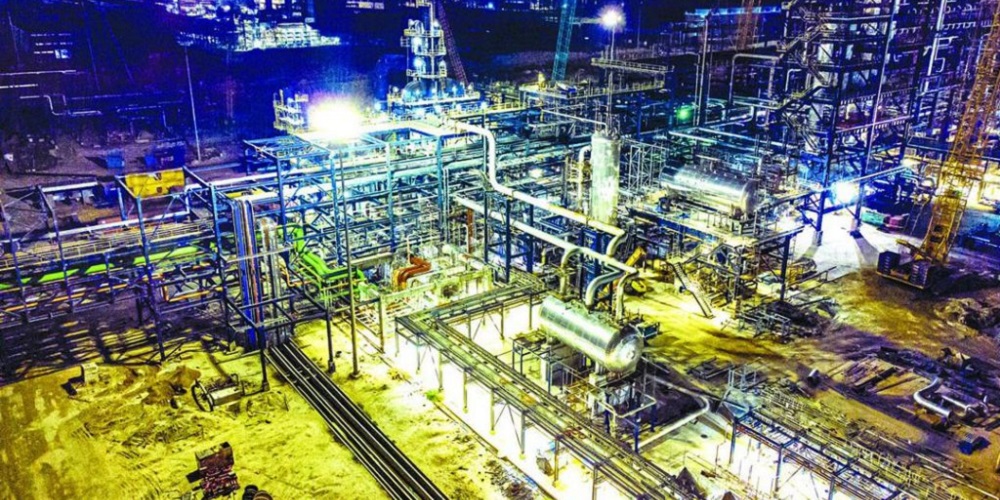
Ten completed refineries in Nigeria and their production capacity
Commercial crude oil production started in Nigeria in 1956 but local crude oil refining did not start until 1965 when the first crude oil refinery was commissioned.

The first set of refineries in Nigeria were government-owned.
However, since 2013, the federal government has been providing private sector players with licenses to build and own petroleum refineries.

The administration of President Buhari introduced the modular refinery initiative to ramp up the nation’s refining capacity and meet local demand.
Below is a list of the completed refineries in Nigeria and their capacity
Edo Refinery and Petro Chemical Company– This project is a wholly owned subsidiary of AIPCC Energy. It operates in two phases with capacities of 1,000 BPSD and 5,000 BPSD and has been commissioned and is fully operational. Work on Phase 2, which will have a capacity of 12,000 BPD, has already begun, with full operations expected to start in 2024.
Duport Midstream– Located in Edo State, this is a 2,500-BPD refinery that was completed in 2022 and started production in 2023.
Walter Smith refinery– The Walter Smith refinery is a 5,000-bpd oil refinery located in Imo State. The refinery started operations in 2020, with plans to expand its capacity to 50,000 bpd in the coming years.
OPAC Refinery, Delta state– This 10,000-bpd modular refinery located in Kwale, Delta state was completed in 2021 as part of the federal government’s effort to improve local crude oil refining.
Niger Delta Petroleum Refinery (Aradel)– The initial 1,000 bbls/day AGO topping plant was commissioned in 2010. Currently, the 3-train, 11,000 bbls/day modular refinery produces Automotive Gas Oil, Dual Purpose Kerosene, Marine Diesel Oil, High-Pour Fuel Oil, and Naphtha.
Old Port-Harcourt refinery– Built and commissioned in 1965 with a refining capacity of 60,000 barrels of oil per day. Then, it cost Shell BP around £12 million to build. The refinery operated above 50% of its design capacity, and throughout the 1990s, it experienced a gradual decline in output.
In March 2021, the federal government awarded the repair of the refinery to Tecnimont SPA- an Italian company that would carry out repair works in phases. In December last year, the Minister of Petroleum Resources, Sen.Keineken Lokpobiri announced the mechanical completion and flare startup of the refinery.
Kaduna refinery– This refinery has a capacity of 110,000 barrels per day (bpd). It was built in 1976 at a cost of $525 million. Like all other government-owned refineries, it has, over time, produced below its capacity. In 2021, the federal government approved a contract for the turnaround maintenance of the refinery at a cost of $586 million
Warri Refinery and Petrochemical Company (WRPC)– The 125,000-bpd capacity WRPC was built and commissioned in 1978 at a cost of around $478 million. The refinery has never achieved full capacity utilization as production has declined steadily except in the early 1990’s, during which there was a brief upswing in production.
In 2021, the federal government awarded the contract for the repair of the decrepit refinery to Saipem SPA at a cost of $897 million.
New Port-Harcourt refinery– In 1985, the federal government commissioned the New Port Harcourt refinery, built at a cost of $850 million. It has the capacity to refine 150,000 barrels of oil daily. The commissioning of the New Port Harcourt refinery increased the total refining capacity of the plants to 210,000 barrels per day.
Recent processing performance has fallen significantly below design capabilities in both refinery throughput and the yield of higher-value products. The refinery has rarely operated above 50% of its design capacity. During the 1990s, it experienced a gradual decline in throughput, resulting in a proportionate increase in the yields of lower-value fuel oil products.
The refinery was part of the $1.5 billion turnaround maintenance awarded by the federal government to Tecnimont SPA in 2021 to be fully completed in about 44 months.
Dangote Refinery and Petrochemicals FZE- This is a 650,000-bpd refinery located in Lekki, Lagos state. The refinery cost around $19 billion and was commissioned in May 2023. Oil refining started in late December 2023, and it started dispensing products to local and international markets as of May 2024.

Economy
See Dollar to Naira exchange rate today, April 23, 2026
The Nigerian Naira displayed a slight softening against the US Dollar in the early trading hours of Thursday, April 23, 2026, across both the official and parallel foreign exchange markets. Financial analysts are keeping a close eye on the market as mid-week demand for the greenback continues to influence rate stability.
In the Nigerian Foreign Exchange Market (NFEM), the Naira opened the trading day with a modest depreciation.
According to real-time data from the FMDQ Securities Exchange, the Naira is currently trading at an average of 1,351.59 NGN per 1 USD. This represents a marginal decline compared to the opening rates observed earlier in the week, where the currency had seen support near the 1,347 NGN level.
Market turnover at the official window remains a key point of focus for investors, as the Central Bank of Nigeria (CBN) maintains its policy of managed float to curb excessive volatility while ensuring essential sectors have access to foreign currency.
Parallel Market Trends
The informal or parallel market continues to trade at a significant premium compared to the official rate. Early morning reports from Bureau De Change (BDC) operators in major hubs such as Lagos (Ikeja and Broad Street), Abuja (Wuse Zone 4), and Kano suggest that the Dollar is being exchanged at rates ranging between 1,465 NGN and 1,480 NGN.
The spread between the NFEM and the parallel market currently sits at approximately 113 Naira, a gap that experts attribute to the unmet demand from small-scale importers and individuals seeking personal travel allowances (PTA) who often find the official channels more stringent.
Economic Factors and Outlook
The current pressure on the Naira is largely attributed to sustained demand for the Dollar to fund international trade obligations and service foreign debt. Additionally, the recent fluctuations in global oil prices—Nigeria’s primary source of foreign exchange—continue to dictate the strength of the nation’s external reserves.
As the trading session progresses into the afternoon, participants expect the rate to stabilize, though any significant intervention from the apex bank or shifts in market liquidity could alter the closing figures for the day. Market watchers are advised to monitor official closing reports for a comprehensive view of the day’s performance.
Economy
FG, states, LGs share N2.036trn March revenue
The Federation Account Allocation Committee (FAAC), has shared N2.036 trillion among the Federal Government, states and the Local Government Councils (LGCs).
The revenue was shared at the April meeting of FAAC in Abuja.
The N2.036 trillion total distributable revenue comprised statutory revenue of N1.320 trillion, Value Added Tax (VAT) revenue of N515.391 billion and Agumentation of N200 billion.
A communiqué issued by FAAC indicated that total gross revenue of N2.364 trillion was available in the month of March.
It said that total deduction for cost of collection was N81.084 billion, while total transfers, refunds and savings was N246.872 billion and Agumentation of N200 billion.
The communiqué said gross statutory revenue of N1.699 trillion was received for the month of March 2026.
This is higher than the sum of N1.561 trillion received in the preceding month by N137.914 billion.
“Gross revenue of N664.425 billion was available from VAT in March 2026.
“This was lower than the N668.450 billion available in the month of February 2026 by N4.025 billion,” it said.
The communiqué said from the N2.036 trillion total distributable revenue, the Federal Government received total sum of N789.159 billion and the state governments received total sum of N657.596 billion.
It said that the LGs received N468.826 billion, while the sum of N120.759 billion (13 per cent of mineral revenue) was shared to the benefiting State as derivation revenue.
“On the N1.320 trillion distributable statutory revenue, the Federal Government received N632.260 billion and the state governments received N320.691 billion.
“The LGs received N247.239 billion and the sum of N120.759 billion (13 per cent of mineral revenue) was shared to the benefiting States as derivation revenue,” it said.
It said that from the N515.391 billion distributable VAT revenue, the Federal Government received N51.539 billion, the state governments received N283.465 billion and the LGs received N180.387 billion.
It said that from the N200 billion Augmentation, the Federal Government received N105.360 big government received N53.440 billion, and the LGs received N41.200 billion.
It said that in March, Companies income Tax (CIT), CGT, SDT and Excise Duty increased significantly.
It said that Petroleum Profit Tax (PPT), Hydrocarbon Tax (HT), Oil and Gas Royalty, Import Duty and CET decreased considerably, while VAT decreased marginally.
(NAN)
Economy
See Black Market Dollar To Naira Exchange Rate Today 20th April 2026
The Black Market Dollar-to-Naira Exchange Rate for 20th April 2026 Can Be Accessed Below.
IMPORTANT NOTE: The exchange rate changes hourly. It depends on the volume of dollars available and the Demand. This means…you can buy or sell 1 dollar at a certain rate, and the price can change (high or low) within hours.
The official naira black market exchange rate in Nigeria today, including the Black Market rates, Bureau De Change (BDC), and CBN rates.
Please note that the exchange rate is subject to hourly fluctuations influenced by the supply and demand of dollars in the market.
What’s the dollar to naira black market today, 20th April 2026?
The exchange rate for a dollar to naira at Lagos Parallel Market (Black Market) players sell a dollar for ₦1400 and buy at ₦1390 on Monday 20th April, 2026, according to sources at Bureau De Change (BDC).
Please note that the Central Bank of Nigeria (CBN) does not recognize the parallel market (black market), as it has directed individuals who want to engage in Forex to approach their respective banks.
Dollar to Naira Black Market Rate Today
Dollar to Naira (USD to NGN) Black Market Exchange Rate Today
Selling Rate ₦1400
Buying Rate ₦1390
Dollar to Naira CBN Rate Today
Dollar to Naira (USD to NGN) CBN Rate Today
Highest Rate ₦1348
Lowest Rate ₦1340
Disclaimer:NEWSRAIN NIGERIA does not set or determine forex rates. The official NAFEX rates are obtained from the FMDQOTC website. Parallel market rates (black market rates) are obtained from various sources, including online media outlets. The rates you buy or sell forex may be different from what is captured in this article.
-
Metro23 hours agoTwo Injured as Police Foil Kidnapping Plot in Ibadan
-
News23 hours agoOAU Medical Student Slumps, Dies During Clinical Examination
-
Politics23 hours agoLagos 2027: Obasa Hosts Hamzat,Promises Support For Governorship Bid
-
News23 hours agoTight Security as Court Arraigns Suspects Over Jos Killings
-
News23 hours agoTinubu Unveils ₦25 Trillion Pension Fund to Strengthen Workers’ Retirement Security
-
News23 hours ago$516m loan request: Tinubu’s borrowing bonanza mortgaging Nigeria’s future
-
News23 hours agoEx-footballer Jailed 3 Years For Rape
-
Politics22 hours agoAPC shifts presidential primary to May 23, 2026, releases revised 2027 election timetable

You must be logged in to post a comment Login