News
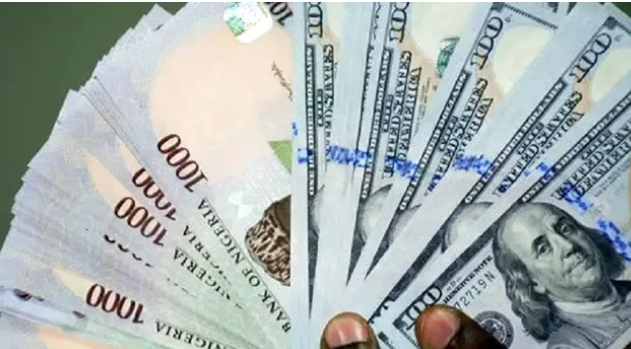
SEE Dollar to Naira Today Black Market June 23, 2024: USD to NGN CBN Rate
- /home/naijuinz/public_html/wp-content/plugins/mvp-social-buttons/mvp-social-buttons.php on line 27
https://naijablitznews.com/wp-content/uploads/2024/06/Screenshot_20240623-181901.png&description=SEE Dollar to Naira Today Black Market June 23, 2024: USD to NGN CBN Rate', 'pinterestShare', 'width=750,height=350'); return false;" title="Pin This Post">
- Share
- Tweet /home/naijuinz/public_html/wp-content/plugins/mvp-social-buttons/mvp-social-buttons.php on line 72
https://naijablitznews.com/wp-content/uploads/2024/06/Screenshot_20240623-181901.png&description=SEE Dollar to Naira Today Black Market June 23, 2024: USD to NGN CBN Rate', 'pinterestShare', 'width=750,height=350'); return false;" title="Pin This Post">
By Kayode Sanni-Arewa

Understanding the fluctuations in the dollar to naira today black market rates is crucial for individuals and businesses engaged in international trade and finance. The parallel market, often termed the black market, presents a more dynamic and volatile exchange rate compared to official channels. This guide provides a thorough examination of current rates, influencing factors, and safe practices for navigating this complex landscape.
*What is the latest Dollar to Naira Black Market Exchange Rate?*

The black market, known for its higher rates than official channels, provides an alternative exchange route, albeit with risks. As of June 23, 2024, the black market dollar to naira exchange rate stands at:
Buying Rate: ₦1,487
Selling Rate: ₦1,493
These rates fluctuate frequently, driven by various market dynamics and economic conditions.
*Geegpay and Grey: online Exchange Platforms*
Digital platforms like Geegpay and Grey offer convenient and secure options for currency exchange, providing competitive rates.
Geegpay Dollar to Naira Rates
EUR (€): Buying at ₦1,690.03,
Selling at ₦1,695.55
GBP (£): Buying at ₦1,950,
Selling at ₦1,965
USD ($): Buying at ₦1,500,
Selling at ₦1,550
EUR (€): Buying at ₦1,640.03,
Selling at ₦1,719
GBP (£): Buying at ₦1,902,
Selling at ₦2,015
USD ($): Buying at ₦1,460,
Selling at ₦1,500
These platforms have gained popularity due to their ease of use, transparency, and security, making them viable alternatives to traditional methods.
Dollar to Naira CBN Exchange Rate
The Central Bank of Nigeria sets the official exchange rates, providing stability through government regulation. As of now, the rates are:
Buying Rate: ₦1,479
Selling Rate: ₦1,480
These rates reflect government policies aimed at stabilizing the naira and managing foreign exchange reserves. Businesses and individuals who prefer regulated transactions often rely on these rates.
*Factors Influencing Black Market Rates*
Understanding the factors that influence the dollar to naira exchange rate in the black market can help anticipate changes and make better financial decisions.
*Economic Policies*
Government policies significantly impact exchange rates. Decisions on interest rates, inflation control, and foreign exchange regulations by the Central Bank of Nigeria (CBN) directly affect the naira’s value. For instance, when the CBN adjusts policies to manage inflation or stabilize the naira, it impacts the exchange rate.
*Supply and Demand*
The availability of foreign currency versus the demand for it plays a crucial role. When foreign currency is scarce or demand is high, the naira depreciates, leading to higher exchange rates. Conversely, an abundant supply of dollars can lead to lower rates.
*Political Stability*
Geopolitical events and internal political stability affect investor confidence. Political unrest or uncertainty can cause the naira to depreciate as investors move towards safer assets. Stability and positive political developments, on the other hand, can strengthen the naira.
*Global Economic*
Conditions Global market conditions, such as shifts in oil prices (a major export for Nigeria), international economic trends, and global inflation rates, influence the naira’s value. For example, a significant drop in oil prices can negatively impact Nigeria’s economy and the naira.
*Comparing Official and Black Market Rates*
There is a significant disparity between official and black market rates. The black market offers higher rates, but with substantial risks such as fraud and legal issues. The CBN advises using official channels to avoid these risks. Official rates provide stability and reliability, making them safer for most transactions.
*Pounds and Euro to Naira Exchange Rates*
For those dealing with currencies other than the US dollar, here are the latest rates:
*Pounds to Naira (CBN Rates)*
Buying Rate: ₦1,890
Selling Rate: ₦1,905
*Euro to Naira (Black Market Rates)*
Buying Rate: ₦1,615
Selling Rate: ₦1,625
These rates are also subject to market conditions and economic policies.
*Understanding Exchange Rate Fluctuations*
Exchange rates fluctuate due to various factors
*Economic Policies*
Government decisions on interest rates, inflation control, and monetary policies significantly impact exchange rates.
*Supply and Demand*
The availability of foreign currency versus local currency demand influences rate movements.
*Political Stability*
Geopolitical events can create uncertainty, affecting investor confidence and exchange rates.
*Global Economic Conditions*
Changes in global markets, such as oil prices and economic growth rates, also affect the naira.
*Safely Navigating the Currency Exchange Market*
Given the risks associated with the black market, it is advisable to use official channels or reputable online platforms like Geegpay and Grey. These platforms offer transparency, security, and competitive rates, reducing the likelihood of fraud and legal issues.
*Practical Tips for Currency Exchange*
*Research Rates Regularly* : Staying updated on the latest rates is essential for making informed decisions.
*Use Reliable Platforms:* Opt for trusted online services or official banking channels to ensure secure transactions.
*Monitor Economic News:* Keep an eye on news that could affect currency values, as this can provide insights into potential rate changes.
*Plan Ahead* : If possible, plan currency exchanges in advance to take advantage of favorable rates.
*FAQs on Black Market Dollar to Naira Exchange Rate*
What is the current dollar to naira exchange rate in the black market?
The current black market rate for the dollar to naira is around ₦1,485 for buying and ₦1,495 for selling.
*How does the CBN exchange rate compare to the black market rate?*
The CBN exchange rate is lower, with the buying rate at ₦1,495 and the selling rate at ₦1,496.
The black market rates are typically higher due to demand and supply factors.
*Are online platforms like Geegpay and Grey reliable for currency exchange?*
Yes, platforms like Geegpay and Grey are reliable and offer competitive rates. They are convenient for individuals and businesses engaged in international transactions.
“Why does the dollar to naira exchange rate fluctuate?*
The exchange rate fluctuates due to various factors, including economic policies, inflation, global economic conditions, and market speculation.
*Is it safe to use the black market for currency exchange?*
While the black market may offer better rates, it carries risks such as fraud and legal issues. It’s advisable to use official channels for safer transactions.
*How can businesses manage exchange rate risks?*
Businesses can manage exchange rate risks through hedging strategies, diversifying income sources, and regularly monitoring market trends.
*Conclusion on Black Market Dollar to Naira Exchange Rate*
Staying informed about the dollar to naira exchange rate is essential for navigating Nigeria’s economic landscape. While the black market offers attractive rates, the risks involved often outweigh the benefits. Therefore, using official channels and reliable online platforms is recommended for safer and more transparent transactions.

News
NCC hosts 185 girls on ICT industrial excursion
The Nigerian Communications Commission (NCC) has supported the Federal Government’s Girls in ICT empowerment initiative by hosting 185 students on an industry excursion.
NCC Director of Public Affairs, Nnenna Ukoha, disclosed this in a statement on Sunday in Abuja.
She said the tour was designed to inspire digital skills development and encourage future careers in technology.
The initiative was championed by the Ministry of Communications, Innovation and Digital Economy.
The programme aims to equip young Nigerians, particularly girls, with digital knowledge and relevant technology skills.
Ukoha said participants were selected by the ministry from across the country’s geopolitical zones.
She said the students were chosen for a competition promoting digital inclusion and greater participation of girls in Information and Communication Technology (ICT).
According to her, some participants were also drawn from Science, Technology, Engineering and Mathematics (STEM) disciplines.
“The visit to the Commission formed part of activities organised by the Ministry under the National Girls in ICT Programme.
“It is an initiative aimed at bridging the gender gap in technology through digital skills, mentorship opportunities and exposure to innovation,” she said.
Ukoha said participants learned about developments in telecommunications from 1886, when colonial authorities established communication facilities for administrative purposes.
She said the students were also introduced to the history of telegraph services linking Lagos with West Africa and Europe through submarine cables.
According to her, the tour highlighted the telecommunications landscape at Independence in 1960.
She said Nigeria then had only 18,724 telephone lines serving an estimated population of about 40 million people.
“The students were also briefed on post-Independence development plans and the operations of the former Department of Posts and Telecommunications.
“They also learned about Nigerian External Telecommunications Ltd. and the establishment of NITEL in 1985,” she said.
Ukoha said NITEL was created to coordinate internal and external telecommunications services across the country.
She noted that a major attraction during the visit was the display of historical artefacts preserved at the NCC Museum.
Among the exhibits were a Post Office Counter and Sorting Racks introduced in Lagos in 1852.
Other artefacts included the Grand ‘T’ Key used in the nineteenth century Lagos Post Office.
The collection also featured leather mail bags from 1863 and Drop Bag fittings from the late twentieth century.
Students viewed a 511A Letter Scale, an Improved Dynamometer Scale, telegram machines and the Teleprinter T100.
Additional exhibits included a Cordless PBX system, Digital Card Phone and other communications equipment.
Speaking during the tour, NCC Executive Vice Chairman, Dr Aminu Maida, said the initiative aligned with the Commission’s digital literacy objectives.
Represented by Director of Research and Development, Babagana Digima, Maida said the museum linked past and present generations.
He said the experience would help young people appreciate the sector’s transformation from analogue systems to the digital age.
According to him, understanding telecommunications history would inspire participants to contribute to future innovation.
Maida said exposing young people to technological advancement was essential for developing leaders for Nigeria’s digital economy.
“The whole idea is to engage the younger generation and show them what communication is all about.
“This museum preserves the history of communications and showcases the evolution from postal services to telegraphy and digital technology.
“We want to spark the curiosity of young people and help them understand how far the sector has progressed.
“When they see the past and the present, they can imagine the future and contribute to shaping it,” he said.
During the tour, NCC officials guided participants through exhibits documenting key milestones in Nigeria’s telecommunications history.
The students also explored the evolution of the communications sector and its contribution to national development.
News
Middle East conflict: Israel Launches Retaliatory Strikes on Iran in renewed violence
Israel has launched airstrikes on Iran in retaliation for waves of missiles fired at its northern regions on Sunday.
The development marked a day of renewed violence in the Middle East after a fragile ceasefire.
Iranian state television reports that the sound of explosions was heard in Isfahan, Karaj, Tabriz and Tehran.
The strikes occurred after Iran’s Islamic Revolutionary Guard Corps, IRGC, said it had targeted the Ramat David Airbase in northern Israel with ballistic missile fire on the evening of June 7.
The IRGC claimed that Israel used air-launched ballistic missiles in its attack on Monday morning.
The Israel Defense Forces, IDF, said it identified missiles fired from Iran toward northern Israel and defensive systems are operating to intercept the threat.
“A short while ago, the Israeli Air Force struck military targets belonging to the Iranian terror regime in western and central Iran,” the Israeli military stated.
News
If a Thief Tells You to Go to Court, His Brother Is the Judge — Jonathan
Ex- President Goodluck Jonathan has criticized what he described as a growing culture among some government institutions of dismissing public concerns by directing aggrieved citizens to seek redress in court.
Speaking at a recent public event, Jonathan expressed concern over what he called declining standards in public institutions and the increasing tendency of officials to rely on the judiciary whenever allegations of wrongdoing are raised against them.
The former president cited an East African proverb to illustrate his point, saying, “If a thief tells you to go to court, he knows that his brother is the judge.”
According to Jonathan, the saying reflects public perceptions that some individuals who engage in wrongdoing may have confidence in receiving favorable outcomes through compromised systems.
“We see government institutions doing the wrong thing and telling people to go to court,” Jonathan said. “There is this saying in East Africa that if a thief tells you to go to court, he knows that his brother is the judge.”
His remarks come amid ongoing debates over accountability, transparency, and public trust in government institutions, with critics frequently raising concerns about the handling of political and administrative disputes through the judicial process.
-
News21 hours ago‘It’s out of place’ , don’t compare Ogbomoso and Adelabu kidnaps – Presidency tells Nigerians
-
Opinion21 hours agoThree years after: “People First” Paradigm: Why Governor Bassey Otu’s Transformative Governance Demands Consolidation and 2nd Term
-
News19 hours agoReps Recover N521.8m VAT From CBN, Targets Additional ₦33bn in Outstanding Liabilities
-
News17 hours ago12 Years On: Suswam’s ₦3.1bn Scam Trial Stalls as Defence Yet to Open Case
-
News19 hours agoStop Demarketing Plateau, Group Cautions Dalung
-
News19 hours agoFaleke Urges Civil Servants to Uphold Integrity, Hails Retiring National Assembly Clerk
-
Metro8 hours agoHouses razed as soldiers, police clash with Delta community youths
-
News8 hours agoPhotos: Nigeria Will Survive Insurgencies like it Survived Past Political Upheavals, Pandemics – Akpabio

Warning: Undefined variable $user_ID in /home/naijuinz/public_html/wp-content/themes/zox-news/comments.php on line 49
You must be logged in to post a comment Login