
News
Six Key Takeaways from Local government autonomy Supreme court judgement

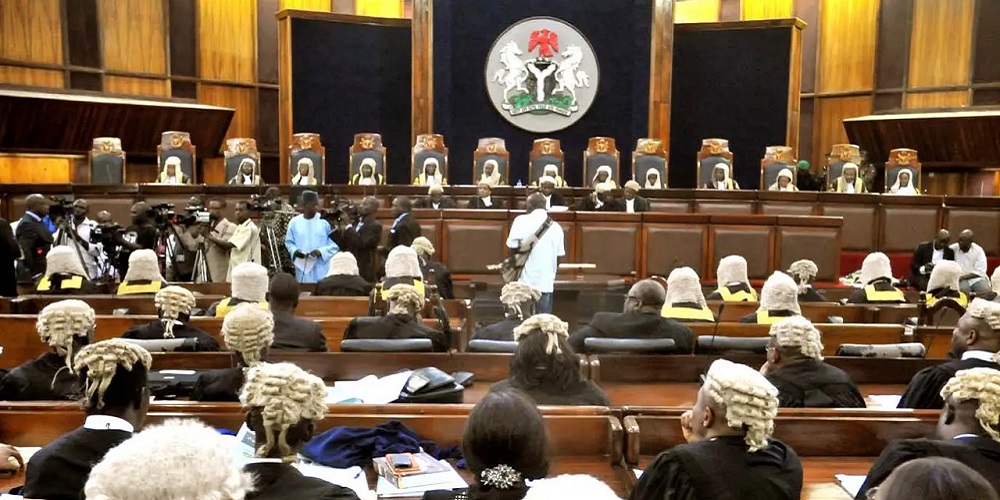


The Supreme Court made a landmark ruling on Thursday, July 11, 2019, that the Federal Government must henceforth pay funds allocated to the local governments in Nigeria directly to those administered by democratically elected officials. Delivered by Justice Emmanuel Agim, the ruling is said to rid off an executive or constitutional violation that dates back so many years and is binding on a new way of administration for local government funds in the country. Here are the six key takeaways from the judgment:
1. Unconstitutional Practice:
The Supreme Court banned the practice whereby state governors receive and withhold funds meant to be allocated to LGAs as illegal and unconstitutional. The practice, which has been in action for over two decades, was a violation of the constitutional provisions on local government autonomy.
2. Violation of the Constitution:
The court held that the withholding of LGA funds by state governments and other entities amounts to a misapplication of the funds, as Section 162 of the 1999 Constitution had succinctly made provisions for the allocation and transfer of the funds to the local government areas.
3. Direct Payment of Funds:
The court mandated that funds for LGAs be directly paid from the federation account into the banks of the local governments, bypassing the state governments. This means funds will have to be paid directly to the local governments lest the aim of their being dispatched—that is, development and administration of the locals—should go astray.
4. Democratic Governance Mandate:
The judgment therefore emphasized the need for democratic governance at the grassroots. The court ruled that a governor’s act in appointing caretaker committees to run LGA affairs is unconstitutional, reiterating that LGAs must be run by democratically elected people.
5. Obligation of States:
The judgment also held that the 36 states are under an obligation to ensure democratic governance at the grassroots level. This means they have to allow for the election of local government officials and that LGAs operate independently of undue state interference.
6. Repulse of Governors’ Objections:
The Supreme Court dismissed the objection filed by state governors against the competence of a suit before it by the federal government.
This was to secure financial autonomy for LGAs, with the court’s dismissal of the governors’ objections paving the way for enforcement.
The ruling is therefore considered one major step forward toward enhancing the autonomy of the local government and for money allocated for local development to be utilised as it should.
That decision of the Supreme Court is for strengthening democratic processes at the grassroots level also, apart from upholding constitutional provisions. Further developments will ensue as Federal Government and state governments adjust to fall in line with this Landmark ruling.
The Ekiti State Governorship Election Petition Tribunal has expressed concern over the repeated failure of the Action Alliance (AA) to present witnesses in support of its petition challenging the outcome of the June 20, 2026 governorship election.
Justice Abubakar Idris Kutigi, Chairman of the three member panel raised the concern during Friday’s proceedings after the AA again failed to produce its witnesses despite earlier assurances that they would appear. Reports from the proceedings indicate that it was the third consecutive sitting at which the party had been unable to present its witnesses.
Nigeria News Alert reports that the development followed the appearance of six witnesses presented by the Social Democratic Party (SDP), who gave evidence relating to the conduct of the election in polling units and wards where they served as party agents and collation agents.
The witnesses were led in evidence by counsel to the SDP and AA, Ebenezer Akinbuli, while counsel representing the Independent National Electoral Commission (INEC), Tunde Salako, and counsel for Governor Biodun Oyebanji, Adetunji Oso, SAN, cross examined them.
The AA and SDP are among the petitioners challenging the declaration of Oyebanji of the All Progressives Congress (APC) as the winner of the governorship election. The AA candidate, Olu Omotoso, polled 126 votes, while the SDP candidate, Adebayo Alade, recorded 179 votes in the election.
After the SDP completed the presentation of its witnesses for the day, attention turned to the AA, which had been expected to commence or continue the presentation of its own witnesses based on an earlier commitment made to the tribunal.
Justice Kutigi reminded Akinbuli of the undertaking previously given to the panel, but the counsel requested another adjournment to enable him to make arrangements for the AA witnesses to appear.
The request prompted the tribunal chairman to question the continued delay, particularly given the length of time that had elapsed since the petition was filed.
“If you are not interested in this case, you these people (AA) should just close your case. If at this stage you have not made up your mind on what you want to do, we can’t just keep adjourning every time and you know that this is an election petition.
“We find this strange and we are not here to play. How does it sound for you to stand before us saying you will be looking for witnesses, after how many months? When was this case filed? Why not pursue this case? You are the counsel, try and take charge of this matter.”
Following the remarks, Akinbuli apologised to the panel and appealed for what he described as a final opportunity to ensure that the AA witnesses appeared at the next sitting.
The counsel assured the tribunal that the party would present its witnesses on Monday, September 28, saying he would “do the needful on the next day of adjournment.”
Counsel for INEC and Oyebanji did not oppose the request, allowing the tribunal to consider the additional opportunity sought by the AA.
Justice Kutigi consequently adjourned further hearing until Monday, September 28, when the tribunal is expected to continue with the petitions and give the AA another opportunity to present evidence through its witnesses.
The latest development adds to the tribunal’s recent emphasis on the need for the parties in the election petitions to proceed with their cases without unnecessary delays. The panel has previously expressed concerns over delays affecting proceedings in the petitions arising from the Ekiti governorship election.
Kano State has ranked first in the 2026 National Examination Council of Nigeria (NECO), with 74,413 candidates that obtained at least five credits, including English Language and Mathematics.
The result showed that Lagos emerged second with 72,496 candidates and Oyo came third with 55,543 candidates.
The performance marks the second consecutive year that Kano has topped the NECO national performance chart, after recording the highest number of candidates with five credits, including English and Mathematics in the 2025 examination.
Reacting to the development, Gov. Abba Yusuf, in a statement by his spokesperson, Mr Sanusi Bature, commended the students, teachers, parents and other stakeholders for the outstanding performance.
Yusuf said the back-to-back performance was an indication that the state’s sustained investment in education was producing measurable results.
“Kano has maintained the first position in NECO twice in a row making the state as the leading SSCE performer for the two consecutive years, (2025 and 2026) respectively,” he said.
He assured the people of Kano that his administration would continue to prioritise education through increased funding, improved learning facilities, teacher recruitment and training, scholarships and support for indigent students.
As part of the interventions, he said, the state government spent over N4.4 billion in 2026 to sponsor candidates for Senior Secondary School Certificate Examination, particularly indigent students.
The governor said the intervention was designed to remove financial barriers and enable students to participate in the examinations under better conditions.
He said the latest NECO result was a continuation of the improvement recorded by Kano students under the present administration.
“Education has consistently received the largest share of Kano State’s budget under Governor Yusuf; overshooting the UNESCO benchmark.”
“In 2024, education accounted for about 29.95 per cent of the state budget. The allocation increased to N168.35 billion, representing 31 per cent, in the 2025 budget.
“For 2026, the state allocated N405.35 billion to education, representing about 30 per cent of the N1,478, 829, 666, 130. 71 trillion budget,” he said.
The governor said the investment goes beyond examination sponsorship to include classroom renovation, teacher recruitment, learning materials, uniforms, scholarships and other interventions aimed at improving the quality of education.
The administration’s education policies have also attracted recognition at national and international levels, with Kano fast becoming a leading education reform hub in sub-Saharan Africa.
In 2024, Yusuf received the Leadership Newspaper Governor of the Year Award for Education, while New Telegraph recognised him for educational development Governor of the year.
The Nigeria Union of Teachers also named the governor its Teachers’ Friendly Governor of the Year for 2024.
“In 2025, Blueprint Newspaper recognised Governor Yusuf as Governor of the Year for Education at the paper’s national conference in Abuja. While This Nigeria newspaper awarded him as courageous Governor of the year 2024.
“The administration also received education-related recognition at International space in London and Paris 2026, for its commitment to education with international literacy and learning award and the education spending award by the Universal Learning Solution and City University, Paris respectively,” he said.
He said the objective was to build an education system capable of providing Kano’s young people with the knowledge and skills required for higher education, employment, innovation and leadership as Kano has recorded over five million school children in the last annual school census.
(NAN)

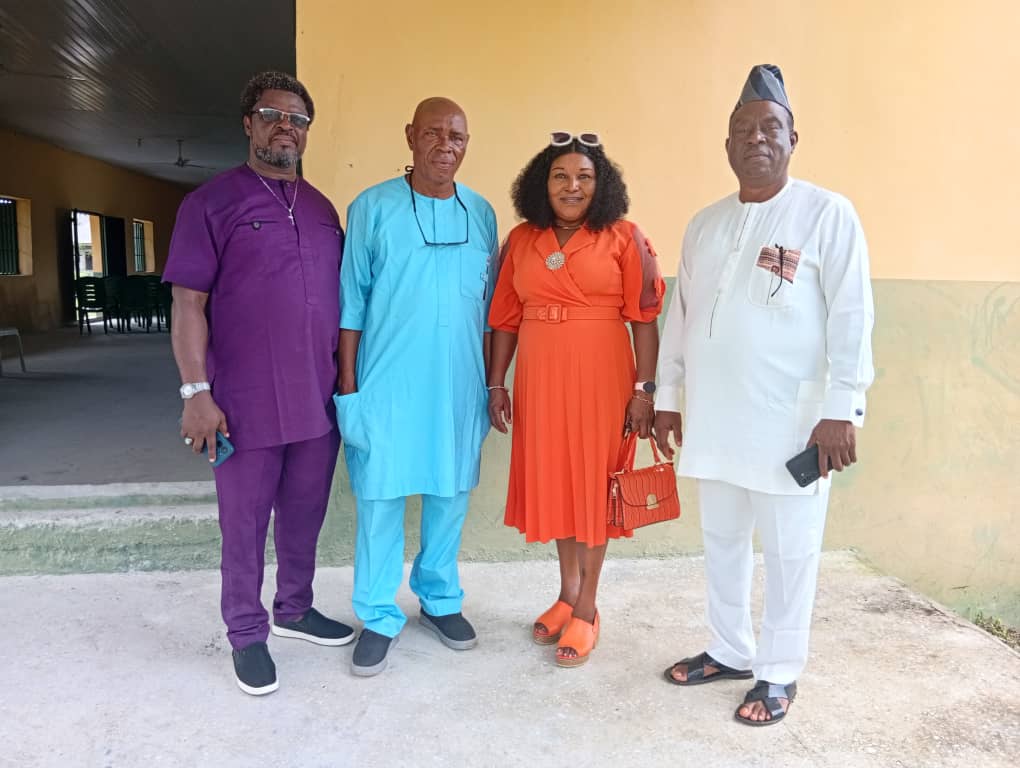
The Iluelogbo Grammar School Old Students Association (IGSOSA), Owhelogbo, has unveiled a series of measures aimed at strengthening its nationwide structure, improving members’ welfare and accelerating the development of the alma mater.
The decisions were contained in a communiqué issued at the end of the Association’s Annual General Meeting (AGM), held in Owhelogbo, where old students from various sets and branches participated in deliberations on the growth of the association and the development of Iluelogbo Grammar School.
A major outcome of the meeting was the appointment of five Zonal Coordinators to improve grassroots mobilisation and deepen participation among members across the country.
The newly appointed coordinators are Dr. Israel Adaigho for Asaba Zone; Barr. Faith Enajedu for Port Harcourt/Akwa Ibom/Abia Zone; Mr. Ben Akelemo for Lagos Zone; Dr. Fortune Erume for Warri Zone; and Mr. Simon Enajedu for Abuja Zone.
According to the communiqué, the coordinators are expected to mobilise old students within their respective zones and serve as a link between the zones and the National Executive of the association.
The AGM also approved the establishment of a Welfare/Benevolent Trust Fund Committee to coordinate welfare-related matters affecting members.
The committee is chaired by Dr. Tony Alabi, with Mr. Patrick Nebe, Mr. Nathais Otobo, Barr. Ovah Frederick, Dcns. Vivian Okpobrisi, Mrs. Flora Utunedi-Whiskey and Chief Jonathan Orife as members.
Engr. Lawrence Enna was appointed Secretary of the committee.
In another major resolution, the AGM proposed an amendment to the association’s constitution to accommodate three additional positions — Legal Adviser, Internal Auditor and Board of Trustees (BOT).
The proposed constitutional amendment is to be posted on the association’s general online platform for members to consider and vote on within one week from the date of the communiqué.
The association said the measures were part of its broader effort to strengthen its administrative structure, promote members’ welfare and ensure greater participation in the affairs of the old students’ body.
IGSOSA expressed appreciation to members for their continued support and called on old students who are yet to join the association to connect with the appropriate Zonal Coordinators.
The communiqué was signed by the National President of the Iluelogbo Grammar School Old Students Association, Owhelogbo.
Ven. Moses Edeki
Secretary General.

Ekiti Tribunal Faults Action Alliance Over Delay in Presenting Witnesses

Terrorists abduct newlywed couple, four others in Kwara

NECO 2026: Kano beats Lagos, Oyo, emerges best-performing state


-

 News22 hours ago
Pastor Chris Breaks Silence on Mother’s Death, Reveals Lessons She Left With Him
-

 News24 hours ago
Decoupling Sovereignty Index (1): The Anatomy of Becoming Nobody
-

 Entertainment22 hours ago
Timaya vows he cannot disrespect Fela or his family
-

 News22 hours ago
Bandit Threat Shuts School, Hospital, Orphanage in Kwara — Cleric
-

 News22 hours ago
Europe-bound bridegroom excretes 72 wraps of cocaine at Enugu airport(Photos)
-
 News22 hours ago
Group Demands Omosehin’s Removal as NAICOM Chief Over Recapitalisation Allegations
You must be logged in to post a comment Login