
Foreign
‘Send Them To Hell’ – Iranian Clerics Call For Ass@ss!nation Of Trump, Netanyahu


- /home/naijuinz/public_html/wp-content/plugins/mvp-social-buttons/mvp-social-buttons.php on line 27
https://naijablitznews.com/wp-content/uploads/2026/07/hjjhg-1.jpg&description=‘Send Them To Hell’ – Iranian Clerics Call For Ass@ss!nation Of Trump, Netanyahu', 'pinterestShare', 'width=750,height=350'); return false;" title="Pin This Post">
- Share
- Tweet /home/naijuinz/public_html/wp-content/plugins/mvp-social-buttons/mvp-social-buttons.php on line 72
https://naijablitznews.com/wp-content/uploads/2026/07/hjjhg-1.jpg&description=‘Send Them To Hell’ – Iranian Clerics Call For Ass@ss!nation Of Trump, Netanyahu', 'pinterestShare', 'width=750,height=350'); return false;" title="Pin This Post">


Iran’s most senior clerics have called for the ass@ss!nations of President Donald Trump and Israeli Prime Minister Benjamin Netanyahu.
The 88-member Assembly of Experts issued a 10-point statement in which they said k!lling “the wicked prime minister of the Zionist regime” and “the criminal American president” was a religious duty that must be carried out “under any circumstances.”
The clerics, who are constitutionally tasked with choosing and supervising the supreme leader, wrote that the call for their ass@ss!nations and avenging the death of supreme leader Ali Khamenei was of “paramount” importance.
“It is obligatory upon any duty-bound person who gains access to these criminals to send them to hell,” they wrote.
In another development, Iranian newspaper Hamshahri ran a front-page story featuring Trump’s face in the crosshairs of a rifle scope with a banner headline reading “Revenge is certain.”
The clerics also warned that the ongoing cease-fire negotiations to end the war that has raged since Feb. 28, was merely a delay tactic to give the US more time to plan another round of attacks.
“The likelihood of a renewed attack after will be very high the matters raised in the memorandum of understanding must be resolved within the stipulated 30-day and 60-day deadlines,” they wrote, referring to the terms in the 14-point memorandum of understanding signed by the US and Iran aimed at ending the war.
They further urged supporters of the Iranian regime to take to the streets “in the leader’s name,” adding that “the people’s presence is necessary and decisive.”
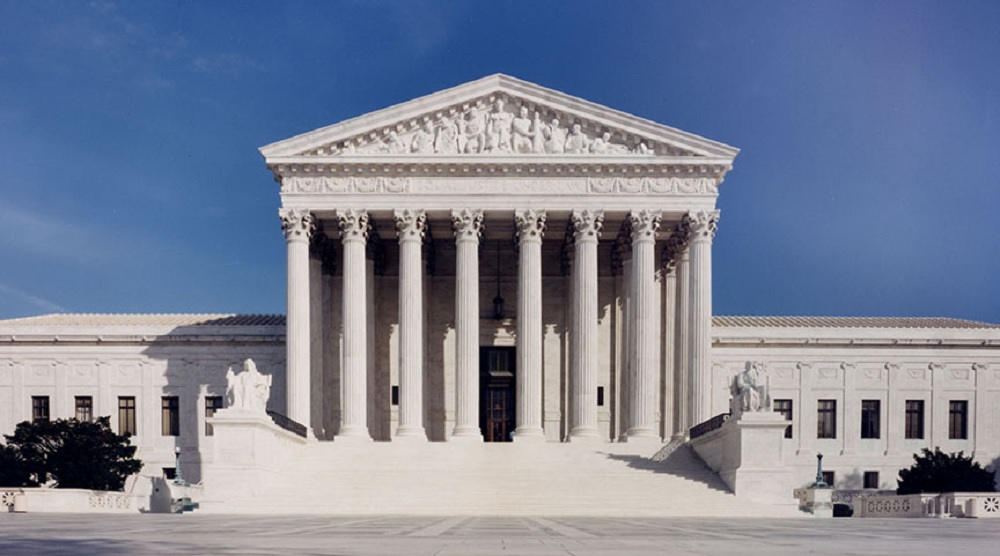
The US Supreme Court on Tuesday upheld state laws barring transgender athletes from competing in girls’ and women’s school sports, delivering a major victory to conservatives in one of the country’s most fiercely contested culture-war battles.
The decision allows Idaho, West Virginia and more than two dozen other Republican-led states to enforce measures requiring students to compete in public school and college teams according to their sex assigned at birth rather than their gender identity.
The ruling is the latest sign of the conservative-dominated court’s willingness to side with states on the issue, following last year’s decision upholding Tennessee’s ban on gender-affirming care for minors.
The cases before the court were brought by transgender students who argued that the bans violated the US Constitution’s equal protection guarantee and Title IX, the federal civil rights law barring sex discrimination in education.
Fair competition?
Supporters of the laws say they are needed to preserve fair competition and protect athletic opportunities for girls and women.
Opponents say they single out a tiny number of vulnerable students for exclusion and discrimination, turning children’s participation in school sports into a national political battleground.
Writing for the majority, Justice Brett Kavanaugh rejected arguments that restrictions on biological males in sports for women and girls unconstitutionally discriminate on the basis of sex or gender identity.
“May schools determine eligibility for women’s and girls’ sports based on biological sex? The answer is yes,” Kavanaugh wrote.
“Consistent with Title IX and the Equal Protection Clause, we hold that the States may maintain women’s and girls’ sports for biological females. They may determine eligibility for women’s and girls’ sports based on biological sex,” he added.
The court was largely divided 6-3, although three justices who opposed the decision concurred in part.
The Idaho case arose from the state’s 2020 Fairness in Women’s Sports Act, which was challenged by a transgender athlete at an Idaho university. Lower courts found the law unconstitutional.
Idaho Solicitor General Alan Hurst told the justices during arguments in January that “sex is what matters in sports,” citing differences in size, strength, muscle mass and lung capacity.
The West Virginia case involved a teenage transgender girl who was barred under a 2021 state law from running on her middle school girls’ track team.
Her lawyers argued that transgender girls who receive testosterone-suppressing treatment do not retain an unfair athletic advantage and that the laws are broad bans driven more by politics than evidence.
‘Zero-sum game’
But several conservative justices had voiced skepticism during arguments.
Kavanaugh said he sympathized with transgender students who wanted to play sports, but described many sports as a “zero-sum game,” in which one athlete’s inclusion can mean another loses a roster spot, playing time or a medal.
“Someone who tries out and makes it who is a transgender girl will bump from the starting lineup, from playing time, from the team… someone else,” he said. “There’s a harm there.”
The ruling lands amid an escalating national push by conservatives to regulate transgender participation in school life, health care and public accommodations.
President Donald Trump issued an executive order in last year allowing federal agencies to deny funding to schools that permit transgender athletes to compete on girls’ or women’s teams.
The issue has been politically charged since Lia Thomas, a transgender swimmer at the University of Pennsylvania who had previously competed on the men’s team, became a flashpoint after racing in women’s collegiate meets in 2022.
Supporters of transgender rights say the debate has been distorted by a handful of high-profile cases.
Seventy percent of voters in a new Quinnipiac University poll think transgender women and girls should not be allowed to play on women’s and girls’ school sports teams.
AFP

A 23-year-old pregnant woman allegedly died by suicide after her husband reportedly demanded a DNA test for her unborn child, leading to the arrest of the man and his mother in India’s Telangana state.
The incident occurred in Gadipeddapur village in Alladurg mandal of Medak district, where the victim, identified as G. Sushmita, was found hanging at her home on the evening of June 25. She was five months pregnant.
Police arrested Sushmita’s husband, G. Abhilash, and his mother, Laxmi, on Saturday, June 27, 2026.
“We arrested her husband G. Abhilash and his mother Laxmi. They were produced before the magistrate and remanded to judicial custody,” Alladurg Sub-Inspector D. Shankar said.
According to a police complaint filed by Sushmita’s mother, G. Janabai, her daughter had been subjected to prolonged physical and emotional abuse during her marriage, with the husband’s alleged demand for a DNA test significantly worsening her distress.
Sushmita, a native of Mothkupally village in Vikarabad district, had been married to Abhilash, a bangle seller from Gadipeddapur, for about 18 months.
Janabai told police that on June 23, she and her husband visited the couple’s home to discuss arrangements for Sushmita’s upcoming baby shower ceremony. During the visit, Abhilash allegedly questioned the paternity of the unborn child and demanded a DNA test in the presence of both families.
According to the complaint, the incident led to an argument before community elders intervened. Janabai alleged that the accusation caused her daughter immense humiliation and emotional trauma, with family members claiming the suspicion cast on her character had a devastating impact on her mental well-being.
Two days later, on June 25, Sushmita was found dead at her residence. Villagers later informed her parents of the incident.
Her mother further alleged that continuous harassment by both her husband and mother-in-law drove Sushmita to take her own life.
Based on the complaint, Alladurg police registered a case on June 26 under Sections 85 (cruelty by husband or relatives), 108 (abetment of suicide), read with Section 3(5) (common intention) of the Bharatiya Nyaya Sanhita.
Following a post-mortem examination, Sushmita’s body was handed over to her family. Police said investigations into the case are ongoing.
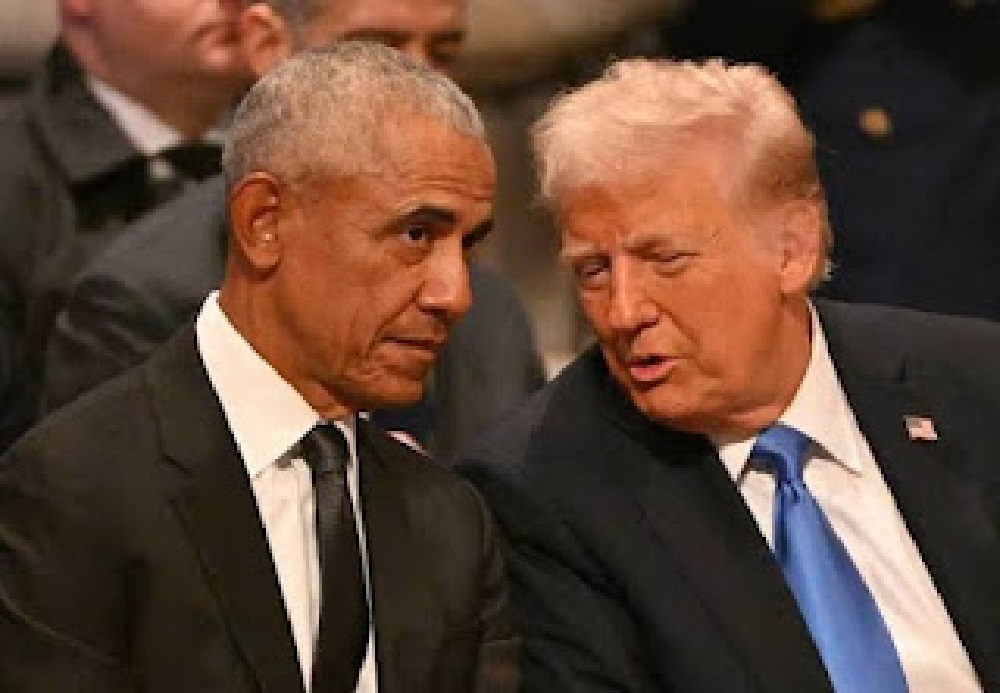
U.S. President Donald Trump has sparked fresh online discussion after sharing side-by-side photos of himself and former President Barack Obama from their younger years, just days after Obama joked that he still occupies space in Trump’s thoughts.Trump posted the images on his Truth Social account on Saturday, June 27.
The post followed an AI-generated image of himself holding the Earth while carrying an American flag over his shoulder, as well as a photograph from a recent UFC event held outside the White House.
The side-by-side image featured a photo of Trump during his years at the New York Military Academy next to a picture of Obama at Occidental College, showing the former president wearing a wide-brimmed hat and smoking a cigarette. Obama has previously spoken publicly about his long struggle to quit smoking after picking up the habit as a teenager.
Trump captioned the images, “D. Trump, 20” and “B.H. Obama, 18.” However, the age listed for Trump quickly drew criticism, with his niece and outspoken critic, Mary Trump, noting that he graduated from the New York Military Academy in 1964 at age 17, suggesting the caption may have been inaccurate.
Although Trump did not explain the reason for posting the photos, many social media users viewed the comparison as a response to comments Obama made earlier this week during an appearance on the All the Smoke podcast.
Speaking on the podcast, Obama joked that Trump remains preoccupied with him years after he left office.
“The obsession,” Obama said. “I obviously have a room in his head. A suite in his head. When I was president, the last thing I had time to do was worry about what somebody said or what my predecessor did. They’re gone. I’ve got work to do.”
Obama also claimed that Trump rarely directs such criticism toward him in person.
The latest exchange adds another chapter to the long-running political rivalry between the two leaders. Trump has frequently criticized Obama during campaign rallies and on social media, while in recent weeks he has also shared AI-generated images mocking the former president, including one depicting Obama’s presidential center as a dumpster.
Neither Trump nor Obama has publicly commented further on the latest social media post.

FCTA Convenes Emergency Meeting Over Stalled Abuja Project Amid N100m Bribery Allegation

US Embassy, Consulate in Nigeria temporarily shutdown

Forgery case: Court grants Ozekhome permission for six-week medical trip to UK




-
 News8 hours ago
Labour Party unveils ₦2.8m essay competition in Abia
-

 News17 hours ago
Asylum Seekers To Pay £10,000 Before Settlement In UK
-

 News8 hours ago
Navy arrests member of vehicle theft syndicate in Abuja
-

 News17 hours ago
Presidency Breaks Silence On Gbajabiamila Alleged Bribery Scandal
-

 News23 hours ago
Insecurity: Gunmen kidnap popular pastor, members in Benue
-

 News8 hours ago
NYSC reforms: Corps members to wear Adire instead of khaki — FG
-

 News10 hours ago
Delta’s ADC guber candidate Unuafe unveils 14-point Blueprint to Transform Delta into Africa’s Leading Sub-National Economy
-
 Metro17 hours ago
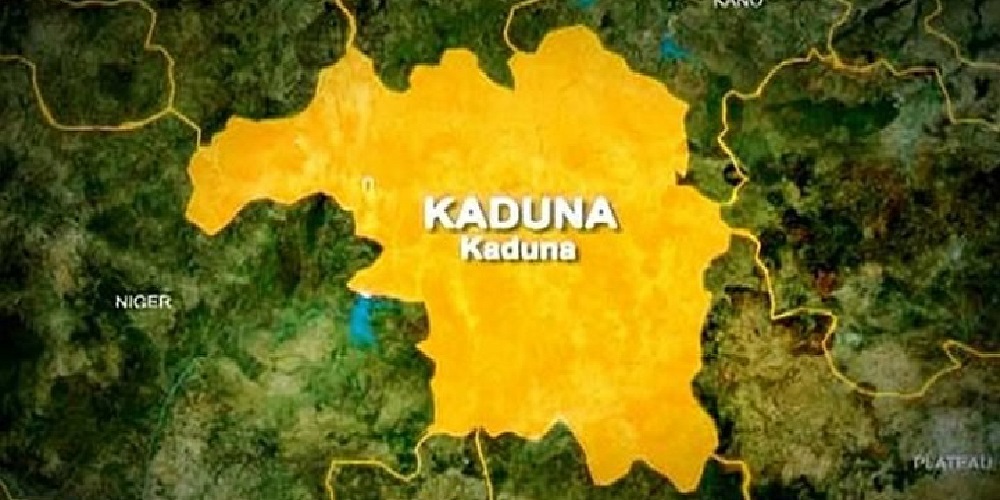
Terrorists k!ll Kaduna Catechist, bride-to-be, and 4 others after 120 days in captivity and ransom payment