
News
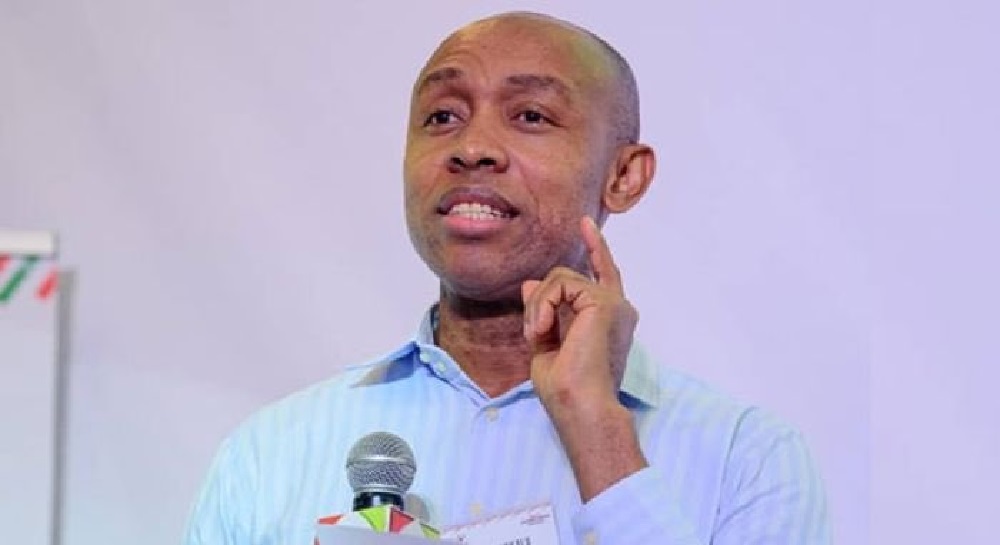
Rule by Judges is Not Rule of Law – By Chidi Anselm Odinkalu



“The judiciary has immense power. In the nature of things, judges cannot be democratically accountable for their decisions. It therefore matters very much that their role should be regarded as legitimate by the public at large.”
Jonathan Sumption, Law in a Time of Crisis, 121 (2021)
For a cumulative period of 17 years between 1885 and 1905, Hardinge Giffard – who was better known as Lord Halsbury – served three tenures as Lord Chancellor. In this capacity he earned a reputation for having “appointed many undistinguished men to the Bench because of their political services to the Conservative Party.” In 1897, Lord Salisbury, one of the Prime Ministers under whom Lord Halsbury served, advised him that “the judicial salad requires both legal oil and political vinegar; but disastrous effects will follow if due proportion is not observed.” For having so manifestly got the proportions out of kilter, Nigeria could be on course for a date Lord Salisbury’s predicted effects.
Abuja, Nigeria’s federal capital, is a place where mutual intercourse between lawyers, politicians and judges is both natural and habitual. It is home to judges too numerous to count and host to the headquarters of many court systems, including the High Court of the Federal Capital Territory (FCT High Court) as well as of Nigeria’s Court of Appeal and Supreme Court. The headquarters of the Court of Justice of the Economic Community of West African States (ECOWAS Court of Justice) is also in Abuja.
The pace of production and reproduction in the courts in Abuja has been rather dizzying recently. On the penultimate day of the past working week, Nigeria’s Supreme Court in a case instituted by the Federal Government against the states issued a decision designed to make it mandatory for local government to be run only by elected officials. This judgment has unlocked a predictable scrum of both political ululation and lamentation but the risk remains that its full benefits are likely to be undermined by the well-established jurisprudence of the Supreme Court in favour of bandit ballots which support the production of leaders at all levels who lack electoral legitimacy.
The day before the Supreme Court judgment, on the approach to the fourth anniversary of Nigeria’s #EndSARs uprising of 2020, the ECOWAS Court of Justice ruled that the conduct of the Nigerian government and its security agencies in their response to the #EndSARS uprising violated the guarantees of “security of person, prohibition of torture and cruel, inhuman, and degrading treatment, rights to freedom of expression, assembly, and association, duty to investigate human rights violations, and right to effective remedy.” In effect, the Court said that the Nigerian government engaged in a cover-up of the violations that occurred during the #EndSARS protests, especially at the Lekki Tollgate in Lagos.
Weighty as they were, both of these otherwise seminal outcomes were relative non-events in the political and judicial registers of Abuja this past week. On the same day that the ECOWAS Court delivered its judgment in the #EndSARS case to a near empty gallery and the day before the Supreme Court held forth on the destination of local government funds, all roads led to the Supreme Court where the outgoing Chief Justice of Nigeria, Olukayode Ariwoola, presided over the inauguration of 22 new Justices of the Court of Appeal and 12 new judges of the FCT High Court.
Many people may have missed the number of Justices of Appeal inaugurated, however. Anyone who followed the reportage would have been forgiven for supposing that there were just two Justices of Appeal sworn in: “Wike’s wife and 21 others”, a reference to the wife of political bruiser and current Minister of the Federal Capital Territory, Nyesom Wike. Also among the new Justices of Appeal is Abdullahi Liman, Kano’s self-appointed federal King-maker. The excess political vinegar in some of these most recent elevations to the Court of Appeal sadly detracts from the tasteful salad among some others. For the sake of their own professional and career advancement in a cynical system, it is best at this time to preserve the anonymity of those deserving ones.
Among the 12 new judges of the FCT High Court, at least seven were family members of serving or living judicial figures and three were family members of persons directly involved in the appointment process. Among these, the Chief Justice of Nigeria, who presided over the appointment, had his daughter-in-law made a judge; the Chief Judge of the FCT High Court made his daughter a judge; and the President of the Court of Appeal got her daughter appointed a high court judge for the second time in three years. In 2021, Governor Simon Lalong of Plateau State had made the same daughter a judge of the Plateau State High Court.
Responding to these appointments, Access to Justice, a group that monitors judicial independence and accountability in Nigeria pointedly said that “three candidates were ineligible to be considered for such appointments in the first place at the time the vacancies were announced.” This was in reference to the daughter of the Chief Judge of the FCT High Court; the daughter of the President of the Court of Appeal; and the daughter-in-law of the outgoing Chief Justice of Nigeria. According to the group, these three appointments were a composite transaction between the CJN, President of the Court of Appeal and the Chief Judge of the FCT High Court best described “in local parlance as: ‘you scratch my back, I scratch your back.’”
To say that these three appointments clearly violate the judicial code of conduct as well as the regulations governing judicial appointments is to be kind to the lack of scruples at the helm of the current judicial appointments process in the country. It makes a joke of the judicial appointment process that someone in Nigeria can be appointed a High Court judge while holding a subsisting appointment as a High Court Judge.
In the days when the Nigerian judiciary was under credible leadership, these judicial inaugurations would passed almost as a non-event, attended only by select staff of the affected courts and by some members of the families of the new appointees. Reflecting the mood and mores of the times and consistent with the current tyranny of perverse incentives in judicial appointments, however, this swearing in was a carnival taken over by cavalcades of dubious politicians and insider dealers in perverse political influence. Following the formal swearing in of the new judges, Abuja was littered with “receptions” convoked by politicians and senior lawyers for many of the new judges.
There was good reason for the politicians to make an obligation of their noisy presence at the swearing in of the new judges. Section 14(2) of Nigeria’s Constitution loudly proclaims that “sovereignty belongs to the people of Nigeria” but under colour of “rule of law” and judicial independence, the judges have toppled the people and installed themselves as the ones who alone can elect politicians to positions of power and influence in Nigeria. Access to political office now, therefore, is a transaction that begins and rests with political access to judges. Having thus murdered the rule of law, what we now have is rule by judges under which both political power and judicial office have become bereft of legitimacy. The victim is the public good.
The week ended with a report which said that “[J]udges top [the] list of bribe recipients in Nigeria.” 15 years ago, the African Commission on Human and Peoples’ rights warned that “the courts need the trust of the people in order to maintain their authority and legitimacy. The credibility of the courts must not be weakened by the perception that courts can be influenced by any external pressure.” In Nigeria, this is now a vain hope.
A lawyer and a teacher, Odinkalu can be reached at [email protected]


Founder of Coscharis Group, Dr. Cosmas Maduka, has alleged that a former governor of Plateau State once asked his company to inflate the invoice for vehicles supplied to the state government.
Maduka claimed that vehicles valued at about N40 million were expected to be invoiced at N80 million as part of the transaction.
The businessman raised questions about the alleged practice, asking whether any senator or member of the House of Representatives had ever approached his company to purchase vehicles under similar circumstances.
Maduka’s comments have renewed concerns about transparency and accountability in public procurement, particularly in government vehicle purchases and other high-value contracts.
However, the allegation remains a claim by Maduka and has not been independently established. The identity of the former Plateau State governor involved was not stated in the account, and the former governor’s response to the allegation was not immediately available.
If substantiated, such an arrangement could raise serious questions about procurement procedures, pricing and the management of public funds.
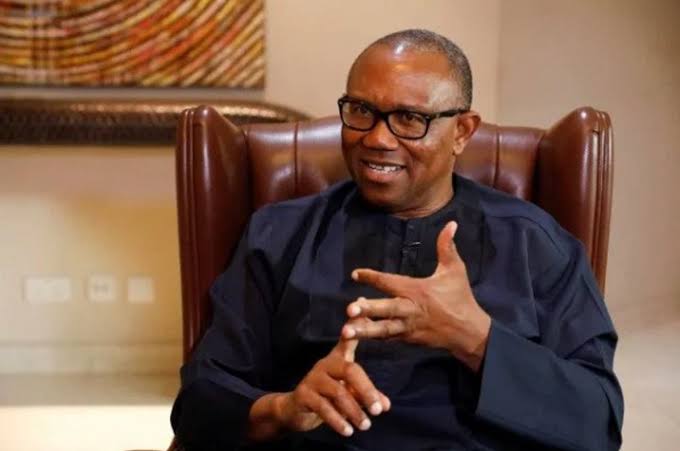
Former Anambra State Governor and presidential candidate of the Nigeria Democratic Congress (NDC), Peter Obi, has dismissed claims that he left the state with outstanding debt when he handed over power in 2014.
Obi said he left more than $150 million in investments for the state, arguing that the funds were sufficient to offset the $123.77 million debt recently attributed to his administration.
He made the statement on Thursday during an interview with Arise News, while responding to claims by the Anambra State Government that his administration left behind loans and other liabilities.
The state Commissioner for Information and Value Reorientation, Law Mefor, had alleged that Obi left $123.77 million in debt at the end of his tenure.
Mefor said the funds were obtained to finance projects covering malaria control, education, healthcare, erosion management, community development and value-chain development.
But Obi disputed the characterization of the funds as loans obtained by his administration from commercial banks.
“I told you these are not loans. I didn’t go to the bank,” Obi said.
He explained that the dollar-denominated portion of the state’s savings and investments in various bonds stood at more than $150 million when he left office.
According to him, the investments generated about $10 million annually for Anambra State.
Obi argued that even if the $123.7 million debt figure were accepted, the funds he left behind would have been sufficient to repay the alleged debt while preserving the state’s capital.
“As at the time I left office, the dollar components of my savings invested in various bonds were over $150 million, which gives Anambra State guaranteed income of about $10 million yearly,” he said.
“Let me assume the worst-case scenario — which is false — that there was $123.7 million owed as of the time I left. I left over $150 million that was earning about $10 million.
“If they just kept the money that I left and were using the income to pay the loan, they would have finished paying it now, with the capital of $150 million still remaining, and still giving Anambra State $10 million annually.”
The former governor likened the situation to inheriting an asset alongside an obligation, arguing that it would be misleading to describe the inheritance simply as a debt.
“Assuming your father left you an inheritance of $100 million, and suddenly somebody comes up and says your father is owing $10 million, are you going to go to the market and say your father left you with debts? You would be unfair,” he said.
Obi also distinguished between conventional borrowing and concessionary financing or support provided through multilateral institutions.
He said some of the funds were facilitated through collaboration between the Federal Government and the World Bank, with Anambra, Ekiti and Bauchi selected for support because of their performance in education.
“They selected Anambra, Ekiti and Bauchi because these three states were doing well in education and said, ‘Why don’t we give them concessionary multilateral support to help them do better?’” Obi said.
“It was a decision made by the Federal Government and the World Bank to give support.”
Obi maintained that, regardless of how the liabilities were classified, the financial resources he left behind were sufficient to cover the alleged debt.
The competing claims have renewed debate over the nature of the obligations inherited by successive administrations in Anambra and the financial position of the state at the end of Obi’s tenure in 2014.
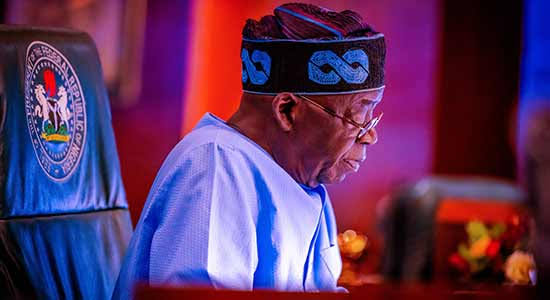
An energy policy expert, Izielen Agbon, has alleged that the Federal Government is planning to sell a controlling stake in the Nigerian National Petroleum Company Limited (NNPCL) to private investors after the 2027 general elections.
Agbon made the allegation during a webinar organised by the Alliance on Surviving COVID-19 and Beyond (ASCAB), chaired by human rights lawyer Femi Falana (SAN), on the theme, “Working-Class Solutions to PMS Price Increases and Fuel Subsidy Removal.”
According to him, discussions about selling NNPCL shares date back to 2023, with the alleged plan involving a reduction of government ownership to about 35 per cent.
“The Tinubu government is planning to sell the shares of NNPCL immediately after the election,” Agbon said.
He alleged that the proposed transaction would see private investors acquire the majority of the company’s shares, leaving the Federal Government with a minority interest.
“They are going to sell it so that the government will only own 35 per cent of the shares of NNPCL,” he said.
Agbon said the proposed structure was similar to the ownership model of Nigeria LNG Limited (NLNG), where the Nigerian government holds a minority stake alongside international oil companies.
Tinubu had announced NNPCL listing.
The allegation comes amid the Federal Government’s publicly stated plans to reform and eventually list NNPCL on the capital market.
President Bola Tinubu said in August 2026 that NNPCL would be reformed and listed on the Nigerian Exchange. The Nigerian Exchange Group also confirmed that the President had expressed commitment to listing the company as part of efforts to deepen Nigeria’s capital market and attract long-term investment.
However, the public announcement of a possible listing does not, by itself, establish Agbon’s allegation that the government intends to reduce its ownership to 35 per cent after the 2027 election.
NNPCL became a limited liability company under the Petroleum Industry Act (PIA) in 2022. Its 2024 financial statements describe the company as having taken over the assets and liabilities of the former NNPC and the Nigerian government’s interests in joint-venture assets.
Agbon warns against private control
Agbon argued that transferring majority ownership of NNPCL to private investors would amount to privatising an institution responsible for managing major national petroleum interests.
“Immediately, we sell the shares of NNPCL to our cronies,” he alleged. “And when you get the shares of NNPCL in private hands, what they have done is to just privatise the resources of the nation.”
He argued that the implications would extend beyond ownership of shares because of NNPCL’s role in Nigeria’s petroleum industry.
“If you control NNPCL and the law says NNPCL is the one in charge of all our government resources, then you actually have access to our government resources,” Agbon said.
He further warned that such a development could eventually result in the privatisation of assets associated with the company, including oil-producing interests and refineries.
The PIA, however, established NNPCL as a commercial entity operating under company law, with the government retaining its ownership interest. NNPCL’s own corporate documents describe the company as responsible for petroleum exploration, production, refining, transportation and product marketing.
Falana backs call for scrutiny
Falana, who chaired the webinar, said the alleged plan should become an issue for public debate ahead of the 2027 elections.
“The information you have just given us about the plan, about the secret plan to sell the shares of NNPC; they have been toying with it, but I think we also must make it part of the campaign,” Falana said.
He also challenged the comparison with NLNG, noting that Nigeria holds a 49 per cent stake in the company while international oil companies hold the remaining 51 per cent.
Falana raised concerns over the management and remittance of dividends generated from Nigeria’s interest in NLNG, alleging that billions of dollars had not been fully remitted into the Federation Account.
He cited figures of about $49 billion in NLNG dividends, claiming that approximately $22 billion had gone to the Federal Government.
NEITI has historically published data on NLNG-related revenues and government receipts, including detailed records of dividends. Its broader mandate is to promote transparency and accountability in Nigeria’s extractive sector.
2027 election issue
Agbon called on Nigerians and political actors to make the future ownership of NNPCL part of the 2027 election debate, alongside issues such as petrol prices and workers’ wages.
“There is a need for us to stop and use this opportunity, not only to fight to sell lower petrol prices, but to fight them to increase minimum wage, and to fight them to say you cannot sell the shares of NNPCL,” he said.
He maintained that Nigeria’s petroleum assets should remain under public ownership, arguing that elected governments have a limited mandate and should not dispose of major national assets without broad public scrutiny.
“That is the inheritance of the citizens of Nigeria as a nation. It’s not for sale,” Agbon said. “People are just elected to be leaders for four years, at maximum eight years. You cannot sell the whole house because you’ve been elected to serve the people for eight years.”
The allegation comes as the Tinubu administration continues its broader restructuring of NNPCL and the petroleum sector. In 2026, the Presidency also announced measures aimed at repositioning NNPCL as a fully commercial operator while safeguarding the Federation’s interests.
Note: Agbon’s claim that the government plans to sell a majority stake to private investors after the 2027 election remains an allegation.
The publicly documented position is that Tinubu supports reforming and listing NNPCL on the capital market; the specific 35 per cent government ownership figure and alleged post-2027 timetable were not established by the official sources reviewed.
Iran Rules Out Fresh US Talks as Trump Pushes for New Negotiations

Ex-Plateau Governor Wanted N40m Vehicle Invoice Doubled to N80m, Coscharis Founder Alleges

Obi: I Left Over $150m in Anambra, Enough to Offset Alleged $123.7m Debt


-

 Entertainment17 hours ago
BREAKING: Nollywood Actor Rykardo Agbor Survives Ghastly Car Crash in Ibadan
-

 Foreign16 hours ago
Sad! 27 Killed, 26 Injured in Two South Africa Mass Shootings as Police Hunt Gunmen
-

 News16 hours ago
Tinubu Shifts Return Date Again, Now Expected Back Tuesday
-
 News10 hours ago
NECO 2026: Kano beats Lagos, Oyo, emerges best-performing state
-

 News4 hours ago
2027: Elections must never be treated as do-or-die affairs – INEC Chair, Amupitan appeals to Emir of Zazzau
-

 Metro10 hours ago
Terrorists abduct newlywed couple, four others in Kwara
You must be logged in to post a comment Login