
News
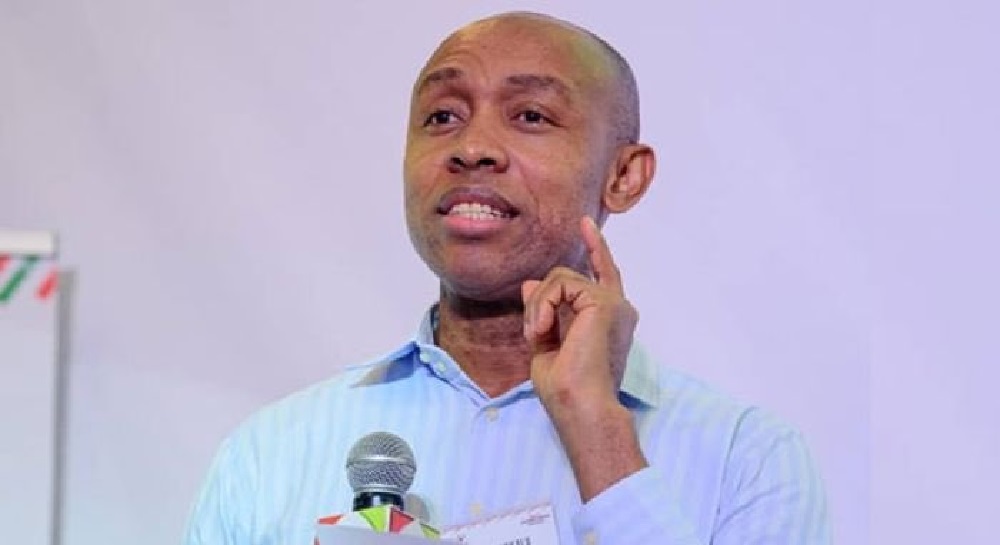
Rule by Judges is Not Rule of Law – By Chidi Anselm Odinkalu



“The judiciary has immense power. In the nature of things, judges cannot be democratically accountable for their decisions. It therefore matters very much that their role should be regarded as legitimate by the public at large.”
Jonathan Sumption, Law in a Time of Crisis, 121 (2021)
For a cumulative period of 17 years between 1885 and 1905, Hardinge Giffard – who was better known as Lord Halsbury – served three tenures as Lord Chancellor. In this capacity he earned a reputation for having “appointed many undistinguished men to the Bench because of their political services to the Conservative Party.” In 1897, Lord Salisbury, one of the Prime Ministers under whom Lord Halsbury served, advised him that “the judicial salad requires both legal oil and political vinegar; but disastrous effects will follow if due proportion is not observed.” For having so manifestly got the proportions out of kilter, Nigeria could be on course for a date Lord Salisbury’s predicted effects.
Abuja, Nigeria’s federal capital, is a place where mutual intercourse between lawyers, politicians and judges is both natural and habitual. It is home to judges too numerous to count and host to the headquarters of many court systems, including the High Court of the Federal Capital Territory (FCT High Court) as well as of Nigeria’s Court of Appeal and Supreme Court. The headquarters of the Court of Justice of the Economic Community of West African States (ECOWAS Court of Justice) is also in Abuja.
The pace of production and reproduction in the courts in Abuja has been rather dizzying recently. On the penultimate day of the past working week, Nigeria’s Supreme Court in a case instituted by the Federal Government against the states issued a decision designed to make it mandatory for local government to be run only by elected officials. This judgment has unlocked a predictable scrum of both political ululation and lamentation but the risk remains that its full benefits are likely to be undermined by the well-established jurisprudence of the Supreme Court in favour of bandit ballots which support the production of leaders at all levels who lack electoral legitimacy.
The day before the Supreme Court judgment, on the approach to the fourth anniversary of Nigeria’s #EndSARs uprising of 2020, the ECOWAS Court of Justice ruled that the conduct of the Nigerian government and its security agencies in their response to the #EndSARS uprising violated the guarantees of “security of person, prohibition of torture and cruel, inhuman, and degrading treatment, rights to freedom of expression, assembly, and association, duty to investigate human rights violations, and right to effective remedy.” In effect, the Court said that the Nigerian government engaged in a cover-up of the violations that occurred during the #EndSARS protests, especially at the Lekki Tollgate in Lagos.
Weighty as they were, both of these otherwise seminal outcomes were relative non-events in the political and judicial registers of Abuja this past week. On the same day that the ECOWAS Court delivered its judgment in the #EndSARS case to a near empty gallery and the day before the Supreme Court held forth on the destination of local government funds, all roads led to the Supreme Court where the outgoing Chief Justice of Nigeria, Olukayode Ariwoola, presided over the inauguration of 22 new Justices of the Court of Appeal and 12 new judges of the FCT High Court.
Many people may have missed the number of Justices of Appeal inaugurated, however. Anyone who followed the reportage would have been forgiven for supposing that there were just two Justices of Appeal sworn in: “Wike’s wife and 21 others”, a reference to the wife of political bruiser and current Minister of the Federal Capital Territory, Nyesom Wike. Also among the new Justices of Appeal is Abdullahi Liman, Kano’s self-appointed federal King-maker. The excess political vinegar in some of these most recent elevations to the Court of Appeal sadly detracts from the tasteful salad among some others. For the sake of their own professional and career advancement in a cynical system, it is best at this time to preserve the anonymity of those deserving ones.
Among the 12 new judges of the FCT High Court, at least seven were family members of serving or living judicial figures and three were family members of persons directly involved in the appointment process. Among these, the Chief Justice of Nigeria, who presided over the appointment, had his daughter-in-law made a judge; the Chief Judge of the FCT High Court made his daughter a judge; and the President of the Court of Appeal got her daughter appointed a high court judge for the second time in three years. In 2021, Governor Simon Lalong of Plateau State had made the same daughter a judge of the Plateau State High Court.
Responding to these appointments, Access to Justice, a group that monitors judicial independence and accountability in Nigeria pointedly said that “three candidates were ineligible to be considered for such appointments in the first place at the time the vacancies were announced.” This was in reference to the daughter of the Chief Judge of the FCT High Court; the daughter of the President of the Court of Appeal; and the daughter-in-law of the outgoing Chief Justice of Nigeria. According to the group, these three appointments were a composite transaction between the CJN, President of the Court of Appeal and the Chief Judge of the FCT High Court best described “in local parlance as: ‘you scratch my back, I scratch your back.’”
To say that these three appointments clearly violate the judicial code of conduct as well as the regulations governing judicial appointments is to be kind to the lack of scruples at the helm of the current judicial appointments process in the country. It makes a joke of the judicial appointment process that someone in Nigeria can be appointed a High Court judge while holding a subsisting appointment as a High Court Judge.
In the days when the Nigerian judiciary was under credible leadership, these judicial inaugurations would passed almost as a non-event, attended only by select staff of the affected courts and by some members of the families of the new appointees. Reflecting the mood and mores of the times and consistent with the current tyranny of perverse incentives in judicial appointments, however, this swearing in was a carnival taken over by cavalcades of dubious politicians and insider dealers in perverse political influence. Following the formal swearing in of the new judges, Abuja was littered with “receptions” convoked by politicians and senior lawyers for many of the new judges.
There was good reason for the politicians to make an obligation of their noisy presence at the swearing in of the new judges. Section 14(2) of Nigeria’s Constitution loudly proclaims that “sovereignty belongs to the people of Nigeria” but under colour of “rule of law” and judicial independence, the judges have toppled the people and installed themselves as the ones who alone can elect politicians to positions of power and influence in Nigeria. Access to political office now, therefore, is a transaction that begins and rests with political access to judges. Having thus murdered the rule of law, what we now have is rule by judges under which both political power and judicial office have become bereft of legitimacy. The victim is the public good.
The week ended with a report which said that “[J]udges top [the] list of bribe recipients in Nigeria.” 15 years ago, the African Commission on Human and Peoples’ rights warned that “the courts need the trust of the people in order to maintain their authority and legitimacy. The credibility of the courts must not be weakened by the perception that courts can be influenced by any external pressure.” In Nigeria, this is now a vain hope.
A lawyer and a teacher, Odinkalu can be reached at chidi.odinkalu@tufts.edu


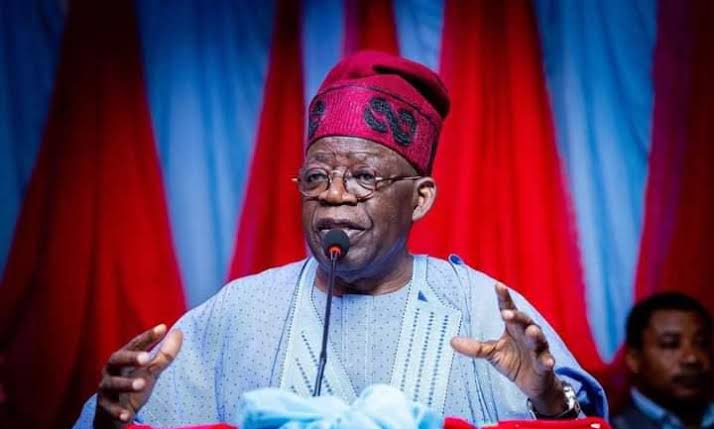
President Bola Tinubu has declared his intention to seek re-election in 2027, saying critics exploiting the country’s security challenges were doing the bidding of his political opponents.
Tinubu made the remarks while receiving Plateau State Governor Caleb Mutfwang and other stakeholders from the state, telling them that hostile forces were weaponising insecurity to undermine his administration.
“You are playing to the hand of agents, including my own enemies, who want to use insecurity to get rid of me,” he said, adding that he would not be deterred.
“I’m a very stubborn politician. I just refuse to go. And I will campaign for my second term.”
The declaration comes amid sustained pressure on the Federal Government over attacks by armed groups, kidnappings, and killings across several states, with opposition figures and civil society organisations demanding stronger federal action.
NDLEA raids 3 illicit drug warehouses, recovers N16.9bn worth of opioids
Tinubu has consistently defended his administration’s security record, maintaining that agencies are being adequately supported to restore stability.
The President took office in May 2023 and is constitutionally eligible to seek a second four-year term when Nigerians go to the polls in 2027.

…proposal aim to strengthen coordination and innovation across the Armed Forces
By Gloria Ikibah
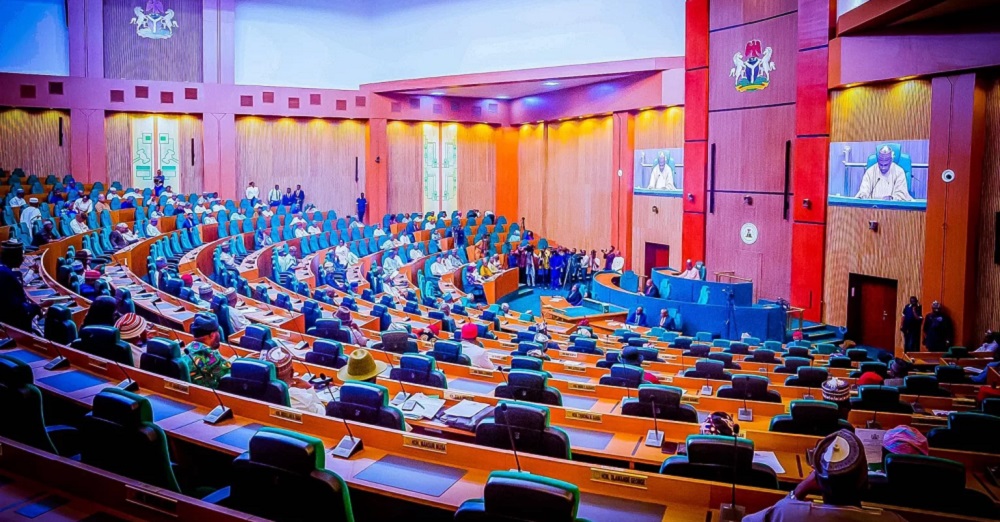
The House of Representatives has passed for second reading a proposal to set up a Joint Doctrine and Warfare Centre, envisioned as a high-level strategic hub to improve coordination, efficiency and overall performance within Nigeria’s Armed Forces.
The bill, sponsored by the Speaker, Tajudeen Abbas, is titled “A Bill for an Act to Establish the Joint Doctrine and Warfare Centre to Enhance the Coordination and Effectiveness of Military Operations of the Armed Forces of Nigeria by Integrating the Capabilities of Its Respective Services; and for Related Matters (HB 2741).”
It progressed to the next stage following debate by lawmakers on Wednesday during plenary.
The planned centre is intended to serve as a focal point for defence research, development of military doctrine, strategic planning and innovation in warfare, with particular attention on fostering closer collaboration among military and paramilitary bodies.
Commencing debate on the general principles of the legislation on behalf of the Speaker, Rep. Daniel Asama said, “the initiative is designed to bridge critical gaps in Nigeria’s defence framework, particularly the lack of a dedicated institution for developing and coordinating joint military doctrines.”
“The centre would establish a structured system for the formulation, validation and dissemination of joint doctrines, while also promoting interdisciplinary research on multi-domain operations”.
Asama further observed that Nigeria’s increasingly complex security landscape demands a more integrated and strategic military response.
“Nigeria faces complex security challenges, including terrorism, insurgency and cyber warfare, which require coordinated doctrinal responses among the Armed Forces.
“The absence of a dedicated institution for joint doctrine development has created operational gaps and limited interoperability among the services”, he said.
According to him, the proposed centre will serve as both a think-tank and a centre of excellence for doctrine formulation and warfare strategy.
“This bill provides the legal and institutional framework for the Joint Doctrine and Warfare Centre as a think-tank and centre of excellence for doctrine development and warfare strategy.
“It addresses the need for integrated doctrine development, unified command thinking and joint operational planning”, he added.
He described the bill as timely, the lawmaker said it would strengthen Nigeria’s capacity to respond to evolving threats while enhancing cooperation among the Army, Navy and Air Force.
He explained that the proposed centre would provide a standing platform for defence research, simulation exercises and policy coordination, with the aim of strengthening the long-term sustainability of the country’s security efforts.
The institution is expected to draw together major players in the security architecture, including the Ministers of Defence, service chiefs and specialists from the private sector.
Its responsibilities would cover aligning warfare strategies, monitoring emerging threats, reviewing operational requirements and offering strategic guidance for defence activities.
The centre would also work closely with defence institutions, universities, international allies and research organisations to advance joint doctrine development, simulation tools and contemporary warfare practices.
Among its core aims are improving Nigeria’s capacity to respond to hybrid and asymmetric threats, enhancing cooperation among the armed services, promoting defence research and expanding both regional and global security partnerships.
Asama expressed optimism that the proposal would markedly strengthen the nation’s military preparedness and strategic depth.
“The Joint Doctrine and Warfare Centre will serve as the intellectual and operational hub for defence coordination, doctrine formulation and integrated warfare planning,” he said.
Following its passage for second reading, the bill was referred to the House Committee on Defence for further legislative consideration.
When passed into law, the piece of legislation is expected to provide a solid institutional framework for advancing joint military operations and improving Nigeria’s response to current and emerging security challenges.
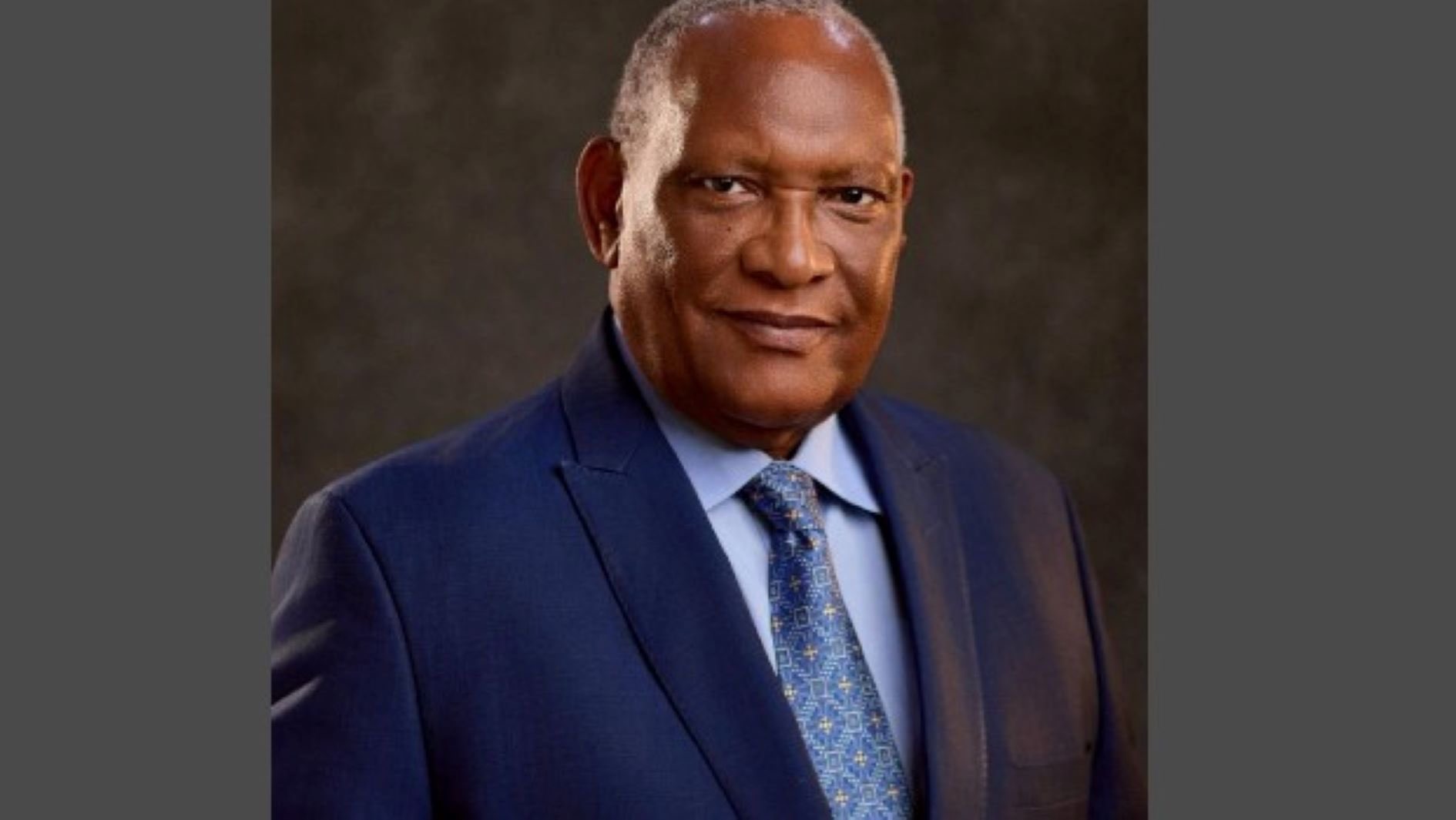
President Bola Ahmed Tinubu has approved the immediate removal of Mr. Saidu Mohammed as Chief Executive of the Nigerian Midstream and Downstream Petroleum Regulatory Authority (NMDPRA).
He has nominated Mr. Rabiu Abdullahi Umar to take over as the new Chief Executive. The appointment is pending confirmation by the Senate.
Details shortly….

2027: My opponents are arming terrorists against me — Tinubu

Lawmakers Move To Establish Military Strategy Hub

See Black Market Dollar To Naira Exchange Rate Today 29th April 2026




-

 Metro17 hours ago
Gunmen invade Ekiti church, k!ll pastor, abduct members during revival
-

 Metro17 hours ago
Delta police arrest officer who shot handcuffed suspect to death in Effurun
-

 Sports17 hours ago
PSG Beat Bayern Munich In Historic 9-Goal UCL Semifinal Thriller
-
 News17 hours ago
Ex-Zamfara Senator Marafa Joins NDC, Citing Court Cases Within ADC
-
 News9 hours ago
Court bars INEC from recognising ADC congresses conducted by Mark-led C’ttee
-

 News8 hours ago
Unbelievable: Police say officer who publicly executed handcuffed Delta man was under “spiritual attack”
-
 News4 hours ago
Reps back digital overhaul of election petition procedures
-

 News3 hours ago
BREAKING: Supreme Court fixes date for verdict on ADC, PDP leadership tussles
You must be logged in to post a comment Login