Connect with us

News

Reps C’ttee Queries Abuja Park and Pay Arrangement, 60% Revenue Share To Concessionaires

Published

on

ADVERTISEMENT
Zoom Ad
ADVERTISEMENT
Zoom Ad
 
By Gloria Ikibah 
 
 
The house of representatives has berated the Park and Pay arrangement of the Federal Capital Territory Administration (FCTA) which was stopped by a court of law in 2014 but reintroduced in 2023.
 
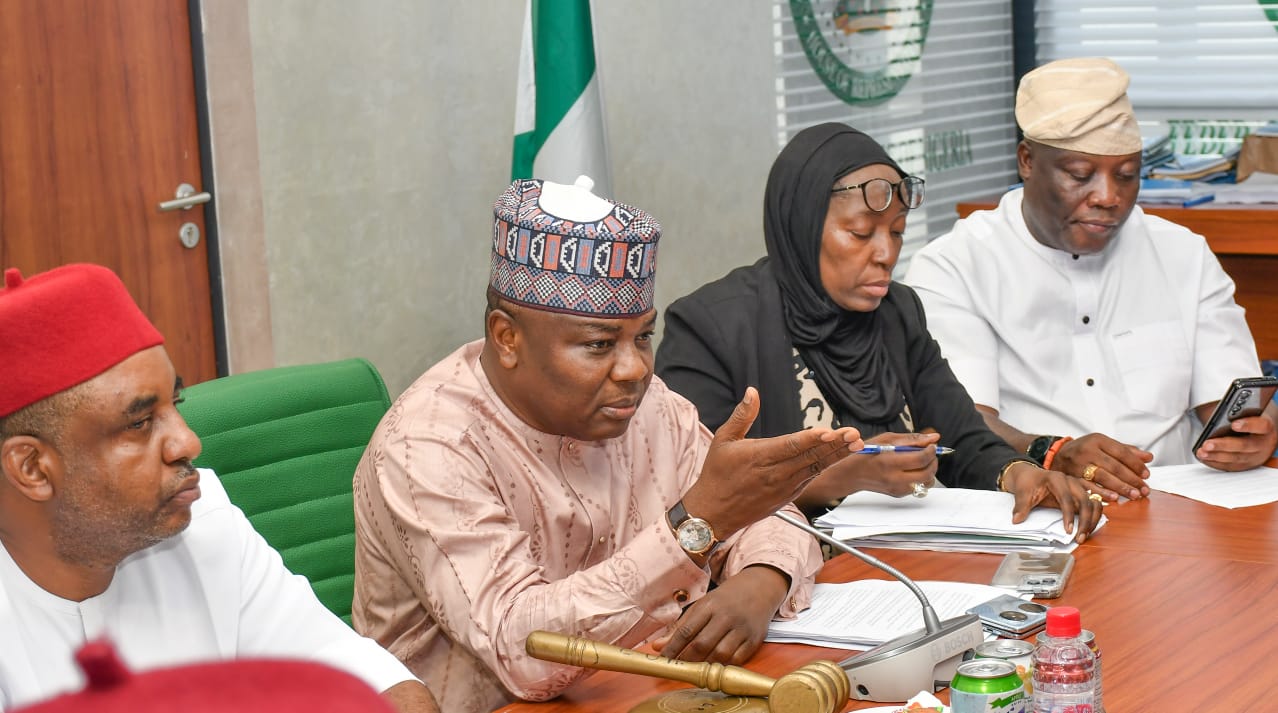
In an interactive session with the Mandate Secretary of Transport Secretariat, on Tuesday in Abuja, the House Committee on Federal Capital Territory stated that residents and motorists are being harassed by those employed to enforce the policy.
 
Naijablitznews.com reports that the FCTA reintroduced the park and pay policy into the nation’s capital in August, 2023, after signing an agreement with two concessionaires. The policy was aimed at decongesting the city and make motoring a more pleasant experience.
 
Naijablitznews.com recalled that the policy was suspended in April 2014 after a high court judgement stopped the FCTA from collecting fees from residents for on-and-off the street parking within the metropolis, the court ruled that the policy was not backed by law.
 
Chairman of the Committee, Muktar Betara, directes details on how the reintroduced park and pay arrangement was established, who authorised it, and how remittances are made to the coffers of the FCDA be made available to the committee. 
 
Responding, Elechi said the policy is regulated and supported by a legal framework and that only designated areas serve as parking zones.
 
“The park and pay is by regulation. We have legal framework. It is part of the ways of controlling traffic. So, under the part and pay, designated areas are meant to be parks. So, it is legal. 
 
“It is (revenue) paid through concessionaires. There is usually a ration between the concessionaires and the FCT. So, for areas where we have the concessionaires, there is a percentage that goes to the concessionaires. It is 60 percent and 40 percent goes to FCT. The infrastructures for the work is usually provided by the concessionaire. It (revenue) goes straight to the revenue account of the FCT not transportation”, he said. 
 
The Chairman further queried the contract process, “How was the contract established? In appointing your concessionaires, what procedure did you follow? How much has been remitted to the FCDA from January to date Who gave you the approval” Betara asked.
 
In response, Director of Legal Services, Hussaina Olayemi, explained that the Infrastructure Concession Regulatory Commission (ICRC) and Abuja Investment Company (AIC), and all FCT organisation responsible for public-private partnerships, were involved.
 
“After their involvement, the concession was submitted to the federal executive council (FEC) for approval. So, we have the FEC approval,” Olayemi stated.
 
The committee queried the FCDA for allocating 60 percent of revenue to concessionaires while the government receives only 40 percent, demanding clarification on what infrastructure the concessionaires are providing.
 
But the Mandate Secretary stated that the concessionaire w
s responsible for marking roads. However, the committee chair countered, asserting that no roads in Abuja have been marked by the concessionaire.
 
“They way they (concessionaires) operate in Abuja, they harass people on the streets. Il would have advised you people to have given the VIO this concessionaire. Let them take up this so that the whole revenue would go to FCT. Why are you personalizing this for an individual,” Betara said. 
 
The committee ruled that, on the next appearance, the mandate secretary should bring a copy of the agreement with the concessionaires and details of the remittances received from January to date. 
 
 
ABANDONED MOTOR PARKS 
 
The committee also questioned the FCDA officials over abandoned motor parks in the nation’s capital.
 
A member of the committee, Paschal Agbodike, expressed concerns over the condition of the Nyanya park.
 
“When motorists don’t have parks, they operate anyhow. We noticed that the Nyanya park has been abandoned. When are you going to address this, and what caused its abandonment? he asked. 
 
In response, Elechi said the park has not been abandoned, and that government was taking one project at time, with initial focus on rails.
 
“Nyanya park is not abandoned. We cannot do everything at the same time. When we came on board, the rail was a priority, but now our attention has shifted to the development of parks. We are currently focusing fully on the bus terminal,” he said. 
 
The committee also sought details on the financial allocations and expenditures for various projects. However, the transport officials struggled to provide concrete figures.
 
Rep. Kama Nkemkanma pressed for specifics on the budget for road mapping from the airport to the city center, while Betara questioned the transport director about the funds provided in 2022 and 2023.
 
The Mandate Secretary and Director of Finance could not provide specific figures on the various projects. 
 
“It is quite unfortunate that everybody keeps saying they can’t remember the figure. You are the CEO. It is not good for us, and it is not good for the committee and your agency. We are talking about Nyanya park here, and a lot of money has been expended, but there is nothing to show for it. Even the committee knows how much was budgeted for this particular project. This does not speak well. If you don’t know the figures, how then can you manage the whole of Abuja? It’s impossible,” Nkemkanma said
 
The committee directed that a a comprehensive report detailing the total budget and expenditures for the years 2022, 2023, and 2024 be made available to facilitate proper scrutiny and oversight.

Continue Reading
Advertisement
Click to comment

Warning: Undefined variable $user_ID in /home/naijuinz/public_html/wp-content/themes/zox-news/comments.php on line 49

You must be logged in to post a comment Login

Leave a Reply

News

BREAKING: President Faye of Senegal Takes Helm of ECOWAS at Regional Summit

Published

on

ADVERTISEMENT
Zoom Ad
ADVERTISEMENT
Zoom Ad

By Gloria Ikibah

Senegalese President, Bassirou Diomaye Faye, has been elected as the new Chairman of the ECOWAS Authority of Heads of State and Government, taking over the leadership of the regional bloc at a crucial period for West Africa.

His election was announced during the 69th Ordinary Session of the ECOWAS Authority of Heads of State and Government, held in Lungi, Sierra Leone.

Faye succeeds the outgoing chairman as ECOWAS continues to grapple with regional security challenges, political transitions, economic integration and efforts to strengthen cooperation among member states.

Advertisement

His emergence is expected to usher in a new phase of leadership with a focus on promoting peace, democratic governance, economic development and regional unity across West Africa.

Continue Reading

News

Nigeria Pushes for Stronger ECOWAS, Condemns Afrophobia, Calls for Deeper Regional Unity

Published

on

ADVERTISEMENT
Zoom Ad
ADVERTISEMENT
Zoom Ad

By Gloria Ikibah

Vice President Kashim Shettima has reaffirmed Nigeria’s commitment to a more united, secure and economically integrated West Africa, urging ECOWAS member states to embrace good governance, strengthen democratic institutions and accelerate implementation of the ECOWAS Compact for the Future of Regional Integration.

Speaking on behalf of President Bola Ahmed Tinubu at the 69th Ordinary Session of the ECOWAS Authority of Heads of State and Government and the Summit of the Future in Lungi, Sierra Leone, Shettima said Nigeria remained committed to providing principled leadership in advancing peace, prosperity and regional cooperation.

He began by expressing appreciation to the Government and people of Sierra Leone for hosting the summit and congratulated President Julius Maada Bio on the inauguration of the Julius Maada Bio International Conference Centre.

Advertisement

The Vice President commended President Bio’s stewardship of ECOWAS over the past year, describing his leadership as instrumental in sustaining dialogue and regional solidarity amid political, economic and security challenges.

He also praised the ECOWAS Commission for developing the ECOWAS Compact for the Future of Regional Integration, describing it as a forward-looking roadmap for the region.

He said: “Nigeria reaffirms its unwavering commitment to the Compact, which represents a significant milestone in our regional integration journey. It reflects the collective resolve of Member States to renew the ideals of ECOWAS, strengthen regional solidarity, and build a more resilient, prosperous, peaceful, and people-centred Community capable of meeting the aspirations of its over 400 million citizens.”

According to Shettima, the Compact aligns with ECOWAS Vision 2050 and extends the bloc’s collective aspirations towards 2075 by shifting the focus from an “ECOWAS of States” to an “ECOWAS of the People.”

Advertisement

He reaffirmed Nigeria’s readiness to work closely with other member states to ensure the successful implementation of the Compact’s strategic pillars.

“As the largest economy and one of the key founding members of our Regional Economic Community, Nigeria remains steadfast in its historic responsibility to continue the promotion of regional unity, peace, economic integration, and democratic governance.”
On economic integration, Shettima stressed the need to expand regional trade, industrialisation and infrastructure while supporting the gradual implementation of the ECO single currency.

“Nigeria remains committed to initiatives that remove trade barriers, improve cross-border infrastructure, facilitate the free movement of persons, goods, and services, and create an enabling environment for businesses, entrepreneurs, and investors to thrive across West Africa”, he said.

Addressing governance and security, the Vice President said sustainable development could only flourish in an atmosphere of peace and stability.

Advertisement

He reaffirmed Nigeria’s support for constitutional governance, the rule of law and democratic principles.

“Beyond adventurism, the most effective tool against unconstitutional changes of government and mass protests that are capable of undermining good order is for us to enthrone good governance that delivers more tangible benefits to our citizens. We must also avoid the temptation to tamper with constitutional term limits or exploit constitutional processes”, he noted.

He further reiterated Nigeria’s commitment to establishing the ECOWAS Counter Terrorism Force and strengthening the regional Standby Force.

“Nigeria remains committed to the setting up of the Counter Terrorism Force, and strengthening of the ECOWAS Standby Force in order to enhance counter-terrorism cooperation, intelligence sharing, joint security operations, and preventive diplomacy to safeguard peace and stability across our region”, he added.

Advertisement

The Vice President also highlighted the importance of science, technology and innovation in driving regional development.

He welcomed plans to establish a Digital Single Market and regional frameworks for artificial intelligence, cybersecurity and digital infrastructure.

On youth and women, Shettima described them as West Africa’s greatest asset and called for greater investment in education, entrepreneurship and leadership opportunities.

“Nigeria remains dedicated to advancing gender equality, expanding opportunities for women in leadership and decision-making, investing in education and skills development, supporting youth entrepreneurship, and ensuring that young people are active participants in shaping the future of West Africa”, Shettima said.

Advertisement

Turning to institutional reforms, he stressed the importance of accountability, transparency and sustainable financing in restoring public confidence in ECOWAS.

He also called for stronger regional cooperation in response to changing global geopolitical realities.

On recent tensions within the region, Shettima reiterated Nigeria’s commitment to dialogue and constructive engagement, particularly with the Alliance of Sahel States (AES).

“Nigeria remains firmly committed to dialogue, solidarity and constructive engagement, especially with the AES, as the foundation for preserving the unity, relevance, and future of ECOWAS”, he said.

Advertisement

The Vice President used the occasion to strongly condemn recent attacks on African nationals in South Africa.

Shettima also reminded South Africa of Nigeria’s role during the anti-apartheid struggle.

He disclosed that Nigeria had already evacuated 1,490 of its citizens from South Africa in seven batches and remained prepared to continue diplomatic engagement on the matter.

“Nigeria condemns in strong terms the recent Afrophobic attack on its citizens and other fellow Africans in the Republic of South Africa.

Advertisement

“South Africa should be reminded that the freedom the country currently enjoys is due to the liberation efforts of African countries such as Nigeria”, he stated.

Backing Ghana’s earlier proposal, he urged ECOWAS to table the issue before the African Union.

“ECOWAS should present this matter before the next meeting of the Authority of the African Union to send a clear message that this type of behaviour is unacceptable.”

Vice President Shettima therefore urged governments, regional institutions, civil society, development partners, the private sector, women and young people to support the implementation of the ECOWAS Compact.

Advertisement

“The Compact provides a roadmap to strengthen regional unity, restore public trust, and build a more resilient and people-centred ECOWAS capable of effectively addressing current and future challenges.

“Nigeria will continue to provide principled leadership and work with all Member States to advance our shared vision of a peaceful, integrated, prosperous, secure and globally respected West Africa, in line with our aspirations”, Shettima said.

Continue Reading

News

Peter Obi gives reason why he picked Kwankwaso as running mate

Published

on

ADVERTISEMENT
Zoom Ad
ADVERTISEMENT
Zoom Ad

Presidential candidate of the Nigeria Democratic Congress, Peter Obi, has disclosed reason behind his decision to pick the leader of Kwankwassiyya Movement, Rabiu Kwankwaso, as his running mate.

In an interview with Sun, Obi said he decided to settle for the former governor of Kano State because “Kwankwaso has the philosophy of pulling people out of poverty”.

Obi said himself and Kwankwaso have similar philosophy on reviving the country’s economy to better the lives of citizens.

“I have the same philosophy. Kwankwaso believes in education. You cannot change society without education.

Advertisement

“If you look at my X, formerly Twitter, I made it clear that I will emphasise on education. Education is going to change society.

“Nigeria must be seen to form its innermost human capital, which we need to develop. Kwankwaso believes in this. I do. We have synergy.”

Obi also dismissed speculation suggesting that there is disagreement between him and Kwankwaso, stating that they remain united in strategizing ahead of the January 2027 elections.

Advertisement
Continue Reading

Trending

Copyright © 2024 Naija Blitz News