Connect with us

News

Food Insecurity: Nigeria now number two worldwide

Published

on

ADVERTISEMENT
Zoom Ad
ADVERTISEMENT
Zoom Ad
Nigeria has further climbed up the ladder, moving from fourth to second among countries with the highest number of people battling with food insecurity in the world, according to a 2024 Global Report on Food Crises.
The report which accounts for 59 countries places Congo DR as the country having the highest number of people facing food insecurity in the world at 25.8 million for a nation with less than 100 million population.
Nigeria, Africa’s most populous nation with over 220 million people has more than 24 million people who are food insecure and plunged into hunger.
Other countries among the top five nations that are faced with food insecurity includes: Sudan, Afghanistan and Ethiopia with 20.29, 19.9 and 19.7 million citizens respectively.
The GRFC highlighted conflict and insecurity, economic shocks and extreme weather conditions as major drivers of food insecurity, noting that in 2023, almost 282 million people of 59 countries experienced high levels of acute food insecurity requiring urgent interventions.
“A food crisis is a situation where acute food insecurity requires urgent action to protect and save lives and livelihoods at local or national levels and exceeds the local resources and capacities to respond,” the report said.
As of 2016, Nigeria was fourth among countries with the highest number of people facing food insecurity but rose to second in 2017. It however sharply fell to eight positions in 2018.
Fast forward to 2019, Africa’s largest economy dropped again to ninth but lost steam as it rose to sixth in 2020, fifth in 2021 and fourth in 2022 before hitting the second spot in 2023.
“The drivers of food crises are interlinked and mutually reinforcing. Acute food insecurity is rarely driven by a single shock or hazard, but rather by the interaction between shocks and underlying poverty, structural weaknesses and other vulnerability factors,” the report stated.
According to the report, of the 59 countries analysed, 21 of them are facing food insecurity due to economic shocks buoyed by structural weaknesses; 20 of the cases were due to conflict and insecurity while 18 were on account of extreme weather conditions.
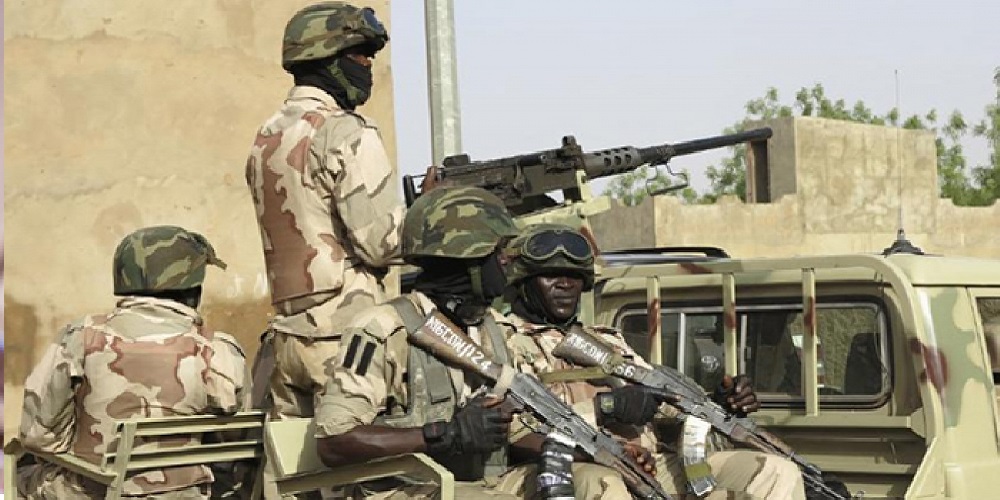
Nigeria is presently contending with severe food shortages as food producing regions are plagued with insecurity challenges which have forced farmers off their farms in search for other jobs.
Economic reforms by the government over a year ago – removal of petrol subsidy and devaluation of the naira — have sent prices of the roof, squeezing the already squeezed Nigerians.
These fiscal imbalances have seen the country’s headline inflation surged to 34.19 percent while food prices have continued to rise, leaving many with nothing to eat.
The government, though has rolled out measures to douse the pains of these reforms. However the palliative measures are yet to cool the prices of staples already up in the market.

Continue Reading
Advertisement
Click to comment

You must be logged in to post a comment Login

Leave a Reply

News

Just in: Tinubu assents 2026 Appropriation Bill, 2025 Budget Extension

Published

on

ADVERTISEMENT
Zoom Ad
ADVERTISEMENT
Zoom Ad

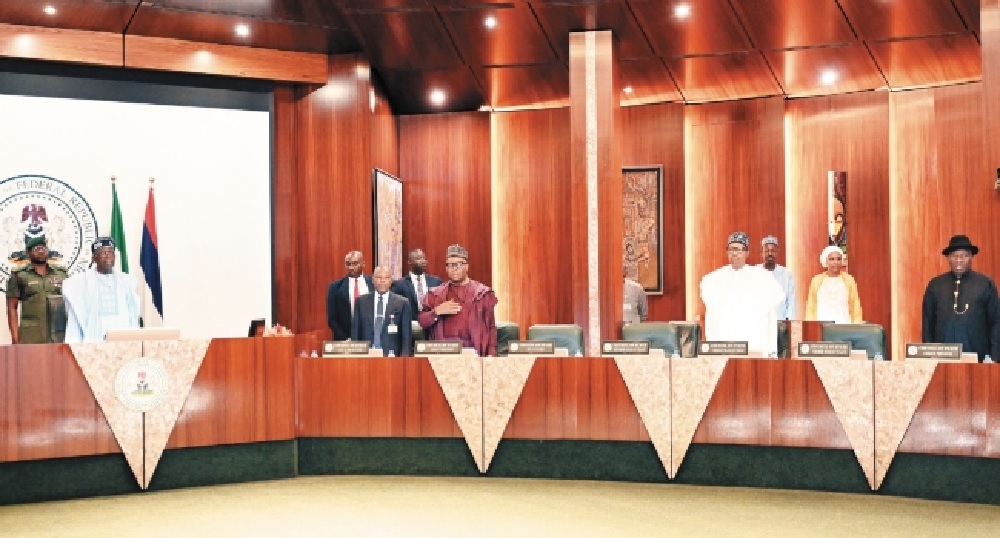
President Bola Tinubu has assented to the 2026 Appropriation Bill, which provides for an aggregate expenditure of ₦68.32 trillion.

He also signed the bill extending the implementation period for the 2025 budget from March 31, 2026, to June 30, 2026.

This was announced on Friday in a statement by his Special Adviser on Information and Strategy, Bayo Onanuga.

The ₦68.32 trillion budget for this year earmarks ₦4.799 trillion for statutory transfers and ₦15.8 trillion for debt service.

Advertisement

It allocates ₦15.4 trillion to recurrent expenditure and ₦32.2 trillion to the Development Fund for Capital Expenditure.

“With capital expenditure accounting for about 50 per cent, the 2026 budget underscores the administration’s continued commitment to economic stability, national security, infrastructure development, and inclusive growth.

The allocations reflect a strategic balance between statutory obligations, debt servicing, recurrent expenditure, and capital investments critical to driving productivity and improving the quality of life for Nigerians,” the statement read in part.

The President also has assented to the Appropriation (Repeal and Enactment) (Amendment) Bill, 2026, which extends the implementation period of the capital component of the 2025 Appropriation Act from March 31, 2026, to June 30, 2026.

Advertisement

The extension, the statement revealed, would ensure the full and effective utilisation of appropriated funds, particularly for critical infrastructure and development projects that are at advanced stages of implementation across the country.

It will enable ministries, departments, and agencies (MDAs) to consolidate ongoing works, enhance project completion rates, and maximise value for public expenditure. With the 2026 Appropriation Act coming into force on April 1, the Federal Government will commence full implementation in line with the Renewed Hope Agenda,” it added.

Additionally, President Tinubu directed MDAs to ensure disciplined, transparent, and efficient utilisation of allocated resources, with a strong emphasis on value for money and timely project delivery.

He commended the National Assembly for its diligence, cooperation, and patriotism in expeditiously considering and passing the budget.

Advertisement

The President reaffirmed the importance of sustained collaboration between the executive and legislative arms of government in advancing national development objectives.

Tinubu also assured Nigerians of his administration’s resolve to deepen fiscal reforms, enhance revenue generation, and prioritise investments that will stimulate economic growth, create jobs, and strengthen social protection mechanisms.

The budget is also expected to be partly financed through external borrowing, following the approval of a foreign loan plan exceeding $21 billion to bridge the fiscal gap.

₦9.85trn Increase

Advertisement

The 2026 budget represents an increase of ₦9.85 trillion over the initial proposal of ₦58.47 trillion that Tinubu submitted to the National Assembly, and ₦13.33 trillion higher than the 2025 budget.

The President had while presenting the 2025 budget proposal before federal lawmakers in December 2025, pegged the capital expenditure at ₦26.08 trillion and the crude oil benchmark at US$64.85 per barrel.

He disclosed that the expected total revenue was ₦34.33 trillion; ₦15.52 trillion for debt servicing.

The proposal was anchored on a crude oil production of 1.84 million barrels per day, and an exchange rate of ₦1,400 to the US Dollar for the 2026 fiscal year.

Advertisement

Amid the growing concerns over insecurity across the country, Tinubu said his administration would “invest in security with clear accountability for outcomes—because security spending must deliver security results”.

“We will take decisive steps to strengthen agricultural markets. Food security is national security.

“The 2026 budget prioritises input financing and mechanisation; irrigation and climate‑resilient agriculture; storage and processing; and agro‑value chains,” he told the National Assembly members.

Nigeria’s budgets in recent years have come under fire with experts critcising the poor implementation and release of funds for the execution of important national projects.

Advertisement

But the Tinubu administration said that the 2026 national budget was well-planned to solidify the gains of its reform agenda.

“Our ‘Budget of Consolidation, Renewed Resilience and Shared Prosperity’ is critical. It is a commitment to double down on what is working, to solidify gains, and to ensure that the shared prosperity we speak of becomes a lived reality for more Nigerians, faster,” Minister of Information and National Orientation, Mohammed Idris, said in a statement.

Continue Reading

News

BREAKING: Popular sports analystt, Okomi is dead

Published

on

ADVERTISEMENT
Zoom Ad
ADVERTISEMENT
Zoom Ad

Popular sports broadcast journalist with Classic FM 97.3, Temisan Okomi, has died.

A journalist with News Central, Olawale Adigun, confirmed his death in a statement shared on X on Friday.

He wrote on X, “The worst way to go into the weekend is hearing about Temisan Okomi’s passing. I’m so gutted and, at the same time, terrified. This man meant so much to me.”

Recall that news of his death has since stirred reactions on X, with colleagues and fans expressing shock and grief.

Advertisement

The late journalist had worked with Lagos Television, HiTV, and other prominent media organizations in Nigeria.

His last post on X was on April 14, 2026, when he wrote, “The Champions League is hard, man.”

Continue Reading

News

Kwankwaso has decided to be Obi’s running mate-Ibrahim Abdulkarim reveals

Published

on

ADVERTISEMENT
Zoom Ad
ADVERTISEMENT
Zoom Ad

Ibrahim Abdulkarim, a political associate of ex-governor of Anambra State, Peter Obi, has claimed that the former governor of Kano State, Rabiu Kwankwaso, has agreed to deputize the Obi in the 2027 presidential race.

He spoke during an interview on Trust TV, said the Obidients and the Kwankwassiyya Movements are already aligning towards Obi/Kwankwaso ticket.

Asked if Obi and Kwankwaso had struck a deal, Abdulkarim said “yes, I can categorically tell you that they have agreed”.

We all know that. Both the Obidients and the Kwankwassiyya Movements are aware of the agreement”.

Advertisement

Recall that Kwankwaso recently decamped from the New Nigerian Peoples Party, NNPP to the African Democratic Congress, ADC.

His move stirred suspicion that the two political gladiators may have agreed to run for the 2027 presidency on a single ticket.

Continue Reading

Trending

Copyright © 2024 Naija Blitz News