Connect with us

News

Emir of Kano, Sanusi Bags Another PhD From London University

Published

on

ADVERTISEMENT
Zoom Ad
ADVERTISEMENT
Zoom Ad

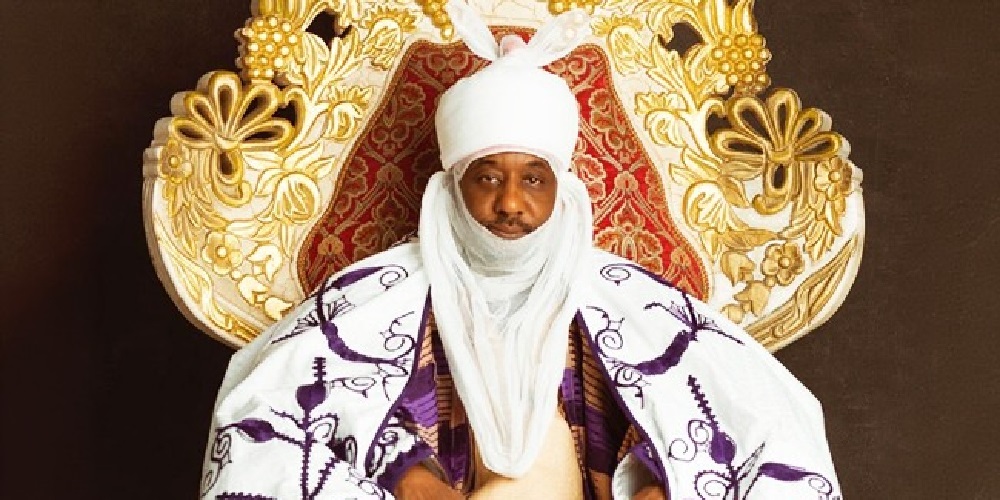
Muhammadu Sanusi II, the 16th Emir of Kano, has achieved another academic milestone, earning a doctorate in Islamic Law from the University of London, United Kingdom.


In a touching video, Sanusi appeared visibly emotional after being informed that his thesis had been approved without any corrections.

The moment was captured during a virtual meeting, where the monarch was congratulated for his academic accomplishment.

Sanusi’s doctoral thesis, titled “Codification of Islamic Family Law as an Instrument of Social Reform: A Case Study of the Emirate of Kano and Comparison with the Kingdom of Morocco,” explores the role of Islamic family law in driving social change.

Advertisement

The journey towards his PhD began after Sanusi was deposed as Emir of Kano by then-governor Abdullahi Ganduje in 2020.

Following his removal, Sanusi relocated to the UK, where he dedicated himself to his studies.

In the months following his dethronement, Sanusi was also granted a visiting fellowship at the African Studies Centre of the University of Oxford.

This academic achievement is the latest in a series of honours for Sanusi. In 2019, he was awarded an honorary doctorate in finance by the School of Oriental and African Studies at the University of London.

Advertisement

The former Central Bank of Nigeria (CBN) governor also holds a second bachelor’s degree in Islamic studies from the Africa International University in Khartoum, Sudan, which he earned in 1997.

His academic journey began in 1981 with a degree in Economics.

Sanusi’s educational background and intellectual pursuits make him one of the most educated individuals to have ever held a traditional title in Nigeria.

Advertisement
Continue Reading
Advertisement
Click to comment

Warning: Undefined variable $user_ID in /home/naijuinz/public_html/wp-content/themes/zox-news/comments.php on line 49

You must be logged in to post a comment Login

Leave a Reply

News

FG Scraps JSS And SSS Secondary Education System

Published

on

By

ADVERTISEMENT
Zoom Ad
ADVERTISEMENT
Zoom Ad

The Federal Government has announced the discontinuation of the disarticulation policy that separated Junior Secondary Schools from Senior Secondary Schools, saying the arrangement has failed and contributed to a crisis of more than 20 million students dropping out before reaching senior secondary.

Minister of Education, Dr Tunji Alausa, disclosed this on Tuesday in Abuja at the inauguration of the UBEC Ministerial Implementation and Monitoring Committee.

He said the policy, which required JSS and SSS to operate separately both physically and administratively, has resulted in overcrowded junior secondary facilities and underutilised senior secondary schools across several states.

According to him, the policy prioritised administrative positions over students’ educational needs and has left thousands of children without access to the next level of learning.

Advertisement

He noted that data from states such as Kaduna and other parts of the north show overflowing JSS classrooms while senior secondary schools remain largely empty because there is one principal for JSS and another for SSS.

“We have 20 million drop out from primary school to JSS. Where are those students? And what we also noticed was that we have 80,000 public primary schools, and junior secondary school, we have just about 15,000. That ratio is one to eight.

“And if you look at the completion rate. So, it’s us as government not doing what we need to do, but the previous government might have failed in this regard, but this government will not fail. We’re fixing this. So, we need to open up as much more opportunities for students to attend these schools, primary schools infrastructure.

“This disarticulation policy has also contributed to this. We’re seeing data from, say, like Kaduna and other northern states, because you have one principal for junior secondary school and another principal for senior secondary schools. We have overflowing JSS, empty senior secondary school.

Advertisement

“So, I can objectively report today that this disarticulation policy has failed. We will phase it out. We can’t be creating positions because we want to create director level for people while we harm our education system. It’s not right. It’s about doing what is good for every Nigerian child.”

Alausa said the proposal to abolish the policy will be tabled for consideration at the next meeting of the National Council on Education as part of efforts to expand access and improve learning outcomes for Nigerian children.

The high-powered committee chaired by Prof. Rashid Aderinoye is to ensure that hundreds of Smart Schools, Bilingual Schools and Alternative Schools funded by the Universal Basic Education Commission are completed, handed over to states and opened for learning.

The Minister said the committee would drive implementation and monitoring to ensure the projects deliver quality education.

Advertisement

He lamented that although UBEC had invested heavily in the three categories of schools across the country, many projects remained unfinished, while several completed schools had yet to be handed over to state governments or integrated into their education systems.

He described the situation as a waste of public resources and a denial of learning opportunities for thousands of children.

Earlier, UBEC Executive Secretary, Aisha Garba, said the Federal Government had made significant progress in expanding access to quality basic education through its Smart Schools, Bilingual Schools and Alternative Schools initiatives.

She disclosed that 37 Smart Schools had been established across the federation, with 24 already conducting academic activities, while the remaining schools were at different stages of completion, furnishing and operational readiness.

Advertisement

She added that under the UBEC–Islamic Development Bank Bilingual Education Programme, 30 schools had been established in nine participating states, with three boarding schools completed and commissioned and four others awaiting commissioning.

She said the Alternative Schools Programme was also expanding access to education for out-of-school children through flexible and inclusive learning.

Garba said the newly inaugurated Ministerial Implementation and Monitoring Team would monitor project implementation, facilitate timely completion and handover of schools, resolve bottlenecks, and ensure government investments translate into fully functional schools.

Speaking on behalf of the committee, Prof. Aderinoye assured that members would discharge their responsibilities with diligence, transparency and commitment to results.

Advertisement

He pledged that the committee would monitor implementation across the country, address delays, and ensure investments improve access to quality education for Nigerian children.

Continue Reading

News

Akpodiete Queries Delta Assembly’s Morality on Udu Seat, Cites Lawmakers’ Defection to APC

Published

on

By

ADVERTISEMENT
Zoom Ad
ADVERTISEMENT
Zoom Ad

Ughelli– Hon. Dr. Olotu Akpodiete JP, a House of Representatives candidate hopeful under the Peoples Democratic Party, PDP, has condemned the decision of the Delta State House of Assembly to declare the Udu Constituency seat vacant.

In a statement on Tuesday, Dr. Akpodiete described the action as “undemocratic” and called on the affected lawmaker, Hon. Collins Egbetamah, to challenge it in court. He expressed confidence that the matter would be resolved in favour of Udu Constituency.

“Udu Constituency’s voice cannot be shut down in the State House of Assembly,” he said. “I believe Hon. Egbetamah will be victorious if he seeks redress through the appropriate legal channels.”

Dr. Akpodiete also questioned the moral standing of the Assembly to declare the seat vacant, noting that several lawmakers had themselves defected from the PDP to the APC last year. He urged the House to reconsider and recall its decision to ensure that Udu Constituency continues to participate fully in legislative activities.

Advertisement

He further appealed to constituents in Udu to remain calm, expressing hope that the seat would be restored and representation would not be interrupted.

Continue Reading

News

Nigeria-UN Renew Push For  Africa’s Growth

Published

on

ADVERTISEMENT
Zoom Ad
ADVERTISEMENT
Zoom Ad

By Gloria Ikibah

Nigeria and the United Nations have reaffirmed their commitment to deepening cooperation on Africa’s development, democratic governance, women’s leadership and regional economic integration following high-level talks in Abuja.

The Minister of Foreign Affairs, Ambassador Bianca Odumegwu-Ojukwu, received the Regional Director for Africa at the United Nations Development Programme (UNDP), Ahunna Eziakonwa, on Monday, where both sides reviewed the long-standing partnership between Nigeria and the United Nations and explored fresh areas of collaboration.

During the meeting, Odumegwu-Ojukwu congratulated Eziakonwa on her appointment as a United Nations Assistant Secretary-General, describing the elevation as a milestone for both Nigeria and Africa.

Advertisement

“Your appointment is a source of pride for Nigeria and the African continent. It reflects your distinguished contributions to international development, and Nigeria remains committed to strengthening its longstanding partnership with the United Nations in advancing sustainable development, democratic governance and regional prosperity,” the minister said.

The discussions focused on democratic governance, sustainable development, regional integration and peacebuilding, while also reviewing Nigeria’s foreign policy priorities under the government’s 4-Ds framework of Development, Democracy, Demography and Diaspora.

Briefing the minister, Eziakonwa highlighted the outcome of the recently concluded regional dialogue on the implementation of the African Continental Free Trade Area, which Nigeria hosted in partnership with the UNDP.

She lauded Nigeria’s leadership in advancing regional economic integration and stressed that the country’s role remains central to the success of the continental trade agreement.

Advertisement

“Nigeria’s leadership in promoting regional economic integration is commendable. The country’s active participation is indispensable to the success of the AfCFTA.

“Nigeria continues to play a growing role in shaping Africa’s development agenda, and UNDP stands ready to support the Federal Government in advancing inclusive economic growth, entrepreneurship, innovation, and policies that strengthen regional value chains and intra-African trade,” Eziakonwa said.

The meeting also spotlighted efforts to expand opportunities for women and young people across the continent.

Eziakonwa outlined the achievements of the UNDP Regional Leadership Programme, which mentors promising young African women through leadership development, networking and engagement with accomplished leaders. She invited the foreign minister to serve as a mentor and speaker for future cohorts, saying her experience in public service would inspire the next generation of female leaders.

Advertisement

She also invited Odumegwu-Ojukwu to participate in a high-level gathering of African women leaders scheduled for August.

Responding, the minister welcomed the initiative and reaffirmed Nigeria’s support for programmes that expand women’s participation in politics and leadership while creating opportunities for young people.

“Nigeria firmly supports programmes that promote women’s political participation, leadership development and youth empowerment. Investing in the next generation of African leaders remains essential to achieving sustainable peace, democratic governance and inclusive development across the continent,” Odumegwu-Ojukwu said.

She further reaffirmed Nigeria’s commitment to working closely with the United Nations and the UNDP to accelerate the implementation of the United Nations Sustainable Development Goals and the African Union’s Agenda 2063.

Advertisement

Both parties also exchanged views on regional and global developments, emphasising that stronger multilateral cooperation, resilient institutions, inclusive governance and innovative partnerships remain critical to addressing Africa’s evolving development challenges.

Continue Reading

Trending

Copyright © 2024 Naija Blitz News