News
Before load shedding by telecoms operators begins
- /home/naijuinz/public_html/wp-content/plugins/mvp-social-buttons/mvp-social-buttons.php on line 27
https://naijablitznews.com/wp-content/uploads/2024/07/Telecom.jpg&description=Before load shedding by telecoms operators begins', 'pinterestShare', 'width=750,height=350'); return false;" title="Pin This Post">
- Share
- Tweet /home/naijuinz/public_html/wp-content/plugins/mvp-social-buttons/mvp-social-buttons.php on line 72
https://naijablitznews.com/wp-content/uploads/2024/07/Telecom.jpg&description=Before load shedding by telecoms operators begins', 'pinterestShare', 'width=750,height=350'); return false;" title="Pin This Post">
By Sonny Aragba-Akpore
Nigerians are commonly used to electricity power load shedding which strategically reduces or cuts off electricity supply to different consumers or areas in a controlled manner. “This process helps balance demand with available resources.”
It is often planned and negotiated with local building owners. Utility providers monitor electricity demand and identify when it exceeds supply or nears capacity limits. They then create a load shedding plan that entails rotating power outages, temporary current disconnections and incentives to building owners for complying. Once demand decreases or additional power resources become available, the utility provider restores power to the affected areas.

Load shedding can also happen without prior planning. Power customers might experience involuntary load shedding when a utility electrical provider lowers or stops electricity distribution across a coverage area for a short period of time.
This type of load shedding is commonly referred to as a rolling blackout. Brownouts, another type of involuntary load shedding, are caused by a power supplier lowering voltage distribution during peak usage times to balance supply and demand.
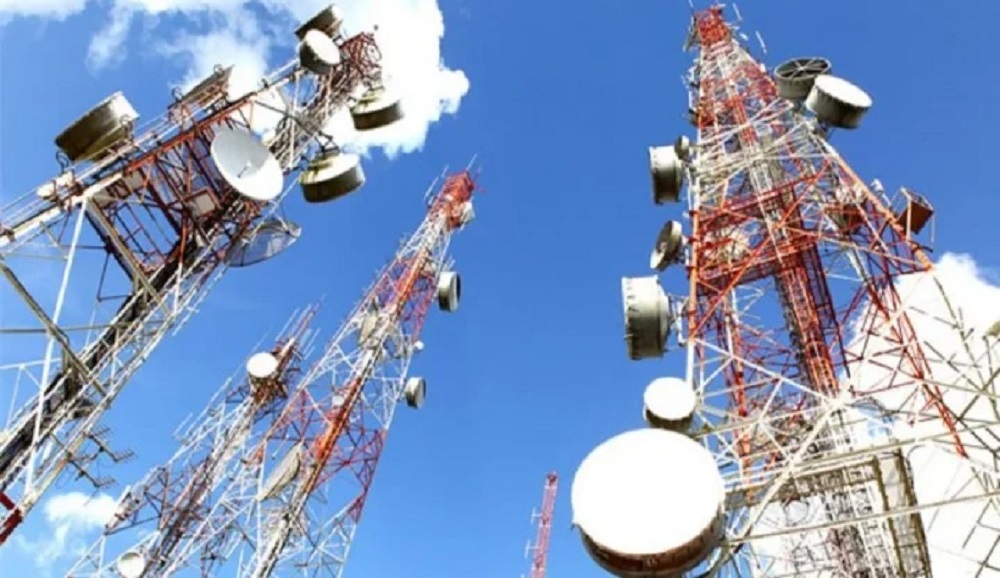
Load shedding is about survival when telecom operators might start turning off some of their cell sites during less busy times to save on energy and costs.
This could help them minimize resources better and keep services running, even when it’s not a perfect solution. If telecom operators implement load-shedding, the quality of service could decline sharply. Load-shedding would likely result in reduced network coverage, slower internet speeds, and an increase in dropped calls according to an analyst.
According to the Nigerian Communications Commission (NCC), Nigeria had over 164 million million active internet subscriptions as of March 2024,with mobile data accounting for the majority. A reduction in service quality could severely impact these users, leading to widespread frustration,this analyst added.
An alalyst describes load shedding as a deliberate shutdown of telecom services in a part or parts, generally to prevent the failure of the entire system when the demand strains the capacity of available infrastructure.
Plagued by incessant rising cost of operations, including the increased prices of diesel, infrastructure maintenance, and a depreciating naira, “have called on the NCC to approve a tariff increase to help mitigate their financial burdens.”
MTN, for instance,with a subscriber base of 81.7million as of March 2024,reported a first loss after tax of N137 billion since its 2019 listing on the Nigerian Stock Exchange in 2023. The telco incurred FX losses of N740 billion ($815.79 million at N907.1/$).
> “Airtel Africa, which had 63.3 million subscribers in Nigeria as of March 2024, reported a loss after tax of $89 million for its full year ended March 2024, primarily due to FX headwinds in Nigeria and Malawi. It lost $1.26 billion to derivative and FX exposures, with $770 million attributed to the naira’s devaluation.”
This has led to dwindled investment in the telecoms sector, Carl Cruz, chief executive officer of Airtel Nigeria, stated, adding that, “The devaluation of the Naira moving from N420/dollar to N760/dollar in a month’s time, to about N1500/dollar today, had indeed affected telecoms industry who rely heavily on importation of infrastructure to grow the sector.’
In the same vein, Karl Toriola, CEO, MTN Nigeria, said operators are reluctant to invest, simply because of the high operating cost and the devaluation of naira, among other issues that have marred the growth of the sector.
According to him, the telecoms sector in Nigeria is now in an intensive care unit (ICU) gasping for breath, while calling on the government to intervene.
The sector is facing a lot of challenges of which if urgent action is not taken, it will dry up. The truth is that investors are not going to come to invest in the sector if the fundamental issues are not addressed. To rescue the sector from collapsing, there is a need to increase prices of telecom services.”
Despite repeated pleas, the regulatory body has remained silent on the issue, causing frustration and uncertainty among industry players.
ALTON had earlier sent a working paper (memo) to the telecom regulator (NCC) saying that “the telecommunications industry has been significantly impacted by a myriad of macroeconomic challenges experienced in recent years due to the resulting exponential increase in broad business costs.”
“Of particular importance are:
*the upward trajectory in the inflation rate from 11.98% in 2019 to 21.34% in 2022 and currently 27.33% as at October 2023;
•rapid devaluation of the Naira evidenced by the recent upward movement at a rate of 68.5% from N461/$1 in December 2022 to N777/US$ as at the end of September 2023;and now over 1,590/a dollar.
•Sustained rise in energy prices with diesel currently retailing at an average price of N1,400/litre from N250/litre in January 2022.
With energy costs representing >40% of Mobile Network Operators’ operating expenses, tighter external financing conditions, higher debt service payments, and increased pressure on the Nigerian FOREX market, there has been a significant increase in the cost of production which has jeopardized MNOs’ capacity to maintain healthy margins in such a capital-intensive and FOREX- dependent industry as ours.
Despite these adverse economic headwinds, the telecommunications industry remains the only industry that has yet to effect any general tariff increase for its services in the last five years due to regulatory and political restrictions limiting the MNOs’ ability to react to the increased cost of doing business with our applications for these general increases still pending with the Commission one year after submission. The same cannot be said for our counterparts in other critical industries who have adjusted the retail prices of their goods and services with the support of their industry regulators to be reflective of their true business costs of production as a means of cushioning the net effect of the sky rocketing costs of doing business. We have attached, for the EVC’s consideration, a detailed overview of examples of such price increases in other sectors.
The operators also lament regulatory overlaps where unbudgetted expenditures are spent to defray unexpected expenses.
In their own position,ALTON also advocates for the co-creation of policies for the ICT sector,
better collaboration between ICT and non-ICT regulators with oversight over the sector (environment and consumer and corporate
governance) given the cross-cutting nature of digital services, which span multiple subject areas and regulatory frameworks.
“The Federal Government should also give the telecoms sector a special status like
> Agriculture and Manufacturing and introduce fiscal incentives for the sector, for example, the reduction of spectrum and numbering fees,replicate Road Infrastructure Tax Credit scheme for digital infrastructure projects.”
“ There is also a need to encourage market consolidation/collaboration arrangements to build stronger market players in the industry.”
“Implementation of the Open Data policy to make data accessible such that companies can collaborate with third-party developers, startups,
>> and other industries to develop applications, analytics tools, and
>> personalized services which will unlock new data-driven revenue
>> streams not only for telecoms but also for other industries such as banking, agriculture, manufacturing, “
“ We also require capable regulatory agencies overseeing and regulating these innovations. As such, the staff of relevant agencies will need to upskill and broaden their knowledge base while revising their frameworks to enhance technical and analytical capabilities.”
> ALTON laments that amid the formidable challenges facing the industry, “MNOs have also had to contend with a protracted history of non-payment by Deposit Money Banks (DMBs) and other Financial Institutions (FIs) for their utilization of Unstructured Supplementary Service Data (USSD) services provided by MNOs from September 2019 till date.”
> “Regardless of the numerous ministerial and joint regulator-led interventions on this issue, commencing with the intervention of the immediate past Honorable Minister of Communications and Digital Economy (HMoCDE) in 2021, the consequent approval for disconnection of the banks issued by the Commission further to the HMoCDE’s directive in 2022, and the recent joint resolutions issued by the Commission and the CBN in August 2023 on the terms for defraying the debts owed, the DMBs and FIs have brazenly and persistently refused to meet their obligations to the MNOs through the malicious non-payment or, in many instances, the payment of a minuscule portion of their monthly invoices which has led to the accumulation of a massive debt of ⁓N200 Billion.”
> As a former Executive Director, Technical Services at the Nigeria Inter-Bank Settlement System PLC (NIBSS), “we believe the EVC appreciates the facilitative role of telecommunications in the provision of financial services to Nigerians and how the USSD service has transformed digital banking and advanced financial inclusion in Nigeria, thereby, positively impacting the balance sheet of the DMBs and FIs.”
> “We maintain that it is beyond the pale for the banking industry to hold the telecommunications industry to ransom by its impenitent freeloading activities.
We, therefore, respectfully urge the EVC to take decisive action to put an end to this deplorable practice moreso as the provision of such USSD services to DMBs and FIs come at considerable cost to MNOs. “
> USSD services require substantial investment in enabling platforms such as Applications Programming Interface (APIs) and USSD Gateways for service delivery, cost of establishing signaling channels (a limited and critical network resource essential for the hitch-free service delivery) and the opportunity cost of utilizing these signaling channels and network services for USSD services instead of other prepaid network services such as Call/SMS set-up and delivery which cannot run in parallel with a USSD session.
News
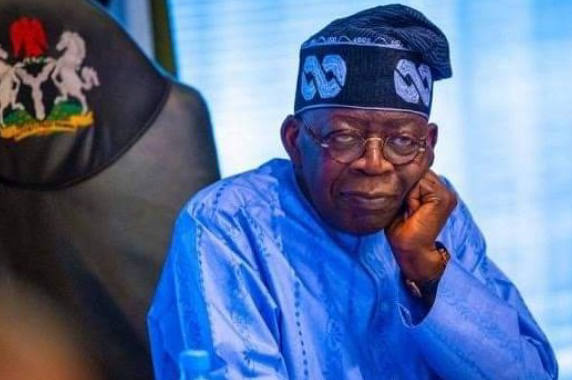
2027: Tinubu’s details incompletes as primary, secondary qualifications missing from INEC EC9 documents
President Bola Tinubu failed to include primary and secondary school qualifications in the educational qualifications section of the personal particulars submitted to the Independent National Electoral Commission, INEC, for the 2027 presidential election.
The documents, published by INEC on Saturday in line with its revised timetable for the 2027 general election, contain the nomination papers and supporting credentials of presidential and vice-presidential candidates.
A review of Tinubu’s EC9 nomination form shows that the President listed only a Bachelor of Science (B.Sc.) degree in Business Administration obtained from Chicago State University in 1979 under the educational qualifications section.
The sections provided for his primary and secondary school qualifications were left blank.
However, Tinubu attached copies of his university degree certificate and National Youth Service Corps, NYSC, certificate to his nomination papers.
In the form, the President stated that he was born on March 29, 1952, in Lagos and described his occupation as “Politician.”
He also declared that he worked at Mobil Nigeria Limited between 1983 and 1992 before serving as Governor of Lagos State from 1999 to 2007.
He listed his current employer as the Federal Government of Nigeria from 2023 to date and stated that he had never been dismissed from public service.
News
“Greatest Threat Is Misinformation, Not Technical Glitch” – INEC Chairman Tasks Media On Osun Poll Coverage
The Chairman of the Independent National Electoral Commission, INEC, Prof. Joash Amupitan, SAN, has described misinformation and disinformation as the greatest threat to the August 15 Osun State Governorship Election, urging the media to prioritize verified and ethical reportage.
He made the call on Saturday in Osogbo during an interactive session with media executives, describing journalists as the “Fourth Estate of the Realm” and critical stakeholders in the democratic process.
“However, your role as the Fourth Estate is critical to the survival of the process. In this final day window, the greatest threat we face is not technical failure, but the pathology of misinformation and disinformation,” the INEC Chairman said.
“Fake news, manufactured election-day panics, and the unauthorized declaration of parallel results are direct assaults on our public peace and democratic stability.”
He said the Commission has accredited field reporters through its dedicated portal “because we want you to see everything,” and in return demanded “a commitment to verified, ethical, and dispassionate reporting.”
“Verify your facts before you broadcast. When a glitch occurs in a single polling unit, do not report it as a systemic failure across the entire state,” Prof. Amupitan charged.
“Use your channels to educate voters: remind them that No PVC means No Voting, and that vote-buying remains a criminal offense that our partners at the EFCC and ICPC have been mandated to curb.”
Giving an update on readiness, the Chairman said the just-concluded mock accreditation proved the resilience of the BVAS.
“The Bimodal Voter Accreditation System (BVAS) demonstrated optimal field resilience. On average, it took between 30 seconds to 2 minutes to successfully verify a voter using either their fingerprints or facial recognition,” he stated.
“As a result, we have increased the total number of BVAS for the election from 4,427 to 5,130 so as to service split polling units in large PUs in Ife East, Irewole, Egbedore, Ede North, Osogbo. In the process, we increased the number of back-ups from 664 to 1,328 for quick intervention in case of any malfunction.”
Prof. Amupitan also addressed insecurity, saying INEC has moved “from reactive monitoring to proactive prevention” through ICCES. He listed hotspot LGAs to include Atakumosa East and West, Boripe, Ede North and South, Ife Central, Ifedayo, Ila, Osogbo, Ifelodun, and Oriade.
On inclusivity, he reaffirmed the Commission’s commitment to vulnerable voters.
“Democracy is incomplete if it excludes vulnerable populations. The Commission has integrated practical assistive devices across polling locations based on our disability mapping in Osun State. We have provisions for braille ballot guides for visually impaired voters; magnifying glasses for voters with albinism and low vision; EC40H poster manifests for hearing-impaired citizens and Priority Voting Queues for Persons with Disabilities (PWDs), pregnant women, nursing mothers, and the elderly,” he said.
The Chairman said 32,000 NYSC members have been engaged as ad-hoc staff via the INECPRES portal and that training for Supervisory Presiding Officers has been concluded.
“We do not care who wins the election; we only care how they win. Our sole job is to ensure that the process is clean, that every valid vote counts, and that the declaration reflects nothing but the true sovereign will of the Osun electorate,” Prof. Amupitan concluded.
The session had in attendance National Commissioners, the Osun REC Barrister Oluwatoyin Babalola, NUJ and BON leadership, Bureau Chiefs, Editors and other senior media executives.
News
Coalition want explanation over alleged BVAS failure in Osun mock accreditation exercise
A group, aegis of Coalition of Concerned Nigeria Citizens (CCNC), has called on the Independent National Electoral Commission (INEC) to immediately explain the alleged widespread failure of the Bimodal Voter Accreditation System (BVAS) during Saturday’s mock accreditation exercise conducted ahead of the August 15 Osun State governorship election.
The group alleged that the mock accreditation, designed to test the commission’s readiness for the election, experienced significant technical challenges after commencing in selected polling units across the state, raising concerns about INEC’s preparedness for the governorship poll.
In a statement signed by its spokesperson, Comrade Raufu Sodiq, popularly known as “Oluomo Success,” the coalition claimed that although the exercise was scheduled to begin at 8:30 a.m., it started behind schedule in some polling units. It further alleged that less than 40 minutes after the exercise commenced, many BVAS machines stopped recognising fingerprints, facial features and Permanent Voter Cards (PVCs), preventing the successful accreditation of voters in the affected locations.
Describing the development as disturbing, the group said a mock accreditation exercise should ordinarily boost public confidence in the electoral process, adding that the reported malfunction of the accreditation devices during the test exercise had instead raised questions about the commission’s level of preparedness.
The coalition argued that accreditation remains the foundation of every credible election because it determines voter eligibility and protects the integrity of the electoral process. According to the group, any failure at that stage could undermine public confidence in the outcome of the election if not urgently addressed.
CCNC also queried why such challenges allegedly occurred despite what it described as years of preparation and substantial public investment in electoral technology. It called on the Osun Resident Electoral Commissioner and the national leadership of INEC to provide a comprehensive explanation on the cause of the reported BVAS malfunction and disclose measures being taken to prevent a recurrence during the August 15 governorship election.
Among its demands, the coalition asked INEC to clarify whether the reported glitches resulted from software, hardware or configuration problems, explain its contingency plans for the 3,763 polling units across Osun State, replace any faulty BVAS machines and consider conducting another mock accreditation exercise before the election to restore public confidence.
“We believe in strong democratic institutions and do not want to see INEC fail. However, public confidence must be built on competence, transparency and accountability. The people of Osun deserve an election where every eligible voter can cast their vote without avoidable technological failures,” the statement read.
The group further urged the Chairman of INEC to personally address Nigerians before the governorship election by explaining the outcome of the mock accreditation exercise, outlining corrective measures and assuring voters that all identified technical challenges would be resolved before Election Day.
INEC had organised the mock accreditation exercise to assess the functionality of the BVAS and other electoral processes ahead of the governorship election scheduled for August 15 across the state’s 3,763 polling units.
-
News13 hours agoJust in: After Hugh Backlash, FIFA finally Scrap Infantino’s £15B World Cup Private Investment Proposal
-
News13 hours ago‘Stop complaining about Buhari, others for your failures,’ Atiku slams Tinubu
-
News13 hours agoColonel Behind Alleged Tinubu Coup Plot Admits Failed Promotion Pushed Him, Reveals How He Was Lured By Army Chiefs
-
News13 hours agoHow Prison Inmate on D*ath Row Livestreamed On TikTok, Earned Money From Ogun Prison
-
News13 hours agoINEC Rejects PDP’s Submission Of Jonathan As 2027 Presidential Candidate
-
News12 hours agoSAD: FRSC Enugu Sector Commander Is Dead
-
News12 hours agoUK PM Burnham slams Infantino, says he’s the ‘wrong man’ to lead FIFA
-
News9 hours agoPresidency reacts to Onaiyekan’s comment, says he’s not speaking for Christians, insists Catholics supporting Obi

Warning: Undefined variable $user_ID in /home/naijuinz/public_html/wp-content/themes/zox-news/comments.php on line 49
You must be logged in to post a comment Login