News
Fuel Crisis: Labour Demands Immediate Reversal Of New Pump Price
- /home/naijuinz/public_html/wp-content/plugins/mvp-social-buttons/mvp-social-buttons.php on line 27
https://naijablitznews.com/wp-content/uploads/2024/08/images-2024-08-08T113719.630.jpeg&description=Fuel Crisis: Labour Demands Immediate Reversal Of New Pump Price', 'pinterestShare', 'width=750,height=350'); return false;" title="Pin This Post">
- Share
- Tweet /home/naijuinz/public_html/wp-content/plugins/mvp-social-buttons/mvp-social-buttons.php on line 72
https://naijablitznews.com/wp-content/uploads/2024/08/images-2024-08-08T113719.630.jpeg&description=Fuel Crisis: Labour Demands Immediate Reversal Of New Pump Price', 'pinterestShare', 'width=750,height=350'); return false;" title="Pin This Post">
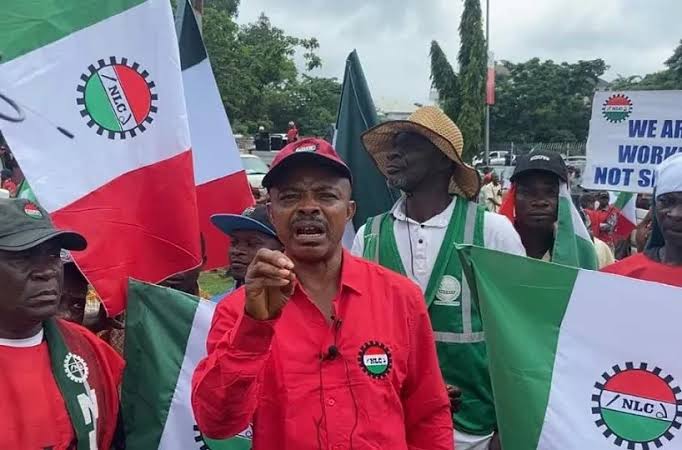
Expectedly, the Nigeria Labour Congress (NLC) has condemned the federal government’s increase in the pump price of Premium Motor Spirit (PMS), describing it as a betrayal of trust.

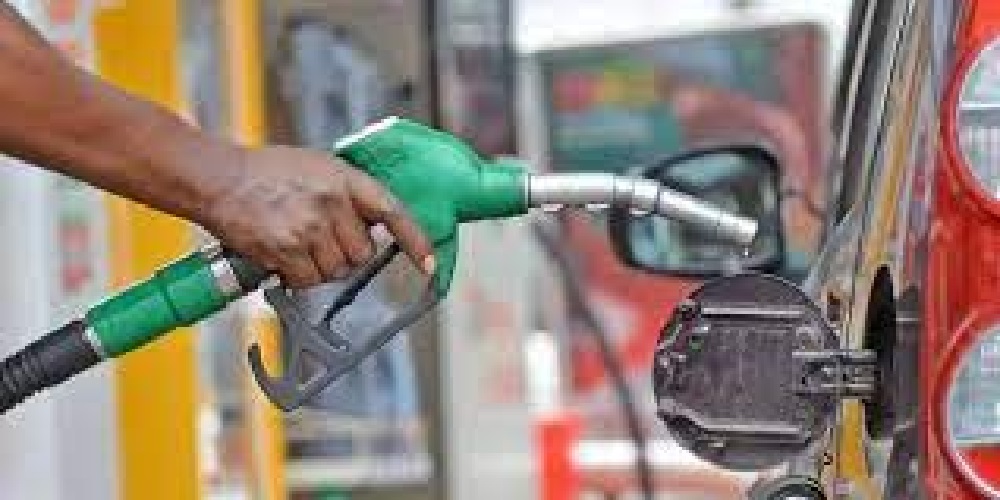
This development followed reports of fuel being sold above N1,000 at petrol stations across Nigeria from yesterday.
In a statement by NLC President Joe Ajaero, in Abuja, Labour expressed shock and disappointment at the government’s decision, which it claimed was made without prior consultation or notice.

It was gathered that during negotiations for the new national minimum wage, one condition for accepting the proposed N70,000 was the government’s commitment to maintain the existing fuel prices.
Labour lamented feeling a deep sense of betrayal as the federal government clandestinely increased the pump price of PMS.
Ajaero stated that one of the reasons for accepting N70,000 as the national minimum wage was the understanding that the pump price of PMS would not be increased, even though they knew that N70,000 was insufficient.
According to Labour, the federal government offered the option of a higher minimum wage of N250,000 with a pump price of PMS between N1,500 and N2,000 or a lower minimum wage of N70,000 with the old fuel rates, and that organised labour opted for the latter, unwilling to burden Nigerians with further economic strain.
Labour lamented that the government has violated this understanding, even when the reduced new minimum wage is yet to be implemented. Amid ongoing fuel scarcity, the increase in petrol prices by the Nigerian National Petroleum Company Limited (NNPC) from N617 to N897 per litre at its retail outlets in Abuja, N855 in Lagos, and over N1000 in other parts of the country had caused a lot of misgiving among Nigerians.
Nigerians woke up yesterday to these changes in petrol pump prices. A directive from the NNPC Retail management indicated approval for an upward review of PMS pump prices across the country.
“This is to inform you that NNPC Retail Management has approved an upward review of PMS pump price from N617/litre to N897/litre, effective today, September 3, 2024. Please ensure all your pumps and totems (price boards)/MIDs reflect the new PMS price of N897/litre,” the message read.
Checks reveal that many NNPC filling stations in Abuja had already implemented the new prices, with downstream facilities selling at N897. At an independent filling station along Jikwoyi Road in Abuja, the commodity was sold at N960 per litre. Our correspondents went round filling stations. In Ado Ekiti, NNPC Mega Station petrol was sold at N855, Rein Oil at N930, Matrix at N935, and Bovas at N935, while others sold between N1000 and N1200 per litre.
In Borno State capital.Maiduguri, petrol at Kime Petrol Limited was N1000, Ajus Oil Ltd.’s pump price was N970, Ngarzema Petrol Station’s was N975, and Bamus Investment’s was N950. Both A. A Rano at Club Road and Danmarna Filling Station at Gwagwarwa by Airport Road in Kano sold a litre of petrol for N950. It is sold at N980 at Rainoil Filling Station along Aba Road in Umuahia, the Abia State capital.
Petroleum was being dispensed at N950 at the Famab—Agoro Filling Station, Sobi Specialist Hospital Road, Alagbado, Ilorin, Kwara State.
In Delta State, specifically Asaba, Rain Oil Petrol Station sold fuel at N950 per litre. In Zamfara State, fuel was sold at different prices: Rikiji Filling Station at N950, Danmarna Filling Station at N890, and Danmaikyau Filling Station at N930. NNPCL in Ibadan sold at N865 per litre. Total was sold at N1000 per litre, Martum Filling Station Apete sold at N950 per litre, and Gmas Petrol Station Apete at N950 per litre.
In Enugu, MOOB Filling Station, opposite St. Patrick’s Cathedral Parish, Awka, along Zik’s Avenue, sold fuel at N950 per litre yesterday.
Abu Kure and Imani fuel stations on Gusau Road, Sokoto State, sold fuel at N1000 and N1200, respectively. Fuel is sold at N980 per litre at EMSA Filling Station, Aka Road, Uyo, Akwa Ibom State.
In Kaduna, AA Rano sold at N950 per litre, Sharon at N920 per litre, while black market sales reached N1500 per litre.
In Rivers, NNPCL sold at N884 per litre, Oando at N970 per litre, and the black market sold at N1000 per litre.
In Imo State, fuel stations such as BGR and Cocean on Orlu Road dispensed the product at N950 per litre.
The product sold for more or less the above prices in Kebbi, Plateau, Gombe, Niger, and Adamawa states.
However, the NNPC spokesperson, Olufemi Soneye, declined to comment when our correspondent contacted us.
The NNPC attributed the shortages and price increases to significant debts owed to suppliers and ongoing operational difficulties at the country’s four non-functional refineries.
As queues grow longer at filling stations, stakeholders warn that further price hikes could deepen the economic hardship faced by many Nigerians, pushing them closer to breaking point.
The price hike comes as Nigerians are already grappling with high inflation, currently at its highest level in 28 years, and a weakening economy. The increase in petrol prices is likely to lead to a sharp rise in the cost of basic food items and transportation, further straining household budgets.
Many Nigerians have expressed frustration with the current situation.
The NNPC, the sole importer of petrol into Nigeria, had attributed the price increase to financial strain caused by the high cost of importing the commodity. The company has acknowledged significant debts owed to petrol suppliers, which has placed considerable pressure on its operations.
Despite the government’s efforts to remove subsidy and allow private firms to import petrol, the NNPC remains the sole importer due to foreign currency shortages and a cap on the price of petrol. Some outlets have taken advantage of the situation to maximize profits, further exacerbating the crisis. As the cost of living continues to rise, many Nigerians are calling for urgent action from the government to address the ongoing petrol crisis and its impact on the economy.
Experts have called on the government to roll out incentives to alleviate the suffering caused by the fuel price hike. The experts, who spoke in various interviews with LEADERSHIP yesterday, also urged the government to increase its support for the adoption of renewable energy in the country.
An impeccable industry source told our correspondent that the NNPCL is about to raise the ex-depot price to N850 per litre, which will force independent retailers to sell at above N900 to N1,000 per litre, considering other costs. This adjustment is connected to the NNPC’s disclosure that petrol importation has caused financial strain and poses a threat to the sustainability of the fuel supply.
Dr. Muda Yusuf, director/CEO of the Centre for the Promotion of Private Enterprise (CPPE), said, “The reality is that this is a very difficult situation for the government and the NNPC. I hope that as citizens, we should show some understanding at this time. If the situation improves, the price may be further moderated.”
On his part, the group executive chairman of Lancelot Group, Mr. Adebayo Adeleke, noted that the fraud characterizing NNPC operations has fully matured. “Why were they fighting Dangote over the refinery? They know that one man’s success will demystify them. What do you do when you owe? You pay up. They should pay.”
Similarly, David Adonri, vice president of Highcap Securities Limited, expressed concern over whether the new PMS price is market-determined.
“NNPC has a monopoly over the supply of PMS. An abuse of monopoly power may be what we are currently witnessing,” he said.
“Several things have already gone wrong, which signals a rollback on market reforms. Whenever prices increase astronomically, it fuels galloping inflation. The drive by NNPC to hike fuel prices may be responsible for the current excruciating fuel scarcity. Some people also think that the measure is geared towards preparing the market for the entry of Dangote’s PMS at international prices.”
FG Denies Ordering NNPC To Increase Petrol Prices
Meanwhile, the federal government has addressed reports circulating on social media, claiming that the minister of state for petroleum resources, Heineken Lokpobiri, directed the Nigerian National Petroleum Company Limited (NNPC) to inflate petroleum prices to N1000 per litre above the approved pump price.
The federal government, in a statement signed by the special adviser to the minister, Nneamaka Okafor, said the report was concocted and ill-conceived to sow discord and confusion in the oil industry.
“There was never a time the federal government interfered with petroleum pricing at NNPC, let alone give directives for price increment. The federal government is compelled to address the outright falsehoods currently being circulated on social media, which claim that the minister of petroleum resources, Senator Heineken Lokpobiri, directed the Nigerian National Petroleum Company Limited (NNPCL) to inflate petroleum prices above the approved pump price.”
“We categorically condemn these claims as baseless, malicious, and a deliberate attempt to incite public discontent.”
“We challenge anyone in possession of any evidence—be it written documents, audio, or video recordings—that supports these fabrications to make it public. Such a claim is entirely untrue and should be recognised as an intentional effort to mislead the public.”
News
Bandit Kingpin Ado Aleru Declares fellow Bandit Leader who k!lled Gen Rabe Wanted
The bandit leader linked to the abduction and eventual death of retired Major General Rabe Abubakar has reportedly gone into hiding, amid claims circulating on social media that a rival bandit kingpin, Ado Aleru, has declared him wanted.
The bandit leader, identified as Kachalla Muhammadu (also known as Kachalla Muhammadu Fulani), is a notorious bandit leader indigenous to Matazu Local Government Area of Katsina State, and has been the prime suspect in the May 30 abduction of Gen. Rabe Abubakar (rtd), a former Director of Defence Information and ex-spokesperson of the Nigerian Army.
It was gathered that Kachalla had previously been involved in a government-backed peace arrangement with armed groups operating in the North-West before the abduction.
The retired general was kidnapped alongside his wife, Hajiya Amina Abubakar, around the Matazu area of Katsina State while the couple were travelling to a wedding. Their vehicle was ambushed along the Marabar Musawa–Kafinsoli Road near Zakin Baure village, with their driver sustaining gunshot wounds in the attack.
Investigations by security agencies suggested the attack was not random. Preliminary findings indicated the abductors had deliberately targeted the general and his wife, tracking their movements from Kaduna before striking.
In the days that followed, Kachalla reportedly reached out to the family through an audio recording that later went viral. He demanded the release of three detained members of his gang and the return of livestock allegedly seized during a security operation in Jikamshi, appealing to the state government and local council leaders to meet his conditions.
He also confirmed reneging on a promise to free the general’s wife. Kachalla said he had planned to release Hajiya Amina but changed his mind because of the heavy security presence in the area, adding that he did not want security agencies to take credit for her release.
The bandit leader did not hide his readiness for violence either. He warned that he would have killed the general had his own parents been among those detained by security operatives, insisting that even a deployment of 1,000 soldiers would not help the government locate his camp.
Despite weeks of negotiation, Gen. Rabe did not survive captivity. The retired general died while in bandits’ custody, with the Katsina State Government attributing his death to complications from diabetes and hypertension rather than direct violence.
President Bola Tinubu reacted to the development, with his office expressing condolences to the family and the Armed Forces while reiterating that government would not bow to kidnappers’ demands.
There was, however, some relief for the family. Hajiya Amina Rabe Abubakar, who was abducted alongside her husband, was successfully rescued by security operatives.
Weeks later, troops intensified the manhunt for Kachalla’s gang. Soldiers of the 17 Brigade Strike Group and Quick Response Force, backed by the 8 Division Special Forces, raided a terrorist hideout in Fafu Village along the Matazu–Musawa axis under Operation CLEAN SWEEP III, engaging the bandits in a gun battle that forced them to flee and abandon their camp. Four other victims who had been held alongside the general and his wife since April 14 were rescued in that operation. The Army said troops remain on Kachalla’s trail.
Social media posts have since claimed that bandit kingpin Ado Aleru a Zamfara-based bandit leader who holds the title Sarkin Fulani and was himself once declared wanted by Nigeria’s Defence Headquarters with a bounty on his head has now declared Kachalla wanted, forcing him underground.
News
BREAKING: Senate passes Police Bill
By Ojomah Austin.
The Senate has passed constitutional amendments to establish state police in Nigeria.
The lawmakers passed the bill on Wednesday.
Earlier, the senators resolved to adopt manual voting for the consideration of the state police bill after its electronic voting device developed a technical fault.
The resolution came after concerns among senators that some lawmakers could be disenfranchised if the chamber proceeded with the faulty device.
In the manual voting, each lawmaker will stand, announce their names and openly declare their positions on the proposed state police framework.
The Senate Leader, Opeyemi Bamidele,
moved the motion for the adoption of manual voting.
News
Kuje-Gwagwalada Road Was a Death Trap for Decades, Tinubu Declares as He Commissions Phase I Dual Carriageway (Photos)
By Ojomah Austin.
President Bola Ahmed Tinubu on Wednesday, said the newly completed Phase I of the Kuje-Gwagwalada Dual Carriageway has brought an end to decades of hardship, insecurity and economic losses suffered by residents and commuters along the corridor.
Speaking through Vice President Kashim Shettima at the commissioning of the 7-kilometre dual carriageway in Kuje Area Council of the Federal Capital Territory, (FCT) Tinubu described the road as a critical economic and security infrastructure that would transform the lives of residents in Kuje, Gwagwalada, Kwali and adjoining communities.

“For decades, this road was a death trap. Traders from Kuje, Gwagwalada, Kwali and beyond lost time, goods and sometimes lives while plying this road. Criminals thrived in the darkness. Students wasted hours in traffic. Farmers could not get their produce to market on time.
“But that story ends today,” the President said.
Tinubu noted that the road, equipped with solar-powered streetlights, pedestrian walkways and modern drainage facilities, represents more than physical infrastructure.

“This 7-kilometre dual carriageway with solar-powered streetlights, pedestrian walkways and proper drainage is more than a road. It is security. It is commerce. It is dignity.
“It is the economic corridor linking Abuja to three area councils and an opening and exit route to Southern Nigeria. With the construction of this road, we have unlocked the agricultural potential of this area, opened new residential layouts and made it safer for mothers, students and workers to move at any hour,” he stated.
The President said the project was a practical demonstration of the Renewed Hope Agenda and reaffirmed his administration’s commitment to extending development beyond Abuja city centre to satellite communities.
“My people of Kuje, Gwagwalada, Kwali and all the area councils and satellite towns, hear me clearly: this government sees you. You are not forgotten.
“For too long, Abuja’s development stopped at the city centre. Under the Renewed Hope Agenda, every area council matters. Every community counts. We will keep bringing roads, water, schools and hospitals to you,” he said.
Tinubu also urged residents to safeguard public infrastructure and support government efforts through civic responsibility.
“Do not build on the median. Do not vandalise the solar lights. Pay your taxes and ground rents. When government works and citizens cooperate, development moves faster,” he added.
The President commended the Minister of the Federal Capital Territory, Nyesom Wike, for expanding development to underserved communities across the territory.
“I gave you an instruction when I appointed you: make Abuja work for all Nigerians, not just for those in Maitama and Asokoro.
“You have taken Renewed Hope to the grassroots. From judicial quarters in Katampe to roads in Kuje and Gwagwalada, you are proving that development must not be selective. You heard the cries of satellite communities and responded. That is leadership. Well done, Honourable Minister,” Tinubu said.
Earlier, FCT Minister, Barr. Nyesom Wike, said the road project was a direct response to demands made by residents, traditional rulers and stakeholders during consultations held across the six area councils shortly after the administration assumed office in 2023.
According to him, insecurity and poor road infrastructure featured prominently among the concerns raised by residents of Kuje.
Wike recalled that the administration revived the abandoned Airport Road-Kuje road project before approving the Kuje-Gwagwalada road after personally inspecting its deplorable condition.
“So, one day, while returning from Kwali after inspecting projects, I said let us pass through the road the traditional ruler had been talking about.
“As we travelled, it took us almost two hours. I asked where we were heading to and they said Kuje. I said, ‘Are we in America?’ This is within the FCT and it took us almost two hours. The road was terrible. In fact, saying it was bad is an understatement; there was practically no road,” he said.
The minister explained that the Federal Executive Council approved the project in early 2025 and that it was awarded to Gilmor Engineering Nigeria Limited.
He expressed satisfaction that the first phase had been completed within schedule and disclosed that the contractor had assured the administration that the second phase would be delivered by December 2026.
“What this means is that the people of Gwagwalada and Kuje can now interact more easily, businesses can thrive and farmers can move their produce to markets without stress. That is governance. That is bringing hope to the people,” Wike said.
Also speaking, Minister of State for FCT, Dr Mariya Mahmoud, described the project as a visible demonstration of the Renewed Hope Agenda and a testament to the Federal Government’s commitment to improving lives through strategic infrastructure investments.
She commended Wike for what she described as his exceptional leadership and determination in delivering critical infrastructure across the FCT.
Earlier, Coordinator of the Satellite Towns Development Department (STDD) Abdulkadir Zulkiflu, said the project was awarded on February 28, 2025, and consists of a 7-kilometre dual carriageway with two lanes in each direction, a three-span bridge, drainage systems and solar-powered streetlights.
He added that the project would improve access to farming communities, facilitate movement of agricultural produce, reduce travel time and stimulate economic growth in Kuje, Gwagwalada and neighbouring communities.
Zulkiflu disclosed that the second phase of the project, covering the remaining six kilometres of dual carriageway, is expected to be completed by December 2026, completing the full upgrade of the Kuje-Gwagwalada road corridor.
-
Metro14 hours agoAlleged Drug Trafficking: Billionaire, Two Others Face Trial in Lagos
-
Foreign14 hours agoUS Targets Alleged ISIS Funding Network, Names Nigerian
-
News7 hours agoDAY 11 of Projects Commissioning in the FCT: TInubu set to commission Kuje, Gwagwalada road today
-
News14 hours agoHajj: NAHCON concludes return of pilgrims’ airlifts
-
News7 hours agoPhotos: Police Block Truck Conveying 47 Sacks Of Camouflage & Drugs In Lagos
-
News6 hours agoBREAKING: El-Rufai arrives in court under heavy security for trial over alleged financial crimes
-
Sports14 hours agoSuper Eagles: Chelle, NFF Reach New Contract
-
News7 hours agoDAY 11 of Projects Commissioning in the FCT

Warning: Undefined variable $user_ID in /home/naijuinz/public_html/wp-content/themes/zox-news/comments.php on line 49
You must be logged in to post a comment Login