News
Nigerian Govt signs Cape Town convention to reduce airline costs
- /home/naijuinz/public_html/wp-content/plugins/mvp-social-buttons/mvp-social-buttons.php on line 27
https://naijablitznews.com/wp-content/uploads/2024/09/Nigerian-Govt-signs-Cape-Town-convention-1000x600.jpg&description=Nigerian Govt signs Cape Town convention to reduce airline costs', 'pinterestShare', 'width=750,height=350'); return false;" title="Pin This Post">
- Share
- Tweet /home/naijuinz/public_html/wp-content/plugins/mvp-social-buttons/mvp-social-buttons.php on line 72
https://naijablitznews.com/wp-content/uploads/2024/09/Nigerian-Govt-signs-Cape-Town-convention-1000x600.jpg&description=Nigerian Govt signs Cape Town convention to reduce airline costs', 'pinterestShare', 'width=750,height=350'); return false;" title="Pin This Post">
The Federal Government has signed the Cape Town Convention, CTC, Practice Directions to reduce the cost of airline operations in Nigeria’s aviation sector.

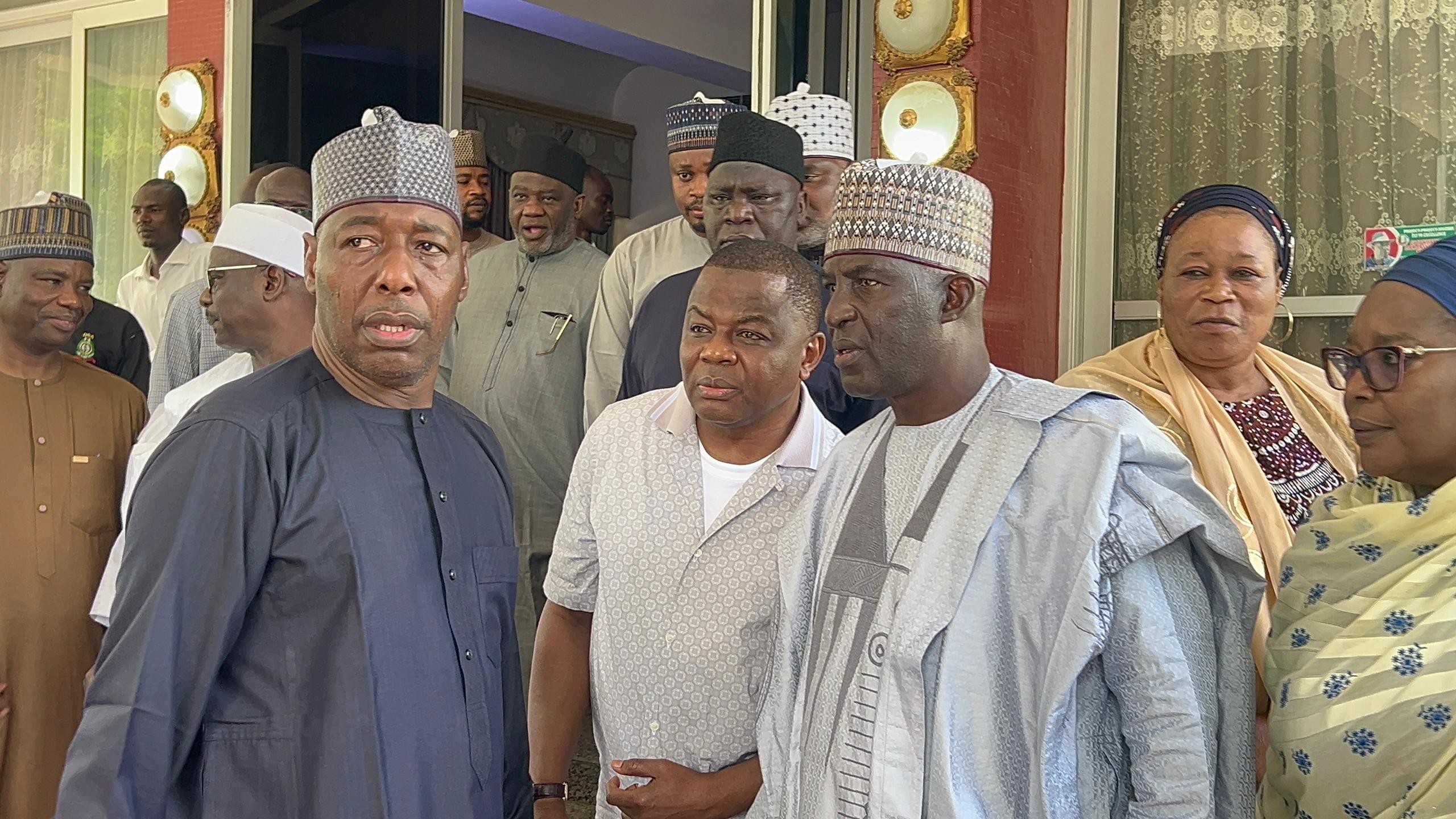
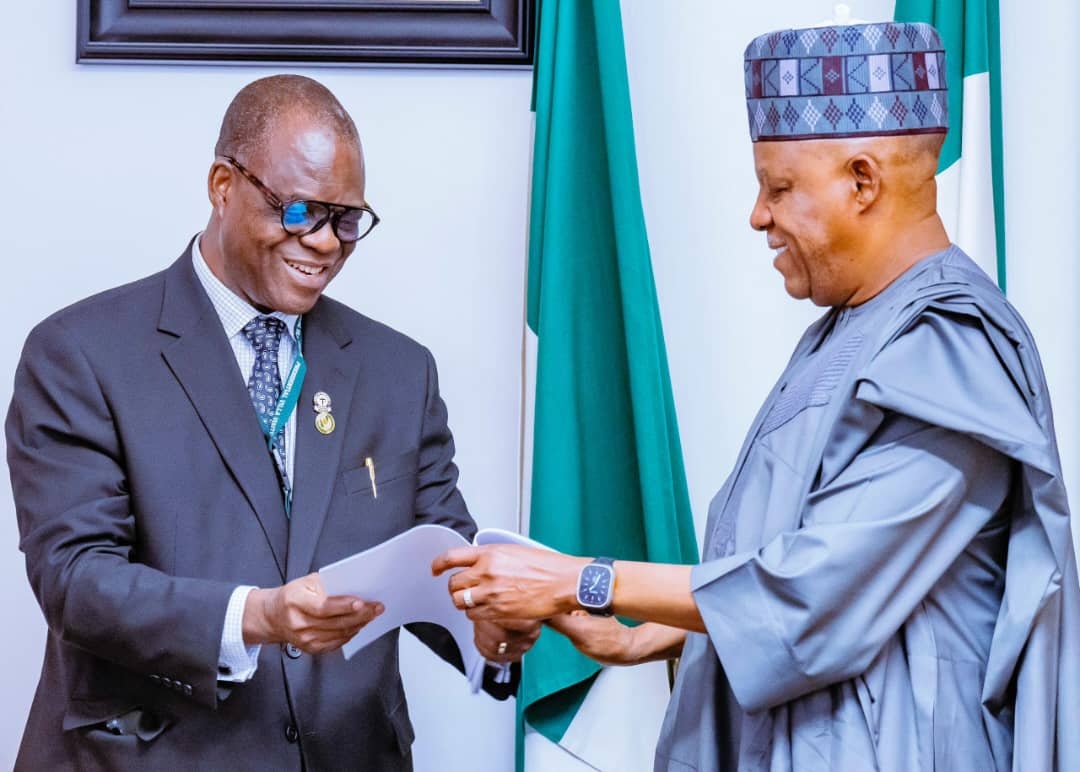
The signing occurred during a stakeholders’ meeting of the Presidential Enabling Business Environment Council, PEBEC, chaired by Vice-President Kashim Shettima at the Presidential Villa, Abuja.
Chief Judge of the Federal High Court, Justice John Tsoho, signed the CTC practice direction, which aimed to promote and preserve the nation’s airline industry.

Shettima commended Justice Tsoho for addressing the issue and signing the document.
The Vice-President assured airline operators that President Bola Tinubu’s administration was committed to protecting and promoting the Nigerian airline industry.
He praised the Minister of Finance, Wale Edun, for addressing the issues affecting airline operators.
Edun promised to meet with stakeholders to perfect the agreements reached during the meeting.
He described the signing as an action to revolutionise the airline industry, reducing costs and facilitating growth.
Airline operators, including Allen Ikechukwu Onyema, CEO of Air Peace, expressed appreciation for the President’s efforts to enhance the aviation sector.
Special Adviser to the President on PEBEC, Dr Jumoke Oduwole, noted that the signing would help reduce insurance costs and improve the business environment.
Minister of Aviation, Festus Keyamo, represented by Dr Anastasia Gbem, said the signing aligned with the Ministry’s goal of enhancing local airlines’ capacity.
“Investors can bring their aircraft into Nigeria and if there is any problem, such aircraft would be recovered within the 10-day period that Nigeria and the Cape Town Convention have provided.
“So, it is an unprecedented history made today and it is a venture that will boost the Nigerian airlines and the entire aviation industry,” said the Minister.
The Chief Executive Officer of the National Insurance Commission, Olusegun Omoseye, described the signing as significant progress for Nigeria’s aviation sector and economy.
News
US Withdraws Troops from Nigeria, Retains Intelligence Partnership in Counterterrorism Fight
The United States has withdrawn most of its troops deployed to Nigeria for a joint counterterrorism operation in the Lake Chad Basin but will continue intelligence sharing and other security cooperation with the Nigerian government.
The Commander of U.S. Air Forces in Europe-Air Forces Africa, General Dagvin R.M. Anderson, disclosed this on Thursday during a digital press briefing on the outcome of the African Chiefs of Defence Conference 2026.
According to Anderson, the operation in the Lake Chad Basin significantly disrupted the activities of the Islamic State (ISIS/Daesh) and contributed to global counterterrorism efforts.
“And so that operation in the Lake Chad Basin of Nigeria not only helped the countries in that immediate region; it also helps countries globally as that disrupts the ISIS network,” he said.
He explained that although the specific mission had ended and most of the U.S. personnel involved had departed Nigeria, Washington remained committed to supporting Abuja through intelligence collaboration and strategic partnerships.
“And so — and then we have withdrawn much of our forces that were just there for that operation, but are continuing the partnership that Nigeria has asked for to help continue with the intelligence sharing and the understanding that’s necessary to be able to prosecute these difficult tasks,” Anderson added.
The U.S. general described Nigeria as a capable ally with a strong military and noted that cooperation between both countries had produced significant gains against ISIS.
He revealed that intelligence sharing between the United States and Nigeria, combined with military operations by Nigerian forces, led to the successful elimination of the second-in-command of the global ISIS network.
“I think the partnership that we’ve shown recently with Nigeria, where Nigeria’s a very capable and large country — it’s got a strong economy; it’s got a large, educated population; it’s got a very capable military.
“But there are things that we have learned in the counterterrorist fight over several years that we were able to assist and integrate with them to help them with their intelligence and help with the intelligence sharing that eventually led to a cooperative effort to where we were able to bring some unique capabilities that the U.S. brings and be able to prosecute together the number two leader within the ISIS or Daesh organization who is responsible for much of their global operations, their global media, and their recruiting,” he said.
Anderson stressed that the success of the operation underscored the importance of intelligence cooperation rather than prolonged foreign military deployments.
“So I think as we go forward, that is an example of how we’re looking at engaging with partners to help them be more effective by only bringing unique U.S. capabilities that allow the partner to be effective in these fights,” he stated.
He also called for stronger intelligence sharing among African countries to combat terrorism, illicit trafficking and other transnational crimes.
According to him, enhanced cooperation recently helped authorities intercept a record 31-ton shipment of cocaine originating from South America and transiting along the West African coast.
“I was able to coordinate through our interagency in the United States, through AFRICOM, and then notify some of the partners. And eventually it was a Spanish ship that interdicted the ship that had 31 tons of cocaine on it, and it turns out is the largest interdiction of drugs at sea that we’ve ever seen,” Anderson said.
He added that sustained cooperation among African nations, international partners and the private sector remains essential to addressing security threats and creating a stable environment for economic growth and investment.
The United States deployed about 200 military personnel to Nigeria in February 2026 to support intelligence, surveillance and counterterrorism operations in the Lake Chad Basin amid deepening security cooperation between Washington and Abuja.
The deployment followed Nigeria’s redesignation as a Country of Particular Concern by U.S. President Donald Trump, who pledged to intensify American support against terrorist groups operating in the country.
On December 25, 2025, the United States carried out air strikes on two terrorist enclaves in the Bauni Forest in Tangaza Local Government Area of Sokoto State.
The partnership reached a major milestone in May 2026 when a joint U.S.-Nigerian operation killed Abu-Bilal Al-Minuki, the second-in-command of ISIS, at his hideout in Borno State.
News
Read details of meeting between IGP Disu and exIGs
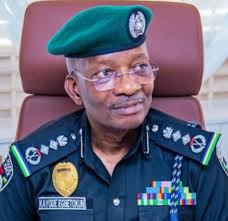
The Inspector-General of Police, Olatunji Disu, on Thursday, held a strategic meeting with former Inspectors-General of Police.
The meeting took place at the Force Headquarters in Abuja.
According to an official statement released after the meeting by the Nigeria Police Force, discussions centred on leveraging the vast institutional memory and strategic insights of past police chiefs to tackle contemporary security challenges and accelerate ongoing police reforms.
The IGP expressed his profound gratitude to his predecessors, noting that their wealth of experience remains an invaluable asset to the Force administration.
Naijapunchnews reports that former IGPs who were part of the delegation for the meeting included IGP Aliyu Attah (Rtd); IGP Sunday Ehindero (Rtd); IGP Mike Mbama Okiro (Rtd); IGP Ogbonna Onachukwu Onovo (Rtd); IGP Abubakar Ringim; IGP Mohammed Dikko Abubakar (Rtd); IGP Sulaiman Abba (Rtd); IGP Usman Alkali Baba (Rtd); and IGP Kayode Adeolu Egbetokun (Rtd).
Meanwhile, the Inspector-General of Police, Olatunji Rilwan Disu, has directed all officers and men of the Nigeria Police Force to desist from unauthorised social media activities capable of undermining the integrity, professionalism, and public image of the Force.
According to a statement on Tuesday by the Force Public Relations Officer, CSP Anietie Okonkon Edem Iniedu, the directive follows growing concerns over the increasing trend of police personnel creating and publishing videos, conducting live sessions, and engaging in other social media activities while in uniform or in circumstances that identify them as members of the Nigeria Police Force without official authorisation.
The IGP emphasized that while social media remains an important tool for communication and public engagement, its use by serving officers must be guided by extant laws, regulations, and the Nigeria Police Force Social Media Policy.
He noted that officers are prohibited from creating or sharing unauthorised content in police uniform, commenting publicly on official police matters, disclosing sensitive operational information, or using their status as police officers for personal promotion, entertainment, or commercial gain.
News
Again, Dangote Refinery slashes price of petrol
Dangote Petroleum Refinery has announced another reduction in the ex-depot price of Premium Motor Spirit (PMS), lowering the gantry price by ₦50 per litre to ₦1,075 per litre, its fourth price cut within a month.
The latest reduction brings the cumulative decrease in the refinery’s PMS ex-depot price to ₦200 per litre since May 30, 2026.
Over the same period, the refinery also reduced the ex-depot price of Automotive Gas Oil (AGO), commonly known as diesel, by ₦300 per litre, while the price of Jet A1 aviation fuel has fallen by ₦520 per litre.
The company said the successive reductions reflect its commitment to passing lower production costs to consumers while maintaining the long-term sustainability of domestic refining operations.
In a statement issued on Thursday, the refinery explained that petroleum product pricing cannot mirror daily movements in international crude oil markets because crude oil is purchased weeks, and sometimes months, before it is processed.
According to the refinery, the petroleum products currently being supplied to the market are being produced from crude inventories acquired during periods of substantially higher prices.
It disclosed that the average landed cost of crude processed stood at approximately US$124.80 per barrel in May and US$95.25 per barrel in June, compared with the current international benchmark of about US$71.01 per barrel.
The refinery also clarified that its crude procurement costs are not based solely on the ICE Brent benchmark commonly quoted in the media.
Rather, it said crude is purchased on a Dated Brent basis, together with applicable market premiums, freight and logistics costs, resulting in actual feedstock costs that differ materially from benchmark prices.
Despite the higher crude acquisition costs, Dangote Refinery said it deliberately absorbed a significant portion of the additional expenses instead of transferring the full impact to consumers.
The company said the pricing approach has helped keep petroleum product prices in Nigeria below those in neighbouring countries, even after accounting for applicable taxes.
“As lower-priced crude cargoes progressively enter our production cycle, we have begun systematically passing the benefits to the market through phased price reductions,” the refinery said.
It added: “Today’s ₦50 per litre reduction is the fourth price cut in one month, bringing cumulative reductions to above ₦200 per litre on PMS.
This approach ensures that pricing decisions are anchored on actual production economics and inventory costs rather than short-term fluctuations in international oil markets.”
The refinery also said its current production volumes are sufficient to meet Nigeria’s domestic fuel demand, helping to strengthen energy security, reduce dependence on imports, conserve foreign exchange and provide greater price stability.
Dangote Refinery expressed confidence that if international crude prices remain favourable and lower-cost feedstock continues to replace higher-priced inventories, Nigerians should expect further moderation in petroleum product prices.
The company reaffirmed its commitment to supplying high-quality, internationally certified petroleum products at competitive prices while supporting Nigeria’s economic growth and the long-term development of the downstream petroleum sector.
-
News15 hours agoNavy arrests member of vehicle theft syndicate in Abuja
-
News15 hours agoLabour Party unveils ₦2.8m essay competition in Abia
-
News15 hours agoNYSC reforms: Corps members to wear Adire instead of khaki — FG
-
News17 hours agoDelta’s ADC guber candidate Unuafe unveils 14-point Blueprint to Transform Delta into Africa’s Leading Sub-National Economy
-
News14 hours agoNigeria may not survive another civil strife– Obasanjo
-
News15 hours agoNUC approves unbundling of UNN Mass Comm programme
-
News16 hours agoLove Over ‘Spec’: Aproko doctor shares the reason he married his wife
-
News14 hours agoWhy there is heavy security presence in Abuja — Security agencies

Warning: Undefined variable $user_ID in /home/naijuinz/public_html/wp-content/themes/zox-news/comments.php on line 49
You must be logged in to post a comment Login