
News
Court lifts order restraining INEC, SIEC, others over Kwara council poll




A Federal High Court in Abuja has lifted the ex-parte order it issued restraining the Independent National Electoral Commission (INEC) from releasing the national voters’ register to the Kwara State Independent Electoral Commission (KWSIEC) to conduct local government election in Kwara State on Saturday.
Justice Peter Lifu, who issued the order on July 29, upon an ex-parte motion by the Peoples Democratic Party (PDP), vacated it yesterday while ruling on an application by KWASIEC.
Justice Lifu, in the ruling, upheld the argument by KWASIEC’s lawyer, Johnson Usman (SAN) that the order, being an ex-parte one, ought to be lifted after 14 days, in line with extant legal provisions.
The judge also dismissed the allegation of contempt of court made by the PDP against the Chairman of KWSIEC, Okanlawon Baba.
PDP had sought that the KWASIEC chairman be committed to prison for allegedly violating a subsisting order of the court.
In the ruling yesterday, Justice Lifu dismissed the motion for committal filed by the PDP on the grounds that the KWASIEC chairman was not served personally as required by law.
Justice Lifu held that since committal proceeding is quash criminal one, the motion commencing it must be served personally on the alleged contemnor and not through any other party or person.
The judge held that the failure of PDP to effect personal service on the alleged contemnor was fatal to its case and amounted to violation of KWASIEC chairman’s right to fair hearing guaranteed under Section 36 of the Constitution.
He said: “I have carefully and painstakingly perused the arguments for and against the motion to commit the contemnor to prison.
“Where the liberty of person is at stake, due of process of law must be carefully followed.
“In the instant case, the fundamental right of the alleged contemnor to fair hearing, as enshrined in Section 36 of the Constitution of the Federal Republic of Nigeria, was breached by not serving him personally and this makes the motion for committal to prison to be liable to dismissal and is hereby dismissed,” the judge said.
Following a motion ex-parte filed by the PDP, the court on July 29 issued an order restraining INEC from releasing the national voters register to the KWSIEC for the purpose of conducting the September 21 local government elections in Kwara State.
It equally restrained KWASIEC and the state’s Attorney General from receiving, accepting or using the national voter register or any part relating to Kwara State from the electoral body for the council’s election in Kwara State.
The PDP had, while alleging contempt, claimed that despite the pending orders of the court, KWASIEC’s chairman wrote two letters to political parties, one inviting them for peace meeting and the other requesting them to submit names and photographs of their agents for the purpose of the election.
At the conclusion of the ruling yesterday, Justice Lifu said he would return the case file to the court’s chief judge for reassignment because his court only sat on the case as a vacation court.
In the substantive case, the PDP is contending among others, that the KWASIEC was in grievous contravention, breach and violation of sections 9, 28, 29 and 106 of the Electoral Act 2022, sections 20 (1) and 21 (1) of Kwara State Local Government Electoral (Amendment) Law, 2024.
The PDP claimed that the conditions and precedents stipulated in Local Government Electoral laws in Kwara State were allegedly deliberately ignored by KWASIEC under unacceptable circumstances.
It alleged that KWASIEC had applied to INEC for the register of voters in Kwara to use the same in the conduct of the local government polls.
The party said the action was in breach and violation of the 1999 Constitution, as amended, Electoral Act, 2022, as well as Kwara State Local Government Electoral (Amendment) Law, 2024.


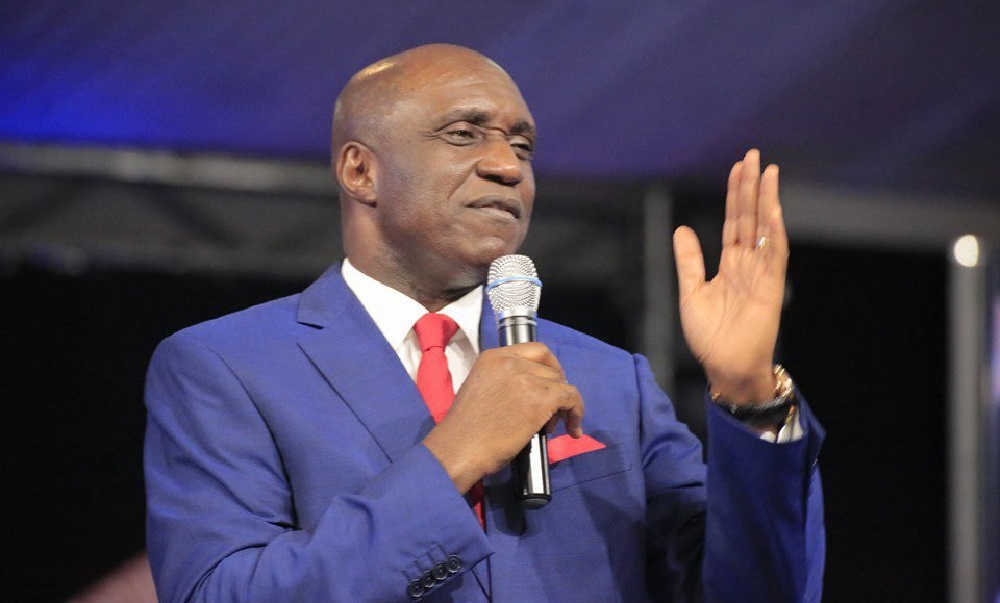
David Ibiyeomie, the presiding pastor of Salvation Ministries in Rivers State, has stirred fresh conversation around tithing and church giving after declaring in a viral sermon that he gives a minimum of $12,000 every Sunday — and that his personal wealth is entirely independent of his congregation’s offerings.
Ibiyeomie, one of Nigeria’s most prominent Pentecostal clergy, made the remarks while preaching on what he described as the foundational role of tithing in Christian covenant living, insisting that any believer who neglects the practice will face financial stagnation.
“You cannot say that you are walking in a covenant if your foundation is not in place. Your foundation covenant is your tithe,” he told his congregation.
“Trying to walk in covenant wealth without tithing is like trying to build a house without a foundation.”
To underscore his commitment to the principle he was preaching, the pastor disclosed the scale of his own giving.
“The minimum I give on a Sunday is $12,000. That is the minimum. Every Sunday. And the minimum I give on weekdays is $2,000.
“Even when I am not in church, even when I travel, my offering will be there,” he said.
Perhaps more striking was his assertion that his prosperity bears no relationship to what his members contribute to the church.
Addressing his congregation directly, he said their offerings — or the withholding of them — had no bearing on his financial standing.
“If you don’t give your offering, I will be rich, stinkingly rich. I am not depending on your money. If my birthday is coming, get angry and don’t give me any money.
“This guy will be rich because it is not coming from you. It is coming from my covenant work with God,” he declared.
The sermon has since circulated widely on social media, reigniting debate around the theology of tithing, pastoral wealth, and the financial expectations placed on church members in Nigeria’s booming Pentecostal landscape.
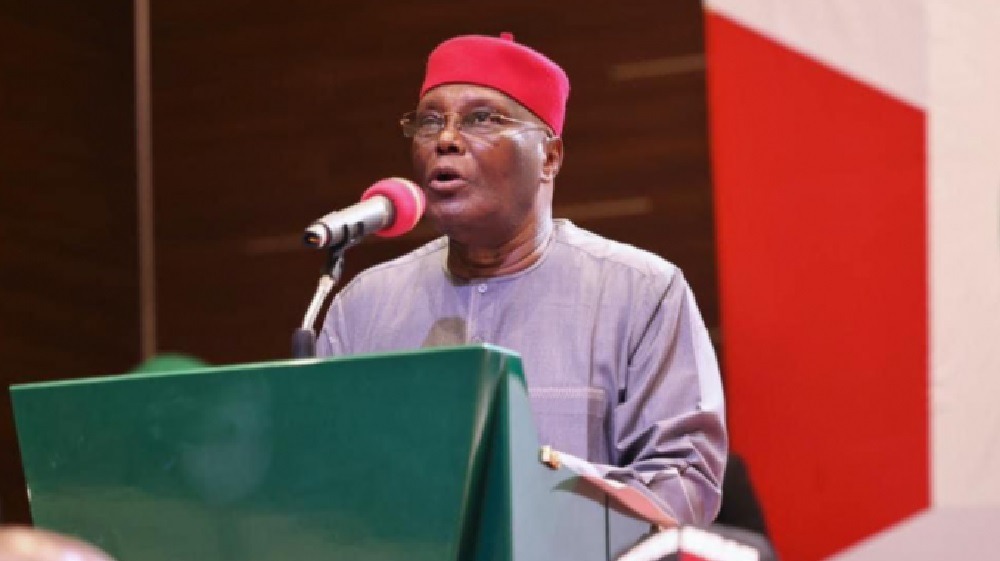
Fresh concerns about the credibility of Nigeria’s electoral process have drawn international attention, following a high-level meeting between representatives of former Vice-President Atiku Abubakar and senior staff of the U.S. House Democratic caucus.
The engagement, which took place remotely, was facilitated by Washington-based lobbying firm Von Batten-Montague-York, recently retained by Abubakar to manage his international political outreach and bolster his reputation in the United States.
In a statement shared on social media platform X, the firm disclosed that the meeting brought together congressional staff aligned with U.S. House Democratic Caucus and representatives of the former Nigerian vice-president’s political camp. According to the firm, discussions centered on what it described as “serious concerns regarding election integrity in Nigeria.”
Central to the deliberations were allegations that Nigeria’s current administration, led by President Bola Ahmed Tinubu, may be undermining democratic processes through electoral manipulation.
The lobbying firm claimed that participants examined “credible allegations” suggesting attempts to “circumvent the will of the Nigerian people.” While these claims were not independently verified, they reflect a growing narrative among opposition figures who have consistently questioned the transparency of recent elections.
The meeting also reportedly explored broader governance concerns, including what was described as a pattern of political consolidation that could tilt Nigeria toward a de facto one-party system. Though no official position has been issued by U.S. lawmakers, the framing of such concerns at a congressional level signals rising international scrutiny of Nigeria’s democratic institutions.
As of the time of filing this report, neither the Abubakar campaign nor the U.S. House of Representatives has released an official statement detailing the outcome of the discussions. The absence of formal communication leaves much of the substance of the meeting open to interpretation, with only the lobbying firm’s account providing insight.
Political analysts note that while such engagements are not unusual in international diplomacy, they often carry significant implications, particularly when tied to election integrity and governance issues in emerging democracies.
Abubakar’s engagement with U.S. policymakers comes on the heels of his formal agreement with Von Batten-Montague-York, a deal aimed at strengthening his “reputational standing” abroad.
Documents filed with the U.S. Department of Justice indicate that the contract, signed in March 2026 by the firm’s managing partner Karl Von Batten and Nigerian politician Fabiyi Oladimeji, outlines a robust advocacy strategy. This includes countering what the firm described as the Nigerian government’s “lobbying narratives” in Washington.
Under the agreement, the firm is tasked with arranging strategic meetings between Abubakar and key U.S. government officials, including members of Congress. It is also expected to provide advisory services on policy positioning and broader engagement strategies.
In a move that has further heightened tensions, Von Batten-Montague-York recently signaled its intention to recommend sanctions against Nigerian political actors and officials of the Independent National Electoral Commission (INEC) found to be complicit in electoral malpractice.
In an earlier statement, the firm said it would begin identifying individuals involved in election rigging and forward their names to the offices of the U.S. President and Congress. Proposed measures include asset freezes and travel bans, tools commonly used by Western governments to penalize individuals accused of undermining democratic processes.
This development aligns with a broader trend of international actors taking a firmer stance on election-related misconduct in Africa, particularly in countries with significant geopolitical and economic influence like Nigeria.
Nigeria’s electoral system has long faced criticism over logistical challenges, allegations of vote manipulation, and institutional weaknesses. However, the latest developments suggest that these concerns are increasingly resonating beyond the country’s borders.
For Abubakar, who remains a central figure in Nigeria’s opposition politics, the outreach to U.S. lawmakers may serve both as a strategic diplomatic move and a signal to domestic supporters that his campaign is pursuing all available avenues to address perceived injustices in the political system.
For the Nigerian government, the allegations, and the prospect of international sanctions, pose a reputational challenge that could impact diplomatic relations and investor confidence if not addressed.
While it remains unclear what immediate outcomes will arise from the meeting, its occurrence underscores the growing intersection between Nigeria’s domestic politics and international diplomatic engagement.
Observers caution that while foreign involvement can amplify calls for transparency, it also raises questions about sovereignty and the appropriate limits of external influence in national electoral matters.
As Nigeria continues to navigate its complex political landscape ahead of future elections, the spotlight from global actors is unlikely to dim anytime soon. The coming months may reveal whether these discussions translate into concrete actions, or remain part of a broader war of narratives between political stakeholders.
The All Progressives Congress (APC) has released its timetable and schedule of activities for the 2027 general elections, setting in motion a tightly packed sequence of internal party processes that will culminate in its primaries across various elective positions in May 2026.
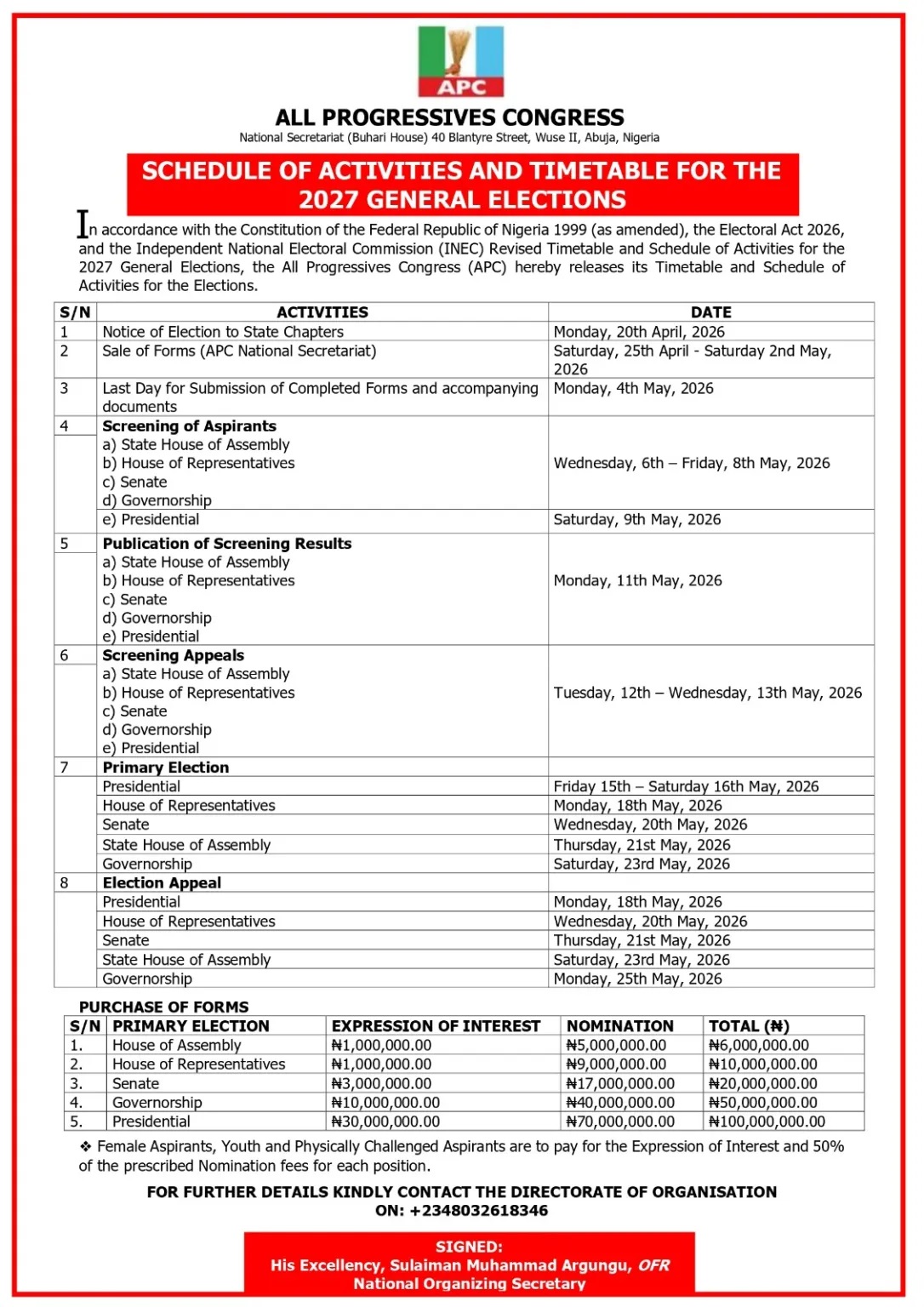
The schedule, signed by the party’s National Organising Secretary, Sulaiman Argungu, provides detailed timelines for the sale of nomination and expression of interest forms, screening of aspirants, publication of results, appeals, and the conduct of primary elections for all levels of elective offices.
The party said the timetable was issued in line with the Constitution of the Federal Republic of Nigeria 1999 (as amended), the Electoral Act 2026, and the Independent National Electoral Commission (INEC) revised timetable and schedule of activities for the 2027 general elections.
According to the APC, the release of the schedule underscores its commitment to what it described as credible and transparent primaries aimed at strengthening internal democracy and consolidating its “progressive ideals” ahead of the 2027 electoral contest.
“In accordance with the Constitution of the Federal Republic of Nigeria 1999 (as amended), the Electoral Act 2026, and the Independent National Electoral Commission (INEC) Revised Timetable and Schedule of Activities for the 2027 General Elections, the All Progressives Congress (APC) hereby releases its Timetable and Schedule of Activities for the Elections,” the party stated.
The process begins with the formal notice of election to state chapters and the commencement of the sale of forms at the APC national secretariat on Monday, 20 April.
The sale of forms will run from Saturday, 25 April, to Saturday, 2 May.
The party fixed Monday, 4 May, as the deadline for the submission of completed forms and accompanying documents by aspirants seeking to contest under its platform.
Screening of aspirants will then follow in phases. Aspirants for State House of Assembly, House of Representatives, Senate, and governorship positions will be screened between Wednesday, 6 May, and Friday, 8 May. Presidential aspirants are scheduled for screening on Saturday, 9 May.
The APC said screening results will be published on Monday, 11 May, covering all categories of offices, after which aggrieved aspirants will have the opportunity to file appeals.
Aggrieved aspirants will have two days, Tuesday, 12 May and Wednesday, 13 May, to file appeals before the party proceeds to its primaries.
Primary elections will commence shortly after the appeals process, beginning with the presidential primary scheduled for Friday, 15 May, to Saturday, 16 May.
This will be followed by the House of Representatives primary on Monday, 18 May, the Senate primary on Wednesday, 20 May, and the State House of Assembly primary on Thursday, 21 May, and Friday, 22 May. The governorship primary is scheduled for Saturday, 23 May.
The party also set dates for election-related appeals arising from the primaries.
Presidential primary appeals are expected to be handled from Monday, 18 May, while House of Representatives appeals are scheduled for Wednesday, 20 May.
Senate appeals will follow on Thursday, 21 May, State House of Assembly appeals on Saturday, 23 May, and governorship appeals on Monday, 25 May.
Beyond the timelines, the APC also detailed the cost structure for nomination and expression of interest forms across different elective offices, a recurring feature of internal party contests in Nigeria that has often generated public debate.
Aspirants for state houses of assembly will pay N1,000,000 for the expression of interest and N5,000,000 for the nomination forms. Those contesting seats in the House of Representatives are to pay N1,000,000 and N9,000,000, respectively.
Senatorial aspirants will pay N3,000,000 for the expression of interest and N17,000,000 for the nomination forms. Governorship aspirants are required to pay N10,000,000 for the expression of interest and N40,000,000 for nomination forms.
Presidential aspirants will pay N30,000,000 for the expression of interest and N70,000,000 for nomination forms.
However, in what may be seen as a concession to inclusivity concerns, the party said female aspirants, youths, and persons with disabilities will pay only for the expression of interest forms and 50 per cent of the prescribed nomination fees for their respective offices.
According to the Independent National Electoral Commission (INEC) timetable, presidential and National Assembly elections will hold on 16 January 2027, while governorship and state Houses of Assembly elections will hold on 6 February 2027.
Political parties are to conduct their primaries between 23 April and 30 May, including the resolution of disputes arising from the exercises.
Campaigns for presidential and National Assembly elections will commence on 19 August, while those for governorship and state Houses of Assembly will begin on 9 September.
However, INEC said that all campaigns must end 24 hours before election day.
See Time Table Below;

I was once a prostitute before God saved me – DJ Kulet

Toyin Abraham appeals for calm, urges fans to stop attacking Abike Shugaa

Ibiyeomie: I give $12k every Sunday, don’t need your offerings to stay rich




-
 News18 hours ago
El-Rufai issues public alert in prison
-
 News22 hours ago
Tinubu reforms shift Nigeria from fragility to growth as global pressures mount(Photos)
-
 News17 hours ago
Aisha Yesufu faults FCT teachers’ strike, wants Wike to intervene
-
 News15 hours ago
PDP Holds First NEC Meeting After Police Reopen National Secretariat
-

 News16 hours ago
Just in: Terrorists invade military camp, k!ll three soldiers in Kwara
-
 News18 hours ago
Alleged support for APC: Utomi, Falana, Others Demand INEC Amupitan’s Resignation
-
 News22 hours ago
Gov. Oborevwori, Prof. Osunbor, Sen. Dafinone, others to grace TheNewsGuru Editor’s book launch
-
 News13 hours ago
Wike to Aggrieved PDP Members: “You’ll Get Your Due, Come Back”(Photos)
You must be logged in to post a comment Login