News
Permutations On Edo Governorship Election 2024

- /home/naijuinz/public_html/wp-content/plugins/mvp-social-buttons/mvp-social-buttons.php on line 27
https://naijablitznews.com/wp-content/uploads/2024/04/2023-Elections.jpg&description=Permutations On Edo Governorship Election 2024', 'pinterestShare', 'width=750,height=350'); return false;" title="Pin This Post">
- Share
- Tweet /home/naijuinz/public_html/wp-content/plugins/mvp-social-buttons/mvp-social-buttons.php on line 72
https://naijablitznews.com/wp-content/uploads/2024/04/2023-Elections.jpg&description=Permutations On Edo Governorship Election 2024', 'pinterestShare', 'width=750,height=350'); return false;" title="Pin This Post">


By Professor Echefuna’ R G ONYEBEADI
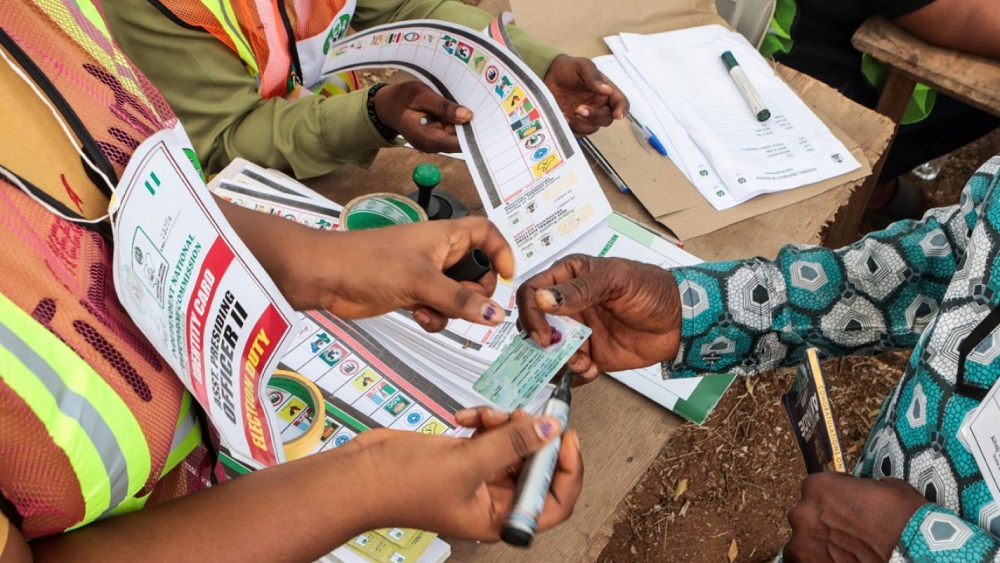
The die is cast! By September 21, 2024 (roughly twenty four hours from now), Edo people shall vote for who will be the next governor of their State.
The stake seems to be very high. It’s most likely to be a “roforofo” show between the “haves” and the “have nots”. Between wits and brawns; and between “godsons” and the “godfatherless”.
The election is poised to be a straight fight between three categories of people viz (not in a particular order):
1. The Elites
2. The Idealists
3. The Vulnerables (terminology loosely used).
The forthcoming election is for three political parties namely: APC, LP and PDP (in alphabetical order), to win or lose.
PDP represents the Elites group. Labour Party (LP) represents the Idealists group while the APC represents the Vulnerables group in the forthcoming election.
Whereas APC has the “Federal Might” (don’t ask me what that means), APC as a political, a former Governor and a humongous flow of money that is flowing from doubtful sources; PDP has the “power of incumbency” (please, don’t ask me what that means), a sitting governor and some unhindered flow of the State’s money, but without the global support of PDP as a political party.
The LP does not have those skewed “advantages” of both the APC and the PDP, but they have the full backing of the “Obidients” with a divided LP as a political party.
Ordinarily, going by “Nigerian factor” (again, please, don’t ask me what that means) on election matters among others, the election would have been for the APC to lose. But, it may not be so this time by a combination of factors.
PDP may have just had an easy win as the political party in power in the State, but again, that may not be so by a combination of factors.
The LP may have just lost the election outrightly in the fight for power between the trio of APC, PDP and LP, but again, that may not be so due to a combination of factors.
So, who then does the odds favour to win the forthcoming governorship election in Edo State? Wait for it!
By simple logic and by the unwritten principles of zoning and rotation, the governorship election is ordinarily for the Edo Central zone to pick, more so, considering the fact that, in this new political dispensation from 1999 to date, Edo South has produced governors twice spanning 16 years out of 25 years. Edo North has produced a governor for 8 years while Edo Central had produced a governor by default for just about one year, off record.
If the general perception of the incumbent Governor’s ‘poor’ performance connotes reality, then, it will be a very herculean task for the current PDP “controlled” State government to win the forthcoming governorship election in Edo State.
This apart, the latent “Omonoba” factor is a very big abartross that will be very difficult if not impossible for the current PDP led government of the State to overcome.
Going by the unprecedented, multifaceted and highly excruciating pains inflicted on Nigerians by the APC led Federal Government, it may be very difficult to convince the Edo people at this time, that their lots will be better served with a replication of an APC governor in the State.
Besides, the APC governorship candidate cuts across as a person bereft of original ideas, pedestrian and lacks self confidence/self esteem.
So, what would have ordinarily been an edge of having the so-called “Federal Might” and a favoured geopolitical zone, may backfire to cause a fatal political damage to the APC and its candidate.
The APC’s zonal factor sentiments of “tiwa ni tiwa” (our own is our own) and/or “it is our turn” ( awa lo kan) with an inappropriate candidate may really be offensive to the sensibilities and sensitivity of a people who had produced political juggernauts in the past in the persons of Chief Anthony Enahoro, Professor Ambrose Alli and Chief Tony Anenih, just to mention a few.
APC seems to have an inappropriate candidate for a zone that is ordinarily favoured to produce the next governor.
Another fear to contend with is that of an overbearing APC god father which may not synchronize well with the psyche of many Edo people at this time.
Therefore, what may have become a disadvantage to APC’s candidate would have naturally become a clear advantage for the PDP candidate, considering that Edo Central is the favoured zone to produce the next governor. But, it may not turn out to be so.
The PDP candidate is elitist, highly educated, but seems imposed on the people and even supposedly alien to his own people.
The PDP candidate seems to have the right credentials and/or pedigree, coming from a private sector but, his involvement in the current PDP led supposedly “failed” government and close association with a perceived “failed” incumbent Governor of the State is a big abbartross for the PDP candidate.
It may also be difficult for Edo people at this time to accept a political neophyte they hardly knew who is seemingly being put forward by a perceived “non performing” PDP godfather Governor!
It may be instructive at this juncture to note that, the so called rotation/zoning of elective political offices is not by any known law.
There hasn’t been any time that elective positions and particularly, that of governorship elections in Edo State have been exclusively restricted to and/or reserved solely, wholly and entirely for any particular zone without the active participation of the other zones.
Otherwise, an Obaseki wouldn’t have been put forward and became governor for 8 years after an Igbinedion had previously governed for eight (8 ) years, when they are both from the same geopolitical zone of Edo South, without other zones taking their turns prior to.
There has never been any time all the zones didn’t present candidates for elections for governorship in the past.
Therefore, the present sentiments for the Edo Central zone to produce the next governor is neither a right nor any agreement by the stakeholders and citizens of Edo State. It can only be hinged on pleas, persuasions, negotiations, building bridges across the geopolitical divides and on moral ground. The clamour for zoning is not enforceable by any law.
Though the yearnings for zoning the governorship this time to Edo Central is justifiable based on the doctrines of equity, fairness and justice. It is also imperative to note that, one of the maxims of equity states that: he who must come to equity must do so with clean hands!
Then, the pertinent question that needs an answer is: how clean are the hands of Edo Central stakeholders in producing inappropriate candidates that seem to be incurably deficient in the art and science of modern governance and/or unable to effectively communicate, with the added curiosity of being led and spoken for in their own campaigns by controversial people with lots of questionable baggage?
Flowing from the aforementioned therefore, it is my considered opinion that, the cloak of zoning elective positions, good as it may, is not a stand alone prerogative and can not rightly overshadow the overall interest and wellbeing of the citizens of the State.
While plying the route of zoning sentiments, it is only proper that competence, credibility, accountability, transparency and acceptability should not be sacrificed on the altars of incurable defective baggage and zoning.
Now, let’s consider some basic statistics.
According to the data from INEC, a total of 2,210,534 people registered to vote in the Edo Governorship election of Saturday, September 21, 2024.
Out of this number, only 1,726,738 people have collected their permanent voter cards (PVCs) while 483,796 PVCs are yet to be collected.
The breakdown of eligible voters for each of the Edo state’s three geopolitical zones and the 18 Local Government Areas in alphabetical order are as follows:
*Edo Central (LGAs)*:
1. Esan Central – 57,100
2. Esan North East – 80,245
3. Esan South East – 76,842
4. Esan West – 99,983
5. Igueben – 46, 828
*Total = 364,998 or 16.51%*
*Edo North (LGAs)*:
1. Akoko Edo – 119,254
2. Etsako Central – 50,058
3. Etsako East – 81, 639
4. Etsako West – 160,137
5. Owan East – 91,841
6. Owan West – 61, 193
*Total = 564, 122 or 25.52%*
*Edo South (LGAs)*:
1. Egor – 219,832
2. Ikpoba Okha – 315,410
3. Oredo – 313,553
4. Orhinmwon – 118,672
5. Ovia North East – 143,009
6. Ovia South West – 96,409
7. Uhunmwode – 74,529
*Total = 1,281,414 or 57.97%*
From the foregoing, it could be observed that *Edo Central has the least number of Local Government Areas (LGAs) with the least number of eligible voters, which is only 16.51% of the total number of eligible voters in Edo State.*
*Edo North has the second highest number of LGAs and the second highest number of eligible voters, which is 25.52% of the total number of eligible voters in Edo State.*
*Edo South has the highest number of eligible voters which is 57.97% of the total number of eligible voters in Edo State*
It may also be noticed that, Edo South alone where the LP candidate comes from, constitutes more than twice of the total number of eligible voters in both Edo Central and Edo North combined!
Therefore, with all the variables and factors considered, the LP’s candidate for the forthcoming governorship election in Edo State may jolly well cruise to victory by default; more so if Edo South people decide to vote for their own, in addition to the palpable “Omonoba” sentiments as evidenced in recent massive protests in Benin City against the perceived enemies of the Oba of the ancient Benin kingdom.
In that case, the remnant votes of the Edo Central people which may be majorly shared by the two prominent candidates from that zone and that of the Edo North, which may mainly favour the candidate of the former governor from that zone, the overall effect may be such that will eventually tend to be insignificant.
All things considered, if the forthcoming election in Edo State is peaceful, free, fair, transparent and credible, all that the LP’s candidate needs to win the election is to secure a huge majority vote from his Edo South people and then, make some strategic inroads into the other two zones to get the mandatory 25% of the votes cast in 2-3rd of the LGAs of the State.
This simply translates to having the majority of the total votes cast as well as 25% of the votes cast in 12 (twelve) LGAs of Edo State.
How these pans out will be an interesting watch!
In the final analysis, the ultimate decisions on who to vote for and/or against in the forthcoming governorship election in Edo State rests squarely on Edo State people. We wait to see!


The Federation Account Allocation Committee (FAAC), at its July 2026 meeting chaired by the Honourable Minister of Finance and Coordinating Minister of the Economy, Mr. Taiwo Oyedele, has shared a total of ₦2.551 trillion among the Federal Government, the 36 States and 774 Local Government Councils as Federation Account revenue for June 2026.
The meeting, held in Abuja, was attended by the Accountant General of the Federation, State Commissioners of Finance and other members of the Committee.
The amount distributed comprised ₦1.810 trillion in Statutory Revenue and ₦740.724 billion from Value Added Tax (VAT).
From the Statutory Revenue, the Federal Government received ₦849.366 billion, the State Governments ₦430.810 billion, while the Local Government Councils received ₦332.136 billion. The oil producing States also received ₦197.610 billion as 13 per cent derivation.
The VAT distribution saw the Federal Government receive ₦74.072 billion, the State Governments ₦407.398 billion, while the Local Government Councils received ₦259.253 billion.
In all, the Federal Government received ₦923.438 billion, the State Governments ₦838.208 billion, the Local Government Councils ₦591.390 billion, while ₦197.610 billion was shared as 13 per cent derivation to the oil producing States.
FAAC noted that gross revenue available in June 2026 stood at ₦4.501 trillion, comprising ₦3.701 trillion in statutory revenue and ₦799.746 billion in gross VAT collections.
The Committee observed a strong improvement in revenue performance during the month.
Gross statutory revenue increased by ₦1.049 trillion over the figure recorded in May 2026.
The growth was driven largely by higher receipts from Companies Income Tax, Value Added Tax, Import Duty, Customs Excise Tariff Levies, Petroleum Royalties, Gas Flared Penalties, Rental Income and Miscellaneous Oil Revenue.
However, collections from Petroleum Profit Tax, Hydrocarbon Tax, Mineral Royalties and Fees recorded declines.
VAT collections also recorded positive growth.
Gross VAT revenue rose from ₦743.668 billion in May to ₦799.746 billion in June, representing an increase of ₦56.078 billion.
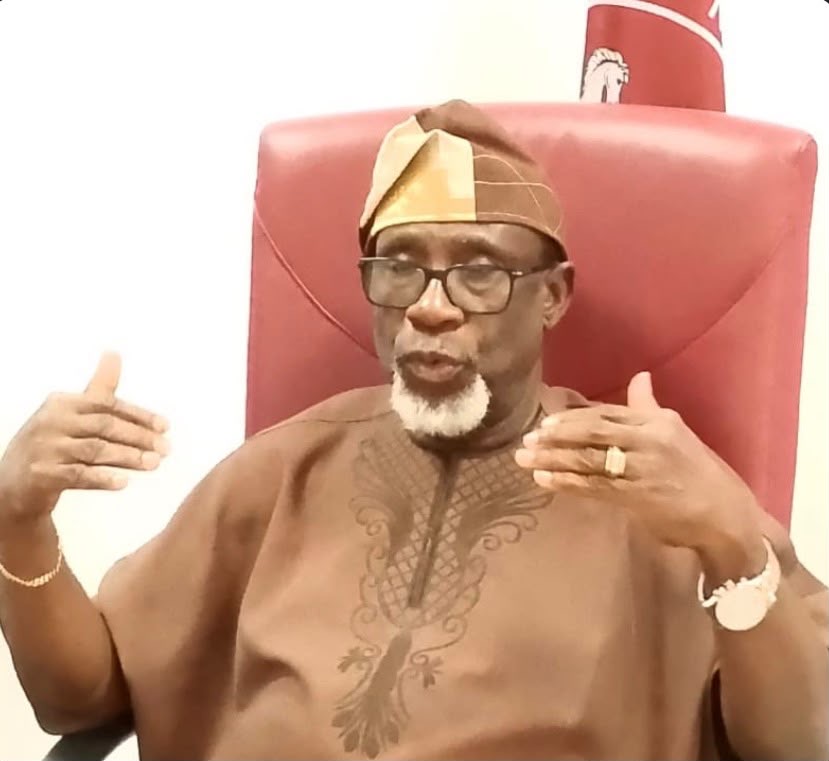
Chairman of the Senate Committee on Drugs and Narcotics, and the senator representing Edo Central, Senator Joseph Ikpea, has thumbed down the rehabilitation and reintegration of repentant Boko Haram members into society, insisting that individuals involved in terrorism should face the full weight of the law rather than be returned to civilian life.
Speaking with journalists after the inaugural meeting of the Senate Committee on Drugs and Narcotics at the National Assembly on Wednesday, Ikpea described the policy of reintegrating former insurgents as “unreasonable,” arguing that it undermines the sacrifices of security personnel and victims of terrorism.
According to him, insurgents responsible for the killing of innocent Nigerians and members of the armed forces should not be rehabilitated or reintegrated into society.
“I don’t understand the rationale behind reintegrating Boko Haram members into society. Our gallant soldiers have lost their lives protecting the country from these terrorists. If someone has committed acts of terrorism and is apprehended, such a person should face the consequences of the law,” he said.
The senator maintained that Boko Haram and other terrorist groups remain enemies of every Nigerian, irrespective of religion or ethnicity, noting that they target Christians, Muslims, civilians and security personnel alike.
Ikpea also alleged that some recent kidnapping incidents across the country could have political undertones, suggesting that certain actors may be exploiting insecurity to undermine the government ahead of future elections.
On the issue of drug control, the committee chairman disclosed that the Senate Committee on Drugs and Narcotics would review the proposed bill seeking to impose the death penalty for drug-related offences after a thorough examination of the legislation.
He explained that he was not a member of the Senate when the bill was previously debated and therefore could not comment on its current status.
“I have no idea about that bill because I was not a senator when it came up on the floor. My committee will look at it and advise accordingly. For now, I cannot say much about it,” he said.
Ikpea noted that the committee’s inaugural meeting was convened to outline its legislative agenda and oversight responsibilities.
He said one of its immediate priorities would be strengthening oversight of the National Drug Law Enforcement Agency (NDLEA) and inspecting rehabilitation centres across the country to ensure they comply with approved operational standards.
“We are planning to visit rehabilitation centres to ensure they meet the required standards. You cannot just establish a rehabilitation centre without complying with the necessary regulations. We want to ensure they are operating properly and delivering quality services,” he said.
Speaking on the proposed death penalty for drug traffickers, the senator declined to take a firm position, saying punishment for offences should be proportionate to the crimes committed and that the final decision rests with the National Assembly and the Federal Government.
“Every offence should attract punishment commensurate with its severity. Different countries have different laws on drug trafficking. Whatever the Senate and the Federal Government eventually decide will be respected,” he stated.
Ikpea further raised concern over the growing prevalence of drug abuse among Nigerian youths, warning that the trend poses a serious threat to the nation’s future.
Citing estimates that about 14 million Nigerians are affected by drug abuse, he advocated the introduction of drug education into school curricula from the primary level to discourage substance abuse from an early age.
“The youth are the leaders of tomorrow. If we fail to educate them on the dangers of drug abuse, the nation’s future will be in jeopardy. We are looking at introducing drug education into school curricula so children understand the consequences from an early age,” he said.

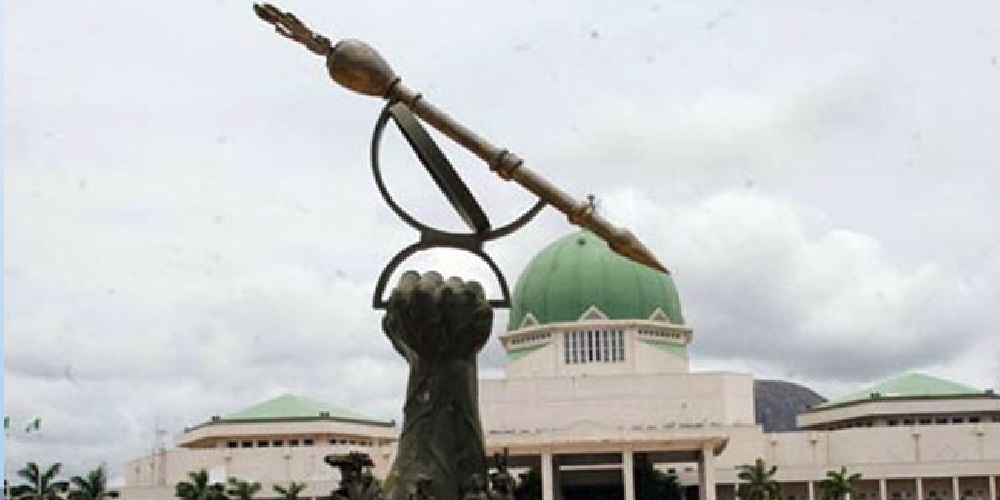
UK Backs National Assembly Security Dialogue as Push for State Policing Gathers Momentum
By Gloria Ikibah
The UK Government-funded Strengthening Peace and Resilience in Nigeria (SPRiNG) Programme has thrown its weight behind the National Assembly Security Roundtable, describing the initiative as a timely platform to advance security sector reforms, strengthen institutional accountability and accelerate discussions on state policing.
In a statement issued ahead of the roundtable, scheduled for Wednesday as part of the National Assembly Open Week 2026, it said that the engagement will bring together Nigeria’s top security chiefs, lawmakers and governors to review the country’s security challenges and identify the legislative and budgetary measures needed to improve the nation’s security architecture.
The meeting, to be held at the Conference Hall of the National Assembly Library Trust Fund, is expected to examine the support required by security agencies while also advancing constitutional reforms relating to state policing.
Among those expected at the event are the National Security Adviser, Chief of Defence Staff, Inspector-General of Police, Ministers of Defence, Interior and Police Affairs, as well as the governors of Kaduna, Katsina, Plateau and Benue — the four focal states of the SPRiNG Programme — alongside their counterparts from Kwara, Zamfara, Niger and Borno states.
Speaking on the significance of the dialogue, the Head of Development Cooperation at the British High Commission in Abuja, Cynthia Rowe, said lasting security can only be achieved through strong and accountable institutions.
She said: “Sustainable security requires strong, accountable institutions that are responsive to the needs of the people. The UK Government remains committed to supporting Nigeria’s legislative frameworks to ensure that security interventions are transparent, well-resourced, and firmly rooted in respect for human rights. This roundtable is a commendable step towards codifying reforms that will protect vulnerable communities and foster long-term stability.”
According to the statement, the roundtable’s agenda aligns closely with the SPRiNG Programme’s security sector reform objectives, with discussions expected to focus on banditry, kidnapping, farmer-herder conflicts, inter-agency collaboration, technology-driven security operations and modern approaches to community engagement.
The Team Leader of the SPRiNG Programme, Ukoha Ukiwo, said experience from the programme’s work across participating states had shown that peacebuilding efforts require solid legal backing to succeed.
“Our work across our state compacts has continually highlighted that operational peacebuilding must be backed by robust legal frameworks. The focus of this roundtable on state policing, security funding, and accountability is incredibly timely. By bridging the gap between grassroots realities and legislative action, we can ensure that informal and formal security architectures work cohesively to build formidable resilience in communities across Nigeria”, he said.
The meeting is expected to produce a comprehensive communiqué outlining priority security reforms, including recommendations on the implementation of state policing and other public safety initiatives.
It added that the SPRiNG Programme would continue to support engagements with relevant stakeholders to ensure that resolutions reached at the dialogue are translated into concrete policy actions.

Just IN: Argentina Cruise Past England To Set Up 2026 Final World Cup Showdown With Spain

FG, states, LGAs share ₦2.551trn as June 2026 revenue

Senator Ikpea Thumbs Down Reintegration of Repentant Boko Haram Members




-
 Health24 hours ago
What is being released to NCDC is a drop in the ocean- Senate C’ttee laments
-

 News24 hours ago
Police Arrest Alleged Fake Agency DG Adeyemi
-

 News24 hours ago
ADC Takes Congress Dispute to Supreme Court, Says 2027 Primaries Remain Valid
-

 Sports24 hours ago
Ashe declares readiness for Commonwealth Games
-
 News17 hours ago
DAY 26 of Projects Commissioning in the FCT:
-
 News16 hours ago
Senate Moves to Amend Electoral Act After Dozens of Incumbent NASS Members Lose Party Tickets
-
 Economy23 hours ago
Pension assets rise 51% to N31.48tn in two years, says PenCom DG
-

 News15 hours ago
Appeal Court reserves verdict on derecognition of ADC, four parties
Warning: Undefined variable $user_ID in /home/naijuinz/public_html/wp-content/themes/zox-news/comments.php on line 49
You must be logged in to post a comment Login