Connect with us

News

More trouble for Nigerians as fuel price hike imminent over rise in FX, oil price, Middle East

Published

on

ADVERTISEMENT
Zoom Ad
ADVERTISEMENT
Zoom Ad

By Mario Deepromoter

There are strong signals that an increase in the price of Premium Motor Spirit (PMS), also known as petrol is imminent.

The anticipated hike, players note, is primarily driven by a rise in the exchange rate of the dollar to the naira, coupled with escalation in the global price of crude oil.

As these economic factors converge, consumers in Nigeria may soon face higher fuel costs, reflecting the interconnected nature of international markets and local economies.

Advertisement

The naira showed further signs of weakness last week, closing the market at N1,700 from N1,600 to $1, a development that is set to affect retail fuel prices.

Brent, the global benchmark for crude, hit $78.04 per barrel on Sunday, up from $74.05 per barrel on September 23, 2024.

More so, there are concerns that a widening regional conflict in the Middle East could disrupt global crude flows. Market fears are rising over the possibility that Israel might target Iranian oil infrastructure, which could provoke retaliation.

President, Petroleum Products Retail Outlets Owners Association of Nigeria (PETROAN), Mr. Billy Gilly-Harry, told Daily Sun that the hostilities in the Middle East will definitely impact petrol prices in the coming days.

Advertisement

He explained that, at the moment, vessels are changing their routes as a result of the crisis in the Middle East, thereby causing an increase in shipping costs, which will subsequently impact prices.

“As an association, we have taken cognizance of the impact of this crisis on fuel costs, and I can tell you categorically that this will lead to an upward review of fuel prices. Certainly, the landing cost of fuel will go up. But what I cannot say is what that cost will be,” he said.

Chief Executive Officer of Pinnacle Oil and Gas Limited, Mr. Robert Dickerman, said the global market price for any oil commodity is dollar-based and must be converted to naira at the naira/USD exchange rate.

He added that the large majority of price increases we have seen in the past year are not because of government policies, price gouging, or product hoarding, nor are they due to an increase in the price of crude oil, but are due to the fall in the value of the naira.

Advertisement

“Every drop in naira value raises the cost of anything imported or market-priced, whether it is gasoline, manufactured goods, or food,” he said.

Dickerman said Nigeria must address the root of the problem, which is how to restore global confidence in Nigeria’s economy and currency, create foreign investment in jobs and local production, increase tax revenue, and achieve fiscal prudence, saying that is the only way to lower petroleum product prices in Nigeria.

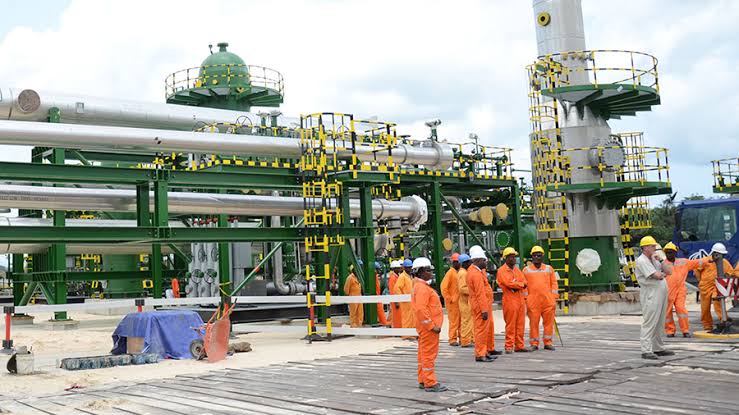
The impending fuel price hike, according to industry observers, may have forced the Nigerian National Petroleum Company (NNPC) Ltd to shut its petrol payment portal against fuel marketers.

Spokesperson for the Independent Petroleum Marketers Association of Nigeria (IPMAN), Mr. Chinedu Ukadike, said that marketers have more than 2,000 pending tickets for the purchasing of 45,000 litres of petrol, warning that the situation may lead to another round of fuel scarcity nationwide.

Advertisement

“I can’t confirm the price now because the portal is still shut down.

“We have more than 2,000 tickets for 45,000 litres (of petrol). That is 45,000 multiplied by 2,000; you can now know the number of million litres it will be. This is just an estimate; you know I don’t work with NNPCL, and I don’t know what is on their system.”

He added that a 45,000-litre truckload of PMS is around N39.5 million, making N79 billion when multiplied by 2,000.

Some of the marketers at the Apapa depot who spoke in confidence expressed concerns that the development could hamper the fragile fuel distribution chain, leading to shortages in the weeks ahead.

Advertisement

They said any disruption in the fuel supply chain is a potential threat for a fuel crisis and therefore called on all relevant stakeholders to address whatever challenges that may want to rear their ugly heads.

But in a separate reaction, the National Vice President of IPMAN, Mr. Hammed Fashola, in a telephone interview with Daily Sun on Friday, said there is no cause for worry, assuring that as long as the tickets which are already in the custody of NNPC Ltd are being serviced, there would be no disruption.

He maintained that the portal closure against fresh payment by NNPC Ltd was taken in the best interest of the market, saying there was no point in holding on to the business funds of marketers when there was a backlog to clear.

“It is better to allow the funds to be in the hands of marketers to enable them to use it for other things, rather than holding on to it when there won’t be immediate supply.”

Advertisement

In his reaction, the spokesperson of NNPC Ltd, Mr. Olufemi Soneye, who confirmed the shutdown of the portal, assured stakeholders that it would be opened as soon as they clear the backlog.

He said that the portal closure was intended to prevent the company from holding marketers’ funds for an extended period.

“We have a significant backlog to address. The closure is intended to prevent us from holding marketers’ funds for an extended period.

Credit: Daily Sun
Advertisement
Continue Reading
Advertisement
Click to comment

Warning: Undefined variable $user_ID in /home/naijuinz/public_html/wp-content/themes/zox-news/comments.php on line 49

You must be logged in to post a comment Login

Leave a Reply

News

48 Choice Properties Linked To Ex-AGF Malami, Including Rayhaan Varsity Hotels, Forfeited To Nigerian Govt (List)

Published

on

ADVERTISEMENT
Zoom Ad
ADVERTISEMENT
Zoom Ad

The Economic and Financial Crimes Commission (EFCC) on Wednesday, secured the final forfeiture of 48 properties linked to ex- Attorney-General of the Federation and Minister of Justice, Abubakar Malami, SAN, to the Federal Government of Nigeria.

Among the forfeited properties are Rayhaan University, Kebbi State, including the Rayhaan University Permanent Site, Rayhaan University Temporary Site, Rayhaan University Third Site, the Rayhaan University Vice Chancellor’s House and Rayhaan Radio along Sani Abacha Bypass Road, Birnin Kebbi.

Delivering judgment, Justice Joyce Abdulmalik of the Federal High Court, Abuja, held that the Commission had successfully established that the properties were reasonably suspected to be proceeds of unlawful activities and were not acquired from lawful sources of income.

The properties finally forfeited to the Federal Government are: a luxury duplex at Amazon Street, Plot No. 3011 within Cadastral Zone A06, Maitama District, Abuja (File No. AN 11352); a two-winged large three-storey building situated at No. 3 Onitsha Crescent, Area 11, Garki, Cadastral Zone A03, Abuja (formerly Harmonia Hotels Limited); Plot 683, Jabi District, Cadastral Zone B04, comprising a five-storey building (now luxurious Meethaq Hotels Ltd., Jabi, with 53 rooms/suites); Property No. 3130 within Cadastral Zone A04, Asokoro District, FCT, Abuja, comprising terraces; Property No. 3 Rhine Street, Maitama, Abuja (Meethaq Hotels Ltd., Maitama, with 15 rooms); and Plot No. 1241B, Asokoro District (No. 11A Yakubu Gowon Crescent), Asokoro District.

Advertisement

Others are: Shop No. C52, Citiscape – Shariff Plaza, Plot 739, Cadastral Zone A07, Aminu Kano Crescent, Wuse II, FCT, Abuja; No. 4 Ahmadu Bello Way, Nasarawa GRA, Kano; Plot 157, Lamido Nasarawa GRA, Kano; a commercial plaza comprising commercial toilets, laundering facilities, warehouse tanks adjacent to Birnin Kebbi Market; 100 hectares of land along Birnin Kebbi–Jega Road; and another 100 hectares of land along Birnin Kebbi–Jega Road.

Others are: a four-bedroom bungalow at Gesse Phase II, Birnin Kebbi; Shops Nos. A36 and B3, Vegas Mall, Wuse II, Abuja; No. 26 Babbi Drive, BUA Estate, Abuja; No. 27 EFAB Estate, 5th Avenue, 59th Crescent, Gwarimpa, Abuja; a four-bedroom house with two-room boys’ quarters at No. 10B Doka Crescent, Abakpa GRA, Kaduna; Plot No. 13, IPENT 7 Estate, Karsana District, Abuja; a bedroom duplex with boys’ quarters at No. 12 Yalinga Street, off Adetokunbo Ademola Crescent, Wuse II, Abuja; two warehouse shops B40 and B46, Wuse Market, Abuja; acquisition of twin houses at Zone E, Apo Legislative Quarters, Cadastral Zone B01, Plot 1401, Gudu District, Abuja; and properties acquired by Khadimiyya for Justice & Development Initiative at the Academic Garden City, Birnin Kebbi, sold by the Federal Housing Authority Mortgage, namely: nine units of three-bedroom bungalows, three units of two-bedroom bungalows, and 5.4 hectares of land.

Also forfeited are the Rayhaan Agro Allied Factory in Kebbi State, including the factory buildings, factory machines and plant units, factory mosque, Rayhaan Mill staff quarters, and the Rayhaan Bustan Building.

Others are assets at Azbir Arena, Kebbi State, including Azbir Hotel, Printing Press, Gallery, Gardens, Mosque, Azbir Clothing, and Azbir Pharmacy and Supermarket.

Advertisement

Other forfeited properties include the Al-Afiya Energy tanker garage opposite Rayhaan University Health Centre along Sani Abacha Bypass Road, Birnin Kebbi; Rayhaan Security House off Sani Abacha Bypass, Birnin Kebbi; an uncompleted two-storey plaza located opposite Central Motor Park (Eastern Park), Birnin Kebbi; Amasdul Oil and Gas Ltd. filling station structure along Sani Abacha Bypass Road, Birnin Kebbi, near Jambali Automobile Workshop; the assets of Zeennoor Hotel at Kabuga Satellite Town, off Gwarzo Road, Kano, with 131 rooms; Zeennoor Mosque at Kabuga Satellite Town, off Gwarzo Road, Kano; and the old Zeennoor Hotel building.

It would be recalled that on January 6, 2026, Justice Emeka Nwite granted the interim forfeiture order following an ex parte motion moved by counsel to the Economic and Financial Crimes Commission, EFCC, Ekele Iheanacho, SAN

Sequel to the granting of the interim forfeiture order, and in compliance with the order of the court, the EFCC published the interim order in national dailies, inviting interested persons to come forward and show cause why the final forfeiture order should not be granted in favour of the Federal Government of Nigeria.

The EFCC subsequently filed a motion for the final forfeiture of all the properties.

Advertisement

Meanwhile, following the publication of the interim order, Mr. Malami, SAN, and 14 other persons, mainly his family members and associates, filed applications to show cause and also urged the court to set aside the interim forfeiture order on the properties. They further challenged the jurisdiction of the court to grant the order and urged it not to grant the final forfeiture order.

The case was heard before Justice Joyce Abdulmalik on May 27, 2026, and the matter was thereafter adjourned for judgment.

Delivering judgment on Wednesday, the court held that the EFCC had sufficiently established that the 48 properties were reasonably suspected to have been acquired with proceeds of unlawful activities, and that the respondents failed to discharge the evidential burden placed on them, as they could not show the legitimate sources of the funds used in acquiring the properties.

The court further held that the respondents merely claimed ownership of the properties without providing proof of how they acquired them with funds from lawful sources.

Advertisement

According to the court, non-conviction-based forfeiture proceedings require respondents to adduce evidence showing the lawful sources of the funds used in acquiring the properties, and not merely make bare assertions of ownership.

Continue Reading

News

93 percent of inmates are State offenders, half don’t need jail — Tunji-Ojo

Published

on

By

ADVERTISEMENT
Zoom Ad
ADVERTISEMENT
Zoom Ad

Minister of Interior, Dr Olubunmi Tunji-Ojo, has disclosed that 93 percent of inmates in Nigerian custodial facilities are state offenders, with only 7 percent held for federal offences, adding that a significant proportion of these inmates do not require incarceration in the first place.

Tunji-Ojo, who spoke on Wednesday in Abuja at the Regional Conference on the Classification of Prisoners and the Use of Technology in Prisons in Africa, jointly organised by the United Nations Office on Drugs and Crime UNODC and the African Correctional Services Association ACSA, said the Federal Government had moved decisively to decongest correctional facilities by targeting inmates jailed for minor offences.

“93% of our inmates in Nigeria are state offenders. Only 7% are federal offenders. And of this 93%, I want to tell you before this president came on board, a lot of them were for minor offences that had no need for incarceration,” the minister said.

He recounted how he ordered an audit of inmates held over minor fines and compensation judgments soon after assuming office.

Advertisement

“When I became minister, I called my permanent secretary, I called the Controller General of the Correctional Service, and I said, listen, give me the data, the record of people who are in correctional centres for fines and compensation of less than 500,000 or something. And guess what? Over 4,000 people,” he said.

According to him, the exercise exposed the futility of keeping such offenders in custody at public expense. “I said, what is the sense in this? Because I feed them in a year with more than 10 times of the fine. So how is the government benefiting? And we were able to clear that, and in one day, we decongested our correctional centre by 5% in one day. In one day,” he said.

The minister said the episode underscored a broader question that correctional authorities across Africa must confront: whether their facilities are rightly overcrowded. “The question is this. Is your correctional centre rightfully overcrowded? That is the question. You have to look at those particular offences. You will realise that more than 30, 40, 50 percent are offences that do not warrant incarceration,” he said.

Tunji-Ojo also disclosed that recidivism in Nigeria’s correctional centres had fallen sharply under the current administration, from about 13,000 cases annually in 2023 to 1,000 last year, a development he attributed to expanded access to education and vocational training for inmates. He said the correctional service currently has 62 inmates pursuing postgraduate studies, 261 in undergraduate programmes, 1,125 in formal education, 18 National Open University centres domiciled in correctional facilities, and 9,582 inmates enrolled in vocational and non-formal rehabilitation programmes.

Advertisement

He said Nigeria had also gone three years without recording a single jailbreak or attack on a correctional facility, a feat he linked to improved data management and inter-agency information sharing. He cited an incident in which an escaped inmate was rearrested after attempting to obtain a Nigerian passport using biometric data linked across security agencies. “Immediately he put his finger at the level of Nigeria immigration service to procure a passport. Immigration saw it immediately that he was an inmate. And immediately they reached out to correctional service and he was arrested right there,” he said.

The Controller General of the Nigerian Correctional Service, Sylvester Ndidi Nwakuche, said Nigeria has continued to modernise its correctional system through reforms anchored on the Nigerian Correctional Service Act, 2019.

He said effective prisoner classification has become a strategic tool for identifying inmates’ risks, protecting vulnerable prisoners, deploying resources efficiently and delivering targeted rehabilitation programmes.

Nwakuche added that integrating technology into correctional administration would enhance record management, improve information sharing and strengthen institutional accountability, stressing that no single correctional service possesses all the solutions to today’s security and rehabilitation challenges. “We have a unique opportunity to exchange ideas, share practical experiences and collectively develop solutions that will strengthen correctional systems across Africa,” he said.

Advertisement
Continue Reading

News

Corruption Charges: Ex-CCT Chairman Umar gets N100m bail as trial begins Oct 29

Published

on

By

ADVERTISEMENT
Zoom Ad
ADVERTISEMENT
Zoom Ad

Six days after he was remanded in prison custody, a High Court of the Federal Capital Territory (FCT), sitting in Maitama, on Wednesday granted bail to the former chairman of the Code of Conduct Tribunal (CCT), Mr Danladi Umar, to the tune of N100 million.

The court, in a ruling delivered by Justice Peter Kekemeke, further directed the erstwhile CCT boss, who is facing a four-count corruption charge, to produce one surety in like sum.

According to the court, the surety must be an owner of a property located within the Federal Capital Territory (FCT), Abuja, who must depose to an affidavit of means.

Besides, the court ordered the defendant to surrender his international passport and not travel out of the country without permission.

Advertisement

The case was subsequently adjourned to October 29 for trial.

Umar was, on July 9, after being arraigned before the court by the Economic and Financial Crimes Commission (EFCC), remanded to Kuje prison.

The anti-graft agency said its investigations revealed that the defendant abused his official position by conferring an undue advantage on himself while he served as head of the tribunal.

He was alleged to have collected kickbacks totalling about N15.5 million from contractors.

Advertisement

The prosecution told the court that the defendant, in 2021, used his wife’s bank account to collect the sum of N5.5 million from a contractor engaged to paint the headquarters of the CCT in Abuja.

It was further alleged that on January 25, 2024, he also used his wife’s account to collect another N6 million from a contractor that handled the digitisation of the tribunal’s records.

Furthermore, the defendant was accused of directing a contractor to pay N2.43 million for his daughter’s tuition fee at Baze University, Abuja.

He was said to have committed offences punishable under Section 19 of the Corrupt Practices and Other Related Offences Act, 2000.

Advertisement

However, upon his arraignment, the embattled former CCT chairman pleaded not guilty to the allegations.

At the resumed proceedings on Wednesday, his legal team, led by Mr Sunday Edward, prayed the court to release him on bail pending the conclusion of the trial.

His bail application was anchored on Section 36(5) of the 1999 Constitution (as amended), as well as Sections 162 and 163 of the Administration of Criminal Justice Act (ACJA), 2015.

Even though the prosecution counsel, Mr Christopher Mshelia, opposed the bail request on the premise that the defendant had the capacity to influence some of the proposed witnesses, Justice Kekemeke dismissed the objection.

Advertisement

He held that nothing was adduced to establish that the defendant could interfere with an investigation that had already concluded, with all documentary evidence frontloaded before the court.

The court further set aside the prosecution’s claim that the defendant could commit another offence or evade trial.

It held that the charges contained bailable offences.

It will be recalled that the defendant, while in office as CCT Chairman, on January 23, 2019, issued a controversial ex parte order that led to the removal of a serving Chief Justice of Nigeria (CJN), Justice Walter Onnoghen.

Advertisement

Following the ex parte order, the late President Muhammadu Buhari, on January 25, swore in the next most senior jurist of the Supreme Court, Justice Tanko Muhammad, as Acting CJN.

Although Onnoghen later voluntarily resigned his position as CJN on April 4, Umar went ahead and convicted him on April 18, 2019, on the federal government’s allegation that he had failed to properly declare his assets as required by law.

He gave the federal government the go-ahead to confiscate all monies in five accounts belonging to the former CJN and also removed him as chairman of both the National Judicial Council (NJC) and the Federal Judicial Service Commission (FJSC).

In 2024, the Senate, citing alleged gross misconduct, removed Umar as chairman of the CCT.

Advertisement

President Tinubu has since appointed Mr Abdullahi Bello to head the tribunal.

Some of the counts in the charge against the former CCT chairman read:

“That you, Danladi Yakubu Umar, while serving as the Chairman of the Code of Conduct Tribunal and Chairman of the Code of Conduct Tribunal Tenders Board, on or about the 5th day of October, 2021, in Abuja, within the jurisdiction of this Honourable Court, did confer upon yourself a corrupt and unfair advantage by causing the sum of N5,500,000.00 (five million, five hundred thousand naira only) to be paid to your wife, Zulaihatu Danladi Umar, through her Keystone Bank Account No. 6031167105, by Kurchmives International Limited, a sub-contractor under the contract awarded by the Code of Conduct Tribunal to Momanaf Global Ventures Limited for internal and external painting of the headquarters of the Code of Conduct Tribunal, and thereby committed an offence contrary to Section 19 of the Corrupt Practices and Other Related Offences Act, 2000, and punishable under the same section.”

“That you, Danladi Yakubu Umar, while serving as the Chairman of the Code of Conduct Tribunal and Chairman of the Code of Conduct Tribunal Tenders Board, on or about the 25th day of January, 2024, in Abuja, within the jurisdiction of this Honourable Court, did confer upon yourself a corrupt and unfair advantage by causing the sum of N6,000,000.00 (six million naira only) to be paid to your wife, Zulaihatu Danladi Umar, through her Zenith Bank Account No. 2085458208, by Portal Realities Limited, a sister company of JTF Global Links Limited, a company which was awarded the contract for the digitalisation of the Code of Conduct Tribunal management records by the Code of Conduct Tribunal, and thereby committed an offence contrary to Section 19 of the Corrupt Practices and Other Related Offences Act, 2000, and punishable under the same section.”

Advertisement
Continue Reading

Trending

Copyright © 2024 Naija Blitz News