Connect with us

News

CBN Says Recapitalization Policy Strengthened Financial Position Of Banks

Published

on

ADVERTISEMENT
Zoom Ad
ADVERTISEMENT
Zoom Ad
…as macroeconomic performance projection indicate 3.2%, 3.3% growth rate for 2024, 2025 respectively
By Gloria Ikibah
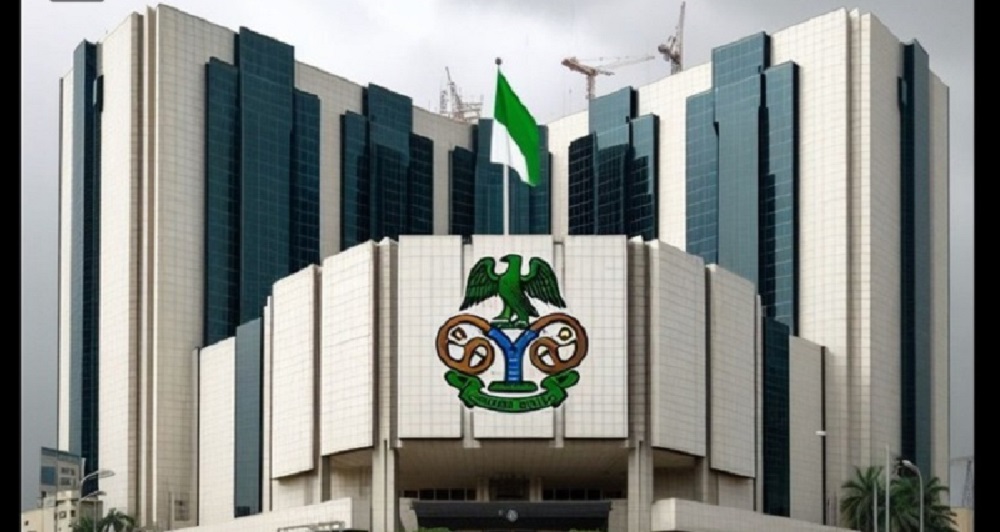
The Governor of Central Bank of Nigeria (CBN), Yemi Cardoso, has highlighted plans of the Apex bank to address the spiralling inflation in the country.
Cardoso also said the Bank’s recapitalization policy has prompted banks to strengthen their financial positions, a process which he said was expected to result in a more robust and resilient banking sector by March 2026.
The CBN Governor who stated this while addressing the House of Representatives Committee on Banking, on the on policy measures and strategies to address domestic macroeconomic challenges.
The exercise, according to him, is expected to support the realisation of $1 trillion economy by the year 2030.
On the macroeconomic performance in 2024, he said projections indicates a growth rate of 3.2% and 3.3% for 2024 and 2025 respectively, and that Nigeria is projected to maintain a more robust 4.3% growth rate.
Cardoso said the non-oil sector maintained strong performance, contributing 94.30% to GDP with a steady 2.80% growth rate.
He added that the oil sector’s growth rate has almost doubled to 10.15% in Q2, 2024 from 5.70% in Q1, 2024, due mainly to improved security surveillance which resulted in increased production of crude oil and natural gas.
He said the Services sector continues to be the primary economic driver, contributing 58.76% to GDP with a robust growth rate of 3.79%.
Similarly, he said the Industrial sector has shown remarkable improvement, with its growth rate surging to 3.53% from 0.31%.
He pointed out that the contribution of agriculture to total GDP also increased, in addition, the growth rate of the sector rose to 1.41%, from a negative territory of -0.90%, indicating a substantial turnaround in productivity.
He also said the foreign exchange reserves have grown significantly, with remittance flows currently representing 9.4 per cent of total external reserves.
The CBN Governor further stated that the reserves grew by 12.74% to US$39.12 billion as of October 11, 2024, from US$34.70 billion at end-June 2024, driven largely by foreign capital inflows, receipts from crude oil related taxes and third-party.
“In Q2 2024, we maintained a current account surplus and saw remarkable improvements in our trade balance”, he said.
Cardoso further explained that the current external reserve position is able to finance over 12 months of import of goods and services, or 15 months of goods only.
“This is substantially higher than the prescribed international benchmark of 3.0 months, reflecting a robust buffer against external shocks.
“Inflation trended upward, driven largely by high food prices, cost of energy and legacy infrastructural challenges, but it commenced deceleration from 34.19% in June 2024 and to 33.40% in July 2024.
“The moderation in inflation became more pronounced in August 2024, as headline inflation further eased to 32.15%, largely attributed to monetary policy measures taken by the Bank”, he added.
” With aggressive monetary policy tightening coupled with robust monetary- fiscal policy coordination, inflation is expected to further trend downward in the near-to-medium term, Cardoso said.
“To combat inflation, he said they had fully reverted to orthodox monetary policy approach and implemented a comprehensive set of monetary policy measures.
“These include raising the policy rate by 850 basis points to 27.25%, increasing Cash Reserve Ratios and normalising Open Market Operations as our primary liquidity management tool.
“In addition, we have adopted an Inflation-Targeting (IT) monetary policy framework as part of the Bank’s Enterprise Strategy (2024 2028).
“The IT framework, widely adopted across various global economies, is renowned for its effectiveness in combating persistent inflation.
“These integrated measures are aimed at stabilizing prices, optimizing liquidity management, and engendering an effective monetary policy framework.
“Regarding the foreign exchange market, the the Bank implemented various reforms including a unification strategy, which streamlined various exchange rate windows into a single model, adopting the ‘Willing Buyer, Willing Seller’ approach to enhance FX liquidity and financial market stability.
“This move was aimed at fostering transparency, reducing market distortions, and enhancing the efficiency of foreign exchange allocations.
“This consolidation involved the implementation of new operational guidelines, which included removing the International Money Transfer Operators (IMTOS) quote cap.
“Additionally, the Bank resumed the sales of FX at the Nigerian Autonomous Foreign Exchange Market (NAFEM) and Bureau De Change (BDC) segments, bolstered by an improved supply from Foreign Portfolio Investors (FPIs)”, he added.
On banking supervision, Cardoso emphasised that the CBN has taken decisive actions to ensure the safety, soundness, and resilience of the banking industry.
“One of the key measures include the recapitalization of the banking sector by raising the minimum capital base to support the $1 trillion economy envisioned by the Federal Government of Nigeria (FGN) by 2030.
“Banks are required to meet these new thresholds by March 31, 2026, with several options available for reaching these targets.
“These options include issuing of new equities, engaging in mergers and acquisitions, or adjusting their operational licenses. The Bank also revoked the licence of Heritage Bank, facilitated the successful merger of Unity Bank and Providus Bank, revised Cybersecurity Rules for Banks and PSPs, suspension of processing fees on cash deposits, and enhanced Anti-Money Laundering and Combating the Financing of Terrorism (AML/CFT) supervision, amongst others”, he stated.
On Monetary and fiscal policy coordination, he said they had strengthened collaboration during the period under review.
“In this regard, several joint committees have been instituted to build synergy and to provide platforms for key stakeholders’ engagements to explore ways through which monetary policy implementation and fiscal operations can be conducted in a mutually reinforcing manner.
“Overall, our policy measures reflect a holistic approach to addressing various challenges in the economy. While some measures have immediate effects, others are designed to bring about long-term structural changes. Our ultimate goal is to create a more stable, resilient, and efficient monetary and financial system that can better serve the Nigerian economy, while adhering to global best practices”, he noted.
Cardoso said the Bank’s numerous policy initiatives have begun to yield significant results across various sectors of the economy.
He said: “In the foreign exchange market, we have achieved increased transparency and improved overall supply. By allowing the foreign exchange rate to be determined by market demand and supply, the CBN has reduced arbitrage and speculative activities, and eliminated the front-loading of FX demand.
“These policy measures have effectively narrowed the exchange rate disparities between the NAFEM and BDC segments, which have largely led to the convergence of FX rates. Improved transparency in the market has restored market confidence leading to increased capital inflows which enabled the CBN to clear existing FX backlogs.
“The settlement of all legitimate backlogs of outstanding FX obligations by the Bank has significantly improved Nigeria’s credibility and ratings across the global financial market, helping to boost investor confidence, and enhanced liquidity in the foreign exchange market.
“With improved investor confidence, foreign investments have increased as evidenced by a significant rise in capital importation by 65.56% to $6.49 billion between January and July 2024, compared to US$3.92 billion in the corresponding period of 2023.
“Collectively, these actions have contributed significantly to the stability of the financial system. While inflation remains a major concern, we are not relenting in ensuring that requisite measures are taken.
“Headline inflation slightly increased from 32.15% in August to 32.70% in September 2024. The MPC further tightened the policy rate in its September meeting in anticipation of an uptick in inflation due to the upward adjustment of the petroleum pump price.
“On a positive note, there was a moderation in core inflation from 27.58% to 27.43% over the same period. We therefore expect the year to end with significant moderation in inflation, as our policy measures permeate the real economy,” he said.
On the outlook for the economy, Cardoso said he was confident as the country expects continued positive growth, especially in the non-oil, oil and industrial sectors.

Continue Reading
Advertisement
Click to comment

Warning: Undefined variable $user_ID in /home/naijuinz/public_html/wp-content/themes/zox-news/comments.php on line 49

You must be logged in to post a comment Login

Leave a Reply

News

Photos: We’re building infrastructure for a knowledge-driven economy – Tinubu

Published

on

ADVERTISEMENT
Zoom Ad
ADVERTISEMENT
Zoom Ad

President Bola Tinubu has said that his administration was building road infrastructure to lay the needed physical foundation for a knowledge-driven economy, stressing that education, justice, and innovation need roads to thrive.

Tinubu stated this in Abuja on Tuesday, while flagging off the construction of Collector Road CO1 in the Institutional Research District, from Nile University to Ring Road III.

Represented by the National Chairman of the All Progressives Congress, Prof Nentawe Yilwatda, the President said that the project included dualisation of the road from Baze University roundabout to Nile University, that is the Base University.

He noted that three years into his administration, the results were speaking out.

“From the Southern Parkway to the Institution and Research District, we are laying the physical foundation for a knowledge-driven economy.

“Today, we provide those roads that are needed to provide justice, education, and innovation to our people.

“To the university community, this road is more than a route. It is a connection between learning, law, and the future of our capital,” he said.

He pointed out that the Institution and Research District was designed to be the intellectual heart of Abuja, adding that universities, law chambers, research centers, and innovation hubs were growing in the area.

Advertisement

He, however, stressed that ideas could not move if roads do not move and connect the heart and people together.

Tinubu further said: “Under the Renewed Hope Agenda, we made a choice to finish what was started and to start what we must finish.

“The first phase of this corridor connecting the Body of Benchers, Nile, and Base University is done and ready for commissioning. Today, we begin the next phase to Ring Road III to complete the loop.

“That is how we build a city—with a plan. Not a city of abandoned pieces. Infrastructure must be continuous, and it must also be useful to the people within the environment”.

He commended FCT Minister Nyesom Wike for turning FCT into a delivery agency, stressing that the transformation of Abuja under the minister’s watch is bold, visible and worthy of commendation.

He said, “Wike, your energy is unmatched. You took over a capital with many stalled projects and turned the FCTA into a delivery agency. ‘Mr. Projects’ is not a slogan, it is a record. You have revived sleeping roads, built new interchanges, and brought development to satellite towns. You have domesticated the Renewed Hope Agenda; street by street, district by district. The transformation of Abuja under your watch is bold, visible, and worthy of commendation. Well done, Minister Wike.”

Advertisement

In his remarks, Wike explained that the project was considered following a plea by the Body of Benchers to provide access roads to ease the movement of people in and out of the area.

He assured FCT residents that the Tinubu administration would fulfill all the promises made to the people of FCT, adding that the project would be completed by January 2027.

The minister said that he would continue to deliver life-impacting projects to FCT residents as directed by Tinubu, stressing that the delivery would not be affected by 2027 political activities.

Earlier, acting Executive Secretary, Federal Capital Development Authority, Mr Richard Dauda, said that the Institutional Research District of the FCT is located in Phase III of the city.

Advertisement

Dauda said that the area was planned to accommodate educational institutions like universities, research institutions, and other government institutions as provided in the Abuja master plan.

He added that the district was being developed in stages, with this project being a major intervention in the opening of this district.

He explained that the scope of the current stage involved the construction of Collector Road CO1, from the Nile University to Ring Road III with a total length of about six kilometres.

He added that the project also included the dualisation of the section from the Base University Junction to Nile University.

Advertisement
Continue Reading

News

Just in: Kidnapped APC Chairman, Another Victim Die in Abductors hideout

Published

on

ADVERTISEMENT
Zoom Ad
ADVERTISEMENT
Zoom Ad

Tragedy struck in northern Nigeria following reports that two abducted victims, including a former chairman of the All Progressives Congress (APC) in Koko/Besse Local Government Area of Kebbi State, have died while in captivity.

The deceased, Alhaji Muhammadu Mai Barga Besse, who previously served as APC chairman in the local government area, was reportedly held hostage by armed kidnappers for an extended period before his death. Another victim who was abducted alongside him was also confirmed dead, although his identity had not been officially disclosed at the time of filing this report.

The sad development comes months after disturbing videos emerged online showing the victims in dire conditions while being held captive in the notorious Birnin Gwari forest.

The footage sparked widespread concern among family members, political associates and members of the public who called for urgent intervention to secure their release.

Advertisement

Despite efforts made during their captivity, both men were reportedly never reunited with their families before their deaths.

The incident has once again drawn attention to the persistent security challenges facing communities across northern Nigeria.

The Birnin Gwari axis, located along the Kaduna-Niger corridor, has become one of the country’s most dangerous regions, with criminal gangs and armed bandits frequently carrying out kidnappings, attacks on villages and other violent crimes.

Residents and stakeholders have repeatedly called on security agencies to intensify operations in the area and dismantle criminal hideouts within the vast forest, which has long served as a sanctuary for armed groups.

Advertisement

News of the deaths has generated an outpouring of grief on social media, with many Nigerians expressing sadness over the fate of the victims and urging authorities to strengthen efforts against kidnapping and banditry.

Popular social media personality Denglishalhajii also shared the development on Instagram, mourning the victims and drawing attention to the growing insecurity affecting many parts of the region.

The deaths of the former APC chairman and his fellow captive have further underscored the human cost of the country’s security crisis, leaving families, friends and political associates in mourning while raising renewed concerns about the safety of citizens in vulnerable communities.

Advertisement
Continue Reading

News

Tinubu Seeks Constitutional Backing For State Police, Writes Senate

Published

on

ADVERTISEMENT
Zoom Ad
ADVERTISEMENT
Zoom Ad

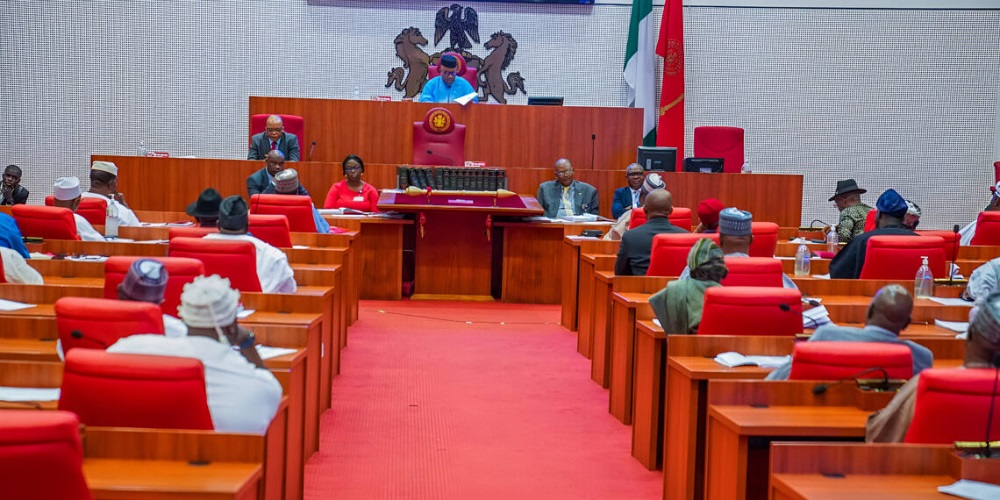
President Bola Tinubu has asked the senate to approve a constitutional amendment bill seeking to establish state police across Nigeria as part of efforts to strengthen the country’s security architecture.

The request was contained in a letter dated June 15, 2026, and read on the floor of the senate on Tuesday by Godswill Akpabio.

In the correspondence, Tinubu said the proposed Constitution of the Federal Republic of Nigeria (Alteration) State Police Bill, 2026, seeks to amend the 1999 constitution to provide a legal framework for the creation of state police services.

The president said the bill is designed to address Nigeria’s evolving security challenges by introducing a dual policing structure that would allow both federal and state policing systems to operate within a constitutional framework.

Advertisement

According to him, the proposal builds on previous legislative efforts by both chambers of the national assembly and contains additional safeguards to ensure effective implementation.

“This bill builds on the significant work already done in this regard by the House of Representatives and the Senate, and incorporates additional safeguards to ensure that the creation of a dual policing structure to address our nation’s evolving national security challenges, will be achieved quickly and effectively to the benefit of all Nigerians,” Tinubu said.

The president described the proposed legislation as a key component of his administration’s broader plan to reform Nigeria’s security system and improve the protection of lives and property.

“The proposed legislation is a critical component of our administration’s strategy to reorganize Nigeria’s security architecture to better protect our citizens, and I’m confident that the Senate will act quickly to consider and pass this bill,” he added.

Advertisement

Read Also: Amnesty International Demands Immediate Release of Omoyele Sowore, Condemns Detention

Tinubu urged lawmakers to give the proposal expeditious consideration.

Following the reading of the letter, Akpabio referred the bill to the senate committee on constitution review for further legislative action.

The committee was directed to report back to the chamber on the next legislative day.

Advertisement
Continue Reading

Trending

Copyright © 2024 Naija Blitz News