
News
The Battle for Integrity at FUHSO: Why Idoma Must Not Remain Silent



By Edwin Adakole.
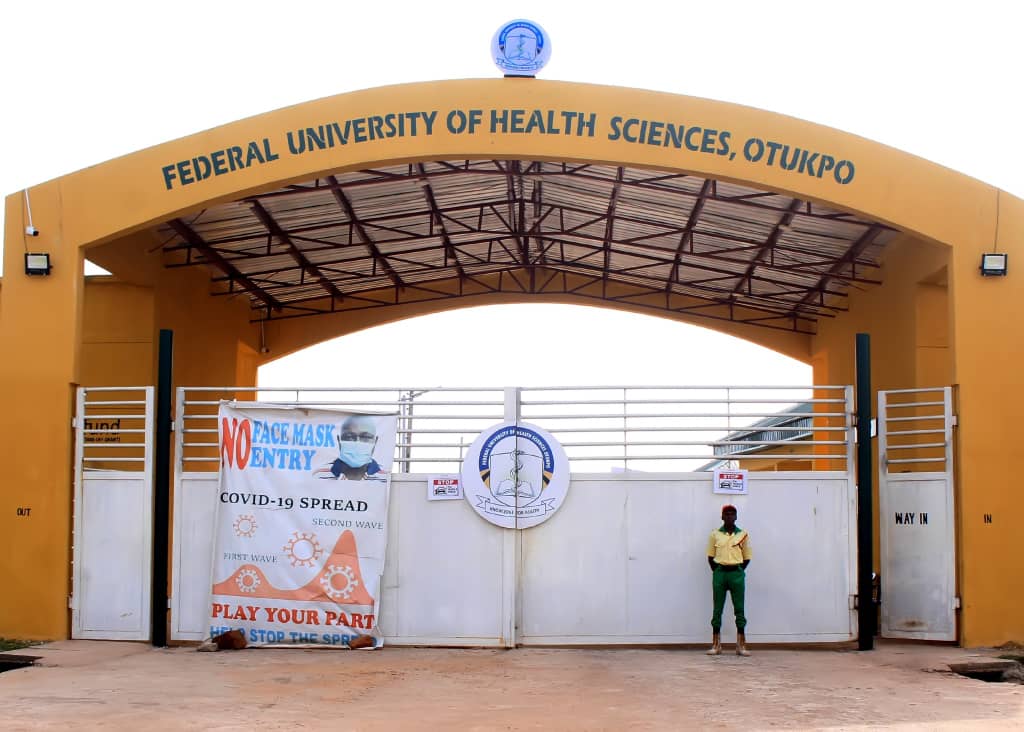
The Federal University of Health Sciences, Otukpo (FUHSO), once hailed as a symbol of promise and progress for the Idoma people, now teeters on the edge of institutional collapse. In what should be a time of growth and development, FUHSO is instead embroiled in a crisis driven by lawlessness, disregard for protocol, and, alarmingly, silence from key figures within the Idoma community.
This ongoing crisis centers around the imposition of Prof. Ediga Agbo, who, despite not being a staff member or a Deputy Vice-Chancellor (DVC), was appointed Acting Vice-Chancellor (VC) in violation of the clear directives set forth by the National Universities Commission (NUC). This disregard for established protocols not only tarnishes FUHSO’s reputation but also erodes the foundational principles upon which the university was built.
The Disregard for NUC Protocols: A Blow to Institutional Integrity
The National Universities Commission (NUC) has mandated a clear protocol for leadership transition across Nigerian universities: when a VC’s term ends, they must hand over to the most senior Deputy Vice-Chancellor. In the case of FUHSO, Prof. Stephen Abah, an accomplished academic and bonafide son of Idoma, holds the position of DVC (Academics) and ranks highest in seniority. His appointment as Acting VC was, therefore, not only rightful but also aligned with NUC guidelines.
FUHSO is no ordinary university. It was established as a specialized institution dedicated to the health sciences—a vital part of Nigeria’s higher education landscape, and a stepping stone for Idoma’s future in medical and scientific excellence. It’s a university whose primary mandate is to produce medical professionals, and its standards must reflect that specialized purpose. Yet, in a shocking turn of events, Prof. Ediga Agbo—neither a member of FUHSO’s staff nor a qualified medical professional was imposed on the university as Acting VC.

This act was not just a violation of protocol; it was a direct affront to due process and transparency. How can an unqualified leader hope to sustain or improve an institution that is already struggling with its own growth and development?
The Ripple Effect of Negligence and Impunity
The consequences of Agbo’s leadership reach far beyond administrative challenges. Agbo’s tenure thus far has included the removal of respected faculty members from critical meetings, the seizing of official vehicles from staff without justification, and even the locking of university gates in an attempt to prevent rightful university leaders from entering. Reports indicate that police and hired thugs now roam the campus, harassing and intimidating any staff members perceived as loyal to the legitimately reinstated Vice-Chancellor, Prof. Innocent Ujah.
This hostility and lawlessness have turned FUHSO from a sanctuary of learning into a militarized zone where students and faculty alike live in fear. Campus facilities remain virtually abandoned due to the fear of violence. Every day the crisis persists, Idoma loses one more step toward self-reliance, development, and a brighter future.

Crisis in Leadership: How FUHSO’s Governing Council Threatens Its Future
Governing councils are meant to guide universities towards growth and stability, but at the Federal University of Health Sciences, Otukpo (FUHSO), the council under Engr. Ohieku Abdulsalami has brought about chaos instead.
Rather than respecting established protocols, the council appears to be running amok, blurring lines of authority and encroaching on daily operations in ways that threaten FUHSO’s core mission and integrity.
This overreach has manifested in decisions that defy both protocol and law. The appointment of Prof. Ediga Agbo as Acting Vice-Chancellor, despite him not being a staff member or the institution’s most senior Deputy Vice-Chancellor, starkly violates National Universities Commission (NUC) protocols, which require an outgoing VC to hand over to the most senior DVC. At FUHSO, this is Prof. Stephen Abah, DVC (Academics), who was rightfully elected by the university senate. Yet the council bypassed him, imposing Agbo and creating a leadership crisis that has sparked tension and disrupted campus life.
The effects of this turmoil are undeniable. Faculty and students operate under fear of reprisal, classrooms stand empty, and security forces now patrol a campus once dedicated to research and teaching. FUHSO’s mission—to advance health sciences and serve as a beacon for Idoma and the nation—is jeopardized by this instability. The governing council’s actions are not merely administrative missteps; they are active threats to the institution’s future.
It’s time for accountability. The FUHSO governing council must answer for these disruptive actions, which risk not only the university’s reputation but its very ability to function. Silence from community leaders and stakeholders is no longer an option. FUHSO’s future depends on a return to order, respect for university governance, and a commitment to its foundational mission. Anything less risks destroying what this university stands for.
The Targeted Attacks on Prof. Stephen Abah: A Tribal Undercurrent
Prof. Stephen Abah’s character and qualifications make him a natural leader for FUHSO, an institution that serves as a beacon for the Idoma people. Yet, his ascension to Acting VC has made him a target. It’s been noted that Prof. Abah, an “Enone”—a sub-clan within Idoma—faces attacks from those who deem leadership within FUHSO the exclusive domain of “Enochi.” The caste-driven conflict is preventing an Idoma institution from fostering unity and excellence, damaging the credibility of a university that should be a pillar for all Idoma, not a select few.
Agbo’s appointment and the ensuing attacks on Prof. Abah represent more than just a leadership crisis; they signify a perilous tribal and political power struggle. This struggle, bolstered by a wealthy “Enochi” financier, has fostered an environment in which due process is subverted, unity is eroded, and impunity reigns.
The Dire Consequences of Silent Complicity
This unchecked lawlessness poses severe consequences for FUHSO, the Idoma people, and Nigeria’s higher education landscape. Without urgent action to restore order, FUHSO will be unable to fulfill its mission as a specialized health sciences institution.
Here’s what Idoma stands to lose:
1. Credibility in Health Sciences Education:
Allowing an unqualified Acting VC to lead FUHSO risks diluting the university’s focus on health sciences, hindering its ability to attract qualified staff and deliver top-tier education.
2. Threat to Students and Staff Safety:
The administration’s use of thugs and police to intimidate those supporting Prof. Abah has created a climate of fear on campus. Reports of harassment, gate lockouts, and confrontations have left the campus desolate, disrupting academic activities and posing a threat to students and faculty alike.
3. Erosion of Idoma’s Legacy:
FUHSO was built to serve as a lasting legacy for the Idoma people—a source of pride and a pathway for the next generation of medical and scientific professionals. Failure to uphold due process and unity erodes this legacy, reducing FUHSO to a mere pawn in personal and political agendas.
4. Stifling of Idoma’s Growth and Unity:
Silence from Idoma’s leaders in the face of such blatant injustice does more than allow chaos to continue; it implies acceptance. This crisis represents a critical moment for Idoma leadership, a chance to assert the value of integrity, unity, and excellence over division and impunity.
A Call for Accountability: Idoma’s Leaders Must Speak Up
The current trajectory of FUHSO’s administration, enabled by silence from within Idoma, puts the institution’s survival at risk. Idoma leaders—cultural, political, and community figures alike—must rise to the occasion. By remaining silent, they tacitly allow FUHSO’s future to be dictated by outsiders and undermine the very institution built to empower their youth.
The law, the NUC’s mandate, and the will of the FUHSO community unequivocally recognize Prof. Stephen Abah as the legitimate Acting VC. Agbo’s imposition, lacking any legal or ethical grounding, must be contested by all who value the rule of law.
This crisis is a defining moment for FUHSO and for Idoma itself. Will its leaders defend the principles of unity and integrity, or will they allow the erosion of a vital educational institution? Silence is not neutrality; it is complicity in the destruction of an institution that could empower generations.
(Adakole, President of Idoma Integrity Network, writes from Otukpo)
News
2027: Elections must never be treated as do-or-die affairs – INEC Chair, Amupitan appeals to Emir of Zazzau

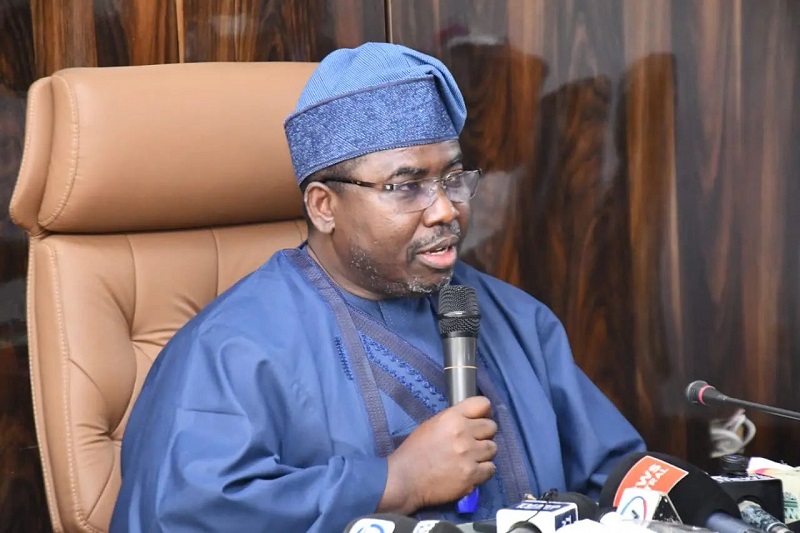
The Chairman of the Independent National Electoral Commission, INEC, Prof. Joash Amupitan, SAN, has appealed to the Emir of Zazzau, Amb. Ahmed Nuhu Bamalli, CFR, to use his exalted platform to counsel political parties, candidates and their supporters on the imperative of non-violent, issue-based campaigns ahead of the 2027 general elections.
The INEC chairman made the appeal on Sunday during a courtesy visit to the Emir’s palace in Zaria, Kaduna State, as part of the Commission’s nationwide Zonal Readiness Assessment and Interactive Staff Engagement for the 2027 general elections.
“Elections must never be treated as do-or-die affairs, but as a peaceful celebration of civic choice,” Prof. Amupitan said, urging the monarch to “strongly counsel our youth not to allow themselves to be used as tools in the hands of politicians or instruments of political violence and thuggery.”
He further called on the Emir to encourage the people of Zazzau Emirate to actively participate in all stages of the electoral process, from the collection of Permanent Voters’ Cards (PVCs) to turning out peacefully to vote on election days, stating that “a vibrant democracy requires an engaged, informed, and participating electorate.”
Amupitan explained that the visit was part of the Commission’s established tradition of deep engagement with traditional rulers, recalling similar consultations with the Ewi of Ado-Ekiti during the Ekiti governorship election, more than 50 Osun monarchs, including the Ooni of Ife and the Ataoja of Osogbo, ahead of the Osun governorship election, and the Oba of Lagos and the White Cap Chiefs during the Commission’s South-West Zonal Assessment tour.
He noted that conducting a national election in “Africa’s largest democracy,” with a national voter register rapidly approaching the 100 million mark, required early planning, operational discipline and deep stakeholder engagement.
He added that the Commission had moved away from last-minute logistics in favour of testing, auditing and strengthening its operational readiness well ahead of time.
He disclosed that the Commission had fixed the statutory dates for the 2027 general elections, with the Presidential and National Assembly elections scheduled for Saturday, January 16, 2027, and the governorship and State Houses of Assembly elections scheduled for Saturday, February 6, 2027.
He stressed that all administrative, technological and logistical frameworks were being fortified across the 36 states and the Federal Capital Territory.
The INEC chairman assured the Emirate that under his leadership, “INEC remains unreservedly committed to absolute neutrality, fairness, and transparency,” stating that the Commission had “no candidate, no political party, and no interest other than the sovereign will of the Nigerian people.”
Responding, the Emir of Zazzau, Amb. Ahmed Nuhu Bamalli, commended the INEC chairman for leading the Commission’s delegation to the palace and for providing timely information on preparations for the 2027 general elections.
The Emir described the engagement as remarkable and important, noting that the visit had helped the Emirate and its people gain a clearer understanding of the Commission’s preparations and the election calendar.
He identified fairness, justice, a level playing field, security, timely dissemination of information and the prompt release of results as critical elements for a successful electoral process.
The Emir also urged INEC to address concerns arising from previous elections, particularly the late distribution of sensitive and non-sensitive materials and technical challenges associated with election technology.
He called for election equipment to be adequately tested before deployment and for election officials and materials to arrive at polling units on time, saying such measures would strengthen public confidence in the electoral process.
The Emir further appealed to political parties and their supporters to conduct themselves responsibly during the campaign period and minimise hate speech and other actions capable of threatening peace and national cohesion.
He expressed optimism that Nigeria would continue to remain united and sustain democratic governance.
The INEC chairman and his entourage are in Kaduna in continuation of the nationwide readiness assessment and are expected to meet with staff from the North-West states on Monday, September 28, 2026.
The Ekiti State Governorship Election Petition Tribunal has expressed concern over the repeated failure of the Action Alliance (AA) to present witnesses in support of its petition challenging the outcome of the June 20, 2026 governorship election.
Justice Abubakar Idris Kutigi, Chairman of the three member panel raised the concern during Friday’s proceedings after the AA again failed to produce its witnesses despite earlier assurances that they would appear. Reports from the proceedings indicate that it was the third consecutive sitting at which the party had been unable to present its witnesses.
Nigeria News Alert reports that the development followed the appearance of six witnesses presented by the Social Democratic Party (SDP), who gave evidence relating to the conduct of the election in polling units and wards where they served as party agents and collation agents.
The witnesses were led in evidence by counsel to the SDP and AA, Ebenezer Akinbuli, while counsel representing the Independent National Electoral Commission (INEC), Tunde Salako, and counsel for Governor Biodun Oyebanji, Adetunji Oso, SAN, cross examined them.
The AA and SDP are among the petitioners challenging the declaration of Oyebanji of the All Progressives Congress (APC) as the winner of the governorship election. The AA candidate, Olu Omotoso, polled 126 votes, while the SDP candidate, Adebayo Alade, recorded 179 votes in the election.
After the SDP completed the presentation of its witnesses for the day, attention turned to the AA, which had been expected to commence or continue the presentation of its own witnesses based on an earlier commitment made to the tribunal.
Justice Kutigi reminded Akinbuli of the undertaking previously given to the panel, but the counsel requested another adjournment to enable him to make arrangements for the AA witnesses to appear.
The request prompted the tribunal chairman to question the continued delay, particularly given the length of time that had elapsed since the petition was filed.
“If you are not interested in this case, you these people (AA) should just close your case. If at this stage you have not made up your mind on what you want to do, we can’t just keep adjourning every time and you know that this is an election petition.
“We find this strange and we are not here to play. How does it sound for you to stand before us saying you will be looking for witnesses, after how many months? When was this case filed? Why not pursue this case? You are the counsel, try and take charge of this matter.”
Following the remarks, Akinbuli apologised to the panel and appealed for what he described as a final opportunity to ensure that the AA witnesses appeared at the next sitting.
The counsel assured the tribunal that the party would present its witnesses on Monday, September 28, saying he would “do the needful on the next day of adjournment.”
Counsel for INEC and Oyebanji did not oppose the request, allowing the tribunal to consider the additional opportunity sought by the AA.
Justice Kutigi consequently adjourned further hearing until Monday, September 28, when the tribunal is expected to continue with the petitions and give the AA another opportunity to present evidence through its witnesses.
The latest development adds to the tribunal’s recent emphasis on the need for the parties in the election petitions to proceed with their cases without unnecessary delays. The panel has previously expressed concerns over delays affecting proceedings in the petitions arising from the Ekiti governorship election.
Kano State has ranked first in the 2026 National Examination Council of Nigeria (NECO), with 74,413 candidates that obtained at least five credits, including English Language and Mathematics.
The result showed that Lagos emerged second with 72,496 candidates and Oyo came third with 55,543 candidates.
The performance marks the second consecutive year that Kano has topped the NECO national performance chart, after recording the highest number of candidates with five credits, including English and Mathematics in the 2025 examination.
Reacting to the development, Gov. Abba Yusuf, in a statement by his spokesperson, Mr Sanusi Bature, commended the students, teachers, parents and other stakeholders for the outstanding performance.
Yusuf said the back-to-back performance was an indication that the state’s sustained investment in education was producing measurable results.
“Kano has maintained the first position in NECO twice in a row making the state as the leading SSCE performer for the two consecutive years, (2025 and 2026) respectively,” he said.
He assured the people of Kano that his administration would continue to prioritise education through increased funding, improved learning facilities, teacher recruitment and training, scholarships and support for indigent students.
As part of the interventions, he said, the state government spent over N4.4 billion in 2026 to sponsor candidates for Senior Secondary School Certificate Examination, particularly indigent students.
The governor said the intervention was designed to remove financial barriers and enable students to participate in the examinations under better conditions.
He said the latest NECO result was a continuation of the improvement recorded by Kano students under the present administration.
“Education has consistently received the largest share of Kano State’s budget under Governor Yusuf; overshooting the UNESCO benchmark.”
“In 2024, education accounted for about 29.95 per cent of the state budget. The allocation increased to N168.35 billion, representing 31 per cent, in the 2025 budget.
“For 2026, the state allocated N405.35 billion to education, representing about 30 per cent of the N1,478, 829, 666, 130. 71 trillion budget,” he said.
The governor said the investment goes beyond examination sponsorship to include classroom renovation, teacher recruitment, learning materials, uniforms, scholarships and other interventions aimed at improving the quality of education.
The administration’s education policies have also attracted recognition at national and international levels, with Kano fast becoming a leading education reform hub in sub-Saharan Africa.
In 2024, Yusuf received the Leadership Newspaper Governor of the Year Award for Education, while New Telegraph recognised him for educational development Governor of the year.
The Nigeria Union of Teachers also named the governor its Teachers’ Friendly Governor of the Year for 2024.
“In 2025, Blueprint Newspaper recognised Governor Yusuf as Governor of the Year for Education at the paper’s national conference in Abuja. While This Nigeria newspaper awarded him as courageous Governor of the year 2024.
“The administration also received education-related recognition at International space in London and Paris 2026, for its commitment to education with international literacy and learning award and the education spending award by the Universal Learning Solution and City University, Paris respectively,” he said.
He said the objective was to build an education system capable of providing Kano’s young people with the knowledge and skills required for higher education, employment, innovation and leadership as Kano has recorded over five million school children in the last annual school census.
(NAN)

2027: Elections must never be treated as do-or-die affairs – INEC Chair, Amupitan appeals to Emir of Zazzau

Serbia’s President Vucic resigns as ruling party faces youth-backed opposition

Ekiti Tribunal Faults Action Alliance Over Delay in Presenting Witnesses


-

 News22 hours ago
Pastor Chris Breaks Silence on Mother’s Death, Reveals Lessons She Left With Him
-
 News23 hours ago
Bandit Threat Shuts School, Hospital, Orphanage in Kwara — Cleric
-
 Entertainment23 hours ago
Timaya vows he cannot disrespect Fela or his family
-

 News22 hours ago
Europe-bound bridegroom excretes 72 wraps of cocaine at Enugu airport(Photos)
-
 News22 hours ago
Group Demands Omosehin’s Removal as NAICOM Chief Over Recapitalisation Allegations
-

 News22 hours ago
Reforms in NNPCL under Ojulari have increased Nigerians’ trust in current administration – Centre
You must be logged in to post a comment Login