Politics
Switch to Parliamentary system : We cannot change our system of governance the way we switch from foreign football coach to local -Senator Osunbor tells advocates
- /home/naijuinz/public_html/wp-content/plugins/mvp-social-buttons/mvp-social-buttons.php on line 27
https://naijablitznews.com/wp-content/uploads/2024/02/Oserheimen-Osunbor.jpg&description=Switch to Parliamentary system : We cannot change our system of governance the way we switch from foreign football coach to local -Senator Osunbor tells advocates', 'pinterestShare', 'width=750,height=350'); return false;" title="Pin This Post">
- Share
- Tweet /home/naijuinz/public_html/wp-content/plugins/mvp-social-buttons/mvp-social-buttons.php on line 72
https://naijablitznews.com/wp-content/uploads/2024/02/Oserheimen-Osunbor.jpg&description=Switch to Parliamentary system : We cannot change our system of governance the way we switch from foreign football coach to local -Senator Osunbor tells advocates', 'pinterestShare', 'width=750,height=350'); return false;" title="Pin This Post">
…so far so good presidential system has fared better in 29years

…wonders why Senate President, Speaker, media refer to NASS as parliament
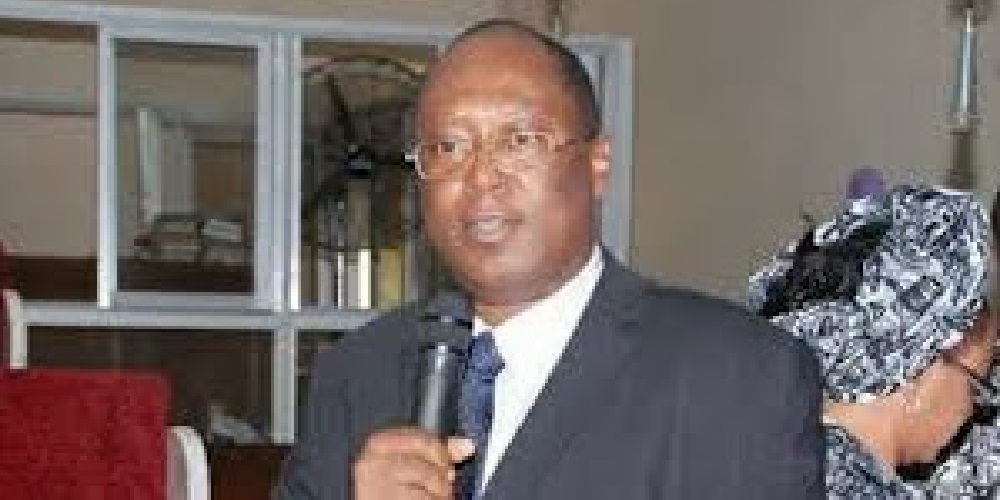
Former Governor of Edo State, Senator Oserheimen Osunbor has said the switch from presidential to Parliamentary system of governance being advanced by some Nigerians fails the test of logic and scientific analysis.

The two term senator also wondered why the Nigerian media, Senate President, Speaker refer to National Assembly as Parliament.
Osunbor, a Professor of Law made this disclosure in a chat with journalists in Abuja on Friday.
He said: “It seems to me that most of those advocating the adoption of the parliamentary system are not aware or have forgotten that Nigeria started off in 1960 with a parliamentary system .
“The weakness of that system contributed largely to the collapse of the First Republic,after only five years, in January 1966. By contrast, the presidential system has been practiced for about 29 years now. On this score alone the presidential system has obviously fared better and proved superior to the parliamentary system.
” For them to be persuasive, those calling for the return to the failed parliamentary system should show that they understand the flaws that led to the collapse of the system in the First Republic and convince Nigerians that those weaknesses will not recur.
“Unfortunately, the advocates are not engaging in such logical scrutiny but are simply being sentimental and unscientific in voicing their preference for the parliamentary system.
” The reasons commonly advanced in support of the parliamentary system are firstly , that it is cheaper to operate. Secondly, that the presidential system breeds pseudo-dictatorship as it confers too much powers on the President and Governors.
Osunbor further explained that it is the Nigerian people that make the presidential system expensive and turn executive office holders into pseudo-dictators. Even if we were to return to the parliamentary system the same elected office holders will continue to approve for themselves outrageous emoluments and bogus allowances.
“A Prime Minister and Ministers can still become autocratic if the society accepts or encourages it.
” Example of this can be drawn from some countries that operate the parliamentary system. First Republic Minister of Finance, Festus Okotie- Eboh, was reputed to be very flamboyant, if not extravagant and that was under the parliamentary system.
“Operation Wetie” in Western region and events leading to the Nigerian civil war happened under the parliamentary system.
” Or have we forgotten parliamentarians, some of them illiterate, that rode in the longest American Pontiac that guzzled petrol at 8 miles per gallon.
” I personally have strong reservation against continuous experimentation with our system of governance with attendant political Instability without sound well thought – out reasons. We should not reduce governance to our style of football administration that oscillates like a pendulum from local coach to foreign coach and back to local coach without any improvement on our performance.
“As the immediate past foreign coach G.Rohr, and others before him, have revealed, the main problem with our football performance is lack of commitment, dedication and indiscipline. It has nothing to do with the colour of the skin of the coach. It is about our attitude as Nigerians.
” On a related matter, I cannot understand why many Nigerians, including the media, now refer to our National Assembly as parliament. Even the Senate President and Senators refer to the Senate as parliament. Same with the speaker and members of the House of Representatives.
Whereas the constitution empowers them to enact an Act of the NASS, many of them assert that they’ve passed an Act of Parliament.
The 1963 Constitution , in chapter 5 , vested legislative powers in parliament created in Section 41 thereof but that constitution is now defunct. In its place we now have the 1999 Constitution which, in section 4 , vested legislative powers in a National Assembly consisting of a Senate and a House of Representatives, not Parliament.
“There is no reference to “Parliament ” in our current Constitution. I cannot understand why people choose to use a name outside our constitution. The U.S. has a congress, Britain has a parliament and Nigeria has a National Assembly. Is
this too difficult to understand?
Rather than call themselves “this parliament” Senators can say “this Senate” or “this Chamber”. Members of the HoR can say “this House” or “this Chamber”.
” Referring to the National Assembly or each of its two Houses as “Parliament” creates an erroneous impression that we run a parliamentary system.
This can be confusing to many especially foreigners who are not familiar with our constitution. I have had occasion in the past to explain the correct position to a foreign expert who had been under the wrong impression that we operate a hybrid system of the French model due to the indiscriminate use of the term “Parliament” by Nigerians.
” Without changing our attitude to governance we will be perpetually going round in circles by continuously changing from one constitution to another or from one system of governance to another.
Politics
Alleged plot to use SWV for campaign: Ghost of Atiku’s sordid past haunting him, APC slams ADC’s presidential candidate
The All Progressives Congress (APC) has dismissed claims by ex-Vice President and African Democratic Congress (ADC) presidential candidate, Atiku Abubakar, that the 2026 Service-Wide Vote (SWV) was set aside to fund President Bola Tinubu’s 2027 re-election campaign, saying the ghost of his sordid past haunting him.
This was disclosed in a statement by APC National Publicity Secretary Felix Morka where described Atiku’s allegation as a sign of disturbing ignorance of basic public finance principles and calculated mischief.
Atiku had accused the Tinubu administration of using the Service-Wide Vote as an illegal slush fund for the 2027 election.
The All Progressives Congress (APC) has dismissed claims by former Vice President and African Democratic Congress (ADC) presidential candidate, Atiku Abubakar, that the 2026 Service-Wide Vote (SWV) was set aside to fund President Bola Tinubu’s 2027 re-election campaign.
In his response ,Morka said Atiku failed to provide any evidence to support the allegation.
He explained that “A Service-Wide Vote is a long-established and widely used budgetary mechanism designed to cater for government-wide obligations and unforeseen expenditures that arise after the annual budget has been passed.”
“It is not a secret fund or an illegal slush account, as Atiku has baselessly and recklessly alleged.”
The APC said the SWV is a normal budgeting practice used in many countries and argued that Atiku, as an experienced politician, should understand how it works.
The ruling party also accused the former vice president of trying to tarnish the image of the Tinubu administration.
The ghost of his sordid past haunts Atiku,” the statement said, adding that he was attempting to attack an administration it described as successful.
The APC pointed to several government programmes under the Renewed Hope Agenda, including the Nigerian Education Loan Fund (NELFUND), the new national minimum wage, the Consumer Credit Scheme and the Presidential Compressed Natural Gas (CNG) initiative, as examples of the administration’s achievements.
The party maintained that Nigerians can distinguish between political accusations and the government’s performance, insisting that President Tinubu remains focused on economic reforms, tax relief for low-income earners and stabilising the economy ahead of the 2027 elections.
Politics
2027: Gov Fubara declares support for Chinda, backs Rainbow Coalition, TInubu
Rivers State Governor, Siminalayi Fubara, has thrown his weight behind, Rep Kingsley Chinda, Rainbow Coalition, a political movement that comprises members of different political parties in Rivers State, led by the Minister of the Federal Capital Territory, Nyesom Wike.
Fubara made this declaration during the groundbreaking ceremony for the reconstruction and equipping of Riven Medical Facility, a public-private sector-driven pharmaceutical factory in the state.
He affirmed President Bola Tinubu as his preferred presidential candidate, and Kingsley Chinda as the preferred governorship candidate, urging his supporters to back all candidates on the coalition’s platform in the 2027 elections.
Governor Fubara said the period of political conflict in the state was over, stressing that peace and unity are now paramount to the state’s development.
“I am supporting our Rainbow Coalition. President Bola Ahmed Tinubu is our President, and he is the one we are supporting.
The governorship candidate is the candidate I am supporting, and anybody who believes in me will support every candidate under the Rainbow Coalition,” the governor declared.
He dismissed calls by some political actors to delay aligning with the coalition, insisting that he had already made his decision.
“I am already in the family. I have returned to our family. Give your total support to the coalition. The time of war is over; it is now time for peace, and that peace will take us to another level,” he said.
The governor warned against actions capable of creating divisions in the state, maintaining that he would not be associated with any agenda that threatened the prevailing peace.
“I am not party to anything that will bring any form of disunity in this state. We have done what we need to do, and now we are moving forward,” he added.
On the investment project, Fubara assured residents that the state government is fully committed to the successful completion of the medical consumables factory, explaining that he accepted to support the project only after receiving assurances from the investors and government officials about its viability and delivery timeline.
According to him, the first phase of the project is expected to be completed within three months, describing it as a strategic investment that would boost industrialisation, create jobs and position Rivers State as a production hub for medical consumables.
He said the project would stimulate economic activities through manufacturing, attract local and international patronage, and encourage the establishment of supporting industries around the facility.
The governor also pledged the government’s full backing for the investors, while urging the host community to cooperate with the company to ensure the project’s success.
He noted that the state government is determined to avoid contractual disputes that could discourage investors, revealing that Rivers State is already involved in litigation with several companies amounting to over ₦200 billion.
Governor Fubara assured the investors that the government would continue to monitor the project and expressed optimism that the first phase would be officially unveiled within the next three months.
Politics
Crisis hits Niger APC as ex-commissioners, lawmakers finalise defection plan
…. Critical Stakeholders Seek Tinubu, National Chairman’s Interventions
New details have emerged over a looming political development within the Niger State chapter of the All Progressives Congress (APC), as influential stakeholders, including former commissioners, ex-political appointees, serving lawmakers and grassroots leaders, are reportedly perfecting plans for a mass defection from the ruling party.
Sources familiar with the development disclosed that consultations have intensified in recent weeks amid growing dissatisfaction over alleged exclusion, political marginalisation and the conduct of internal party affairs.
The development is already generating anxiety within political circles in the state, with observers warning that any large-scale defection could trigger one of the biggest political realignments in Niger State since the return to democratic rule in 1999.
Investigations revealed that the aggrieved camp comprises former commissioners who served under Governor Mohammed Umaru Bago, former appointees of ex-Governor and Senator representing Niger North, Abubakar Sani Bello, members of the State House of Assembly and several party leaders who are said to be unhappy with recent political developments within the APC.
A key member of the coalition from the Suleja Emirate, who spoke on condition of anonymity due to the sensitivity of the matter, disclosed that the group had resolved to await the release of the APC’s authentic list of candidates before making its next political move.
According to the source, the planned action is intended to challenge what he described as the growing concentration of political power in the hands of a few individuals.
“This movement will shake the foundation of the APC in Niger State. Politics belongs to the people and not to one individual.
Many loyal party members who laboured for the party’s success now feel alienated and ignored,” the source stated.
He further disclosed that consultations were ongoing with influential political actors, community leaders and grassroots structures across the 25 local government areas of the state.
“We are building a formidable coalition that cuts across all political interests. Once our position is made public, many people will understand that the current situation within the party is unsustainable,” he added.
Political analysts believe the emerging crisis may not be unconnected with the battle for political supremacy ahead of the 2027 general elections, as various interest groups seek to reposition themselves ahead of the next electoral cycle.
The APC has maintained a dominant political presence in Niger State for over a decade, producing governors, lawmakers and key political office holders. However, recent developments suggest that internal disagreements and unresolved grievances may be gradually eroding the party’s unity.
Observers note that the alleged discontent among party stakeholders could have far-reaching implications, particularly if prominent political figures with established structures decide to align with opposition parties or form a new political bloc.
“There is no political party that can afford to ignore its grassroots leaders and longstanding loyalists,” a political analyst in Minna, revealed.
“If these aggrieved stakeholders eventually leave the APC, it could significantly alter the political equation in Niger State and make the 2027 elections more competitive than previously anticipated”, the Analyst added.
On his part, Alhaji Ibrahim Idris, former senior Aide to ex Governor Bello, called on President Bola Tinubu and the National Chairman of APC, Professor Nentawe Yilwatda, to urgently intervene, to save the soul of the party in Niger.
“As it stands now, if the President or the National Chairman do not quickly intervene, I doubt if there would be anything left in Niger APC after 2027. This was the same party we laboured to build, it is unfortunately disintegrating under our watch, just for the selfishness of a microscopic few”, Idris added.
Former Chairman of Lapai Local Government Area who pleaded anonymity, confirmed to our Correspondent that stakeholders in the area have concluded arrangements to kiss the APC goodbye, why entertaining the fear that those who would be left in APC would certainly engage in anti party activities during the 2027 elections.
Although it remains unclear which political platform the aggrieved politicians may eventually adopt, sources hinted that preliminary discussions have already commenced with leaders of other political parties and emerging political movements.
Efforts to obtain official reactions from the Niger State APC leadership were unsuccessful as calls and messages sent to some key officials were not responded to as of the time of filing this report.
As political activities gradually gather momentum ahead of the 2027 general elections, the unfolding developments in Niger State may signal the beginning of an intense struggle for control of the state’s political structure, with potential consequences for the APC’s continued dominance in one of its traditional strongholds in the North-Central region.
-
Entertainment24 hours agoNigeria’s Education Threshold Should Be Beyond Akara & Kuli Kuli – Seyi Awolowo
-
News24 hours agoGumi Questions Why No One Has Visited Boko Haram, Bandits to Negotiate Peace
-
Metro24 hours agoPolice Return Stolen Toyota Highlander to Owner 5 Years After Theft
-
Foreign24 hours agoIranian Commander Issues “One-for-One” Threat to US Over Citizen Deaths
-
News23 hours agoAbacha didn’t die on top of a woman – Al-Mustapha
-
News24 hours agoINEC Insists CVR Ends Today
-
News23 hours agoTroops neutralise suspected female terrorist spy, nab 14 suspects nationwide
-
News23 hours agoCAN faults FRSC amendment bill, seeks Tinubu’s intervention

Warning: Undefined variable $user_ID in /home/naijuinz/public_html/wp-content/themes/zox-news/comments.php on line 49
You must be logged in to post a comment Login