Connect with us

Economy

Hurricane at CBN; 1,000 workers set to go into unemployment market

Published

on

ADVERTISEMENT
Zoom Ad
ADVERTISEMENT
Zoom Ad

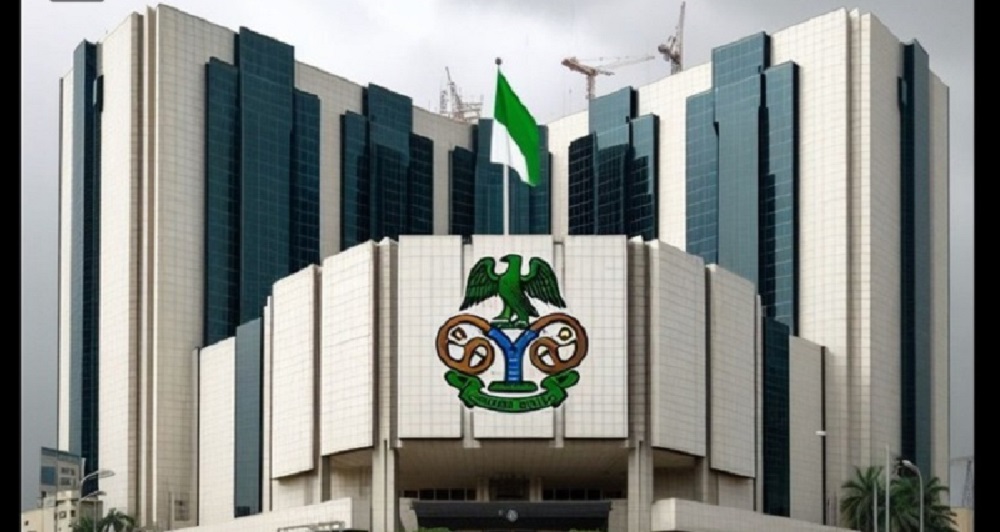
Barring any last-minute changes, the Central Bank of Nigeria (CBN) will soon retire about 1,000 of its employees before the end of the year, investigations have shown.


Reliable sources at the apex bank’s headquarters revealed that the retirement would gulp over N50 billion in payoff to the affected workers.

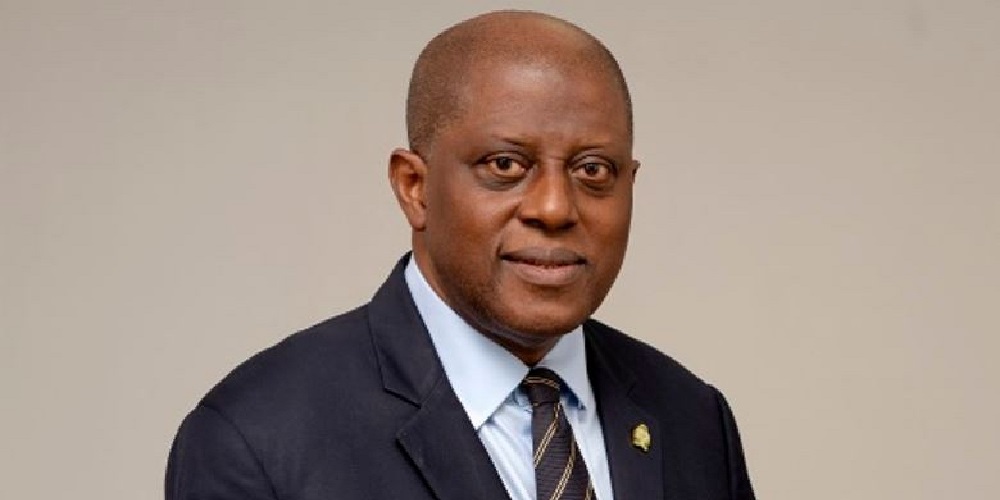
In what it described as a strategic realignment of its workforce, the CBN’s Board of Governors, led by Olayemi Cardoso, had expressed commitment to reducing the workforce.

In the last 10 months,t the CBN had disengaged many of its staffers, including 17 directors, who served under the immediate past governor, Godwin Emefiele.

Advertisement

Minimum wage: States race to beat NLC deadline

FG begins malaria vaccination for children today

Those 17 directors are yet to be replaced.

A circular released three weeks ago by the CBN, sighted yesterday by our reporter, said the application for Early Exit Package (EPP) was open to all cadres of staff and will close by Saturday, December 7.

Advertisement

Exempted are those yet to be confirmed or who have served less than one year “as of the date of publication with the effective date of exit set at 31 December, 20, 2024.

Officials told Daily Trust that the apex bank was targeting retirement of over 1,000 staff members.

The officials, who pleaded anonymity, told our correspondent that at least 860 staff from the various departments have already applied for the EPP.

The management described the EEP as a voluntary programme offering eligible employees an incentive to exit the CBN early, “while providing employees seeking other career options a great opportunity for early exit.”

Advertisement

It cautioned that the staffers could not change their minds after applying, saying that all completed and submitted applications are final.

The EEP stated that financial incentives for senior supervisors to deputy managers shall be for the remaining period in service, up to a maximum of 60 months of current grade’s gross annual emoluments.

It also noted that financial incentives for managers shall be for the remaining period in service, up to a maximum of 36 months of current grade’s gross annual emoluments.

“Financial incentives for all other cadres of staff shall be for the remaining period in service, up to a maximum of 18 months of current grade gross annual emoluments,” it added.

Advertisement

The EEP also provides for non-financial incentives, including “financial planning and entrepreneurial capacity building programme, purchase of laptops in line with the Bank’s current policy and extended medical care for an additional three months for self and dependents after the expiration of the three-month current provision of access to medical windows care by exited employees.”

‘They’re offering me N97m for 4-yr service’

A staff member, who spoke to our reporter, said: “The way they dated the offer, you’ll know that the target is actually from senior supervisors to deputy managers. If you look at it, they’re mostly those that came in within the 9 years of Governor Emefiele.

“For instance, I’ve worked for 4 years in the bank; the package they’re giving me is between N92 million to N97 million.

Advertisement

“Some others have worked up to a manager level and are only entitled to N64.5 million. So, the more time you have to go, the more money they pay you because you know, for them, you don’t have gratuity”, the staff said.

Another staff told Daily Trust yesterday that during a webinar held on Friday, the Human Resource Department of the bank expressed the apex bank’s decision to get the number it was targeting for the EEP.

“There is serious tension, serious apprehension. You can imagine the atmosphere. It is terrible.

“As of Friday, there were 860 people so far that have indicated interest in the EEP,” the staff said. (Text, excluding headline: Daily Trust)
Advertisement

Economy

See Black Market Dollar To Naira Exchange Rate Today 12th September 2026

Published

on

ADVERTISEMENT
Zoom Ad
ADVERTISEMENT
Zoom Ad

The Black Market Dollar-to-Naira Exchange Rate for 12th September 2026 Can Be Accessed Below.

NOTE: The exchange rate changes hourly. It depends on the volume of dollars available and the Demand. This means…you can buy or sell 1 dollar at a certain rate, and the price can change (high or low) within hours.

The official naira black market exchange rate in Nigeria today, including the Black Market rates, Bureau De Change (BDC), and CBN rates.

The exchange rate fluctuates hourly based on the supply and demand of dollars in the market.

Advertisement

What’s the dollar to naira black market today, 12th September 2026?
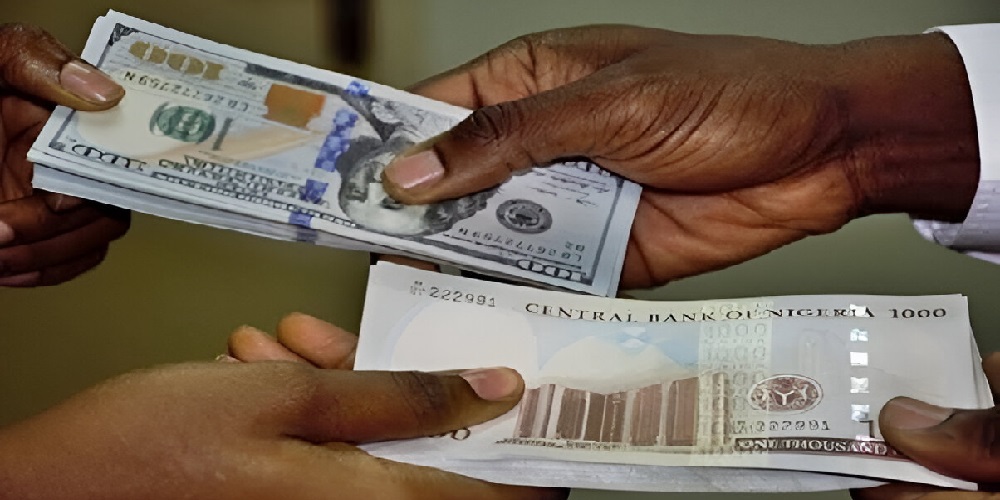
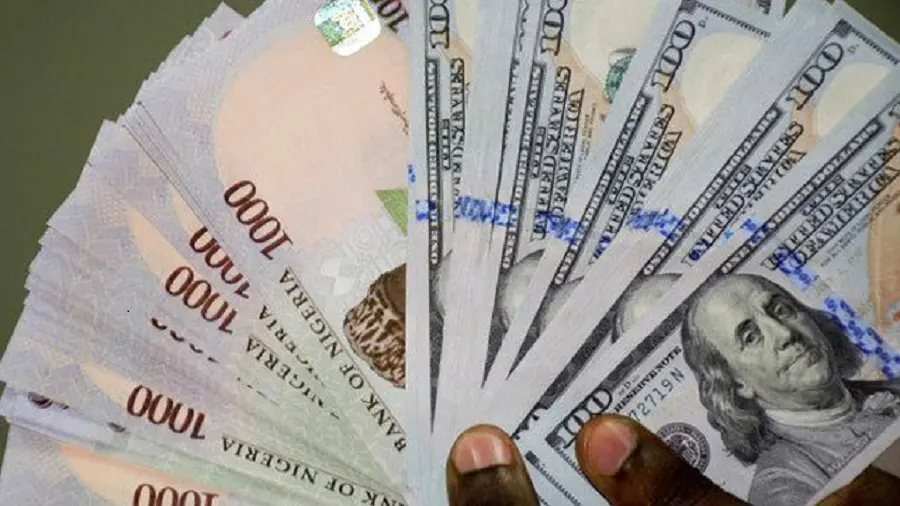
The exchange rate for a dollar to naira at Lagos Parallel Market (Black Market) players sell a dollar for ₦1380 and buy at ₦1392 on Saturday, 12th September, 2026, according to sources at Bureau De Change (BDC).
Please note that the Central Bank of Nigeria (CBN) does not recognize the parallel market (black market), as it has directed individuals who want to engage in Forex to approach their respective banks.

Dollar to Naira Black Market Rate Today
Dollar to Naira (USD to NGN) Black Market Exchange Rate Today
Selling Rate ₦1380
Buying Rate ₦1392
Dollar to Naira CBN Rate Today
Dollar to Naira (USD to NGN) CBN Rate Today
Highest Rate ₦1326
Lowest Rate ₦1326

Continue Reading

Economy

NFIU moves to unite banks, fintechs, regulators against illicit financial flows

Published

on

By

ADVERTISEMENT
Zoom Ad
ADVERTISEMENT
Zoom Ad

Nigerian Financial Intelligence Unit (NFIU) has moved to forge a new public-private partnership that will bring banks, fintechs, insurers, virtual asset providers and regulators together to tackle increasingly sophisticated financial crimes and illicit financial flows.

The initiative, known as the Joint Financial Intelligence Collaboration (JFIC), is designed to create a trusted platform for public and private institutions to share financial intelligence, detect emerging threats and disrupt illicit financial networks.

The NFIU unveiled the framework at a stakeholders’ engagement in Abuja yesterday, with support from the British High Commission and the Convention for Business Integrity (CBi).

Representatives of banks, insurance companies, fintechs, Virtual Asset Service Providers (VASPs), technology firms, regulators and other stakeholders participated in the engagement, which was aimed at moving the proposed partnership from concept to implementation.

Advertisement

Representing the NFIU Chief Executive Officer, Hafsat Bakari, the Unit’s General Counsel, Felix Obiamalu, said the engagement marked a decisive turning point in the development of the initiative.

“We have moved from dialogue to design, to commitment and implementation,” Obiamalu said.

He stressed that the objective was no longer merely to discuss the concept, but to jointly determine the structure, operation and value of the partnership and how it could be sustained.

“The objective is no longer simply to discuss the concept. It is to jointly determine what this partnership should look like, how it should operate, what value it should create and how it can be sustained over time,” he said.

Advertisement

The NFIU said the initiative was premised on the recognition that no single institution could effectively combat modern financial crime in isolation, making intelligence sharing and coordinated action between government and industry increasingly critical.

Speaking on behalf of the British High Commission, Jehanzeb Khan, Illicit Financial Flows Officer at the Foreign, Commonwealth and Development Office (FCDO), reaffirmed the importance of stronger collaboration between government and the private sector in combating illicit financial flows.

Managing Director of the Convention for Business Integrity, Olusoji Apampa, said the process was deliberately structured to place the private sector at the centre of decision-making.

According to him, this would ensure that the emerging framework reflects operational realities and secures broad ownership among stakeholders.

Advertisement

Delivering the keynote presentation, former Chair of the Egmont Group and former Director of South Africa’s Financial Intelligence Centre, Xolisile Khanyile, described private-sector participation in the fight against financial crime as a national responsibility.

She urged Nigeria to adopt a practical and phased approach to implementing the proposed collaboration.

“Trust, shared ownership and collaboration are the foundations of every successful public-private partnership,” Khanyile said.

She added that given Nigeria’s strategic importance within the global anti-money laundering and countering the financing of terrorism (AML/CFT) framework, the initiative was both timely and necessary.

Advertisement

The engagement ended with strong stakeholder support for the proposed JFIC framework and a commitment to advancing a partnership capable of strengthening financial intelligence, improving threat detection and enhancing Nigeria’s response to increasingly sophisticated financial crimes.

Continue Reading

Economy

Crude Oil Hits $107 Per Barrel as Fuel Prices Reach Record Highs

Published

on

By

ADVERTISEMENT
Zoom Ad
ADVERTISEMENT
Zoom Ad

Oil prices surged yesterday with Brent crude hitting over  $107 per barrel for the first time since May, as traders braced for a more prolonged supply shock caused by the Iran war.

Oil prices have climbed back above the $100 per barrel mark this week as fighting in the Strait  of Hormuz and Red Sea has intensified. The US and Iran have traded strikes, while the Iran-backed Houthis have attacked Saudi Arabia and ignited tensions in the Bab al-Mandab Strait.

In Nigeria, fuel prices have continued to rise, with the cost of diesel (Automotive Gas Oil) reaching about N2,000 per litre in some locations, while petrol has climbed beyond N1,400 per litre in parts of the country.

The fresh increases are adding to pressure on businesses and households, particularly manufacturers, transport operators and other users that depend heavily on petroleum products for power and mobility.

Advertisement

The development has also raised concerns over a renewed increase in transportation and production costs, with businesses likely to pass higher energy expenses on to consumers through increased prices of goods and services.

The latest surge in pump prices comes despite increased domestic refining capacity, underscoring the continued impact of crude supply, distribution costs, market conditions and other factors on the pricing of petroleum products.

Yesterday, Brent crude, the global oil benchmark, rose 6.1 per cent and traded at $107.40 per barrel while  US crude rose 6.2 per cent and hit $102 per barrel for the first time since May.

Resurgent conflict has stoked concerns of further disruptions to global oil supplies and the flow of crude through the Strait of Hormuz.

Advertisement

“The step up in attacks in the Strait of Hormuz and by the Houthis against Saudi Arabia suggests that Iran and its proxies are trying to regain the initiative in the war,” Jason Tuvey, deputy chief emerging markets economist at Capital Economics, said in a note.

“This could set back the recovery in oil output in the Gulf and raises the risk that global energy prices rise even further in the coming weeks,” Tuvey said.

For the first time since the war started, S&P Global Energy said Thursday it does not expect Middle East oil production to return to pre-war levels by the end of next year. The firm no longer assumes a definitive end to the war nor a return to normal in the Strait of Hormuz by the end of 2027.

S&P now expects oil prices to stay high in the $80 to $100 a barrel range  through next year.

Advertisement

The rise in oil prices has added to nerves about inflation and central bank rate hikes, sending ripples through bonds and stocks, a CNN report stated.

Continue Reading

Trending

Copyright © 2024 Naija Blitz News