Economy
FG auditors probe NNPCL’s N2.7tn subsidy refund claim
- /home/naijuinz/public_html/wp-content/plugins/mvp-social-buttons/mvp-social-buttons.php on line 27
https://naijablitznews.com/wp-content/uploads/2024/02/NNPCL.jpg&description=FG auditors probe NNPCL’s N2.7tn subsidy refund claim', 'pinterestShare', 'width=750,height=350'); return false;" title="Pin This Post">
- Share
- Tweet /home/naijuinz/public_html/wp-content/plugins/mvp-social-buttons/mvp-social-buttons.php on line 72
https://naijablitznews.com/wp-content/uploads/2024/02/NNPCL.jpg&description=FG auditors probe NNPCL’s N2.7tn subsidy refund claim', 'pinterestShare', 'width=750,height=350'); return false;" title="Pin This Post">
The Office of the Auditor-General of the Federation has received the necessary and complete documents required to verify the N2.7 trillion fuel subsidy claim by the Nigerian National Petroleum Company Limited against the government, The PUNCH reports.

This is as the procurement department of the finance ministry obtained the terms of reference and the scope of work to guide the process of hiring the external firm to support the OAuGF.
Recall that in April 2024, the Federal Government commenced a fresh audit of the N2.8tn fuel subsidy claim by the NNPCL.

An audit firm, KPMG, had conducted an initial audit, reducing the claims from N6tn to N2.7tn.
The PUNCH had reported that the audit would span from 2015 to 2021.
On May 30, 2023, a few hours after the “subsidy is gone” declaration by President Bola Tinubu, NNPCL’s Group Chief Executive Officer, Mele Kyari, told State House correspondents that the Federal Government still owed the firm the sum of N2.8tn spent on petrol subsidy.
While saying the NNPC footed petrol subsidy bills from its cash flow, Kyari said the government had so far been unable to pay back the N2.8tn.
He said, “Since the provision of the N6tn in 2022 and N3.7tn in 2023, we have not received any payment from the Federation.
“That means they (the Federal Government) are unable to pay and we’ve continued to support this subsidy from the cash flow of the NNPC. We are waiting for them to settle up to N2.8tn of NNPC’s cash flow from the subsidy regime and we can’t continue to build this.”
Providing an update in the minutes of the Federal Allocation Accounts Committee meeting for September 2024, the Director of Home Finance, Ali Mohammed, said the exercise would be judiciously carried out.
A section of the minutes with the heading ‘Update on the Forensic Audit Covering the Period 2015 to 2022 to Authenticate NNPC/Federation Claims in Respect of N2.7tn withheld by NNPC Limited’, stated that documents had been provided to conduct the task.
The minutes read, “The Director, Home Finance reported that the Office of the Auditor-General for the Federation was provided with the documents requested for conducting the assignment.
“He also reported that the Procurement Department of the Ministry had been given the Terms of Reference and the Scope of work to guide the process of hiring the External Firm that would support OAuGF in conducting the assignment.
“Contributing, the Chairman disclosed that he had engaged with the Auditor-General for the Federation on the matter, and there was a commitment by the OAuGF to diligently conduct the assignment with the support of the External Audit Firm as proposed. He assured that the Ministry will continue to follow up with OAuGF to ensure the successful conduct of the assignment.”
The director further asked that the topic be expunged from its discussions pending any future update.
“Based on that, he suggested and the meeting agreed that the matter be temporarily removed from the Matters Arising pending any future update,” he stated.
Experts monitoring the situation had expressed concerns about the probe following the exit of the former NNPCL CFO, Ajiya Umar, but the NNPCL spokesperson, Femi Soneye, dismissed the notion, stressing that the process is ongoing.
Soneye in a chat with our correspondent on Monday, said, “I can confirm that reconciliation is currently ongoing with the relevant government agencies and auditors. Once the process is completed, the public will be informed appropriately.”
Meanwhile, revenue-generating agencies have refunded a total sum of N1.19tn as arrears reconciled to the federation account in the first seven months of 2024.
This followed the reconciliation of unresolved revenue disbursement into the federation account.
The FAAC, in its meeting minutes, said, “The cumulative outstanding arrears reconciled and paid to the Federation Account from January to July 2024 stood at N1,190,686,027,547.39.
For July, the committee reported that $214.32m, equivalent to N289.01bn, was repaid to the CBN-designated account.
“For the Month of July 2024 Federation Account, the PMSC would like to inform the Plenary that as a result of reconciliation with Revenue Generating Agencies, a total sum of $214,322,512 equivalent to N289.01bn was reconciled and confirmed paid to the CBN designated accounts,” It noted.
The document further stated that “The total unresolved amount due to the Federation Account from the reconciliation meeting held with the Revenue Generating Agencies in September 2024 was $273,701,370.86 N3.65tn.
The agencies are NNPCL, the Nigerian Upstream Petroleum Regulatory Commission, and the Federal Inland Revenue Service.
“Members should note that these outstanding amounts are still being reconciled at the monthly reconciliation meetings between the Agencies and the Sub-Committee. Furthermore, the sum of $180,230,895 and N2.54tn outstanding payments from the Revenue Generating Agencies before June 2023 was referred to the Stakeholders Alignment Committee, and the Sub-Committee awaits the outcome of the reconciliation soonest.
“The Sub-Committee is working with the Revenue Generating Agencies to ensure that the above outstanding amounts are paid to the Federation Account as soon as possible.”
Commenting on the issue, an energy expert, Prof Wumi Iledare, queried why the NNPCL allowed such an amount to linger with the government.
He further noted that the audit should be extended to the amount collected by the national oil firm on behalf of the government.
Similarly, a Professor of Energy at the University of Lagos, Dayo Ayoade, noted that the relationship between the government and the national oil firm has always been shrouded in secrecy, making it difficult to ascertain transparency issues.
Economy
Cooking Gas Price Reduces, See New Amount Per KG
Cooking gas prices have reduced in Abuja and nearby cities over the past three weeks, with some outlets selling LPG for as low as ₦1,300 per kilogramme.
Checks showed Ranoil, Shafa and AP Ardova now sell LPG at ₦1,350, ₦1,300 and ₦1,400 per kilogramme, down from ₦1,450 to ₦1,500.
NMDPRA data showed LPG imports jumped 1,400 per cent to 1.5 kilotonnes per day in June 2026, matching the drop to ₦997-₦1,030 at depots.
The price of Liquefied Petroleum Gas (LPG), popularly known as cooking gas, has continued to decline in parts of Nigeria over the past three weeks.
A recent market survey by journalists showed that the price of a kilogramme of cooking gas had dropped to as low as ₦1,300 in Abuja and its environs, depending on the location.
The latest price represents a reduction from the ₦1,450 previously recorded in some areas.
Checks at some filling stations in Abuja showed that Ranoil, Shafa and AP Ardova now sell LPG at ₦1,350, ₦1,300 and ₦1,400 per kilogramme, respectively.
The prices are lower than the ₦1,450 to ₦1,500 per kilogramme previously recorded at the outlets.
The decline has also been recorded at the depot level, with depot owners now selling LPG for between ₦997 and ₦1,030 per kilogramme.
This is a reduction from prices that had risen to as high as ₦1,100 per kilogramme.
Cooking gas retailers in some parts of the Federal Capital Territory have also reduced their prices.
Most retailers in Dawaki, Kubwa, Gwarimpa and Lugbe now sell LPG at about ₦1,500 per kilogramme.
The price is down from around ₦1,700 per kilogramme previously recorded in the areas.
The reduction in the price of cooking gas comes amid a significant increase in LPG imports into the country.
Data from the Nigerian Midstream and Downstream Petroleum Regulatory Authority (NMDPRA) showed that LPG imports increased significantly in June 2026.
According to the data, LPG imports rose by 1,400 per cent to 1.5 kilotonnes per day in June.
The increase in supply has coincided with the recent decline in cooking gas prices recorded across parts of the country.
Economy
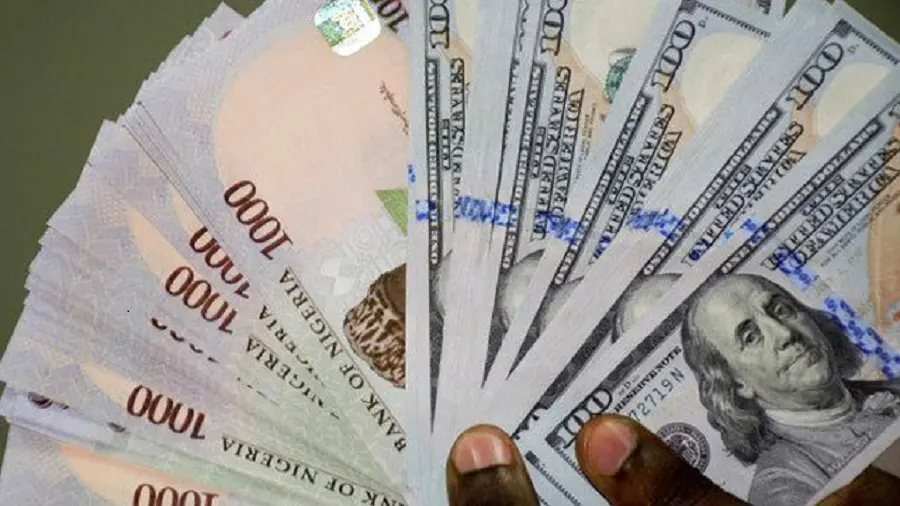
SEE Black Market Dollar To Naira Exchange Rate Today 31st July 2026
See Exchange Rate As Naira Gains 0.07%
The Black Market Dollar-to-Naira Exchange Rate for 31st July 2026 Can Be Accessed Below.
NOTE: The exchange rate changes hourly. It depends on the volume of dollars available and the Demand. This means…you can buy or sell 1 dollar at a certain rate, and the price can change (high or low) within hours.
The official naira black market exchange rate in Nigeria today, including the Black Market rates, Bureau De Change (BDC), and CBN rates.
The exchange rate fluctuates hourly based on the supply and demand of dollars in the market.
What’s the dollar to naira black market today, 31st July 2026?
The exchange rate for a dollar to naira at Lagos Parallel Market (Black Market) players sell a dollar for ₦1419 and buy at ₦1408 on Friday, 31st July, 2026, according to sources at Bureau De Change (BDC).
Please note that the Central Bank of Nigeria (CBN) does not recognize the parallel market (black market), as it has directed individuals who want to engage in Forex to approach their respective banks.
Dollar to Naira Black Market Rate Today
Dollar to Naira (USD to NGN) Black Market Exchange Rate Today
Selling Rate ₦1419
Buying Rate ₦1408
Dollar to Naira CBN Rate Today
Dollar to Naira (USD to NGN) CBN Rate Today
Highest Rate ₦1370
Lowest Rate ₦1365
Economy
SEC begins full e-registration for capital market services
The Securities and Exchange Commission (SEC) has commenced the implementation of a fully electronic registration process for capital market operators as part of efforts to modernise Nigeria’s capital market and improve regulatory efficiency.
The Commission, in a statement issued on Wednesday, said the electronic registration (e-Registration) platform, deployed through its ePortal, would enable designated regulatory services to be completed entirely online.
According to the SEC, the platform allows Capital Market Operators (CMOs) to complete approved registration processes digitally, including application submission, regulatory review, approvals and communication of decisions.
It said the initiative would eliminate manual processing for services covered in the current phase, while simplifying regulatory interactions, reducing administrative bottlenecks, shortening processing timelines and giving applicants improved visibility into the status of their applications.
The Commission explained that migrating to a fully digital registration system would enhance operational efficiency and strengthen regulatory oversight through standardised workflows, electronic documentation, secure digital record management and improved audit trails.
“The new platform represents a major step towards creating a seamless digital regulatory ecosystem that enhances operational efficiency while strengthening regulatory effectiveness,” the SEC said.
The regulator said the e-Registration platform aligns with its strategic objective of leveraging technology to improve market efficiency, enhance ease of doing business and deliver better services to stakeholders.
It added that the digital system would improve the integrity of regulatory processes by reducing delays associated with paper-based documentation and enhancing the quality of regulatory data available for decision-making.
The SEC noted that the platform would also provide a stronger foundation for regulatory analytics and future innovations aimed at improving oversight of the Nigerian capital market.
It said the implementation would be carried out in phases to ensure a smooth transition for market participants while maintaining the stability and integrity of regulatory processes.
The Commission clarified that the current phase covers post-registration services for existing Capital Market Operators, adding that applications for the registration of new entrants into the Nigerian capital market are not included yet.
According to the SEC, the commencement of electronic processing for new registration applications would be announced at a later date.
The Commission urged all Capital Market Operators to familiarise themselves with the new platform and comply with implementation timelines to ensure a seamless transition.
It reaffirmed its commitment to implementing reforms that promote innovation, improve regulatory service delivery, strengthen market infrastructure, enhance transparency and boost investor confidence in Nigeria’s capital market.
-
Entertainment21 hours agoWhy I Don’t Want Any Of My Children To Make Music – Davido
-
News23 hours agoSterling Financial Bucks Banking Slump, Emerges Among NGX’s Top Gainers
-
Economy20 hours agoCooking Gas Price Reduces, See New Amount Per KG
-
Metro20 hours agoJust in: Fire guts Federal Mortgage Bank HQ in Abuja
-
News20 hours agoWhy I Need To Go Beg God — Ex-JAMB Registrar
-
News20 hours agoABU lecturer dies in road crash
-
News20 hours agoPolice probe video of officers attacking gold seller in Lagos
-
Metro20 hours agoKidnapped Benue Seminarian Escapes From Abductors

Warning: Undefined variable $user_ID in /home/naijuinz/public_html/wp-content/themes/zox-news/comments.php on line 49
You must be logged in to post a comment Login