News
Ghana becomes record fifth African nation to take over from ruling party this year
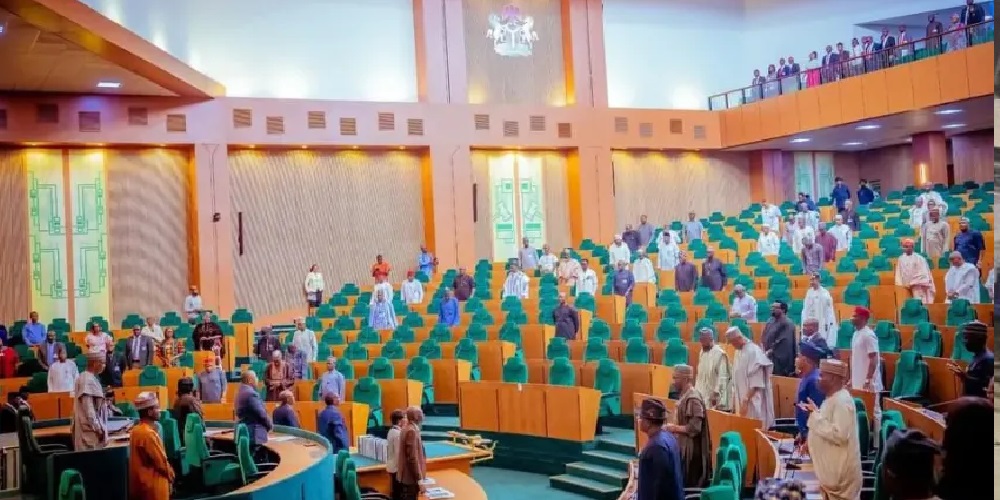
Ghana’s vote brings to an end a remarkable 12 months in African politics, which have seen five transfers of power – more than ever before. This “annus horribilis” for governments has now also brought opposition victories in Botswana, Mauritius, Senegal and the self-declared republic of Somaliland.

Even beyond these results, almost every election held in the region this year under reasonably democratic conditions, has seen the governing party lose a significant number of seats.
This trend has been driven by a combination of factors:

*the economic downturn
*growing public intolerance of corruption
*and the emergence of increasingly assertive and well-co-ordinated opposition parties.
The trend is likely to continue into 2025, and will cause trouble for leaders such as Malawian President Lazarus Chakwera, whose country goes to the polls in September.
One of the most striking aspect of the elections that have taken place in 2024 is that many have resulted in landslide defeats for governments that have previously appeared to have a strong grip on power – including in countries that have never before experienced a change at the top.
The Botswana Democratic Party (BDP) that had ruled the country since independence in 1966 was crushed in October’s general elections.
As well as losing power, the BDP went from holding 38 seats in the 69-strong parliament to almost being wiped out.
After winning only four seats, the BDP is now one of the smallest parties in parliament, and faces an uphill battle to remain politically relevant.
There was also a landslide defeat for the governing party in Mauritius in November, where the Alliance Lepep coalition, headed by Pravind Jagnauth of the Militant Socialist Movement, won only 27% of the vote and was reduced to just two seats in parliament.
With its rival Alliance du Changement sweeping 60 of the 66 seats available, Mauritius has experienced one of the most complete political transformations imaginable.
Senegal and the self-declared republic of Somaliland also saw opposition victories.
In the case of Senegal, the political turnaround was just as striking as in Botswana, albeit in a different way.
Just weeks ahead of the election, the main opposition leaders Bassirou Diomaye Faye and Ousmane Sonko were languishing in jail as the government of President Macky Sall abused its power in a desperate bid to avert defeat.
After growing domestic and international pressure led to Faye and Sonko being released, Faye went on to win the presidency in the first round of voting, with the government’s candidate winning only 36% of the vote.
Even in cases where governments have not lost, their reputation and political control have been severely dented.
South Africa’s African National Congress (ANC) retained power but only after a bruising campaign that saw it fall below 50% of the vote in a national election for the first time since the end of white-minority rule in 1994.
This forced President Cyril Ramaphosa to enter into a coalition government, giving up 12 cabinet posts to other parties, including powerful positions such as home affairs.
The recent elections in Namibia told a similar story. Although the ruling party retained power, the opposition has rejected the results and claims the poll was badly manipulated after it was marred by logistical problems and irregularities.
Even with the flaws, the government suffered in the parliamentary election, recording its worst-ever performance, losing 12 of its 63 seats and only just holding on to its parliamentary majority.
As a result, a region that is known more for governments that manage to hold on to power for decades has seen 12 months of vibrant, intensely contested, multiparty politics.
The only exceptions to this have been countries where elections were seen as neither free nor fair, such as Chad and Rwanda, or in which governments were accused by opposition and rights groups of resorting to a combination of rigging and repression to avert defeat, as in Mozambique.
Three trends have combined to make it a particularly difficult year to be in power.
In Botswana, Mauritius and Senegal, growing citizen concern about corruption and the abuse of power eroded government credibility.
Opposition leaders were then able to play on popular anger at nepotism, economic mismanagement and the failure of leaders to uphold the rule of law to expand their support base.
Especially in Mauritius and Senegal, the party in power also undermined its claim to be a government committed to respecting political rights and civil liberties – a dangerous misstep in countries where the vast majority of citizens are committed to democracy, and which have previously seen opposition victories.
The perception that governments were mishandling the economy was particularly important because many people experienced a tough year financially.
High food and fuel prices have increased the cost of living for millions of citizens, increasing their frustration with the status quo.
In addition to underpinning some of the government defeats this year, economic anThis is not an African phenomenon, of course, but a global one.
Popular discontent over inflation played a role in the defeat of Rishi Sunak and the Conservative Party in the UK and the victory of Donald Trump and the Republican Party in the United States.
What was perhaps more distinctive about the transfers of power in Africa this year was the way that opposition parties learned from the past.
In some cases, such as Mauritius, this meant developing new ways to try and protect the vote by ensuring every stage of the electoral process was carefully watched.
In others, it meant forging new coalitions to present the electorate with a united front.
In Botswana, for example, three opposition parties and a number of independent candidates came together under the banner of the Umbrella for Democratic Change to comprehensively out-mobilise the BDP.
A similar set of trends is likely to make life particularly difficult for leaders that have to go to the polls next year, such as Malawi’s President Chakwera, who is also struggling to overcome rising public anger at the state of the economy.
With the defeat of the NPP in Ghana, Africa has seen five transfers of power in 12 months. The previous record was four opposition victories, which occurred some time ago in 2000.
That so many governments are being given an electoral bloody nose against a backdrop of global democratic decline that has seen a rise in authoritarianism in some regions is particularly striking.
It suggests that Africa has much higher levels of democratic resilience than is often recognised, notwithstanding the number of entrenched authoritarian regimes that continue to exist.
Civil society groups, opposition parties and citizens themselves have mobilised in large numbers to demand accountability, and punish governments that have failed both economically and democratically.
International governments, organisations, and activists looking for new ways to defend democracy around the world should pay more attention to a region that is often assumed to be an inhospitable environment for multiparty politics, yet has seen more examples of democratic bounce-back than other regions of the world.
BBC
News
All 13 kidnapped Otukpo passengers, successfully rescued
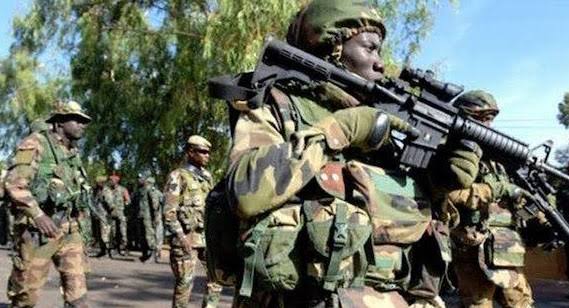
All 13 passengers abducted along the Makurdi–Otukpo road in Otukpo Local Government Area of Benue State have been successfully rescued.
The victims were reportedly freed in the early hours of Sunday, following what sources described as a coordinated effort.
Meanwhile, official confirmation and operational details are still being awaited at the time of filing this report.
The abduction had earlier raised concerns among residents and commuters along the busy Makurdi–Otukpo axis, a route that has witnessed sporadic security challenges in recent times.
Security agencies are yet to issue a formal statement on the circumstances surrounding both the abduction and the subsequent rescue.
It also remains unclear whether any arrests were made or if ransom was involved.
Local sources, however, expressed relief over the safe return of the victims, describing the development as a significant breakthrough amid ongoing security concerns in the area.
The spokesperson of the Benue state Police command, DSP Udeme Edet could not be reached to confirm the story as at the time of filing this report.
News
Board cautions candidates after arrest of suspects over doctored UTME scores
The Joint Admissions and Matriculation Board has announced the arrest of two candidates and a parent for allegedly falsifying the 2026 Unified Tertiary Matriculation Examination results using Artificial Intelligence and other electronic tools.
The announcement was made on Friday as the board released the results of 632,788 candidates who sat for the examination on Thursday, April 16.
In a statement issued by JAMB spokesperson, Fabian Benjamin, the suspects were apprehended for tampering with official SMS result notifications to alter or fabricate scores with the intention of deceiving others, including parents and guardians.
“Currently, two candidates and one parent are in custody for engaging in result falsification using AI and other electronic means,” the statement said.
Benjamin emphasized that such actions constitute serious criminal offences and warned that the board would ensure that all those involved are prosecuted in accordance with the law.
He further cautioned candidates against interfering with result messages sent through JAMB’s official SMS platforms, 55019 and 66019.
Candidates who took the examination on Thursday can check their results by sending “UTMERESULT” via SMS to 55019 or 66019 using the phone number linked to their registration. Printing of official result slips is not yet available but will be enabled later.
The 2026 UTME commenced on April 16 and is scheduled to run until April 22 across examination centres nationwide. Results will continue to be released in batches as the exercise progresses.
News
How NDLEA operatives uncovered cocaine, loud in food flasks, snacks, nabs fashion designer, others(Photos)
. Raids Edo, Cross River forests, destroys over 17,000kg skunk; recovers large consignments in Lagos, Delta, Kaduna operations
Operatives of the National Drug Law Enforcement Agency (NDLEA) have intercepted 12 large parcels of cocaine concealed in false bottom of food flasks heading to the United Kingdom via a Virgin Atlantic Airline flight from the Murtala Muhammed International Airport (MMIA) Ikeja, Lagos.

The cocaine consignment with a gross weight of 2.80 kilograms was intercepted on Thursday 9th April 2026 by NDLEA operatives attached to the export shed of the Lagos airport while two cargo agents involved in the export bid: Ama Obinna Ufeim, 33, and Ogabi Monday Akorede, 39, were swiftly arrested. Further investigation revealed a 52-year-old freight and forwarding agent Agoro Tajudeen Moninuola as the sender of the consignment and he was arrested in a follow-up operation.
In a similar operation, NDLEA officers at the import shed of the Lagos airport on Wednesday 8th April intercepted a consignment of Loud, a strong strain of cannabis, with a gross weight of 2.90 kilograms and concealed in snack food packs, which arrived from the United States of America aboard a Delta Airlines flight.
Two cargo clearing agents: Animashaun Moshood Adetunji and Mercy Gabriel Oluwasegun, were initially arrested in connection with the seizure before the consignee, Saheed Adeshina Adegoke, a 29-year-old fashion designer, was nabbed in a follow-up operation at 3 Oba Ogunji road, Ogba, Lagos, on Monday 13th April.

In Kaduna, NDLEA operatives on patrol along Kaduna-Zaria highway by Gwargwaje Zaria on Monday 13th April intercepted a trailer conveying cement heading to Hadeja in Jigawa state. A search of the truck led to the recovery of 760 blocks and 33 jumbo bags of skunk, a strain of cannabis, weighing 847 kilograms. The truck driver Umar Garba Haruna, 33, was arrested in connection with the seizure.
A 53-year-old female suspect, Alice Sunday Udoh, was arrested on Thursday 16th April when NDLEA officers supported by soldiers raided a forest in Uwet community, Akamkpa LGA, Cross River state, where 15,000 kilograms of skunk on six hectares of farmland were destroyed and 119kg of same substance recovered.
Another cannabis farm was raided on Tuesday 14th April at Saboro camp, Ovia North East LGA, Edo state where NDLEA operatives destroyed 2,281.43kg of same psychoactive substance, while three suspects: Nweke Smart, 27; Christopher Egbe, 62; and Monday Ayan, 45, were arrested, with the duo of Christopher and Monday caught with 38.5kg cannabis and its seeds. Two suspects: Sunday Odili, 49, and Ijenebe Joshua, 39, were nabbed with 87.838kg skunk and seeds at Powerline area of Okwo, Delta state on Friday 17th April.
In Lagos, two suspects: Chinedu Ogbekene and Zindozin Aloukou Bienvenu were arrested on Wednesday 15th April at Mile 2, Lagos/Badagry expressway while conveying 11,900 capsules of tramadol and 400 ampoules of phenobarbital injection in a truck to Ghana. Same day, NDLEA operatives raided a two-storey building at Petti, Lagos Island, where a total of 95.8kg skunk was recovered.

With the same zeal, Commands and formations of the Agency across the country continued their War Against Drug Abuse, WADA, sensitization activities in schools, worship centres, work places and communities among others in the past week. These include: WADA enlightenment lecture for students and staff of Alfurgan Islamic School, Paiko, Niger state;
Edgerly Memorial Girls Secondary School, Calabar, Cross River; Heritage Model School, Ankpa, Kogi; Government Day Junior and Senior Secondary School, Kankia, Katsina; Government Senior Secondary School, Rano, Kano, and De Ambassador Secondary School, Epe, Lagos state, among others.
While commending the officers and men of MMIA, Edo, Delta, Cross River, Kaduna, and Lagos Commands of the Agency for the arrests and seizures, Chairman/Chief Executive Officer of NDLEA, Brig. Gen. Mohamed Buba Marwa (Rtd) noted their drug supply reduction efforts balanced with WADA sensitization activities while he charged them and their compatriots across the country to maintain the current tempo.
-
News23 hours agoJAMB: See How To Check, Print 2026 UTME Result Slip
-
News23 hours agoTroops nab nine suspected terrorists in Plateau, recover arms, ammunition
-
Metro11 hours agoBandits Demand N9m Per Benue JAMB Victim As Police Nab Seven
-
Sports11 hours agoReal Sociedad Beat Atletico On Penalties To Win Copa Dey Rey
-
Politics11 hours agoADC crisis deepens as Binani-led bloc quits Adamawa chapter
-
Sports11 hours agoAnother heavy headache for Chelsea as Man U secures 1-0 victory
-
News11 hours agoArmy raises alarm over low South-East recruitment
-
News20 hours ago11 die, 32 injured in Bauchi tanker crash


You must be logged in to post a comment Login