Economy
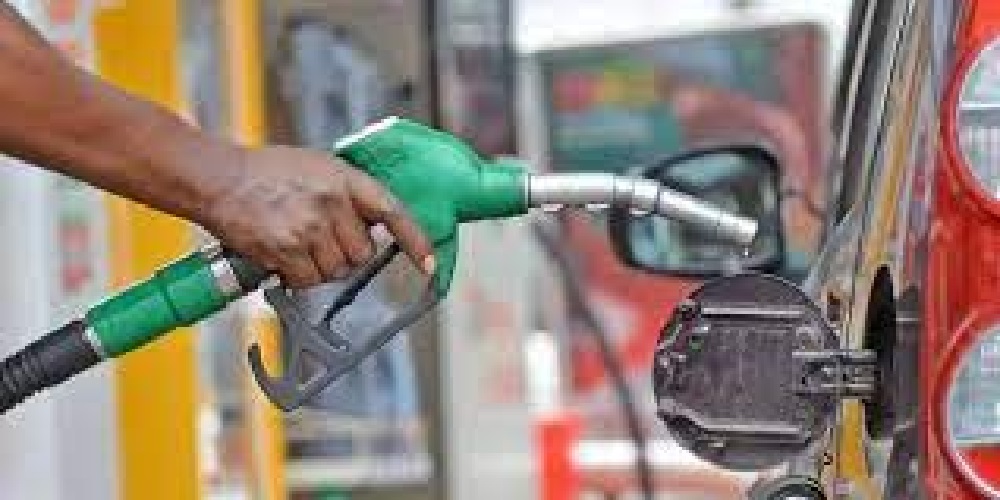
Petrol to sell at N935 per litre from today-IPMAN
- /home/naijuinz/public_html/wp-content/plugins/mvp-social-buttons/mvp-social-buttons.php on line 27
https://naijablitznews.com/wp-content/uploads/2024/03/fuel.jpg&description=Petrol to sell at N935 per litre from today-IPMAN', 'pinterestShare', 'width=750,height=350'); return false;" title="Pin This Post">
- Share
- Tweet /home/naijuinz/public_html/wp-content/plugins/mvp-social-buttons/mvp-social-buttons.php on line 72
https://naijablitznews.com/wp-content/uploads/2024/03/fuel.jpg&description=Petrol to sell at N935 per litre from today-IPMAN', 'pinterestShare', 'width=750,height=350'); return false;" title="Pin This Post">
The Independent Petroleum Marketers Association of Nigeria (IPMAN), says the price of petrol will drop to N935 per litre by Monday in view of Dangote Refinery’s new arrangement.

IPMAN said the new price was necessitated by the reduction in Dangote Refinery’s fuel ex-depot price and uniform arrangement, which would enable marketers to sell at N935 in their outlets nationwide.
Alhaji Maigandi Garima, IPMAN National President, who made this known on Sunday in an interview with the News Agency of Nigeria (NAN) in Abuja, lauded the Dangote refinery for the development.

NAN reports that Dangote refinery recently announced a significant reduction in fuel price by 7.27 per cent from N970 per litre to N899.50 per litre at its loading gantry and provided generous credit terms to marketers.
In the bid to ensure that the price reduction gets to the end consumers, it signed a partnership with MRS to sell petrol from its retail outlets nationwide at N935.
The price reduction which is designed by Dangote refinery to alleviate transport cost during the festive period and beyond, has already commenced in Lagos, and will be offered nationwide from Monday.
“Dangote refinery has brought another new arrangement of loading and pricing by which marketers would pay a fixed ex-depot price of N899. 50k.
“The refinery is running a programme whereby it wants the fuel consumption across the country to be at the same rate. We are expecting the new arrangement to kick-start on Monday.
“We have been loading from the Dangote refinery and the refinery is saving us in this festive period,’’ he said.
The IPMAN president said previously it was loading at N970 per litre at Dangote refinery, but based on the arrangement and promise from Dangote, by Monday fuel price will drop to N935.
Garima said the downstream sector competition being witnessed currently was expected by marketers since due to deregulation, adding that it would see the price of fuel dropping continuously.
“That is the reason why we have been asking the government to allow private sectors to participate in the refinery business.
“Very soon more refineries are coming up and the country will see a lot of price reduction in the downstream sector,’’ he said.
He recalled that during the 2023 yuletide, per litre of fuel was sold at N2, 000 in the Northern and Eastern part of the country because fuel was being imported at that period.
He added that the highest price of which fuel could be sold there currently is N1, 100 because refineries are running in the country.
“By the time Warri and Kaduna resume production, one can buy products at cheaper rates and it is good for the economy,’’ he added.
He however commended the Naira for the crude swap deal, adding that it is a good development for the growth of the economy.
The NNPC Ltd. had also slashed fuel ex-depot price from N1, 020 to N899.
The fuel price reduction reflects response to deregulation and increased industry competition.
(NAN)
Economy
Nigeria’s crude oil output hits 74-month high, beats OPEC quota
Nigeria’s crude oil production has climbed to its highest level in more than six years, with the country exceeding its Organisation of the Petroleum Exporting Countries production quota for the fourth consecutive month, buoyed by improved operational stability and fewer disruptions to oil infrastructure.
Latest figures released on Sunday in Abuja by the Nigerian Upstream Petroleum Regulatory Commission showed that the country’s average crude oil production rose to 1.56 million barrels per day in June 2026, while condensate output stood at 0.18 million barrels per day, bringing total crude oil and condensate production to 1,735,398 barrels per day.
The production level represents 104 per cent of Nigeria’s 1.5 million barrels per day crude oil production quota approved by OPEC and marks the country’s highest crude oil output since April 2020, making it a 74-month high.
The figures, contained in the commission’s latest production report and conveyed in a statement issued by its Head of Media and Corporate Communications, Eniola Akinkuotu, showed that June also marked the fourth consecutive month of production growth, reinforcing the recovery of Nigeria’s upstream oil sector after years of production losses caused by crude theft, pipeline vandalism and operational disruptions.
The statement read, “Nigeria’s crude oil and condensate production soared to an average of 1,735,398 barrels per day in the month of June 2026, representing positive growth for a 4th consecutive month. In the month under review, crude oil production hit 1.56mbpd while 0.18mbpd of condensates was produced. This means Nigeria met 104 per cent of the 1.5mbpd crude oil production quota set by the Organisation of Petroleum Exporting Countries.”
According to the commission, total crude oil and condensate production increased from 1.700 million barrels per day recorded in May to 1.735 million barrels per day in June, representing a 2.2 per cent month-on-month increase.
The report showed that combined production had earlier stood at 1.483 million barrels per day in February before rising steadily to 1.564 million barrels per day in March, 1.663 million barrels per day in April, 1.701 million barrels per day in May and 1.735 million barrels per day in June.
The NUPRC attributed the improved performance to stable production activities across major oil-producing assets and the absence of significant pipeline outages during the review period.
“The improved performance was primarily driven by stable production operations across most producing assets and the absence of any major pipeline outages during the period under review.
“This enhanced operational stability supported improved production uptime and crude evacuation efficiency. Although a limited number of assets experienced short-duration operational shutdowns, the overall impact on national production was minimal.
“In addition, scheduled turnaround maintenance activities were effectively managed and completed without significant disruption to production operations.
“The sustained growth recorded in June reflects the continued commitment of operators and industry stakeholders towards improving operational efficiency, maintaining asset integrity, and enhancing production reliability across the Nigerian upstream petroleum sector,” the statement added.
The commission also disclosed that Nigeria’s highest daily combined crude oil and condensate production during the month reached 1.89 million barrels per day, while the lowest daily production stood at 1.57 million barrels per day.
The peak production level underscores Nigeria’s growing potential to achieve the Federal Government’s medium-term ambition of producing two million barrels of oil per day, a target that has remained elusive for years due to insecurity in oil-producing communities, crude theft and ageing infrastructure.
An analysis of production by export terminals showed that Bonny Terminal retained its position as Nigeria’s highest-producing terminal, recording an average daily production of 318,280 barrels, compared with 293,880 barrels in May.
Forcados Terminal ranked second with 306,360 barrels per day, up from 289,900 barrels recorded in the previous month.
However, production at Qua Iboe Terminal declined to 164,730 barrels per day from 173,360 barrels per day in May.
Similarly, Escravos Terminal recorded a slight increase to 138,030 barrels per day, compared with 135,470 barrels per day in the previous month, while Bonga Terminal maintained steady output, producing 103,660 barrels per day, slightly above the 102,540 barrels per day recorded in May.
The sustained production growth is expected to strengthen Nigeria’s oil export earnings, improve foreign exchange inflows and provide additional fiscal revenues for the Federal Government at a time authorities are seeking to increase crude output and attract fresh investment into the upstream sector.
Nigeria has struggled in recent years to meet its OPEC production allocation because of widespread crude oil theft, pipeline vandalism, underinvestment and prolonged operational challenges.
However, reforms introduced under the Petroleum Industry Act, enhanced security around critical oil infrastructure and closer collaboration between government agencies and oil producers have contributed to the gradual recovery in production.
Maintaining production above the OPEC quota and sustaining operational stability will be critical if Nigeria is to realise its target of producing two million barrels per day and maximise the benefits of favourable global oil market conditions.
Economy
NDIC takes financial literacy campaign to secondary schools
The Nigeria Deposit Insurance Corporation (NDIC) has intensified efforts to promote financial literacy and savings culture among young Nigerians by taking its financial education campaign to public secondary schools in Akwa Ibom State.
The NDIC, as part of activities marking the 2026 Financial Literacy Day, visited the Federal Technical College, Ukana Offot, in Uyo Local Government Area, on Friday where students were sensitised on the importance of prudent financial management and the culture of saving.
Speaking during the programme, the Controller of NDIC Port Harcourt’s Zonal Office, Mr. Adefemi Shaba, said the initiative was designed to improve financial literacy among young people and equip them with the knowledge required to make informed financial decisions in the future.
According to him, the programme, which featured discussions under the theme, “Smart Money Talks,” forms part of an annual awareness campaign jointly championed by the NDIC and the Central Bank of Nigeria (CBN).
He explained that the theme of NDIC in 2026 underscores the importance of having open conversations about money management and the need to build confidence among young people in handling financial matters.
Building a savings culture
Shaba said one of the major objectives of the campaign was to inculcate a savings culture in children and teenagers, noting that the habit of saving is best developed from an early age.
He stressed that while the lessons may not appear immediately relevant to some of the students, the knowledge acquired would become useful as they advance in their academic pursuits and eventually begin to earn and manage their own income.
“We are here to commemorate Financial Literacy Day 2026 and to introduce the students to saving habits and encourage them to cultivate the culture of saving. We do this so that as the students grow up, they already have the habit of saving embedded in them,” he said.
The NDIC official added that the sensitisation programme also provided an opportunity for the corporation to educate students on its mandates and its role in promoting stability and confidence in the Nigerian banking system.
According to him, many Nigerians, especially young people, are unaware of the functions of the NDIC and the importance of financial institutions in national development.
Empowering the younger generation
Also speaking, the Principal Manager, Communication and Public Affairs Department of the NDIC, Mrs. Sa’adatu Bowsan, described Financial Literacy Day as a global initiative aimed at promoting financial education and empowering young people with essential money management skills.
She said the programme specifically targets secondary school students because they represent the future of the country’s economy and financial system.
According to her, exposing children to financial education at an early stage would help them develop positive financial behaviours and prepare them to become responsible adults.
“We are here in Akwa Ibom State as part of the commemoration of Financial Literacy Day 2026, which is a global initiative of the Bankers’ Committee. We are here basically to teach financial literacy, targeting young people, particularly secondary school students,” she said.
Bowsan noted that the essence of the programme is to shape the mindset of young Nigerians towards prudent financial management, savings and responsible spending.
“The whole idea is to target them while they are still young. We realised that the young people of today will become the adults of tomorrow, and so we are inculcating the right habits in them so that they can become better managers of resources in the future,” she added.
Students commend initiative
Some of the students who participated in the programme expressed appreciation to the NDIC for selecting their school for the sensitisation exercise.
One of the beneficiaries, Miss Udeme Effiong, said the programme had broadened her understanding of financial literacy and the importance of developing good savings habits.
She noted that prior to the programme, she had little knowledge of financial planning and management but now understood the need to save and make informed financial decisions.
“I want to thank the NDIC for choosing our school for this important programme. I have learnt a lot about financial literacy and I can now explain to others what it means and why saving is important,” she said.
Promoting financial inclusion
Financial experts have continued to stress the need for increased financial literacy among Nigerians, especially young people, as part of efforts to deepen financial inclusion and encourage responsible financial behaviour.
The annual Financial Literacy Day campaign has become one of the key platforms through which the NDIC and the CBN seek to bridge the knowledge gap in financial education and promote a culture of savings among citizens.
Stakeholders believe that equipping young people with financial knowledge and skills will not only improve personal financial management but also contribute significantly to economic growth and national development.
The NDIC has, over the years, continued to expand its financial education campaigns across the country, targeting schools and other institutions with the aim of raising a financially informed generation capable of making sound financial decisions.
Economy
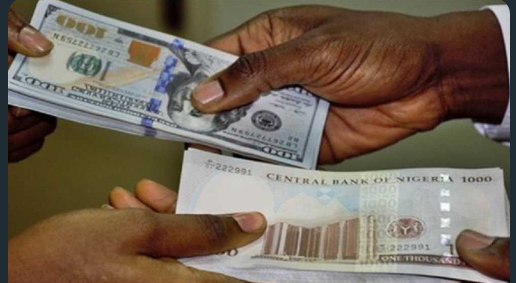
See Black Market Dollar To Naira Exchange Rate Today 10th July 2026
The Black Market Dollar-to-Naira Exchange Rate for 10th July 2026 Can Be Accessed Below.
IMPORTANT NOTE: The exchange rate changes hourly. It depends on the volume of dollars available and the Demand. This means…you can buy or sell 1 dollar at a certain rate, and the price can change (high or low) within hours.
The official naira black market exchange rate in Nigeria today, including the Black Market rates, Bureau De Change (BDC), and CBN rates.
Please note that the exchange rate is subject to hourly fluctuations influenced by the supply and demand of dollars in the market.
What’s the dollar to naira black market today, 10th July 2026?
The exchange rate for a dollar to naira at Lagos Parallel Market (Black Market) players sell a dollar for ₦1412 and buy at ₦1400 on Friday, 10th July, 2026, according to sources at Bureau De Change (BDC).
Please note that the Central Bank of Nigeria (CBN) does not recognize the parallel market (black market), as it has directed individuals who want to engage in Forex to approach their respective banks.
Dollar to Naira Black Market Rate Today
Dollar to Naira (USD to NGN) Black Market Exchange Rate Today
Selling Rate ₦1412
Buying Rate ₦1400
Dollar to Naira CBN Rate Today
Dollar to Naira (USD to NGN) CBN Rate Today
Highest Rate ₦1380
Lowest Rate ₦1376
-
Entertainment23 hours agoFinally, Peller, Jarvis pick date for white wedding
-
News23 hours agoNDLEA arrests South African lady with 3-yr-old son as cover up to traffic heroin
-
Sports22 hours agoFIFA Rubbishes Claims of Referee Bias in Argentina’s World Cup Victory Over Egypt
-
News22 hours agoDANGEROUS DEVT: Bandits abduct corpse of FRSC Cmdr, mourners, demand almost half a billion Naira ransom
-
News23 hours agoNDLEA nabs South African lady with 3-year-old son as cover to traffic heroin(Photos)
-
News22 hours agoNotorious bandit kingpin Sani Yellow eliminated in Zamfara
-
News22 hours agoBreaking: Dozens feared killed as suspected herdsmen again launch deadly attack in Benue
-
News18 hours agoMilitary identifies Army lieutenant who paid supreme sacrifice in rescue of abducted Oyo pupils, teachers

Warning: Undefined variable $user_ID in /home/naijuinz/public_html/wp-content/themes/zox-news/comments.php on line 49
You must be logged in to post a comment Login