Economy
Nigeria, others lose $1.6bn daily to illicit flows – AfDB
- /home/naijuinz/public_html/wp-content/plugins/mvp-social-buttons/mvp-social-buttons.php on line 27
https://naijablitznews.com/wp-content/uploads/2024/06/Screenshot_20240605-141212.png&description=Nigeria, others lose $1.6bn daily to illicit flows – AfDB', 'pinterestShare', 'width=750,height=350'); return false;" title="Pin This Post">
- Share
- Tweet /home/naijuinz/public_html/wp-content/plugins/mvp-social-buttons/mvp-social-buttons.php on line 72
https://naijablitznews.com/wp-content/uploads/2024/06/Screenshot_20240605-141212.png&description=Nigeria, others lose $1.6bn daily to illicit flows – AfDB', 'pinterestShare', 'width=750,height=350'); return false;" title="Pin This Post">
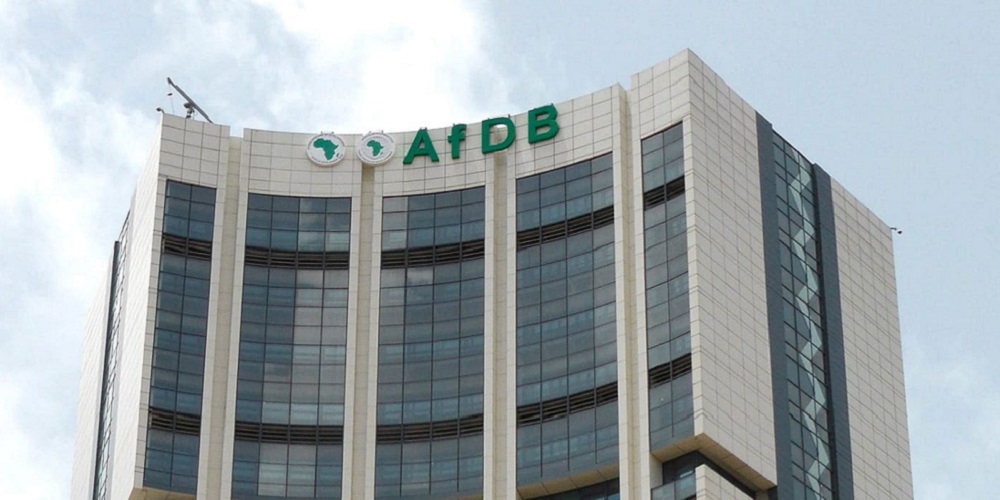
Akinwumi AdesinaThe African Development Bank has revealed that the continent loses about $1.6bn every day to illicit financial flows and profit shifting on the part of multinationals operating in Africa.

This was disclosed by the Chief Economist of AfDB, Kevin Urama, in an exclusive interview with The PUNCH.
According to the International Monetary Fund, illicit financial flows refer to the movement of money across borders that is illegal in its source (e.g. corruption, smuggling), its transfer (e.g. tax evasion), or its use (e.g. terrorist financing).

For decades, the IMF has played a key role in international efforts to combat these opaque and often destabilising transfers. It also has longstanding concerns with flows that are not strictly illegal but are associated with tax avoidance
Urama said that Africa was losing more than it was getting back via Foreign Direct Investment and said that the focus of stakeholders should be on blocking the outflow rather than chasing inflows.
He said, “There are so many things that happen on the continent that actually make corruption a big issue. And some estimations show that Africa loses about 248 billion US dollars every year due to corruption. If you add illicit financial flows of over $90bn and add profit shifting; corporates operating in Africa but then maybe have headquarters somewhere else and they find clever accounting ways of legally not paying taxes. In Africa, we are losing about $275bn. When you sum all these up, these are things you can trace through banks, then you find that Africa is losing about $587bn every year.
“That’s about $1.61bn every day. Yet we spend all our time chasing FDI, foreign direct investment, official development assistance, portfolio flows and remittances. All these together during the year we did this study for 2022 was about $174.5bn. That’s less than three times, I mean what we are losing is three times more than what we are getting from the global market. So how do we engage with the global market? Are we not focusing on the wrong priorities? Because if you ask me if I’m losing almost $600bn, I will focus on how not to lose it instead of going to get more. Tackling it, is what we are doing.
Highlighting some of the ways to shut the door on the outflow, Urama said, “It all comes down to the quality of institutions, the accountability systems for institutions, the capacity of individuals in government, in public service to first understand the implications of decisions they make but also to have the tools, the regulations, the policies and principles and technologies to be able to track it down and stem it.
“And that is why in the African Development Bank, we not only are developing these issues on debt but we’ve also now developed what we call a Public Service Delivery Index for Africa which measures the quantum of public services delivered in all key sectors of development but also the perceptions of the citizens on how that public service is. You may say you have provided electricity to me because you put a pole and wires passed behind my house, but maybe I have not been able to connect.”
Illicit financial flows were one of the reasons Nigeria has been on the greylist of the Financial Action Task Force since February 2023.
However, the Nigerian Financial Intelligence Unit in October said that FAFT had approved the fourth progress report of the country at its last plenary meeting.
Speaking on the sidelines of the last IMF’s annual meetings in Washington, Deputy Governor, Central Bank of Nigeria, Philip Ikeazor reinforced the commitment to exiting the grey list, saying, “Practically sending money home is impossible and if we are talking about driving remittances and FDI’s then we need to get out of the Grey List.”
The CBN Governor, Yemi Cardoso outlining measures to meet this target, said stronger oversight and collaboration with international money transfer operators and Nigeria’s diaspora were key.
Economy
Oyedele Delivers ₦39.63bn Lifeline to 24,814 Pensioners as PTAD Clears Long-Standing DBS Liabilities

L:R: Director General of PTAD, Mrs Tolulope Odunaiya in a warm handshake with the Minister of Finance, Mr Taiwo Oyedele in Abuja.
The Honourable Minister of Finance and Coordinating Minister of the Economy, Mr. Taiwo Oyedele, has reaffirmed his commitment to improving the welfare of Nigerian pensioners with the successful disbursement of ₦39.63 billion to 24,814 eligible Defined Benefit Scheme (DBS) pensioners, ending years of anxious waiting for thousands of retirees.
Working under the supervision of the Federal Ministry of Finance, the Pension Transitional Arrangement Directorate (PTAD) carried out the payments following the Minister’s directive to prioritise the settlement of verified pension liabilities, bringing relief to beneficiaries across the country.
Mr. Oyedele said the payment reflects the administration’s determination to ensure that retired public servants receive the benefits they earned through decades of dedicated service.
“A nation that values service must also honour those who gave their productive years in its service. This payment is about people, not just figures. It is about restoring confidence, rewarding sacrifice and giving thousands of pensioners and their families the reassurance that they have not been forgotten.”
The Minister explained that the disbursement covered three categories of outstanding pension obligations that had accumulated over the years.
According to him, PTAD paid ₦25,053,703,604.12 to clear the outstanding 35-month pension liability owed to 9,675 eligible Defined Benefit Scheme pensioners of the defunct NITEL/MTEL.
The Directorate also disbursed ₦9,481,886,576.53, representing the initial 50 per cent payment of the Back End Computation (BEC) arrears due to 3,959 eligible PHCN Defined Benefit Scheme pensioners.
In addition, PTAD paid ₦5,094,784,054.27, representing the outstanding 50 per cent balance of the 10.66 per cent and 12.95 per cent pension increment arrears due to 11,180 eligible Defined Benefit Scheme pensioners of the defunct Assurance Bank, NICON Insurance, NITEL and People’s Bank of Nigeria.
For many of the beneficiaries, the payments mark the end of years of uncertainty. They provide the means to meet pressing family needs, pay medical bills, support loved ones and enjoy retirement with greater peace of mind.
Mr. Oyedele said government remains mindful of the real lives behind every pension payment.
“Behind every approved payment is a retiree who served this country faithfully, a family that has waited patiently and a story that deserves a positive ending. We will continue to support measures that improve the lives of our senior citizens while maintaining fiscal discipline and accountability.”
The Minister commended the management and staff of PTAD for the prompt implementation of the directive, describing the successful disbursement as evidence of what can be achieved when institutions work together in the public interest.
“PTAD has demonstrated professionalism in implementing this exercise. The Ministry will continue to provide the policy direction and support required to strengthen pension administration and ensure that verified obligations are settled as resources become available.”
The Director-General of PTAD, Mrs. Tolulope Odunaiya, said the Directorate remained focused on delivering efficient pension administration and expressed appreciation to the Honourable Minister for his leadership and support, which made the release and prompt disbursement of the funds possible.
The latest payment represents another important step in the Federal Government’s efforts to improve the welfare of retirees and ensure that public institutions deliver meaningful outcomes for Nigerians under President Bola Ahmed Tinubu’s Renewed Hope Agenda.
Economy
See Black Market Dollar To Naira Exchange Rate Today 3rd July 2026
The Black Market Dollar-to-Naira Exchange Rate for 3rd July 2026 Can Be Accessed Below.
NOTE: The exchange rate changes hourly. It depends on the volume of dollars available and the Demand. This means…you can buy or sell 1 dollar at a certain rate, and the price can change (high or low) within hours.
The official naira black market exchange rate in Nigeria today, including the Black Market rates, Bureau De Change (BDC), and CBN rates.
Please note that the exchange rate is subject to hourly fluctuations influenced by the supply and demand of dollars in the market.
What’s the dollar to naira black market today, 3rd July 2026?
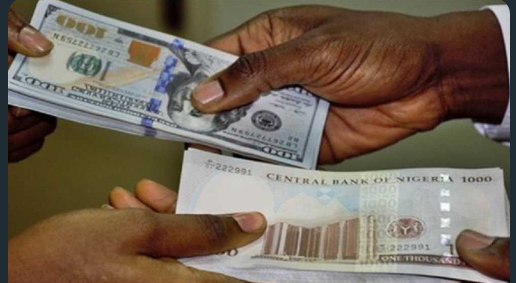
The exchange rate for a dollar to naira at Lagos Parallel Market (Black Market) players sell a dollar for ₦1408 and buy at ₦1396 on Friday, 3rd July, 2026, according to sources at Bureau De Change (BDC).
Please note that the Central Bank of Nigeria (CBN) does not recognize the parallel market (black market), as it has directed individuals who want to engage in Forex to approach their respective banks.
Dollar to Naira Black Market Rate Today
Dollar to Naira (USD to NGN) Black Market Exchange Rate Today
Selling Rate ₦1408
Buying Rate ₦1396
Dollar to Naira CBN Rate Today
Dollar to Naira (USD to NGN) CBN Rate Today
Highest Rate ₦1373
Lowest Rate ₦1360
Economy
See Black Market Dollar To Naira Exchange Rate Today 1st July 2026
The Black Market Dollar-to-Naira Exchange Rate for 1st July 2026 Can Be Accessed Below.
NOTE: The exchange rate changes hourly. It depends on the volume of dollars available and the Demand. This means…you can buy or sell 1 dollar at a certain rate, and the price can change (high or low) within hours.
The official naira black market exchange rate in Nigeria today, including the Black Market rates, Bureau De Change (BDC), and CBN rates.
Please note that the exchange rate is subject to hourly fluctuations influenced by the supply and demand of dollars in the market.
What’s the dollar to naira black market today, 1st July 2026?
The exchange rate for a dollar to naira at Lagos Parallel Market (Black Market) players sell a dollar for ₦1400 and buy at ₦1390 on Wednesday, 1st July, 2026, according to sources at Bureau De Change (BDC).
Please note that the Central Bank of Nigeria (CBN) does not recognize the parallel market (black market), as it has directed individuals who want to engage in Forex to approach their respective banks.
Dollar to Naira Black Market Rate Today
Dollar to Naira (USD to NGN) Black Market Exchange Rate Today
Selling Rate ₦1400
Buying Rate ₦1390
Dollar to Naira CBN Rate Today
Dollar to Naira (USD to NGN) CBN Rate Today
Highest Rate ₦1385
Lowest Rate ₦1376
-
News15 hours agoCourt Orders Final Forfeiture Of Ex-Minister’s Abuja Apartment, Seizes Four More Properties
-
News15 hours agoSouth Africa snubs compensation for Nigerians who abandoned property after anti-migrants protests
-
Sports15 hours agoArgentina luckily escape as they manageably survive tiny Cape Verde scare after extra time
-
News15 hours agoDespite FG’s denial, documents show the accountant-general’s office posted foreign affairs officials to PFIPC
-
Metro15 hours agoEdo: How We Escaped From Kidnappers’ Den — Victims
-
Sports15 hours ago2026 Work Cup: Prediction flops as Egypt flogs Australia to zoom into round of 16
-
Metro15 hours agoZamfara Woman, Two Children Regain Freedom After One Month in Bandits’ Captivity
-
Metro15 hours agoEdo Police Arrest Fake Medical Doctor, 44 Other Suspects

Warning: Undefined variable $user_ID in /home/naijuinz/public_html/wp-content/themes/zox-news/comments.php on line 49
You must be logged in to post a comment Login