Economy
Imported food inflation hits 42% as FG’s duty waiver delays
- /home/naijuinz/public_html/wp-content/plugins/mvp-social-buttons/mvp-social-buttons.php on line 27
https://naijablitznews.com/wp-content/uploads/2024/02/food-items.jpg&description=Imported food inflation hits 42% as FG’s duty waiver delays', 'pinterestShare', 'width=750,height=350'); return false;" title="Pin This Post">
- Share
- Tweet /home/naijuinz/public_html/wp-content/plugins/mvp-social-buttons/mvp-social-buttons.php on line 72
https://naijablitznews.com/wp-content/uploads/2024/02/food-items.jpg&description=Imported food inflation hits 42% as FG’s duty waiver delays', 'pinterestShare', 'width=750,height=350'); return false;" title="Pin This Post">
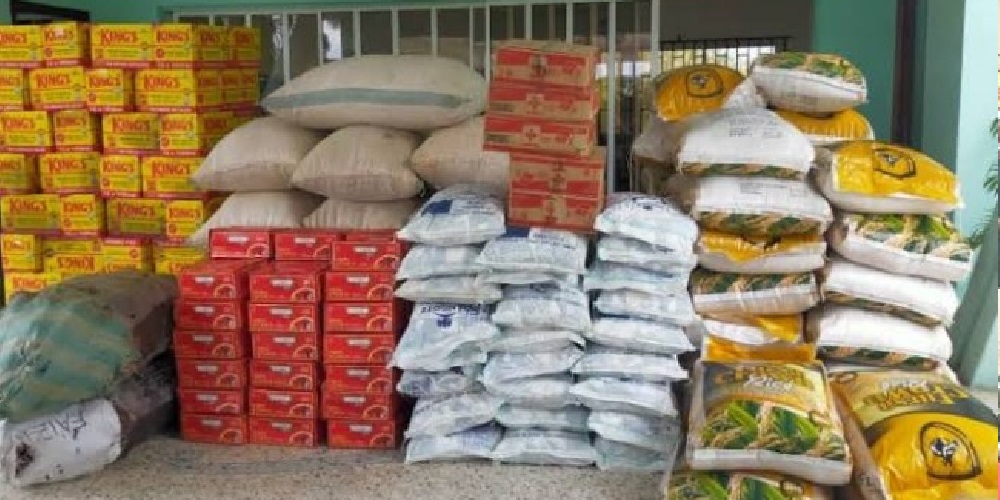
Nigeria’s imported food inflation surged to 42.29 per cent in November 2024, according to the Consumer Price Index report released by the National Bureau of Statistics.

This represents a significant rise from 23.74 per cent recorded in November 2023, marking an 18.55 percentage point year-on-year increase.
On a month-on-month basis, the inflation rate increased from 40.96 per cent in October 2024, a 1.33 percentage point rise in just one month.

The data highlights the relentless upward trajectory of imported food inflation throughout 2024, which began at 26.29 per cent in January.
By October, the inflation rate had crossed the 40 per cent threshold, and November’s figure of 42.29 per cent is the highest recorded in the past two years.
This sharp rise has been attributed to multiple factors, including currency devaluation, global supply chain disruptions, and inefficiencies in domestic policies.
The Federal Government’s attempt to address the situation through a duty waiver on imported food has been fraught with delays.
In July 2024, the Federal Government announced a 150-day duty-free import window for food commodities as it stepped up efforts to tackle rising inflation, which had impoverished many Nigerians.
The commodities include maize, husked brown rice, wheat and cowpeas. Under this arrangement, imported food commodities will be subjected to a Recommended Retail Price.
It was designed to reduce import costs and make staple foods more affordable. However, the implementation has stalled due to bureaucratic delays.
The PUNCH earlier reported that the average price of imported high-quality rice has surged by 144.77 per cent year-on-year as the Federal Government delays implementing its duty-free food policy.
Since the announcement of the policy, the price of one kilogramme of imported rice has risen by 3.21 per cent, climbing from N2,329.05 in July to N2,403.86 in September.

Economy
STN gets green light for Universal Licence
…eyes big pie in telecom sector
Swift Telephone Network Limited, STN, has announced the award of a Unified Access Service Licence, UASL, by the Nigerian Communications Commission, NCC, as it joins Nigeria’s fast growing telecoms industry.
The milestone marks STN’s formal evolution from its early beginnings as a telephone call service operating under an umbrella structure, into an independent Nigerian telecommunications company positioned to build the next generation of digital infrastructure in Nigeria.
Chief Executive Officer of STN, Oluwole Adetuyi said: “This UASL is not just a licence. It is a new chapter. It represents where we started, what we have endured, how we have evolved, and where we are going. We are building in Nigeria, for Nigeria.”
STN’s journey mirrors the story of Nigerian enterprise. From humble beginnings providing basic telephony, the company has endured changing economic conditions, evolving regulations, and market challenges.
Through perseverance and adaptation, STN has transformed into a full-service operator ready to compete and create value at scale.
The UASL grants STN the ability to provide a full range of telecommunications services such as voice, data, and access across Nigeria.
Reflecting on the resilience of STN, Adetuyi said this milestone reinforces a larger truth about Nigerian businesses to stand the test of time.
“They can evolve, compete globally, and build institutions of lasting value from Nigeria. At a time when the digital economy is central to national growth, STN is proof that local ambition, backed by resilience, can deliver world-class infrastructure”, said Adetuyi.
As STN enters this new phase, the company is committing to building a truly Nigerian telecommunications ecosystem.
Some of the key pillars of the telecom firm include, “Investment in skills development and training for Nigerian engineers, technicians and digital professionals; Prioritising partnerships with Nigerian service providers, contractors and vendors across the value chain as well as collaborations with global technology partners to deepen indigenous technical capabilities.
Other key areas, according to the company, include infrastructure development, as it intends to roll-out telecommunications infrastructure to expand access and bridge the digital divide and creation of direct employment and opportunities for Nigerian entrepreneurs in distribution, retail and support services, including increasing Nigerian ownership and leadership in the telecoms value chain.
“Our ambition is simple: to help build Nigeria’s digital economy from the ground up,” Adetuyi said.
He added: “This licence gives us the platform. Nigerian talent, Nigerian partners, and Nigerian innovation will give us the momentum.”
Director,Legal and Regulatory Services,Mrs Yetunde Okafor,explained further that “STN will in the coming weeks announce strategic partnerships, infrastructure rollout plans, and programmes to engage investors and stakeholders as it begins commercial operations under the UASL.”
Swift Telephone Network Limited is an independent Nigerian telecommunications company.
Okafor said “from its origins as a telephone call service, STN has evolved into a UASL-licensed operator committed to building resilient, inclusive, and innovative digital infrastructure for Nigeria.”
Recall that the UASL issued by the NCC authorises the holder to provide a comprehensive range of telecommunications services including fixed, mobile, voice and data services across Nigeria.
Economy
Dangote Refinery: MRS filling stations reduce fuel price
Dangote Refinery-backed MRS filling stations have reduced their petrol pump price.
A market survey by DAILY POST on Monday showed that MRS filling stations in Abuja had adjusted their petrol pump price to N1,370 per litre from N1,395 per litre.
This represents a reduction of N25 per litre.
The new price has been implemented at MRS filling stations in Katampe and along the Lugbe Expressway in Abuja.
The development comes a week after Dangote Refinery reduced its gantry petrol price to N1,325 per litre from N1,350.
With the latest downward adjustment, petrol now sells for between N1,370 and N1,450 per litre in Abuja and its environs.
The price reduction by MRS filling stations could signal a possible downward adjustment by other filling stations, including the Nigerian National Petroleum Company Limited, NNPCL, which rely on petrol from Dangote Refinery.
Economy
See Black Market Dollar To Naira Exchange Rate Today 28th September 2026
The Black Market Dollar-to-Naira Exchange Rate for 28th September 2026 Can Be Accessed Below.
IMPORTANT NOTE: The exchange rate changes hourly. It depends on the volume of dollars available and the Demand. This means…you can buy or sell 1 dollar at a certain rate, and the price can change (high or low) within hours.
READ ALSO: Goodluck Jonathan, Olu of Warri, Others To Headline Megastar Awards 2026
The official naira black market exchange rate in Nigeria today, including the Black Market rates, Bureau De Change (BDC), and CBN rates.
The exchange rate fluctuates hourly based on the supply and demand of dollars in the market.
What’s the dollar to naira black market today, 28th September 2026?
The exchange rate for a dollar to naira at Lagos Parallel Market (Black Market) players sell a dollar for ₦1385 and buy at ₦1375 on Monday, 28th September, 2026, according to sources at Bureau De Change (BDC).
Please note that the Central Bank of Nigeria (CBN) does not recognize the parallel market (black market), as it has directed individuals who want to engage in Forex to approach their respective banks.
Dollar to Naira Black Market Rate Today
Dollar to Naira (USD to NGN) Black Market Exchange Rate Today
Selling Rate ₦1385
Buying Rate ₦1375
Dollar to Naira CBN Rate Today
Dollar to Naira (USD to NGN) CBN Rate Today
Highest Rate ₦1329
Lowest Rate ₦1328
-
News9 hours agoCourt Denies KC Luxury Bail, Remands Influencer Over ₦39bn Cocaine Trafficking Allegation
-
Metro10 hours agoEdo APC Chairman Tenebe Sparks Outrage Over ‘AK-47 Fire’ Threat Against Tinubu Vote Opponents
-
Metro10 hours agoFear grips RCCG Church members as pastor collapses, dies while preaching about sudden death
-
News9 hours agoAmaechi: I’ll Dump Atiku, Back Tinubu If Petrol Drops to ₦600 Per Litre
-
News9 hours agoLagos University Workers Threaten Indefinite Strike Over Nine-Month Salary Arrears
-
News7 hours ago‘I Can Barely Walk Now’ — Pete Edochie Opens Up About Health Struggles, Body Swelling

You must be logged in to post a comment Login