Connect with us

Economy

CBN blames ageing pipelines for oil revenue crash

Published

on

ADVERTISEMENT
Zoom Ad
ADVERTISEMENT
Zoom Ad

The Central Bank of Nigeria has attributed the significant decline in oil revenue for the third quarter of 2024 to ageing pipeline infrastructure and operational inefficiencies.


According to the apex bank’s latest economic report for the third quarter of 2024, oil revenue fell by 24.72 per cent to N1.30tn compared to the second quarter of 2024.

This drop was largely due to lower receipts from petroleum profit tax and royalties.

Also, the revenue figure fell short of the quarterly target by 75.39 per cent, primarily due to frequent shut-ins caused by deteriorating pipelines and installations.

Advertisement

The report read, “Oil revenue, however, fell by 24.72 per cent to N1.30tn, relative to the level in Q2 2024 on account of lower receipts from petroleum profit tax and royalties.

“It was also 75.39 per cent short of the quarterly target due to shut-ins, arising from ageing oil pipelines and installations.”

It also noted that despite a modest increase in crude oil production to 1.33 million barrels per day from 1.27 mbpd in the preceding quarter, challenges including theft, vandalism, and infrastructure deficits severely hampered Nigeria’s oil revenue performance.

The ageing infrastructure not only reduced efficiency but also undermined the country’s ability to meet its OPEC production quota.

Advertisement

The report noted that global factors further compounded the situation, as the average spot price of Nigeria’s Bonny Light crude fell by 5.45 per cent to $82.23 per barrel during the quarter, reflecting subdued demand in the global market.

Similar declines were observed in other crude benchmarks, including Brent and the OPEC Reference Basket.

While the oil sector struggled, the Nigerian economy recorded growth of 3.46 per cent in Q3 2024, up from 3.19 per cent in the second quarter, driven largely by the non-oil sector, which contributed 3.18 percentage points to total GDP growth.

The oil sector’s growth slowed to 5.17 per cent year-on-year, compared to 10.15 per cent in the previous quarter, as operational inefficiencies and declining crude oil prices took a toll.

Advertisement

The fiscal implications were significant, with federally collected revenue falling 23.71 per cent short of the budget benchmark, despite a 7.48 per cent quarter-on-quarter increase.

The fiscal deficit, although narrowing by 22.51 per cent compared to the previous quarter, widened by 43.88 per cent relative to the quarterly target, reflecting ongoing fiscal pressures.

The report concluded that Nigeria’s goal of achieving an oil production target of 2mbpd by the end of 2024 remains under threat due to these challenges.
Advertisement

Economy

See Black Market Dollar To Naira Exchange Rate Today 20th April 2026

Published

on

ADVERTISEMENT
Zoom Ad
ADVERTISEMENT
Zoom Ad

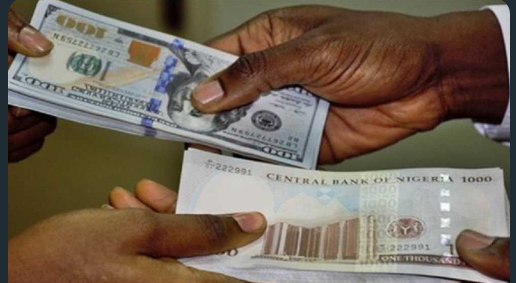
The Black Market Dollar-to-Naira Exchange Rate for 20th April 2026 Can Be Accessed Below.
IMPORTANT NOTE: The exchange rate changes hourly. It depends on the volume of dollars available and the Demand. This means…you can buy or sell 1 dollar at a certain rate, and the price can change (high or low) within hours.

The official naira black market exchange rate in Nigeria today, including the Black Market rates, Bureau De Change (BDC), and CBN rates.

Please note that the exchange rate is subject to hourly fluctuations influenced by the supply and demand of dollars in the market.

What’s the dollar to naira black market today, 20th April 2026?

Advertisement

The exchange rate for a dollar to naira at Lagos Parallel Market (Black Market) players sell a dollar for ₦1400 and buy at ₦1390 on Monday 20th April, 2026, according to sources at Bureau De Change (BDC).

Please note that the Central Bank of Nigeria (CBN) does not recognize the parallel market (black market), as it has directed individuals who want to engage in Forex to approach their respective banks.
Dollar to Naira Black Market Rate Today

Dollar to Naira (USD to NGN) Black Market Exchange Rate Today
Selling Rate ₦1400
Buying Rate ₦1390
Dollar to Naira CBN Rate Today
Dollar to Naira (USD to NGN) CBN Rate Today
Highest Rate ₦1348
Lowest Rate ₦1340
Disclaimer:NEWSRAIN NIGERIA does not set or determine forex rates. The official NAFEX rates are obtained from the FMDQOTC website. Parallel market rates (black market rates) are obtained from various sources, including online media outlets. The rates you buy or sell forex may be different from what is captured in this article.

Advertisement
Continue Reading

Economy

CBN, FMDA introduce the Nigerian Overnight Financing Rate

Published

on

ADVERTISEMENT
Zoom Ad
ADVERTISEMENT
Zoom Ad

The Central Bank of Nigeria (CBN) in collaboration with the Financial Markets Dealers Association (FMDA) has introduced the Nigerian Overnight Financing Rate (NOFR).

The new initiative is a standardized benchmark, aimed at enhancing transparency, strengthening monetary policy transmission, and deepening Nigeria’s money market.

The introduction of the NOFR was made known in a statement issued on Sunday by the Director, Corporate Communications of the CBN, Mrs. Hakama Sidi Ali.

The apex bank explained that the NOFR was developed to align Nigeria with global best practices in short-term interest
rate benchmarks.

Advertisement

Moreover, it said the initiative is expected to improve price discovery and transparency, while promoting consistent pricing of money market instruments.

“It will enhance the effectiveness of monetary policy, support financial innovation, boost investor confidence, and strengthen risk management across the financial system,” the CBN said.

The introduction of NOFR positions Nigeria alongside leading global benchmarks such as SOFR in the United States, SONIA in the United Kingdom, €STR in the Eurozone, and TONA in Japan.

Also, it complements African benchmarks such as the JIBAR in South Africa.

Advertisement

The CBN added that the benchmark was adopted after a stakeholder engagement session held on February 27, 2026, with market participants formally endorsing the initiative.

It further disclosed that following the subsequent regulatory approval, NOFR is now in use, with the CBN serving as the benchmark administrator.

“The bank will ensure governance, transparency, and regular publication of the rate,” the statement stated.

Advertisement
Continue Reading

Economy

Naira Slumps At Official FX Market

Published

on

ADVERTISEMENT
Zoom Ad
ADVERTISEMENT
Zoom Ad

The Nigerian naira depreciated slightly against the United States (US) dollar, trading at N1,343.6398 per dollar at the Central Bank of Nigeria (CBN) official foreign exchange window on Friday, 17th April, 2026.

According to the data on the CBN’s official platform, the naira traded at the Nigerian Foreign Exchange Market (NFEM) rate of N1,343.6398/$per dollar and closed at N1,342.5000 per dollar.

When compared with the previous trading rate, the Nigerian currency traded at N1342.3037 on 16th April, 2026. With this, the Nigerian currency depreciated slightly by a minimum of N1.3.

At the parallel market, the naira-to-dollar exchange rate for the buying rate didn’t change while the selling rate increased by N3 when compared to that of the previous trading rate.

Advertisement

According to Aboki FX , the Naira-to-dollar exchange rate at the black market on Friday, 17th April, 2026, was N1,395 and N1,405 per dollar for buying and selling rate respectively.

Continue Reading

Trending

Copyright © 2024 Naija Blitz News