News
I Meet Financial Obligations Without NNPC, Ways & Means, Tinubu Boasts

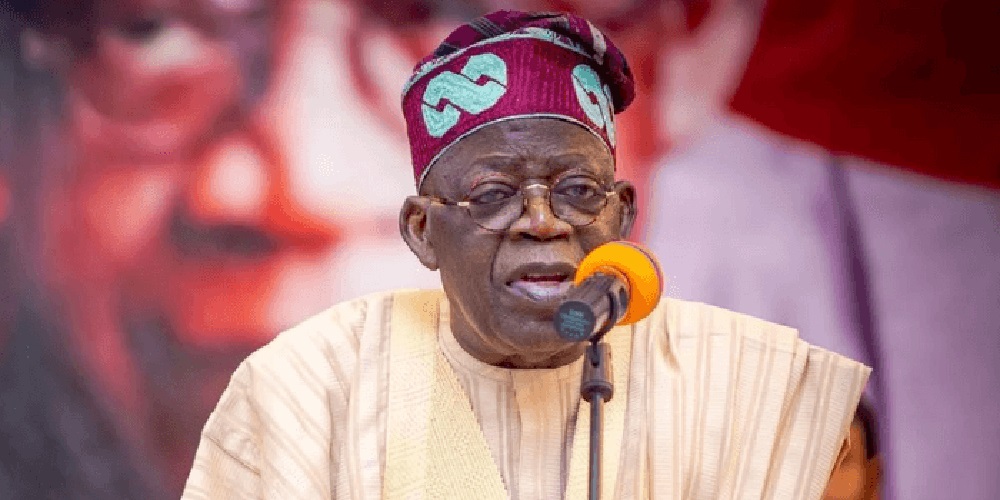


President Bola Tinubu donned his bragging hat on Monday when he announced that for three straight months, he has fulfilled Nigeria’s financial obligations without touching remittance by Nigerian National Petroleum Company Limited (NNPCL) or exploring Ways and Means from the Central Bank of Nigeria (CBN).
“Push me to my brag mode, in the last three months, I’ve not taken a penny from NNPC before I meet my other obligations. To me, that is excellent,” a gleeful Tinubu told reporters on Monday during a chat at his Bourdillon residence in the highbrow Ikoyi area of Lagos State.
The former Lagos governor said he has met Nigeria’s financial obligations “without falling back to the old order, without going into Ways and Means, I’ve met all obligations”.
When asked whether he was scoring himself, the President said, “Why not? Will you score me? I should grade myself if I do my homework right”.
In September 2024, Nigeria’s apex bank chief Olayemi Cardoso blamed his embattled predecessor Godwin Emefiele for harming the Nigerian economy through the excess printing of money and the pumping of liquidity into the system.
“In 2015, the money supply was about N19tn, and in 2023, it was N54tn. That’s a huge increase, a very huge increase. And then a substantial amount of that was through ways and means.
“So, essentially, the printing of money resulted in a huge amount of money chasing the same amount of goods or a relative amount of goods. I think that context is very important to have.”
Known as the Ways and Means, the apex bank offered short-term financing to the Federal Government to cover its budget shortfalls.







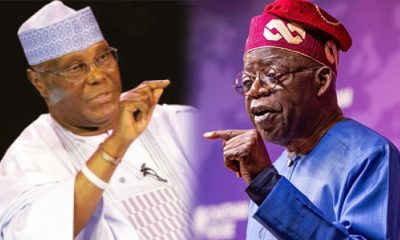


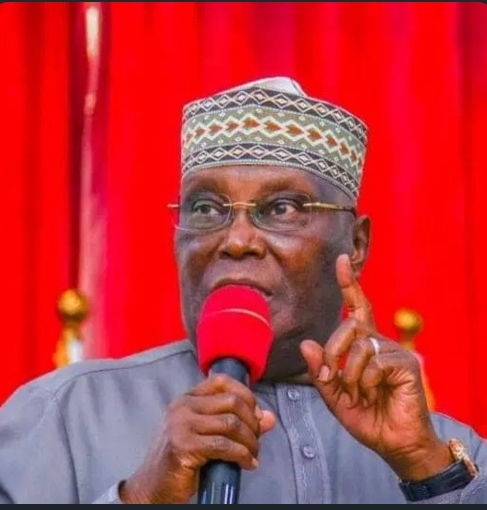
The All Progressives Congress (APC) Presidential Campaign Council has called on African Democratic Congress (ADC) presidential candidate Atiku Abubakar to withdraw from the 2027 presidential race over a controversial $500,000 payment made to his former wife, Jennifer Douglas, during negotiations surrounding the Mambilla Hydroelectric Power Project.
The demand followed revelations from a final award issued by a three-member International Chamber of Commerce (ICC) arbitration tribunal in Paris in the long-running dispute between Sunrise Power and Transmission Company Limited and the Federal Government.
The tribunal ruled in favour of Nigeria, rejecting Sunrise Power’s claims and ordering the company and its promoter, Leno Adesanya, to reimburse Nigeria for 75 per cent of its legal costs.
At the centre of the controversy is a $500,000 transfer made by Adesanya on January 30, 2003, through China Castle Investments Limited, an offshore company he controlled, into Douglas’s Citibank account in the United States.
The payment came less than four months before Sunrise was purportedly awarded a 3,960-megawatt Build-Operate-Transfer (BOT) contract for the Mambilla project in Taraba State.
Tribunal Questions $500,000 Payment
During the arbitration, Adesanya told the tribunal that the $500,000 was part of a foreign-exchange transaction carried out on behalf of Atiku.
However, the tribunal did not accept the explanation, noting the absence of documentary evidence showing the underlying naira payment, exchange rate, instructions from Atiku or his aides, correspondence relating to the transaction or records establishing its commercial purpose.
The tribunal also noted that neither Atiku nor Douglas testified or submitted witness statements to corroborate Adesanya’s account.
It further questioned the explanation because the payment was made during the period when Sunrise was pursuing the Mambilla project and months before the company was purportedly awarded the contract.
The tribunal’s findings, however, concerned the evidence and claims before it in the arbitration; they did not establish in the award that Atiku personally received a bribe.
Mambilla Contract Controversy
The Mambilla project, initially conceived in 1982 as a 3,050MW hydropower scheme, later became the subject of negotiations involving Sunrise and its Chinese partner.
Sunrise expressed interest in developing the project from 2001 and subsequently submitted proposals to the Federal Government.
A technical committee eventually recommended Sunrise for the 3,960MW project in March 2003.
Former Minister of Power Olu Agunloye later issued a letter which Sunrise relied upon as evidence that it had been awarded the project.
Former President Olusegun Obasanjo, however, maintained that the Federal Executive Council never approved the contract and that he directed the withdrawal of the relevant memorandum.
The disputed letter subsequently became central to Sunrise’s multibillion-dollar arbitration claims against Nigeria.
APC Accuses Atiku of Conflict of Interest
Reacting to the tribunal’s findings, APC Presidential Campaign Council spokesman Dele Alake accused Atiku and Agunloye of working together to facilitate the disputed Sunrise contract.
Alake described the $500,000 payment as an alleged bribe connected to the Mambilla deal and argued that its timing raised questions about a possible conflict of interest involving Atiku, who was vice-president at the time.
The APC spokesman also criticised Atiku for not appearing as a witness before the tribunal, saying his testimony could have helped clarify the circumstances surrounding the payment.
The campaign council subsequently demanded that Atiku withdraw from the 2027 presidential contest.
Long-Running Mambilla Legal Battle
The dispute over the Mambilla project has continued for years.
Sunrise previously pursued billions of dollars in claims against Nigeria, alleging breaches relating to the proposed project.
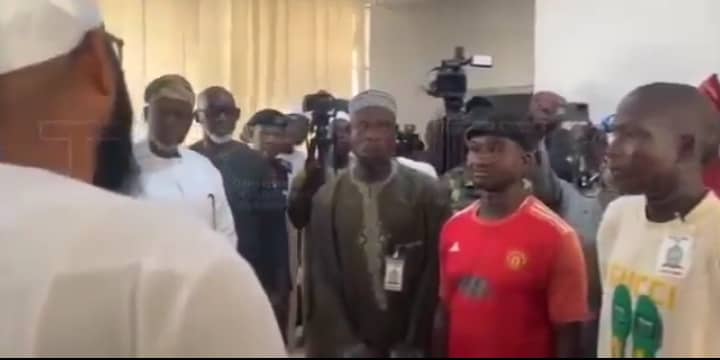
A surviving miner has alleged that an unidentified substance was sprayed inside a detention cell shortly before several suspected illegal miners began collapsing while in the custody of the Nigeria Security and Civil Defence Corps (NSCDC) in Niger State.
The survivor made the allegation while recounting his experience in detention during a visit to the state by the Minister of Interior, Olubunmi Tunji-Ojo.
According to the miner, detainees were locked inside a cell before an unidentified substance was sprayed into the facility.
He alleged that shortly after the substance was released, some of the detainees began experiencing difficulties before collapsing.
«“They sprayed something inside the cell after locking us in, and people began collapsing,” the survivor reportedly said.»
The allegation comes amid growing scrutiny over the circumstances surrounding the deaths of suspected illegal miners who were detained by security authorities in Niger State.
The survivor did not identify the substance allegedly sprayed inside the cell, nor did he state who allegedly authorised or carried out the action.
He also did not provide details on the number of detainees who were affected or establish whether the alleged spraying directly caused any of the reported deaths.
The NSCDC and other relevant authorities have yet to publicly respond to the specific allegation.
The account is likely to intensify calls for a thorough investigation into the treatment of the detainees and the circumstances surrounding the deaths.
Establishing what happened inside the cell would require further investigation, including determining the identity of the substance allegedly used, who introduced it into the facility and whether there was any link between the incident and the subsequent collapse or deaths of detainees.

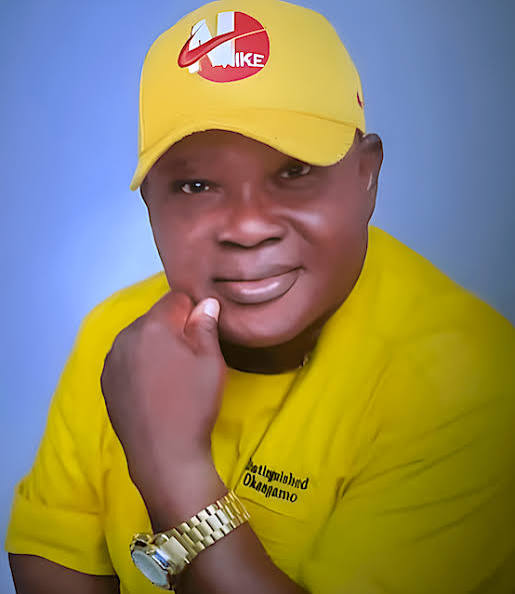
Enugu State politician, Prince Ikechukwu Oloto, also known as Okanga Moo, has reportedly been killed in an attack at his residence in Nsukka Local Government Area of the state.
Oloto was allegedly attacked by unknown assailants at his home in the Odenigbo area of Nsukka on Thursday evening.
According to reports by Daily Post, the attackers invaded the politician’s residence and killed him during the incident. The report further alleged that a knife was used in the attack.
The circumstances surrounding the reported killing remain unclear, while the identities and motive of the attackers had not been established as of the time of filing this report.
The incident was also reported on Facebook by social media influencer Sen. Chijinkem Ugwuanyi, who claimed that Oloto was killed at his Odenigbo residence.
The reported killing comes amid heightened political activities and preparations ahead of Nigeria’s 2027 general elections. However, there is currently no confirmed information linking the attack to Oloto’s political activities.
The Enugu State Police Command had yet to publicly confirm the reported killing or disclose whether an investigation had commenced as of the time of filing this report.
Further details are expected as authorities investigate the circumstances surrounding the incident.

Just in: APC Demands Atiku Quit 2027 Race Over $500,000 Mambilla Payment

Niger Deaths: Survivor Alleges Substance Was Sprayed in Cell Before Detainees Collapsed

Just in: Enugu Politician Ikechukwu Oloto Reportedly Killed in Nsukka Home Attack



-
 Metro16 hours ago
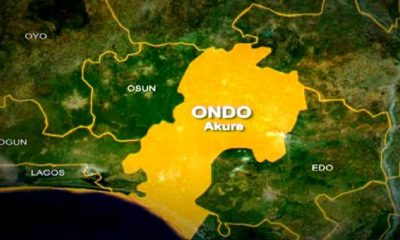
Ondo Poisonous Alcohol: Death Toll Increases To 49, Cases Spread To Neighboring Local Govt
-
 News17 hours ago
Canada Invites Senior Managers To Apply For Permanent Residence
-

 News17 hours ago
Falconets Advance to quarter-finals of FIFA U-20 World Cup
-
 Metro17 hours ago
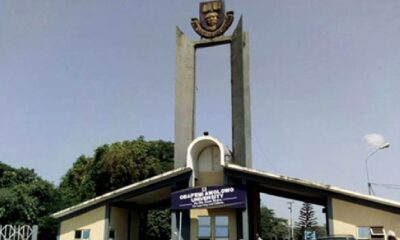
Tragedy Hits OAU: Final-Year Engineering Student Dies In Suspected Suicide At Off-Campus Apartment
-

 Sports16 hours ago
Carabao Cup Round of 16 fixtures confirmed [Full List]
-
 Opinion15 hours ago
Wike and the APC Governors’ Nightmare
Warning: Undefined variable $user_ID in /home/naijuinz/public_html/wp-content/themes/zox-news/comments.php on line 49
You must be logged in to post a comment Login