Connect with us

News

Power Palaver: Nigerian Breweries, varsities get permits to generate electricity

Published

on

ADVERTISEMENT
Zoom Ad
ADVERTISEMENT
Zoom Ad

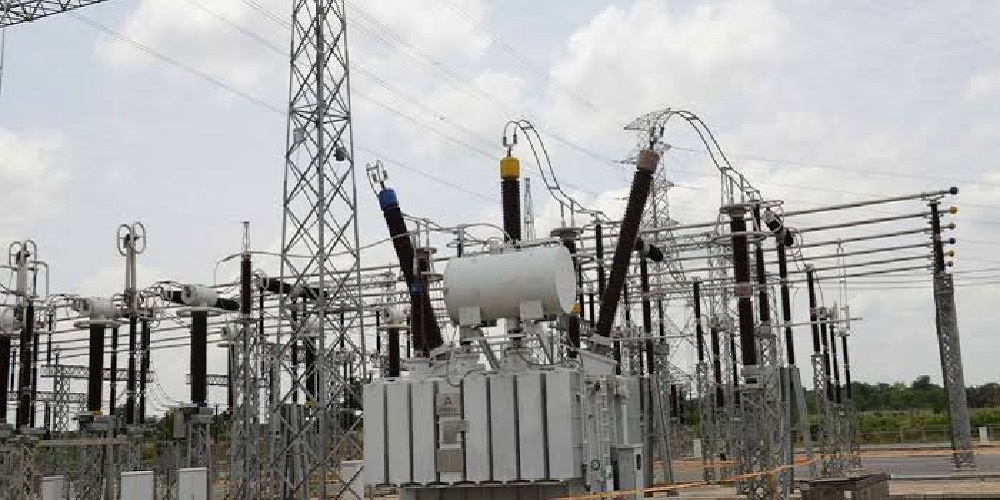
Amid the high cost of electricity and incessant power fluctuations, Nigerian Breweries Plc has got approval to generate captive power in its offices located in Abia, Oyo, and Enugu states.


Cumulatively, Nigerian Breweries is generating up to 41MW in the four stations.

The Nigerian Electricity Regulatory Commission disclosed this in a report, saying the permits were granted in the third quarter of 2024.

Following the signing of the Electricity Act 2023, many companies appear to be leaving the national grid to generate their own power.

Advertisement

According to the NERC, captive power generation permits are issued to entities that intend to own and maintain power plants exclusively for their consumption. This means there is no sale of electricity generated from the plant to any third party.

The commission said it approved the grant of captive power generation permits to 11 applicants with a gross capacity of 63.36 megawatts.

Also, six Nigerian universities and the Nigerian Defence Academy were given permits to generate captive electricity.

The University of Abuja got a permit to generate 3MW; University of Calabar & Teaching Hospital, Cross River State is generating 7MW; University of Agriculture Micheal Okpara, Umetuke, Abia State, 3MW; University of Maiduguri & Teaching Hospital, Borno State, 12MW; Federal University of Agriculture, Abeokuta Main Campus, Ogun State, 3MW; and the Federal University Gashuwa, Yobe State, 1.50MW.

Advertisement

The Nigerian Defence Academy, a military university based in Kaduna got NERC’s nod to generate 2.50MW of electricity.

Last year, the Minister of Power, Chief Adebayo Adelabu, disclosed that the Federal Government had approved electricity subsidies for tertiary education and health institutions to address their concerns following the removal of subsidies in areas categorised under Band A feeders.

After the Federal Government removed subsidies from customers in Band A and upgraded their daily electricity supply to a minimum of 20 hours daily, universities and public hospitals cried out that their bills had skyrocketed.

The College of Medicine of the University of Lagos and the Lagos University Teaching Hospital cried out over what they described as an outrageous electricity bill charged by the Eko Electricity Distribution Company.

Advertisement

The institutions said they were jointly presented with a bill of about N280m for May instead of the less than N100m they used to pay.

The monthly bill given to UNILAG jumped from N180m to N300m.

The Federal University of Technology, Akure had its bill raised from N20m to N60m by the Ibadan DisCo.

At the University of Benin, the tariff was hiked from N80m monthly to N250m.

Advertisement

The Vice-Chancellor of Babcock University, Ogun State, Prof. Ademola Tayo, said in July that the institution paid N300m as electricity tariff in May, lamenting that the high electricity tariff was a great threat to quality education in Nigeria.

Aside from the high cost of energy, many Nigerian institutions are also battling low supply and fluctuations coupled with repeated grid collapses.

With permits to generate captive power, Nigerian Breweries and academic institutions will have a stable power supply to run their daily activities.

Within the period under review, the commission certified seven Meter Service Providers, five-meter installer companies, and two-meter manufacturers.

Advertisement

The commission also issued 22 permits for Meter Asset Providers within the period even as it issued 50 orders to guide the activities of licensees.

News

SEDC Launches Venture Capital Drive to Unlock South-East Business Growth

Published

on

ADVERTISEMENT
Zoom Ad
ADVERTISEMENT
Zoom Ad

By Gloria Ikibah

The South East Development Commission has commenced the grand finale of its inaugural South East Venture Capital Programme, marking a major step towards expanding access to investment funding for emerging businesses across the region.

The event, taking place at the International Conference Centre in Enugu, features 50 finalist ventures selected from more than 1,200 applications submitted by entrepreneurs from across the South-East and other parts of the country.

According to the Commission, the initiative forms part of a broader strategy aimed at creating sustainable investment structures for innovation-driven enterprises and strengthening the region’s economic competitiveness.

Advertisement

The finalists emerged after a rigorous selection process involving video pitch reviews, phased assessments and judging rounds. The businesses were grouped into two categories, the Accelerator Track for ventures with measurable market traction and the Incubation Track for early-stage startups with strong growth potential.

Ahead of the final presentations, participants underwent an intensive investment-readiness bootcamp in Enugu focused on business development, investor engagement and pitch refinement.

Speaking before the grand finale, the Managing Director and Chief Executive Officer of the Commission, Mark Okoye, described the programme as a strategic economic intervention rather than a routine competition.

“What is taking place here is not simply a startup pitch event. It is the deliberate construction of institutional capital infrastructure for the South East. For far too long, exceptional entrepreneurial talent in this region has operated without the kind of structured financial backing required to scale sustainably. The South East Venture Capital Program is our response to that gap, carefully designed to create long-term pathways for capital, innovation, and enterprise growth,” he said.

Advertisement

The 30 successful ventures selected from the finale will be unveiled during the inaugural investment ceremony scheduled for Tuesday, May 26, 2026. The selected businesses are expected to receive structured early-stage investment support under the South East Venture Capital Fund.

The Commission explained that the Fund was established to tackle one of the region’s longstanding economic challenges, limited access to institutional startup financing. It added that the investment framework is expected to attract up to $50 million in blended financing from public institutions, development finance partners, private investors and diaspora contributors over time.

Also speaking, the Executive Director of Finance at the Commission and Chairman of the South East Venture Capital Programme, Stanley Ohajuruka, said the initiative had already demonstrated the depth of entrepreneurial talent within the region.

“What this programme has demonstrated very clearly is the depth of entrepreneurial ambition that exists across the South East. The volume and quality of participation affirm that there is no shortage of high-potential ventures in the region. The challenge has always been creating credible structures through which promising ventures can access early support, build investor confidence, and progress toward scale. This initiative is an important first step in building that bridge between enterprise and capital,” he stated.

Advertisement

The programme aligns with the Federal Government’s economic agenda focused on enterprise development, innovation and job creation under the Renewed Hope initiative.

Continue Reading

News

Warning! Nigeria faces high Ebola importation risk amid DRC, Uganda outbreaks — NCDC

Published

on

ADVERTISEMENT
Zoom Ad
ADVERTISEMENT
Zoom Ad

The Nigeria Centre for Disease Control and Prevention (NCDC) has warned that Nigeria faces a high risk of importing the Ebola virus disease (EVD) due to ongoing outbreaks in the Democratic Republic of Congo (DRC) and Uganda.

Despite the absence of any confirmed case in the country, the agency said heightened regional transmission, increased international travel, and cross-border population movement have raised concerns over the possibility of the disease spreading into Nigeria.

In a statement issued on Sunday, the Director-General of the NCDC, Jide Idris, said the agency’s latest risk assessment classified the threat level as high.

“This assessment estimated the risk of Ebola importation into Nigeria as high due to the ongoing transmission in the DRC and Uganda, international travel and population movement, uncertainty regarding the full magnitude of the outbreak, and the potential for delayed recognition because symptoms may overlap with endemic diseases such as malaria and Lassa fever,” the statement read.

Advertisement

The agency disclosed that several states have already been identified as vulnerable because of their proximity to land borders, major transport corridors, and international entry points.

According to the NCDC, response efforts are currently ongoing in the affected countries, including surveillance, contact tracing, laboratory testing, infection prevention and control measures, as well as public sensitisation campaigns.

“However, we are aware of the ongoing Ebola outbreak in the Democratic Republic of the Congo (DRC) and recent reports of a confirmed imported case in Uganda linked to the outbreak in DRC,” the agency stated.

As part of preparedness measures, the NCDC said Nigeria’s national Emergency Operations Centre (EOC) has been placed on alert mode, while the incident management system has also been activated to strengthen national coordination and outbreak response capacity.

Advertisement

The agency added that Nigeria still retains critical structures and expertise developed from previous responses to Ebola and other viral haemorrhagic diseases.

“It also must be noted that Nigeria maintains important response capacities, including laboratory capability, trained rapid response teams, functional emergency operations centres (EOCs), established Viral haemorrhagic fever preparedness structures, and prior experience in successfully responding to Ebola and other viral haemorrhagic fever outbreaks,” the statement added.
“Epidemiologists and rapid response teams (RRTs) are also on alert for rapid deployment to any affected state, if required.”

The NCDC further said laboratories located in states with international points of entry have been placed on standby, while sample collection and transportation systems are being strengthened to support quick diagnosis of suspected infections.

The agency also said it has intensified public communication campaigns to combat misinformation and false claims surrounding Ebola.
“NCDC is strengthening public awareness and risk communication activities, intensifying social listening and rumour management systems, and working with media organizations, healthcare professionals, community leaders, and digital platforms to amplify credible information and promote responsible public discourse,” the statement said.
“NCDC has also developed and disseminated Ebola Myths and Facts materials to address misinformation and false claims circulating online.”

Advertisement
Continue Reading

News

FG declares May 27-28 Public holiday to markEid-el-Kabir

Published

on

ADVERTISEMENT
Zoom Ad
ADVERTISEMENT
Zoom Ad

The Federal Government has declared Wednesday, May 27 and Thursday, May 28, 2026, as public holidays to mark Eid-el-Kabir.

Minister of Interior Olubunmi Tunji-Ojo announced the holidays on Monday in a statement signed by the ministry’s Permanent Secretary, Magdalene Ajani.

Tunji-Ojo congratulated Muslims in Nigeria and abroad, calling Eid-ul-Adha a festival of sacrifice, obedience to God, and compassion. He urged Nigerians to use the period for prayer and reflection on peace, security, and national prosperity.

“The Federal Government urges all Nigerians to use this period for prayer and sober reflection, asking for divine see guidance as it continues its pursuit of peace, security, and prosperity for every citizen,” the statement read.

Advertisement
Continue Reading

Trending

Copyright © 2024 Naija Blitz News