Connect with us

News

Three Nigerian Women Detained In Iraqi Prison Cry Out For Urgent Help To Return Home

Published

on

ADVERTISEMENT
Zoom Ad
ADVERTISEMENT
Zoom Ad

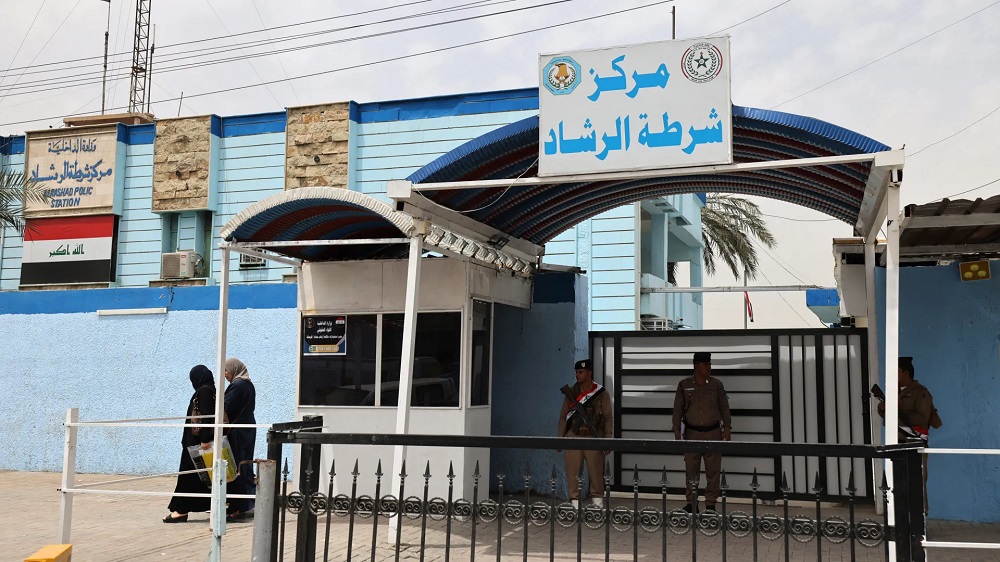
Three Nigerian women, 36-year-old Adetunji Opeyemi Elizabeth, 28-year-old Aladetan Rachael Tinuola and 24-year-old Adebayo Blessing Favour, who are currently in detention in prison in Karada, Baghdad, Iraq, for not having residence permits, have cried out to the Nigerian government for urgent help to return home.


Speaking with SaharaReporters in a phone interview organised by a human rights advocacy organisation in Nigeria, Hopes Haven Foundation, one of the detained women, Adetunji, however said that they were not trafficked to the Middle-East country, as they travelled to the country for a greener pasture but situation turned against their expectations.

Adetunji said, “We got arrested for not having resident permits. We came to Iraq through an agent,” adding that the agent in Nigeria, one Adekunle Oladiola, who “is like a brother to me,” processed her visa in Nigeria through which she travelled to Iraq.

However, she, like several others from Nigeria and other African countries, was picked up at the Iraq airport on her arrival by one agency which she said she doesn’t know the name of because it was written in Arabic language.

Advertisement

“The person (the agent) is a brother to me. One of my cousins has been here (Iraq) for three years, and she has been working and that motivated me. I told my brother (Adekunle) to process my visa, which he did,” Adetunji told SaharaReporters.

She said that before she left Nigeria, “Things were not going well since I graduated far back in 2013 and I couldn’t get a good job. I thought that instead of going up and down in Nigeria doing what does not make sense, I decided to come (to Iraq) and hustle.

“When we got to the airport, they (people from the agency in Iraq) came and picked us. We didn’t even have access to check any name or anything. Once we entered the office, we have entered.

“Any time a customer needs us, they would come to the office and take us. There was no way to check the name of the office or anything.”

Advertisement

Asked the kind of customers she meant, Adetunji said, “People from outside. They come and if they like any of us, they would take us to go and work with them.”

She said October 2024 made her two years in Iraq, meaning she has been in the country for two years and three months, but she was arrested in September 2024 before she completed two years of her stay in the country.

Asked the kind of work she was doing in Iraq before she was arrested, she said, “I told them when I was in Nigeria that I want to work in Salon and they said no problem, that they would get a salon for me.

“When I got here, they got me a salon but after two months, the woman said she didn’t want me again and she took me back to the office.

Advertisement

“After she took me back to the office, I spent about five months in the office doing nothing. They couldn’t get me a job. They said they couldn’t get me a salon job except I would work in the house and I told them I cannot work in the house because I don’t want to work as a house help.

“I can only work in the salon and that is the only job I can do. They asked me to wait. One day they came and said they got a caregiving job for me at one place to be taking care of an old woman, and that there is an African lady there already who I will be doing it with.

“I had no choice but to accept since there is another lady there. When I was working there, there was a problem and my boss threatened to kill me. He told me he would make me go back to my country. I was scared.

“I said I came to hustle for my life and he wants to take my life, I won’t wait for that to happen to me. I said I wanted to go back to the office because he threatened to kill me. I got back to the office.”

Advertisement

She however said that before the caregiving job was given to her, the office where she and others used to stay said they were closing down their business and that everyone should go back to their countries.

“They sent some people back to their countries – Nigeria, Kenya, Sudan because they couldn’t get them job.”

According to her, after her problem with her employer, she went back to the office “But the office said they don’t have a space for me to enter anymore. I had no choice but to go to away because it would have been very disastrous for me to go back to where I was working.

“The man can eliminate me immediately because his house is surrounded with guns. Here they use guns anyhow. So when the office said they don’t have space for me again, I sorted myself out.”

Advertisement

Asked if the name of the office they used to stay and get jobs, she said the name of the office was written in Arabic and that they were never given any opportunity to take a photo or details of the office, adding that the office has completely been shut down.

She said, “We were not allowed to even go outside or do anything. And they have closed it now. They are no longer in operation for more than a year.”

She further explained that she is currently in prison not because her visa expired but because she and two other Nigerian women in the prison with her do not have residence permits.

According to her, “When they arrested us, they took us to the court and asked us if we have residence permits and we said it was not done for us. They said we will be going back to our country and we said we are ready to go back.

Advertisement

“They brought us to the immigration and we still told them we are ready to go back to our country. That once they permit us to book our tickets, we will book our tickets. Now, they are not ready to book our tickets and I personally told them I’m ready to book my ticket but that is the problem because they have not allowed me to book my ticket.”

Asked how they are being treated in the prison, she said they are not being tortured but lamented that they are being fed with unhealthy foods.

“Presently we are three Nigerians here (Adetunji Opeyemi Elizabeth, Aladetan Rachael Tinuola and Adebayo Blessing Favour). Sometimes they bring spoiled foods. Many times.

“Personally, I go days without eating because I can’t cope with their food. At the station we were before, I used to call some of my friends to cook for me. Sometimes they cooked with their money, sometimes I sent them money.

Advertisement

“But at the station we are now, sometimes they bring food that is not properly cooked. Foods that can damage our organs. Yet, we have been telling them we want to go and they have been postponing it. I asked if I should book my ticket but they said I should not book until they ask me to do so.

“I want to go because this place is not a good place for me. I discovered it after I got here. Any issue between a Black and the White here, they don’t even listen to the Black and they start maltreatment immediately.

“As I speak, I’m not feeling well at all and I told them from day one. I have been managing my health. I’m having severe back pain.I need doctor’s assistance. Let me go back to my country.

“They wanted to take me to the hospital here but I refused because they take people to hospital and give them treatment that doesn’t match their medical needs and some of them loss their lives.”

Advertisement

Asked if they had reached out to any Nigerian community in Iraq considering the fact that Nigeria does not have an Embassy in Iraq, he said no.
News

CJN Kekere-Ekun seeks more women in Judiciary’s leadership positions

Published

on

By

ADVERTISEMENT
Zoom Ad
ADVERTISEMENT
Zoom Ad

The Chief Justice of Nigeria (CJN), Justice Kudirat Kekere-Ekun, has called for the involvement of more women in the leadership of the nation’s Judiciary.

Justice Kekere-Ekun argued that the involvement of more women would enrich the administration of justice in many ways, including  broadening jurisprudential perspectives, reducing unconscious biases and
strengthening public confidence in legal institutions.

She spoke in Abuja on Tuesday during the opening session of the  2026 African Regional Conference of the International Association of Women Judges (IAWJ), with the theme, “Promoting Excellence in the Administration
of Justice.”

The CJN spoke about a number of factors that could contribute to the attainment of excellence in the administration of justice in any society.

Advertisement

Justice Kekere-Ekun said: “Excellence in the administration of justice also requires a thoughtful examination of the relationship between gender equality and the legal
system.

“The full and effective participation of women within the Judiciary has far-reaching implications for justice delivery.
Over the years, we have witnessed encouraging progress in the representation of women within Judiciaries across the world.

“Nevertheless, while notable gains have been made, particularly at entry and intermediate levels, significant work remains to be done in ensuring equal representation within leadership positions and at the highest levels of judicial decisionmaking.

“The pursuit of gender equality within the Judiciary is not merely a matter of representation; it is fundamentally a matter of institutional legitimacy.

Advertisement

“A Judiciary that reflects the diversity of the society it serves is better positioned to command public confidence and to appreciate the varied experiences that come before it.

“Diversity strengthens judicial deliberation, enriches legal reasoning, and ultimately enhances the quality of justice delivered.

“Ultimately, gender inclusion must be viewed as an indispensable component of the Judiciary’s commitment to fairness, equality, and the rule of law,” the CJN said.

Justice Kekere-Ekun added that excellence in the administration of justice could also be measured by the quality of judicial reasoning, the integrity of judicial officers, the fairness of judicial processes, and the confidence that citizens repose in the courts as impartial arbiters of disputes.

Advertisement

She noted that excellence is ultimately reflected in the ability of the Judiciary to uphold the Constitution, protect the vulnerable, preserve the rule of law, and dispense justice without fear, favour, affection or ill will.

She also identified judicial education as another factor that could contribute to the attainment of excellence in the administration of justice.

The CJN said: “Beyond enhancing professional competence, judicial education reinforces the rule of law, preserves the integrity of legal institutions, and equips judicial officers with the knowledge and skills necessary to address emerging legal challenges.

“Ultimately, continuous judicial training fosters a more responsive, efficient, and impartial justice system capable of sustaining public confidence in democratic governance.

Advertisement

“Professional development is therefore not a luxury but a necessity. It is an indispensable requirement for any Judiciary committed to excellence,” she said.

The First Lady, Senator Oluremi Tinubu, who featured as a special guest, noted that the Judiciary was central to the preservation of the rule of law in every democratic society.

Senator Tinubu urged participants at the event, who are from different African countries, not to relent in building judicial systems that are transparent, compassionate and firmly anchored on the rule of law.

She said: “At a time when societies across the world are advancing through new legal, technological, and social developments, the pursuit of excellence within our justice system remains both an obligation and a moral imperative.

Advertisement

“The Judiciary remains central to sustaining the rule of law in a democratic society, serving as the institution where justice and fairness are upheld, and the rights of citizens are protected.

“The presence of women on the bench adds value to the judicial system by broadening perspectives and deepening understanding in the dispensation of justice.

“Across Africa, women judges have broken through long-standing barriers and, by their resilience and excellence, paved the way for future generations of women in the legal profession.

“As a former Senator of the Federal Republic of Nigeria, I understand the challenges women face while aspiring for leadership positions. This is why I remain committed to initiatives that promote equitable access to opportunities for women and girls and strengthen our democracy.

Advertisement

“I commend the National Association of Women Judges of Nigeria (NAWJN)  for hosting this regional conference. Your sustained commitment to promoting judicial excellence, gender equity, and access to justice continues to inspire both the legal community and the wider society,” the First Lady said.

The Attorney-General of the Federation (AGF) and Minister of Justice, Lateef Fagbemi (SAN) said  the role of women judges extends beyond the courtroom and pledged country’s commitment to advancing judicial reforms that champion gender inclusivity.

Represented by the Solicitor-General of the Federation, Mrs. Beatrice Jedy-Agba, Fagbemi argued that the country had already broken the glass ceiling through the appointment of women into important positions

The President of the Court of Appeal (PCA), Justice Monica Dongban-Mensem (who is also the  President of the NAWJN), said the Judiciary must continue to uphold the highest standards of integrity, competence, fairness, and accountability in a rapidly evolving global landscape characterised by complex legal challenges, technological advancements and increasing public expectations.

Advertisement

Justice Dongban-Mensem added the country’s female judges, whose association is hosting the conference, are firmly committed to advancing judicial capacity, promoting gender equality within the judiciary, and fostering collaboration among women judges across the continent and beyond.

The Minister of the Federal Capital Territory (FCT), Nyesom Wike, said the President Bola Tinubu-led administration will continue to provide basic infrastructure that would not only enhance the justice sector but also lend dignity to the bench.

Wike, who said the Federal Government has built over 400 befitting residences for judges in Abuja, added that the gesture was not politically motivated but done in furtherance of good governance.

Advertisement
Continue Reading

News

Nigeria Begins Evacuation of Citizens From South Africa Amid Xenophobic Attacks

Published

on

ADVERTISEMENT
Zoom Ad
ADVERTISEMENT
Zoom Ad

By Gloria Ikibah

The Federal Government has commenced the evacuation of Nigerian nationals affected by the recent wave of xenophobic attacks in South Africa, with the first group of returnees expected to arrive in Lagos on Thursday morning.

In a statement issued by the Ministry of Foreign Affairs on Tuesday, the government confirmed that the initial batch of evacuees will continue depart Johannesburg’s Oliver Tambo International Airport on Wednesday night aboard an Air Peace flight.

According to the Ministry, the aircraft is scheduled to land at the Murtala Muhammed International Airport in Lagos at approximately 5:00 a.m. on Thursday.

Advertisement

Announcing the operation, the Ministry stated:
“The Ministry of Foreign Affairs wishes to inform that the first batch of Nigerian nationals that will be evacuated from the Republic of South Africa due to Xenophobic attacks will depart the Oliver Thambo International Airport in Johannesburg on Wednesday night, and the expected time of arrival at the Murtala Mohammed International Airport in Lagos is 5.00am on Thursday morning.”

The Ministry disclosed that the evacuation exercise is being carried out by Air Peace Airlines and fully financed by the Federal Government, ensuring that affected Nigerians are returned home without any financial burden.

“The evacuation operation will be undertaken by Air Peace Airlines. The Federal Government of Nigeria has fully funded the evacuation exercise; consequently, all affected Nigerians will be repatriated at no cost to them”, he stated.

Authorities also assured Nigerians that adequate arrangements have been made to receive and support the returnees upon arrival.
Q
The Ministry explained that relevant government agencies have put measures in place to ensure a smooth reintegration process for those being evacuated.

Advertisement

“The Ministry further wishes to assure the public that the Federal Government, through relevant Ministries, Departments and Agencies, has put in place the necessary reception and support arrangements for the returnees.”
It added that the evacuees would undergo documentation and profiling procedures before receiving assistance and being reunited with their families.

“Upon arrival, the evacuees will undergo documentation and profiling procedures and will receive the appropriate assistance and support before being reunited with their families”, it added.

The evacuation follows growing concerns over attacks targeting foreign nationals in parts of South Africa, prompting  calls for the protection of Nigerians living and working in the country.

The Federal Government has repeatedly stated its commitment to safeguarding the welfare of Nigerians abroad and has continued to engage South African authorities over the safety of its citizens.
renewed

Advertisement
Continue Reading

News

SEDC Defends Record Before Senate, Says Less Than 10% of ₦140bn Budget Released

Published

on

ADVERTISEMENT
Zoom Ad
ADVERTISEMENT
Zoom Ad

…highlight major projects, Programme,Regional Development Plans Amid Funding Challenges

By Gloria Ikibah

The South East Development Commission (SEDC) has reiterated its commitment to transparency, accountability and regional development following an oversight session with the Senate Committee on South East Development Commission at the National Assembly.

The interactive session, chaired by the Committee Chairman, Senator Orji Uzor Kalu, formed part of the National Assembly’s constitutional responsibility to oversee the activities of government agencies.

Advertisement

During the engagement, the Commission presented a detailed report of its activities since the inauguration of its Board in February 2025, covering its financial performance, institutional development, procurement processes, staffing, partnerships and ongoing programmes across the South-East.

The Commission also briefed lawmakers on its engagements with state governments, federal institutions, development finance organisations and other stakeholders involved in driving development across the region.

As part of its review, the Senate Committee requested additional documentation relating to certain aspects of the Commission’s operations and programme implementation.
Responding to the request, the Commission welcomed the move and sought a short extension to collate and submit the required materials.

Following discussions, the Committee adjourned proceedings to a later date pending receipt of the requested submissions, which the Commission is expected to provide on or before 23 June 2026.

Advertisement

SEDC used the opportunity to highlight progress recorded despite what it described as significant funding constraints.
According to the Commission, preparatory work has advanced on several major regional projects since the Board was inaugurated, including strategic infrastructure initiatives such as gas pipeline and railway projects designed to drive economic growth and regional integration.

The Commission also disclosed that it had established partnerships with a number of national and international institutions, including the United Nations Development Programme (UNDP), Afreximbank, Rural Electrification Agency, the Bank of Industry, Presidential Initiative on Compressed Natural Gas and Gas Aggregator Company of Nigeria.

It added that extensive consultations had been held with the governments of the five South-East states, federal ministries, development partners, academic institutions and private sector stakeholders to create a coordinated approach to regional development.

One of the major achievements highlighted during the session was the South East Vision 2050 stakeholder consultations, which brought together government officials, development experts, business leaders, academics and civil society groups to develop a long-term blueprint for the economic transformation of the region.

Advertisement

The Commission also spotlighted the successful rollout of the inaugural South East Venture Capital Programme (SEVCP), which it described as a flagship initiative aimed at promoting innovation, entrepreneurship and investment.

According to SEDC, 25 start-ups from across the South-East received equity investments through a transparent and competitive selection process under the programme.

The Commission said the initiative aligns with President Bola Ahmed Tinubu’s Renewed Hope Agenda and reflects efforts to strengthen entrepreneurship, private sector growth and investor confidence.

“Anchored within the South East Investment Company, the Programme represents a strategic effort to move beyond fragmented interventions towards a more structured and credible venture capital ecosystem for the South East, combining capital deployment with venture development, institutional partnerships, and pathways for attracting institutional capital into early-stage, high-growth enterprises across the region,” it stated.

Advertisement

However, the Commission expressed concern over the pace of funding releases, warning that implementation of critical projects could be affected if appropriated funds are not released promptly.

It disclosed that despite the Federal Government and National Assembly approving ₦140 billion for the Commission in the 2026 budget, less than 10 per cent of the allocation has so far been released.

The statement further read: “Of the N140 billion appropriated to the Commission in the 2026 budget, less than 10% has been released to date across all budget lines.”

SEDC stressed that accelerated releases are essential to enable the execution of key infrastructure, agricultural transformation, youth empowerment, economic development and regional security initiatives captured within its mandate.

Advertisement

“The scale of development required across the South East demands sustained funding, institutional coordination, and continued collaboration among all stakeholders,” the Commission noted.

Reaffirming its commitment to openness and accountability, the Commission pledged full cooperation with the National Assembly and all relevant oversight institutions.

“SEDC remains committed to full cooperation with the National Assembly and all relevant oversight institutions. The Commission views accountability, transparency, and constructive engagement as fundamental to the successful delivery of its mandate and will continue to provide all information required to support effective legislative oversight.

“The Commission remains focused on its responsibility to deliver meaningful and measurable impact for the people of the South East through disciplined planning, transparent governance, strategic partnerships, and the effective deployment of public resources. The Commission appreciates the continued support of the National Assembly and looks forward to sustained collaboration in advancing inclusive growth, shared prosperity, and long-term development across the region.”

Advertisement
Continue Reading

Trending

Copyright © 2024 Naija Blitz News