Connect with us

News

Covenant, ABU Emerge Top In Nigeria as 2025 world university ranking released

Published

on

ADVERTISEMENT
Zoom Ad
ADVERTISEMENT
Zoom Ad

Covenant University (CU) has again been listed as Nigeria’s overall best university in Times Higher Education (THE) 2025 Rankings.


In the 2025 rankings, the Ahmadu Bello University, Zaria came second, displacing the University of Ibadan which occupied the position for the 2024 ccrankings.

The Times Higher Education World Rankings is a comprehensive global ranking of universities published annually.

The 2025 rankings THE said it ranked more than 2,000 institutions from 115 countries and territories.

Advertisement

Globally, Oxford holds on to the top spot for the ninth consecutive year, bolstered by significant improvements in industry engagement and teaching. MIT rises to second place, overtaking Stanford, which drops to sixth.

The ratings were done based on 18 carefully calibrated performance indicators that measure an institution’s performance across five areas: teaching, research environment, research quality, industry, and international outlook.

University of Oxford
Massachusetts Institute of Technology
Harvard University
Princeton University
University of Cambridge
Stanford University
California Institute of Technology
University of California, Berkeley
Imperial College London
Yale University

Top ranked Nigerian universities

Advertisement

1. Covenant University
2. Ahmadu Bello University
3. Landmark University
4. University of Ibadan
5. University of Lagos
6. Bayero University
7. Federal University of Technology Akure
8. Federal University of Technology, Minna
9. University of Benin
10. University of Ilorin

11. University of Nigeria Nsukka
12. Ekiti State University
13. Federal University of Agriculture, Abeokuta
14. Federal University of Technology, Owerri
15. Federal University Oye-Ekiti
16. Ladoke Akintola University of Technology
17. Lagos State University
18. Nnamdi Azikiwe University
19. Obafemi Awolowo University
20. University of Port Harcourt

21. Usmanu Danfodiyo University, Sokoto
22. Abia State University
23. Akwa Ibom State University
24. Alex Ekwueme Federal University, Ndufu-Alike
25. Ambrose Alli University
26. Baze University
27. Bells University of Technology
28. Benson Idahosa University
29. Bowen University
30. Delta State University, Abraka

31. Evangel University, Akaeze
32. Federal University of Petroleum Resources, Effurun
33. Godfrey Okoye University
34. Lagos State University of Education
35. Lagos State University of Science and Technology
36. Nasarawa State University, Keffi
37. Niger Delta University
38. Nile University of Nigeria
39. Osun State University
40. Rivers State University

Advertisement

41. Thomas Adewumi University
42. University of Cross River State
43. University of Maiduguri
44. Veritas University, Abuja

News

Tinubu defends FCTA’s TSA exit, says policy fast-tracked Abuja projects

Published

on

By

ADVERTISEMENT
Zoom Ad
ADVERTISEMENT
Zoom Ad

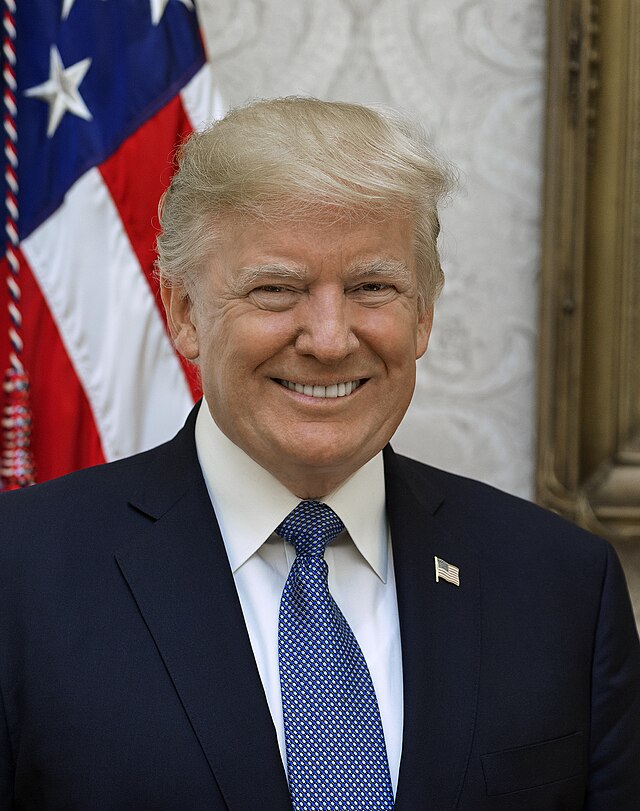
President Bola Tinubu on Monday defended his administration’s decision to remove the Federal Capital Territory Administration from the Treasury Single Account, saying the policy has provided the financial flexibility needed to accelerate infrastructure development across Abuja.

The President also dismissed claims that the executive was interfering in the affairs of the judiciary through the provision of infrastructure, insisting that supporting the justice sector is a constitutional responsibility of government.

Tinubu spoke while inaugurating the new Office Annex of the Body of Benchers and 10 units of four-bedroom staff quarters at the Nigerian Law School in Bwari, Abuja.

He was represented at both events by the Secretary to the Government of the Federation, Dr George Akume.

Advertisement

Speaking on the decision to exempt the FCTA from the TSA, Tinubu said the move had enabled the administration to execute projects more efficiently by eliminating bureaucratic bottlenecks.

He said, “When we pulled the FCT Administration out of the Treasury Single Account, there were sceptics. There were those who questioned the wisdom of that financial liberation.

“But we did it because we knew that local administration must have the liquidity, the speed and the corporate flexibility to interface with financial institutions and deliver critical projects without bureaucratic strangulation. Today, the results are glaring.”

Tinubu said the visible transformation in the Federal Capital Territory had justified the policy, crediting the Minister of the Federal Capital Territory, Nyesom Wike, for delivering on the administration’s development agenda.

Advertisement

“When I appointed Minister Wike, I gave him a clear mandate to transform Abuja into a modern, functional and world-class capital city.

“Over the last three years, the scale of infrastructural development, urban renewal and project delivery in the FCT has been unmatched,” he said.

The President also commended Wike for resolving the long-standing land documentation challenge facing the Nigerian Law School by facilitating the issuance of its Certificate of Occupancy after years without a formal title.

At the inauguration of the Body of Benchers’ Office Annex, Tinubu described the project as a demonstration of his administration’s commitment to strengthening the rule of law, democratic governance and institutional independence.

Advertisement

Responding to criticisms that the executive was encroaching on the independence of the judiciary by constructing facilities for the legal community, the President rejected the claim.

“Let me be absolutely clear: the provision of infrastructure for the legal community and the judiciary is not an interference in the independence of another arm of government.

“Rather, it is a constitutional and collaborative duty of the executive to ensure that those who interpret and uphold our laws are provided with an environment that fosters operational efficiency and excellence,”he said.

At the Nigerian Law School, Tinubu said quality infrastructure remained essential to producing competent legal professionals, stressing that the government was committed to improving learning and living conditions within the institution.

Advertisement

“We cannot build a world-class legal system with dilapidated infrastructure,” he said.

The President described the newly inaugurated staff quarters as the first phase of broader investments at the Law School, disclosing that the Federal Government was funding the construction of a new auditorium, additional student hostels and the digitisation of the institution’s academic and administrative operations.

He added that similar interventions were ongoing across the justice sector, including the construction of the Abuja Division of the Court of Appeal, magistrates’ courts and residential quarters for judges.

According to him, the projects reflected the administration’s determination to strengthen institutions that sustain democracy rather than merely constructing physical infrastructure.

Advertisement

“We promised not just to govern, but to reform. We promised to rebuild the broken structures of our institutional foundations,” Tinubu said.

He maintained that the projects demonstrated the Federal Government’s commitment to translating its promises into measurable results through sustained investment in critical national institutions.

Continue Reading

News

FG spends N358.3bn on electricity subsidy in Q1 2026 – NERC

Published

on

By

ADVERTISEMENT
Zoom Ad
ADVERTISEMENT
Zoom Ad

The Federal Government incurred an electricity tariff subsidy of N358.32 billion in the first quarter of 2026 as it continued to bridge the gap between cost-reflective electricity tariffs and the rates paid by consumers, according to the latest report by the Nigerian Electricity Regulatory Commission (NERC).

In its First Quarter 2026 report released on Monday, NERC said the subsidy represented a 14.44 per cent decline from the N418.79 billion recorded in the fourth quarter of 2025.

The Commission attributed the reduction mainly to lower electricity offtake by distribution companies (DisCos), rather than improvements in tariff recovery.

NERC explained that because electricity tariffs remain below cost-reflective levels, the Federal Government continues to subsidise the difference between the actual cost of power generation and the approved tariffs charged to consumers.

Advertisement

Under the current Distribution Companies’ Remittance Obligation (DRO) framework, the subsidy covers part of the generation costs payable by DisCos to the Nigerian Bulk Electricity Trading Plc (NBET), while the Federal Ministry of Finance settles the outstanding balance.

According to the report, electricity generation companies invoiced a total of N689.72 billion for power supplied to the 11 electricity distribution companies during the quarter. However, only N331.40 billion was billed to the DisCos under the DRO arrangement, leaving the Federal Government to cover the remaining N358.32 billion.

NERC said the subsidy accounted for 51.95 per cent of the total generation invoice during the period, compared with 52.03 per cent in the preceding quarter.

“The key driver of this reduction in the Federal Government’s subsidy obligation is the decrease in energy offtake by the DisCos by 8.56 per cent between the fourth quarter of 2025 and the first quarter of 2026,” the Commission stated.

Advertisement

The report also showed that the 11 DisCos collected N597.56 billion out of the N756.93 billion billed to customers during the quarter, representing a collection efficiency of 78.95 per cent, slightly below the 79.36 per cent recorded in the previous quarter.

Among the distribution companies, Ikeja Electric recorded the highest collection efficiency at 90.0 per cent, followed by Eko DisCo with 89.64 per cent, Benin DisCo with 85.16 per cent, Port Harcourt DisCo with 81.22 per cent, and Abuja DisCo with 80.90 per cent.

Kaduna DisCo recorded the lowest collection efficiency at 45.81 per cent.

NERC noted that while Jos, Kaduna, Kano, Port Harcourt and Benin distribution companies improved their collection efficiencies compared with the previous quarter, the remaining six DisCos recorded declines, with Enugu DisCo posting the sharpest drop.

Advertisement
Continue Reading

News

Tinubu meets Alia, Suswam behind closed doors as Benue crisis deepens

Published

on

By

ADVERTISEMENT
Zoom Ad
ADVERTISEMENT
Zoom Ad

President Bola Tinubu is currently in a private meeting with Benue State Governor Hyacinth Alia and former governor, Senator Gabriel Suswam, at the Presidential Villa in Abuja.

The Monday meeting is taking place at a time of rising political tension in the North-Central state.

No official details have been released, as discussions are ongoing behind closed doors.

The engagement comes amid growing divisions within the Benue chapter of the ruling All Progressives Congress (APC), where Governor Alia and allies of the Secretary to the Government of the Federation (SGF), Senator George Akume, are reportedly struggling for control of the party structure ahead of the 2027 elections.

Advertisement

It also follows recent political shifts in the state, with Senator Suswam’s name surfacing after the APC senatorial primaries as a notable figure ahead of the next election cycle.

While it remains unconfirmed whether the state’s political crisis is on the agenda, the timing of the meeting has fueled speculation that the Presidency may be stepping in to calm tensions, reconcile rival blocs, and encourage unity among key political actors in the state.

As of the time of filing this report, the Presidency had not released any official statement on the outcome of the discussions.

Advertisement
Continue Reading

Trending

Copyright © 2024 Naija Blitz News