
News
Playing games with telecom tariff hikes



By Sonny Aragba-Akpore
In what sounded like a death knell or an epilogue as we know it in literature,Association of Licenced Telecoms Operators of Nigeria (ALTON )chairman, Gbenga Adebayo, warned that “if nothing is done, we might begin to see in the new year grim consequences unfolding, such as Service Shedding; Operators may not be able to provide services in some areas and at some times of the day leaving millions disconnected, there will be significant economic Fallout, because businesses will suffer from lack of connectivity, stalling growth and innovation. There will also be national economic disruption where key sectors like security, commerce, healthcare, and education which rely heavily on telecom infrastructure, will face serious disruptions.”
This is frightening should the threat be carried out with full force.
But can the operators act unilaterally?The answer is no and that is where the game begins.
Only last week the government agreed to demands for tariff hikes in the telecommunication industry. This is expected in the coming weeks, as the government aims to address sustainability challenges in the telecom sector. This implies that prices of calls, data and SMS will go up for the average Nigerian.
However, the hike will fall short of the 100 percent increase requested by service providers, with the government seeking to balance sector growth and protecting Nigerians from excessive financial burdens.Bosun Tijani, the minister of communications, innovation, and digital economy, disclosed this during an industry stakeholder forum in Abuja on Wednesday January 8,2025.
Similarly the NCC introduced the Guidance for the Simplification of Tariffs signed out by NCC Chief on November 25,2024 stating among other things that :”This Guidance is pursuant to the regulatory powers of the Nigerian Communications Commission (Commission) under Sections 3, 108 and 109 of the Nigerian
Communications Act 2003 (Act) as well as relevant subsidiary legislations empowering the Commission in that regard. It is also in furtherance of the mandate of the Commission to regulate communications services and ensure consumer protection in the sector.
The Commission hereby issues this Amended Guidance for the simplification of tariff plans, bundles and promotional activities that include tariffs. This Guidance is designed to enhance transparency, improve consumer understanding and foster fair competition”.
It doesn’t stop there as the guidelines also elaborate on what is possible: “For the USSD platform, the following information should be included when a subscriber requests details of their tariff plan
o Name of Plan
o Validity Period (if applicable) Indicate rate per second (and rate per
minute) on-net/off-net
o Indicate rate per megabyte/kilobyte/gigabyte
o Indicate rate per SMS on-net/off-net
o The number of Add-ons subscribed to
Additional Conditions for Tariff Approvals
Operators must offer standalone data bundles, at fair prices to avoid tying consumers with products they do not need Bonuses on promotions must be stated in actual value.For all tariff plans, both the Main and Bonus accounts must deplete at rates within stipulated price floors and caps.
Bundles with shorter validity periods should be prioritized for depletion.
Options for subscribers who exhaust their bundle allowance within the stipulated
validity period should include:
o Purchase of a top-up bundle
o Purchase of a new bundle
o Switch to the default rate of his/her plan
Any Operator wishing to offer services on third-party platforms (Banking applications, etc.) at discounted rates must obtain and comply with the explicit approval received from the Commission (Hot Deals, personalized/ below-the-
line offers, Cashback etc.)
Existing personalised offers approved by the Commission can remain active for the duration of the validity period of the approval. However, the Commission will continue to monitor the market and make necessary
interventions when required.
Below-the-line/personalised offers, Fixed/Fixed Wireless Services, and Device
Financing Propositions must be presented for the Commission’s prior approval process.
No one has ever challenged the powers of telecommunications regulators,the Nigerian Communications Commission (NCC) to regulate the sector which is believed to be the engine room of the economy.
With over 14% contributions to the Gross Domestic Product’s (GDP) and one the biggest single contributors, telecommunications affects every fabric of the Nigerian life.
Understandably then, if the sector players experience haemorhage as a result of economic headwinds, then the economy is truly troubled.
The operators complain loudly that government may have decided to give out telecom services as palliative to Nigerians against the wishes of of Mobile Network Operators (MNOS) therefore suffocating their business.
They alleged that the regulator is playing games, especially against the backdrop of its inability to hearken to their cries of tariff hike.
But the regulator thinks differently as it says the Nigerian Communications Act (2003) especially sections 108 and 109 empowered it to treat such issues in that regard.
The position and powers of the regulator have never been questioned by any of the industry stakeholders. What the operators are saying, for instance, is that some of the regulations by the Commission are so stale that they have little or no impact on modern business operations that can lead to growth or renewal of the industry.
At the time, NCC lost the voice to proclaim the provisions of the Act in Sections 108 and 109 which have no tolerance for the meddlesomeness of a minister or even the President of the Republic if he wanted to supervene. The operators did not also test the provisions of the Act in the Court.
One operator confessed in trepidation that “it’s already very tough doing business in Nigeria. We don’t want the government to come after use with all its powers.”one analyst summed up the NCC imbroglio at a time a Minister,s unnecessary place in the gallery truncated the 10% tariff hike which ended up as a Greek gift .And later short lived thus creating telecommunications as palliative to subscribers who do not have an idea of what operators are living through.
Even the operators are obviously ignorant of the floor price template as another analysis summed it up:
“Once a Floor and a Ceiling have been put in place, playing wthin the band doesn’t need the approval of the NCC,” another source affirmed.
Perhaps in trying to enjoy this regulatory latitude, the operators in 2022 requested for, and got a 10 percent tariff increase on Voice and Data services from the NCC. The Commission reversed itself after a few days, saying the priority of the Minister Isa Pantami was to protect the citizens and ensure justice for all stakeholders. An NCC source told this writer that the reversal was unilaterally done by the minister who coerced the regulator to receive the fall.”
Telecom industry is under heavy burden according to ALTON Chairman, Adebayo.
Emphasizing that without the tariff review, operators cannot continue to guarantee service availability, the ALTON Chairman said though the challenges being faced by the telcos are not new, they have become more acute and more threatening with this passing year.
He noted that rising operational costs, skyrocketing energy costs, the relentless pressure of inflation, and volatile exchange rates, amongst others, have all placed an unsustainable burden on network operators.
Adebayo added that despite these mounting pressures, tariffs have remained stagnant, leaving operators trapped in a financial quagmire.
According to him, the resources needed to maintain, expand, and modernize telecom networks are no longer available and without intervention, “the future of this sector is at grave risk.”
Keeping the sector afloat
The ALTON Chairman noted that stakeholders have done their best over the years to sustain the sector by upholding the values and importance of telecommunications in society.
“However, let me be clear: our work is far from over. It is not enough to have kept the sector afloat; we must now focus on securing its future. The sustainability challenges we face today are not just a passing storm—they are a clarion call for decisive action to ensure that this industry thrives for generations to come.
Due to the increasing costs, telecom operators in Nigeria have since last year been clamouring for an increase in tariffs.
In a joint statement by the Association of Licensed Telecom Operators of Nigeria (ALTON) and The Association of Telecommunication Companies of Nigeria (ATCON), the operators said the telecom industry is the only industry that has not reviewed its prices despite the rising inflation in the country and other economic realities that warrant increment.
They blamed this on the regulatory restraints that have been preventing them from pricing appropriately.
The Nigerian Communications Commission (NCC) regulates prices in the telecom industry and telecom operators are not allowed to implement any price change without the regulator’s approval.
The regulator has said a cost-based study is being conducted to determine if it would approve price increments for the operators.
But the 2022 and 2024 proposals as announced by Toriola were truncated in August 2024 when ALTON traded off the proposals because of alleged misrepresentation saying the misrepresentation of the good intention of telecom operators to secure a slight adjustment on end-user tariff on voice calls and data services has led to the carriers slowing down on the push.
The operators, acting under the aegis of Association of Licensed Telecom Operators of Nigeria (ALTON), had sought the imprimatur of the Federal Government, via the Nigerian Communications Commission (NCC), to adjust call and data tariff to reflect cost of operation in the country.
The NCC had refused to accede to their demand, a decision insiders said was based on political expediency. In a pushback, the telcos had said their services should not be used as palliative to cushion the impact of ongoing economic hardships in the country.
In May 2022,the mobile network operators (MNOS) proposed 40% increase in tariffs.
The operators under the auspices of Association of Licensed Telecommunication Operators of Nigeria (ALTON), proposed a 40 per cent hike in call and SMS tariffs.
The operators said the decision was necessary considering the rising cost of doing business.
A letter to the NCC said the fee for calls will increase from N6.4 to N8.95 while the price cap for SMS will increase from N4 to N5.61.
The association said the telecommunications industry had been financially challenged by an economic downturn that occurred during the COVID-19 pandemic in 2020 and the ongoing Russia-Ukraine war.
ALTON added that the introduction of the five percent excise duty on telecom service providers has heightened the burden of multiple taxes and levies on the industry.
“ALTON considers it expedient for the telecommunications sector to undergo periodic cost adjustments through the commission’s intervention in order to minimise the impact of the challenging economic issues faced by our members,” it said.
“Upward review of the price determination for voice and data and SMS. Given the state of the economy and the circa 40 per cent increase in the cost of doing business, we wish to request for an interim administrative review of the mobile (voice) termination rate for voice; administrative data floor price, and cost of SMS as reflected in extant instruments.
“For data services, we wish to request that the commission implements the recommendations in the August 2020 KPMG report on the determination of cost-based pricing for wholesale and retail broadband service in Nigeria. Excerpts from the report are attached and marked ‘Annexure 2’ to provide a further illustration,” it added.
When he spoke unanimously on national tv Toriola said “We at MTN believe we need adjustment of about 100 per cent, I think the industry is pretty much aligned because we are all experiencing the same headwinds. Now, the government is very sensitive to squeezing consumers’ wallets with the pressures that have come from inflation and currency devaluation on consumers.
Toriola was very optimistic that the government of Nigeria will accede to the proposed 100% tariff increase eventually all things being equal.
Toriola carried the cross and burden of the embattled sector when he spoke on national television last week Friday.
While bragging that telecommunications had impacted positively on the economy (he was right anyway) he is worried that not much encouragement has come from government.
But that is where he miscalculated.
Although he felt justified that a tariff increase is sine quanon,there are several untapped layers of this question.
“So, I’m not sure they will give us 100 per cent, but I am optimistic they will give us something substantial and maybe progressively over the course of the year we can have smaller adjustments that will help us to get back to where we need to be,” Toriola said.
The MTN CEO said that almost every other sector in the country, including aviation and power have increased tariffs except the telecoms industry.
According to him, all the bodies that look into the statistics of the telecoms industry globally have disclosed that Nigeria has probably the second or third lowest tariffs in the world on data as well as on voice.
If Toriola and his strange bedfellows return to the Floor price determination of 2016 and 2020 and the various studies carried out in that regard ,he will see a number of windows that could address the nightmare and save both the regulator Nigerian Communications Commission (NCC) and the rest of us these agonizing times.
Strangely,non of the operators has hit the maximum threshold of 50 naira per minute because of the competition to outdo each other by playing to the gallery in order to play smart and scurry subscribers attentions.



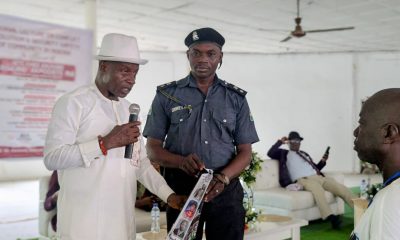


President Bola Tinubu has assented to the 2026 Appropriation Bill, which provides for an aggregate expenditure of ₦68.32 trillion.
He also signed the bill extending the implementation period for the 2025 budget from March 31, 2026, to June 30, 2026.
This was announced on Friday in a statement by his Special Adviser on Information and Strategy, Bayo Onanuga.
The ₦68.32 trillion budget for this year earmarks ₦4.799 trillion for statutory transfers and ₦15.8 trillion for debt service.
It allocates ₦15.4 trillion to recurrent expenditure and ₦32.2 trillion to the Development Fund for Capital Expenditure.
“With capital expenditure accounting for about 50 per cent, the 2026 budget underscores the administration’s continued commitment to economic stability, national security, infrastructure development, and inclusive growth.
The allocations reflect a strategic balance between statutory obligations, debt servicing, recurrent expenditure, and capital investments critical to driving productivity and improving the quality of life for Nigerians,” the statement read in part.
The President also has assented to the Appropriation (Repeal and Enactment) (Amendment) Bill, 2026, which extends the implementation period of the capital component of the 2025 Appropriation Act from March 31, 2026, to June 30, 2026.
The extension, the statement revealed, would ensure the full and effective utilisation of appropriated funds, particularly for critical infrastructure and development projects that are at advanced stages of implementation across the country.
It will enable ministries, departments, and agencies (MDAs) to consolidate ongoing works, enhance project completion rates, and maximise value for public expenditure. With the 2026 Appropriation Act coming into force on April 1, the Federal Government will commence full implementation in line with the Renewed Hope Agenda,” it added.
Additionally, President Tinubu directed MDAs to ensure disciplined, transparent, and efficient utilisation of allocated resources, with a strong emphasis on value for money and timely project delivery.
He commended the National Assembly for its diligence, cooperation, and patriotism in expeditiously considering and passing the budget.
The President reaffirmed the importance of sustained collaboration between the executive and legislative arms of government in advancing national development objectives.
Tinubu also assured Nigerians of his administration’s resolve to deepen fiscal reforms, enhance revenue generation, and prioritise investments that will stimulate economic growth, create jobs, and strengthen social protection mechanisms.
The budget is also expected to be partly financed through external borrowing, following the approval of a foreign loan plan exceeding $21 billion to bridge the fiscal gap.
₦9.85trn Increase
The 2026 budget represents an increase of ₦9.85 trillion over the initial proposal of ₦58.47 trillion that Tinubu submitted to the National Assembly, and ₦13.33 trillion higher than the 2025 budget.
The President had while presenting the 2025 budget proposal before federal lawmakers in December 2025, pegged the capital expenditure at ₦26.08 trillion and the crude oil benchmark at US$64.85 per barrel.
He disclosed that the expected total revenue was ₦34.33 trillion; ₦15.52 trillion for debt servicing.
The proposal was anchored on a crude oil production of 1.84 million barrels per day, and an exchange rate of ₦1,400 to the US Dollar for the 2026 fiscal year.
Amid the growing concerns over insecurity across the country, Tinubu said his administration would “invest in security with clear accountability for outcomes—because security spending must deliver security results”.
“We will take decisive steps to strengthen agricultural markets. Food security is national security.
“The 2026 budget prioritises input financing and mechanisation; irrigation and climate‑resilient agriculture; storage and processing; and agro‑value chains,” he told the National Assembly members.
Nigeria’s budgets in recent years have come under fire with experts critcising the poor implementation and release of funds for the execution of important national projects.
But the Tinubu administration said that the 2026 national budget was well-planned to solidify the gains of its reform agenda.
“Our ‘Budget of Consolidation, Renewed Resilience and Shared Prosperity’ is critical. It is a commitment to double down on what is working, to solidify gains, and to ensure that the shared prosperity we speak of becomes a lived reality for more Nigerians, faster,” Minister of Information and National Orientation, Mohammed Idris, said in a statement.
Popular sports broadcast journalist with Classic FM 97.3, Temisan Okomi, has died.
A journalist with News Central, Olawale Adigun, confirmed his death in a statement shared on X on Friday.
He wrote on X, “The worst way to go into the weekend is hearing about Temisan Okomi’s passing. I’m so gutted and, at the same time, terrified. This man meant so much to me.”
Recall that news of his death has since stirred reactions on X, with colleagues and fans expressing shock and grief.
The late journalist had worked with Lagos Television, HiTV, and other prominent media organizations in Nigeria.
His last post on X was on April 14, 2026, when he wrote, “The Champions League is hard, man.”
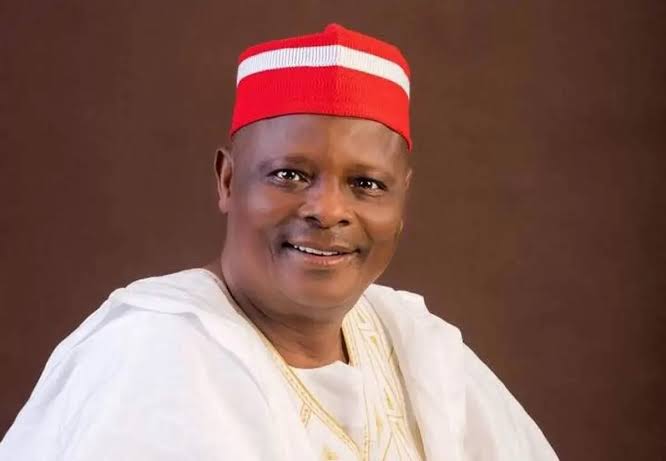
Ibrahim Abdulkarim, a political associate of ex-governor of Anambra State, Peter Obi, has claimed that the former governor of Kano State, Rabiu Kwankwaso, has agreed to deputize the Obi in the 2027 presidential race.
He spoke during an interview on Trust TV, said the Obidients and the Kwankwassiyya Movements are already aligning towards Obi/Kwankwaso ticket.
Asked if Obi and Kwankwaso had struck a deal, Abdulkarim said “yes, I can categorically tell you that they have agreed”.
We all know that. Both the Obidients and the Kwankwassiyya Movements are aware of the agreement”.
Recall that Kwankwaso recently decamped from the New Nigerian Peoples Party, NNPP to the African Democratic Congress, ADC.
His move stirred suspicion that the two political gladiators may have agreed to run for the 2027 presidency on a single ticket.

Just in: Tinubu assents 2026 Appropriation Bill, 2025 Budget Extension

BREAKING: Popular sports analystt, Okomi is dead

BREAKING: JAMB set to release first batch of 2026 UTME results today



-
 Economy17 hours ago
Nigerian stocks rally again as investors gain N1.66tn, market cap crosses N136tn
-

 News17 hours ago
I Am Ready For 2027 – President Tinubu Declares
-
 News11 hours ago
Just in: Ex-Senate president, Saraki, others to face death penalty charges
-

 News17 hours ago
Senator Abdulaziz Yari Accused of Using Billions to Secure Vice Presidential Ambition
-

 News17 hours ago
ADC Reacts To Suspension Of Atiku, Lawal From Party
-

 Foreign17 hours ago
Trump Says Iran Agrees To Hand Over Nuclear Dust Amid Strait of Hormuz Blockade
-
 Metro17 hours ago
Bauchi Govt Sacks Driver Over Road Crash That K!lled Two Journalists
-

 Sports17 hours ago
Former Arsenal, Liverpool Legend Dies In Train Crash
You must be logged in to post a comment Login