Connect with us

News

Tax Reform Bills: Our Goal is to Boost Revenue and Encourage Investments — Deputy Speaker

Published

on

ADVERTISEMENT
Zoom Ad
ADVERTISEMENT
Zoom Ad
…as he says IPOB leader, Kanu subscribing to peace
By Gloria Ikibah
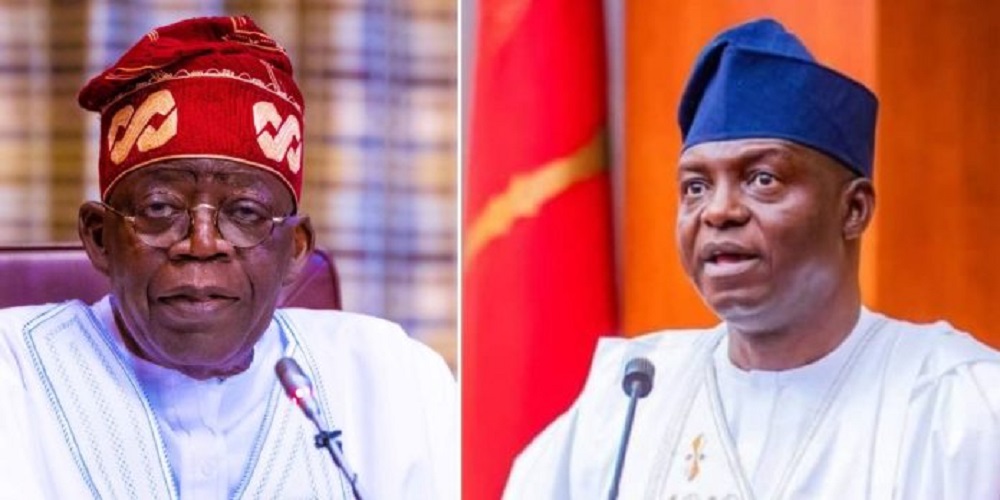
Deputy Speaker of the House of Representatives, Rep. Benjamin Kalu has said that the major aim of the tax reform bills is to raise the revenue profile of the country and support locally and internationally investments.
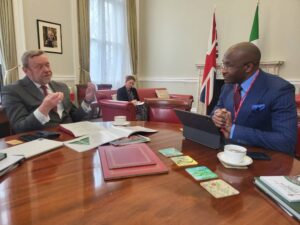
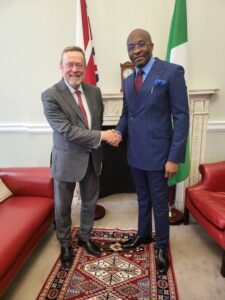
Kalu who shared his perspective during a meeting on UK -Nigeria Strategic Dialogue with the Deputy Leader, House of Lords and United Kingdom Minister of African Affairs, Rt. Hon. Lord Collins of Highbury on Wednesday in London, said the existing tax laws are obsolete and needed to be twerked and streamlined in line with the global best practices and standards.
Naijablitznews.com recalled that the National Assembly is currently considering four tax bills aimed at reforming the fiscal climate for which the federal government is engaging the stakeholders to get their input.
The bills included the Nigeria Revenue Service (Establishment) Bill, Nigeria Tax Bill, Nigeria Tax Administration Bill, and Joint Revenue Board (Establishment) Bill.
Kalu said that Nigeria is the right destination for investments and called on the UK business and the international community as a whole to increase their investment ratio in the country.
He said: “Our tax laws have been
obsolete. So, what we are trying to do now is to streamline them in line with global best practices.
“The aim is to drive revenue and also support some of the investors who have irregular tax laws affecting their revenue, streamlining them to know what they are paying for. Not multiple taxation on the same issues.”
The Deputy Speaker highlighted the legislative agenda of the 10th House, abd said that the Parliament has prioritized national security, law reforms, economic growth and development, social sector reforms and development, inclusion and open parliament, foreign policy, climate change and environmental sustainability for improvement.
Kalu who is also the Chairman of the House Committee on Constitution Review explained that certain key areas of reform has also been outlined in the Constitution review process.
According to him, these included increased women participation in politics with creation of special seats to increase the number of women in Nigeria’s National and State Houses of Assembly; local government reforms to improve the autonomy of local government councils and their ability to deliver on development; state policing to address localized security challenges in Nigeria; improved human rights to strengthen Nigeria’s compliance with international human rights standards by empowering relevant Committees of the House to exercise more oversight of the Police and our security services; supporting reforms to improve the judiciary and enable them to perform better.
Others, he said, are constitutional and electoral reforms through modernization of the electoral framework to ensue free, fair, and transparent elections, constitutional amendments to address systemic inefficiencies and promote good governance and pursuing more engagement with the civil society and stakeholders to build consensus on critical reform issues.
Deputy Speaker who expressed gratitude to the UK government and Foreign, Commonwealth & Development Office (FCDO) for support to the parliament for relevant institutional development programs, training workshops and consultative sessions to better equipp the legislators also requested for expanded support on capacity building, expansion of public engagement mechanisms to strengthen transparency and accountability, security collaboration, human rights advocacy, support for electoral reforms to provide expertise and resources to enhance Nigeria’s electoral processes and ensure credible elections and parliamentary exchanges for Nigerian parliamentarians with the UK parliament.
He also said that the strategic partnership between both countries will ensure continued growth and jobs creation, enhanced national security, migration, justice and home affairs, technology, automobile manufacturing, healthcare, agriculture and food security.
“UK could do more with Nigeria  knowing our history with the UK. Increase the frequency of trade missions to Nigeria like other nations because various opportunities are there beyond oil and gas; Green metals, etc”, he said.
Kalu also explained some of the policies of the President Tinubu administration especially in economic reforms including the removal of fuel subsidy, the intervention in the foreign exchange market, new regional development commissions, tax reforms, student loan, credit scheme and efforts to diversify the Nigerian economy from dependence on fossil fuels, climate change concerns, saying that the parliament is in support.
Beyond law making, the Deputy Speaker also hinted to his hosts his intervention in the security circles especially in the South East to arrest the escalating insecurity situation.
He said: “I adopted the non kinetic model in the south east Nigeria where civil war left marks that birthed conflicts and agitations which the barrels of gun over the years in form of military intervention failed to heal. Peace In South East Project- PISE-P became the new platforms for intervention”.
Responding to Lord Collins who intoned that “I think your approach is a correct one. The focus on peace,  progress,  is key. What you’re advocating is absolutely right”, Kalu said that the intervention was necessary to help to restore peace in the South East.
He said that the Leader of the Indigenous People’s of Biafra (IPOB), Mazi Nnamdi Kanu has also subscribed to peace.
“In order to achieve the peace we are looking for in that south eastern region, we have to bring Nnamdi Kanu out of incarceration because a lot of criminals are leveraging his incarceration as a reason to commit various henious crimes and we cannot continue to allow that.
“While he is in court, what some of us have done has been to look for a political approach towards the resolution of the problem by appealing to Mr. President because you can’t coarse the President, you can’t force him. We want to use that approach to achieve peace in that area and the President that we have is a listening President. He is not averse to it.
“He’s opening up lines for conversations. And we are doing the conversation and he is watching and getting advice on how to go about it. I am actually one of those who approached him for his release. I am from the region and I know what that would do for my region. And I have visited him. And I asked him do you still want to continue with the agitations. That was before the President signed into the South East Development Commission (SEDC) and he, if the President signs it, it means he’s favorably disposed to rebuilding the south east that went through war and that’s the Biafra I am for. The Biafra I am looking for is good roads, hospitals, schools for our people. That’s it. The Biafra I am looking for is not to be President or take a State. It’s for that place to be rebuilt.
“Now that the President has signed it, if he comes out, he will join my peace advocacy which is Peace In South East Project (PISE-P), that he will be a Peace Ambassador, project peace and all those who are using his name to name to commit crime because there will be no excuse again”, he said.
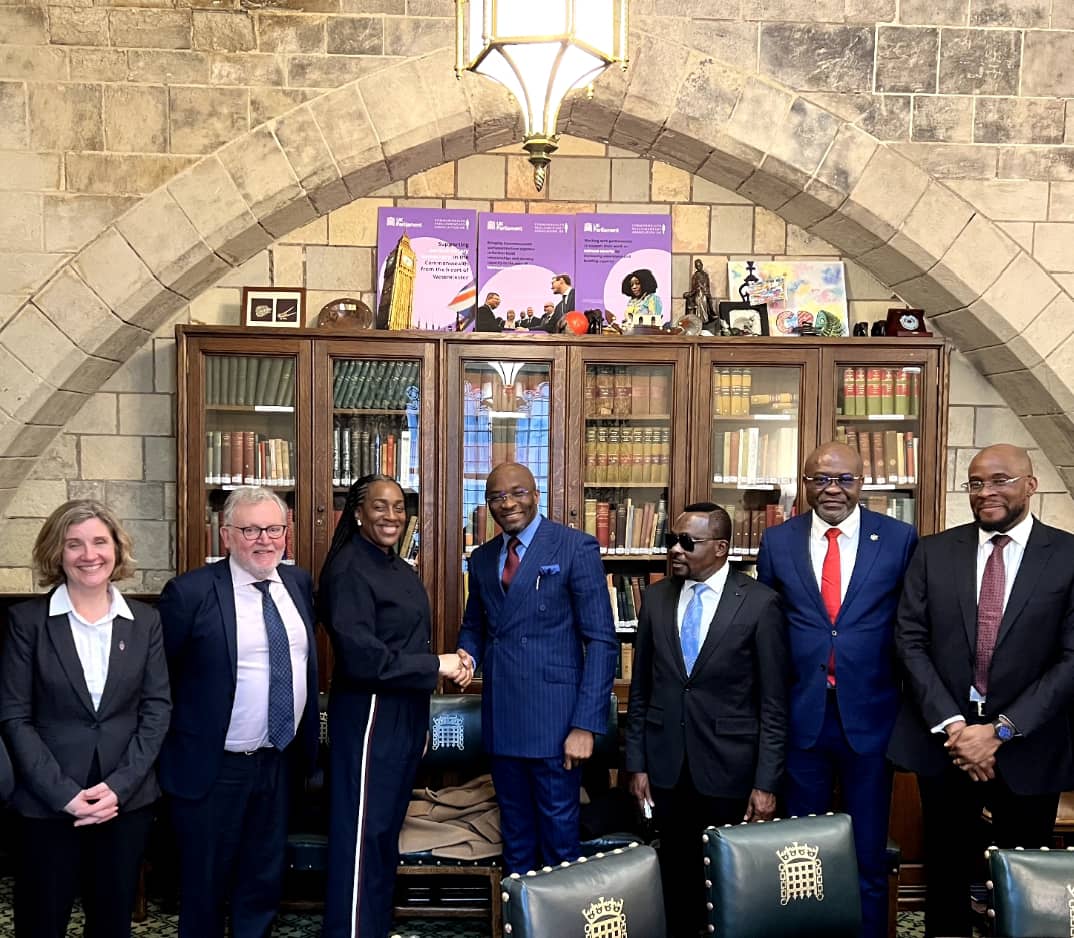
In a similar meeting with the Commonwealth Parliamentary Association (CPA) led by Hon. Kate Osamor at Westminster on the sidelines.of the UK-Nigeria Strategic Dialogue, Kalu also urged  UK Parliament to continue supporting the advancement of democracy in Nigeria.
Welcoming Kalu and his team of lawmakers from Nigeria to Westminster, Osamor who traced her roots to Nigeria assured that the United Kingdom remained a strategic partner to Nigeria on a number of fronts.
Osamor commended President Bola Ahmed Tinubu for the establishment of the South East Development Commission noting that her familiarity with the post-civil war challenges of Nigeria gives her the confidence that the Commission was a great catalyst towards fostering greater integration in the South East region.
The British MP informed the Deputy Speaker of the CPA’s intension to visit Nigeria in March, 2025 for continued dialogue with various stakeholders on significant parliamentary issues.

News

Warning! Nigeria faces high Ebola importation risk amid DRC, Uganda outbreaks — NCDC

Published

on

ADVERTISEMENT
Zoom Ad
ADVERTISEMENT
Zoom Ad

The Nigeria Centre for Disease Control and Prevention (NCDC) has warned that Nigeria faces a high risk of importing the Ebola virus disease (EVD) due to ongoing outbreaks in the Democratic Republic of Congo (DRC) and Uganda.

Despite the absence of any confirmed case in the country, the agency said heightened regional transmission, increased international travel, and cross-border population movement have raised concerns over the possibility of the disease spreading into Nigeria.

In a statement issued on Sunday, the Director-General of the NCDC, Jide Idris, said the agency’s latest risk assessment classified the threat level as high.

“This assessment estimated the risk of Ebola importation into Nigeria as high due to the ongoing transmission in the DRC and Uganda, international travel and population movement, uncertainty regarding the full magnitude of the outbreak, and the potential for delayed recognition because symptoms may overlap with endemic diseases such as malaria and Lassa fever,” the statement read.

Advertisement

The agency disclosed that several states have already been identified as vulnerable because of their proximity to land borders, major transport corridors, and international entry points.

According to the NCDC, response efforts are currently ongoing in the affected countries, including surveillance, contact tracing, laboratory testing, infection prevention and control measures, as well as public sensitisation campaigns.

“However, we are aware of the ongoing Ebola outbreak in the Democratic Republic of the Congo (DRC) and recent reports of a confirmed imported case in Uganda linked to the outbreak in DRC,” the agency stated.

As part of preparedness measures, the NCDC said Nigeria’s national Emergency Operations Centre (EOC) has been placed on alert mode, while the incident management system has also been activated to strengthen national coordination and outbreak response capacity.

Advertisement

The agency added that Nigeria still retains critical structures and expertise developed from previous responses to Ebola and other viral haemorrhagic diseases.

“It also must be noted that Nigeria maintains important response capacities, including laboratory capability, trained rapid response teams, functional emergency operations centres (EOCs), established Viral haemorrhagic fever preparedness structures, and prior experience in successfully responding to Ebola and other viral haemorrhagic fever outbreaks,” the statement added.
“Epidemiologists and rapid response teams (RRTs) are also on alert for rapid deployment to any affected state, if required.”

The NCDC further said laboratories located in states with international points of entry have been placed on standby, while sample collection and transportation systems are being strengthened to support quick diagnosis of suspected infections.

The agency also said it has intensified public communication campaigns to combat misinformation and false claims surrounding Ebola.
“NCDC is strengthening public awareness and risk communication activities, intensifying social listening and rumour management systems, and working with media organizations, healthcare professionals, community leaders, and digital platforms to amplify credible information and promote responsible public discourse,” the statement said.
“NCDC has also developed and disseminated Ebola Myths and Facts materials to address misinformation and false claims circulating online.”

Advertisement
Continue Reading

News

FG declares May 27-28 Public holiday to markEid-el-Kabir

Published

on

ADVERTISEMENT
Zoom Ad
ADVERTISEMENT
Zoom Ad

The Federal Government has declared Wednesday, May 27 and Thursday, May 28, 2026, as public holidays to mark Eid-el-Kabir.

Minister of Interior Olubunmi Tunji-Ojo announced the holidays on Monday in a statement signed by the ministry’s Permanent Secretary, Magdalene Ajani.

Tunji-Ojo congratulated Muslims in Nigeria and abroad, calling Eid-ul-Adha a festival of sacrifice, obedience to God, and compassion. He urged Nigerians to use the period for prayer and reflection on peace, security, and national prosperity.

“The Federal Government urges all Nigerians to use this period for prayer and sober reflection, asking for divine see guidance as it continues its pursuit of peace, security, and prosperity for every citizen,” the statement read.

Advertisement
Continue Reading

News

Iran Warns Deal With US Not Yet Close, Despite Minimal Progress

Published

on

ADVERTISEMENT
Zoom Ad
ADVERTISEMENT
Zoom Ad

World oil prices tumbled on renewed optimism about an agreement, after top US diplomat Marco Rubio suggested a deal could be reached within the day.

Iran warned Monday that, while some progress had been made, it was not yet close to striking a deal with the United States to end the Middle East war, after a weekend of mixed messages from Washington and Tehran.

World oil prices tumbled on renewed optimism about an agreement, after top US diplomat Marco Rubio suggested a deal could be reached within the day — but Iran’s foreign ministry spokesman responded: “No one can make such a claim.”

Meanwhile, Pakistan’s Prime Minister Shehbaz Sharif — whose government is spearheading efforts to mediate a negotiated agreement between the United States and Iran — met China’s President Xi Jinping in Beijing.
US and Iranian forces have observed a ceasefire since April 8 while diplomats push for a negotiated settlement, although Iran has maintained controls on Gulf shipping through the Strait of Hormuz and the US Navy has sought to blockade Iran’s ports.

Advertisement

“We thought we might have some news last night, maybe today,” US Secretary of State Rubio told reporters during a visit to New Delhi, referring to hopes for a deal.

“We have what I think is a pretty solid thing on the table in terms of their ability to open up the straits, get the straits open,” he said.
“We’re either going to have a good agreement or we’re going to have to deal with it another way. We’d prefer to have a good agreement,” he said.
But in Tehran, foreign ministry spokesman Esmaeil Baqaei poured cold water on hopes for a quick final settlement.

‘Certain fees’

“It is correct to say that we have reached a conclusion on a large portion of the issues under discussion,” he told a weekly news briefing.
“But to say that this means the signing of an agreement is imminent — no one can make such a claim.”

Advertisement

Baqaei stressed that Iran would continue to manage maritime traffic through the Strait of Hormuz by charging service fees — arguing that this did not amount to Tehran “seeking to collect tolls”.

“The services that are provided — navigational services in addition to the measures necessary to protect the environment of the Strait of Hormuz, the Persian Gulf and the Sea of Oman — require the collection of certain fees,” he said.

Earlier, President Donald Trump had said that he had told his negotiators “not to rush into a deal, in that time is on our side”, and warned that the US naval blockade would remain in place until a deal was reached.
A post on Trump’s Truth Social read: “If I make a deal with Iran, it will be a good and proper one,” adding that: “It isn’t even fully negotiated yet.”
Israel’s Prime Minister Benjamin Netanyahu said Sunday that he and Trump had agreed that “any final agreement with Iran must eliminate the nuclear threat entirely.”

‘Lasting peace’

Advertisement

Iranian officials have stressed that, despite the long-standing US demand for an end to its uranium enrichment, talks on the issue of Iran’s contested nuclear programme have been deferred until after an initial agreement.
The war, which erupted after the United States and Israel attacked the Islamic republic on February 28 and saw Iran respond with missile and drone attacks across the region, drove energy prices higher.
Crude oil remains expensive by recent standards, but prices have see-sawed and Monday’s mood of relative optimism caused prices to plunge by almost five percent.
The price of North Sea Brent crude and West Texas Intermediate slipped to $99.00 and $92.10 a barrel respectively.
On Saturday, leaders from Saudi Arabia, the United Arab Emirates, Qatar, Egypt, Jordan and Bahrain, as well as representatives from Turkey and Pakistan, joined a call with Trump to discuss the deal.
The focus of international efforts moved to Beijing on Monday, where Pakistan’s Sharif and army chief Asim Munir, who visited Tehran on Saturday, met senior leaders including Xi and Premier Li Qiang.
Speaking to Chinese leaders, Sharif said “the world is passing through a critical moment”, Pakistan’s state-run PTV channel showed.
“Things are moving in the right direction. I would like to thank China’s support to promote peace.”

AFP

Continue Reading

Trending

Copyright © 2024 Naija Blitz News