Connect with us

News

US malaria funding cut may worsen Nigeria’s maternal mortality

Published

on

ADVERTISEMENT
Zoom Ad
ADVERTISEMENT
Zoom Ad

By Francesca Hangeior

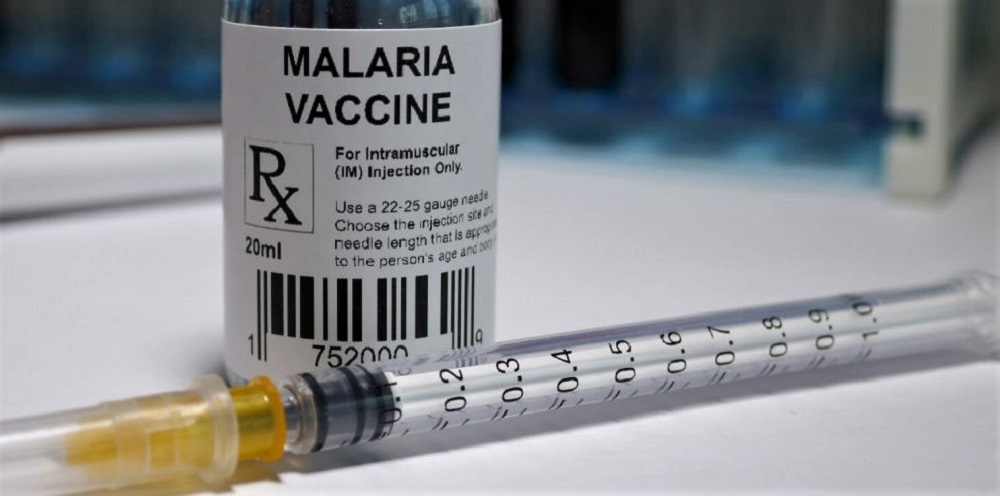
Nigeria’s already alarming maternal and infant mortality rates may worsen following an executive order signed by the United States President, Donald Trump, to halt funding support for malaria treatment in the country and other developing countries.

Trump, who was recently sworn in as the 47th US president, stopped the supply of medical aid related to malaria, and tuberculosis as well as the supplies of drugs and equipment meant for newborns in USAID-supported countries.

The US president halted foreign aid for 90 days with a likelihood of a longer pause in foreign assistance.

Advertisement

This executive order, however, made health experts express concerns that the halt in malaria funding by the Trump administration could lead to an increase in malaria-related deaths among pregnant women and children under the age of five in Nigeria.

They warned that the consequences of the funding cut would be devastating, particularly for vulnerable populations such as pregnant women and children.

Malaria is responsible for about 11 per cent of pregnancy-related deaths annually in Nigeria, according to the National Malaria Elimination Programme, an agency of the Federal Ministry of Health and Social Welfare.

According to the United Nations Children’s Fund, Nigeria accounts for nearly 20 per cent of global maternal deaths, with an estimated 576 maternal deaths per 100,000 live births.

Advertisement

UNICEF added that the country also has one of the highest infant mortality rates, with 69 deaths per 1,000 live births.

Similarly, the World Health Organisation reports that malaria is a leading cause of death in Nigeria, especially among pregnant women and children.

In 2023, WHO revealed that Nigeria accounted for 30.9 per cent of malaria deaths in the African region.

The global health agency noted that the disease is endemic in Nigeria, with the majority of the population at risk of infection.

Advertisement

The halt in malaria funding by the Trump administration experts fear could worsen the already dire situation.

PUNCH Healthwise reports that the funding previously provided through the US Government’s President’s Malaria Initiative, had been instrumental in reducing malaria-related deaths in Nigeria.

A 2024 report by PMI revealed that the U.S. president’s funding has contributed $914 million to Nigeria’s fight against malaria since 2011. This includes $73 million in 2023

In 2020, despite the constraints of COVID-19, PMI helped Nigeria provide 14.7 million treatment doses at the facility and community levels, 8.2 million of which were for pregnant women and children.

Advertisement

PMI distributed 7.1 million insecticide-treated mosquito nets, provided 7.2 million rapid test kits, and trained 9,300 health workers to properly diagnose and treat patients for early detection of the disease.

In 2023, the U.S. Agency for International Development, through PMI funding and programmes, delivered 13.4 million bed nets, 6 million fast-acting medicines, and 11.8 million Malaria Rapid Diagnostic Tests to clinics and communities in Nigeria.

Similarly, in November 2024, USAID committed $2.3 million to procure 4.8 million doses of life-saving malaria tablets from Swiss Pharma (Swipha) in a landmark partnership that will expand access to essential medicines in Nigeria and West Africa.

However, the plan to stop such funding has raised concerns and fear among experts, who argued that such could worsen the country’s already alarming maternal and infant mortality rates.

Advertisement

The experts, who spoke to our correspondent, warned that the funding cut would severely impact Nigeria’s ability to control malaria, particularly in rural areas where access to healthcare was limited.

A malaria researcher, Prof Chijioke Nwauche warned that the halt in malaria funding by the United States government could have a devastating impact on Nigeria’s fight against the disease.

Nwauche noted that the US had been a significant contributor to Nigeria’s malaria control efforts.

He stressed that the cut in funding could lead to a surge in malaria-related deaths, particularly among pregnant women and infants.

Advertisement

“Malaria is a major public health concern in Nigeria, and anything that affects our ability to control it will have a negative impact on our maternal and infant mortality rates,” Nwauche said.

The don noted that the Nigerian government needed to take urgent action to address the funding gap, by increasing domestic funding for malaria control programmes and exploring alternative sources of funding.

Nwauche also emphasised the need for the government to address the brain drain in the health sector, which has seen many medical professionals leave the country in search of better opportunities.

“We need to find a way to retain our health personnel, by providing them with better working conditions, training, and equipment,” he said.

Advertisement

He also called on the media to play a critical role in holding the government accountable for its actions and to ensure that the voices of Nigerians are heard.

“The media has a critical role to play in speaking truth to power, and in ensuring that the government is held accountable for its actions,” Nwauche said.

On his part, a consultant gynaecologist at the University of Lagos Teaching Hospital, Dr. Adeyemi Otunuya, stressed that without adequate funding, the country would see a surge in malaria-related deaths.

Otunuya explained that the funding cut would also impact the availability of insecticide-treated bed nets, which are a crucial tool in preventing malaria.

Advertisement

According to the maternal health expert, malaria is a major threat to women’s health in Nigeria, particularly during pregnancy.

The gynaecologist explained that malaria can affect women in several ways, including increasing the risk of miscarriage, stillbirth, and preterm labor.

“Malaria can also lead to anemia, which can increase the risk of maternal mortality,” he added.

The expert warned that the halt in malaria funding could worsen maternal mortality in Nigeria, particularly in rural areas where access to healthcare is limited.

Advertisement

“The funding cut will reduce the availability of insecticide-treated bed nets, which are a crucial tool in preventing malaria,” Otunuya noted.

The physician also stressed that the funding cut will impact the availability of antimalarial drugs, which are essential for treating malaria in pregnant women.

He urged the government to take immediate action to address the funding gap and ensure that pregnant women have access to the treatment they need.
Advertisement

News

Just in: Tinubu assents 2026 Appropriation Bill, 2025 Budget Extension

Published

on

ADVERTISEMENT
Zoom Ad
ADVERTISEMENT
Zoom Ad

President Bola Tinubu has assented to the 2026 Appropriation Bill, which provides for an aggregate expenditure of ₦68.32 trillion.

He also signed the bill extending the implementation period for the 2025 budget from March 31, 2026, to June 30, 2026.

This was announced on Friday in a statement by his Special Adviser on Information and Strategy, Bayo Onanuga.

The ₦68.32 trillion budget for this year earmarks ₦4.799 trillion for statutory transfers and ₦15.8 trillion for debt service.

Advertisement

It allocates ₦15.4 trillion to recurrent expenditure and ₦32.2 trillion to the Development Fund for Capital Expenditure.

“With capital expenditure accounting for about 50 per cent, the 2026 budget underscores the administration’s continued commitment to economic stability, national security, infrastructure development, and inclusive growth.

The allocations reflect a strategic balance between statutory obligations, debt servicing, recurrent expenditure, and capital investments critical to driving productivity and improving the quality of life for Nigerians,” the statement read in part.

The President also has assented to the Appropriation (Repeal and Enactment) (Amendment) Bill, 2026, which extends the implementation period of the capital component of the 2025 Appropriation Act from March 31, 2026, to June 30, 2026.

Advertisement

The extension, the statement revealed, would ensure the full and effective utilisation of appropriated funds, particularly for critical infrastructure and development projects that are at advanced stages of implementation across the country.

It will enable ministries, departments, and agencies (MDAs) to consolidate ongoing works, enhance project completion rates, and maximise value for public expenditure. With the 2026 Appropriation Act coming into force on April 1, the Federal Government will commence full implementation in line with the Renewed Hope Agenda,” it added.

Additionally, President Tinubu directed MDAs to ensure disciplined, transparent, and efficient utilisation of allocated resources, with a strong emphasis on value for money and timely project delivery.

He commended the National Assembly for its diligence, cooperation, and patriotism in expeditiously considering and passing the budget.

Advertisement

The President reaffirmed the importance of sustained collaboration between the executive and legislative arms of government in advancing national development objectives.

Tinubu also assured Nigerians of his administration’s resolve to deepen fiscal reforms, enhance revenue generation, and prioritise investments that will stimulate economic growth, create jobs, and strengthen social protection mechanisms.

The budget is also expected to be partly financed through external borrowing, following the approval of a foreign loan plan exceeding $21 billion to bridge the fiscal gap.

₦9.85trn Increase

Advertisement

The 2026 budget represents an increase of ₦9.85 trillion over the initial proposal of ₦58.47 trillion that Tinubu submitted to the National Assembly, and ₦13.33 trillion higher than the 2025 budget.

The President had while presenting the 2025 budget proposal before federal lawmakers in December 2025, pegged the capital expenditure at ₦26.08 trillion and the crude oil benchmark at US$64.85 per barrel.

He disclosed that the expected total revenue was ₦34.33 trillion; ₦15.52 trillion for debt servicing.

The proposal was anchored on a crude oil production of 1.84 million barrels per day, and an exchange rate of ₦1,400 to the US Dollar for the 2026 fiscal year.

Advertisement

Amid the growing concerns over insecurity across the country, Tinubu said his administration would “invest in security with clear accountability for outcomes—because security spending must deliver security results”.

“We will take decisive steps to strengthen agricultural markets. Food security is national security.

“The 2026 budget prioritises input financing and mechanisation; irrigation and climate‑resilient agriculture; storage and processing; and agro‑value chains,” he told the National Assembly members.

Nigeria’s budgets in recent years have come under fire with experts critcising the poor implementation and release of funds for the execution of important national projects.

Advertisement

But the Tinubu administration said that the 2026 national budget was well-planned to solidify the gains of its reform agenda.

“Our ‘Budget of Consolidation, Renewed Resilience and Shared Prosperity’ is critical. It is a commitment to double down on what is working, to solidify gains, and to ensure that the shared prosperity we speak of becomes a lived reality for more Nigerians, faster,” Minister of Information and National Orientation, Mohammed Idris, said in a statement.

Continue Reading

News

BREAKING: Popular sports analystt, Okomi is dead

Published

on

ADVERTISEMENT
Zoom Ad
ADVERTISEMENT
Zoom Ad

Popular sports broadcast journalist with Classic FM 97.3, Temisan Okomi, has died.

A journalist with News Central, Olawale Adigun, confirmed his death in a statement shared on X on Friday.

He wrote on X, “The worst way to go into the weekend is hearing about Temisan Okomi’s passing. I’m so gutted and, at the same time, terrified. This man meant so much to me.”

Recall that news of his death has since stirred reactions on X, with colleagues and fans expressing shock and grief.

Advertisement

The late journalist had worked with Lagos Television, HiTV, and other prominent media organizations in Nigeria.

His last post on X was on April 14, 2026, when he wrote, “The Champions League is hard, man.”

Continue Reading

News

Kwankwaso has decided to be Obi’s running mate-Ibrahim Abdulkarim reveals

Published

on

ADVERTISEMENT
Zoom Ad
ADVERTISEMENT
Zoom Ad

Ibrahim Abdulkarim, a political associate of ex-governor of Anambra State, Peter Obi, has claimed that the former governor of Kano State, Rabiu Kwankwaso, has agreed to deputize the Obi in the 2027 presidential race.

He spoke during an interview on Trust TV, said the Obidients and the Kwankwassiyya Movements are already aligning towards Obi/Kwankwaso ticket.

Asked if Obi and Kwankwaso had struck a deal, Abdulkarim said “yes, I can categorically tell you that they have agreed”.

We all know that. Both the Obidients and the Kwankwassiyya Movements are aware of the agreement”.

Advertisement

Recall that Kwankwaso recently decamped from the New Nigerian Peoples Party, NNPP to the African Democratic Congress, ADC.

His move stirred suspicion that the two political gladiators may have agreed to run for the 2027 presidency on a single ticket.

Continue Reading

Trending

Copyright © 2024 Naija Blitz News