Economy
Nigeria remains Africa’s largest economy, says World Bank
The World Bank’s Country Director for Nigeria, Dr. Ndiame Diop, has confirmed that Nigeria remains the largest economy in Africa by Gross Domestic Product (GDP) despite the challenges faced by its private sector.

Speaking at the Country Private Sector Diagnostic (CPSD) and Stakeholder Engagement in Abuja yesterday, Dr. Diop said while Nigeria receives far less Foreign Direct Investment (FDI) than its potential warrants—especially in comparison to countries like Indonesia and South Africa—it continues to hold its position as Africa’s biggest economy.
He stated that the CPSD report, set to be released in the coming weeks, will reveal the impact of private sector constraints on economic growth.

He noted that if targeted actions were taken to remove these obstacles, Nigeria’s economic potential would be significantly enhanced.
The current macroeconomic reforms, he explained, have created a favorable environment for such changes. He cited the country’s recent economic stabilization measures, particularly exchange rate market adjustments and improved access to foreign exchange, as critical steps that have already enhanced investment conditions.
Dr. Diop outlined four key sectors where strategic reforms could unlock massive investment and job creation. In the Information Communication Technology (ICT) sector, investment opportunities worth up to $4 billion could be realized, potentially creating more than 200,000 jobs.
In agribusiness, reforms could unlock $6 billion in investment and generate over 275,000 jobs.
The solar photovoltaic (PV) industry holds the potential for $8.5 billion in investment and more than 129,000 jobs, while the pharmaceutical sector could attract $1.6 billion and create more than 30,000 to 40,000 jobs.
For the ICT sector, he identified the high, unpredictable, and inconsistent right-of-way fees, levies, and informal charges—comprising 30 to 70 per cent of broadband rollout costs—as a major barrier. Addressing these regulatory inconsistencies, he argued, would be a game-changer for broadband expansion. He acknowledged that the National Economic Council has recognized this issue and that progress is being made through a World Bank-supported initiative.
Additionally, he pointed to challenges such as vandalism, limited financing for rural broadband expansion, and the need for competitive access to wholesale fiber. He noted that efforts are underway in collaboration with government agencies to resolve these issues, and the World Bank, the International Finance Corporation (IFC), and private investors are prepared to support broadband infrastructure development.
On solar power, Dr. Diop described Nigeria’s energy sector as difficult but noted that renewable energy access, particularly solar PV, has been a bright spot. He explained that private sector investment in renewable energy has historically been hindered by high costs and unviable tariffs. However, blended finance mechanisms supported by the World Bank and IFC have helped bridge this gap, making off-grid solutions more viable.
He pointed to the DES project, which aims to connect 17.5 million households and businesses to solar power, as evidence of growing private sector interest. While the solar industry is expanding, he stressed that reforms to improve Nigeria’s grid electricity supply remain crucial for industrialization.
The Regional Director for Central Africa and Anglophone West Africa at the IFC, Dr. Dahlia Khalifa, stressed the importance of consistency in regulatory policies, particularly in customs duties and revenue agency fees. She noted that unpredictability discourages private sector investment, as businesses rely on stable regulatory environments for strategic planning.
Khalifa also pointed out that while direct job creation in the pharmaceutical sector may be lower compared to other industries, improved healthcare services would yield far-reaching economic benefits.
Minister of Finance and Coordinating Minister of the Economy, Mr. Wale Edun, commended the IFC for its support across critical sectors, including agriculture, infrastructure, and pharmaceuticals. He highlighted key financing partnerships such as the $1.2 billion facility for Indorama’s fertilizer expansion in Eleme, investments in cocoa processing, and a $70 million SME financing initiative with First City Monument Bank.
He also acknowledged IFC’s latest commitment of $70 million to five Nigerian companies under the Distributive Access to Renewable Energy programme, part of the federal government’s broader Mission 300 initiative.
Edun said President Bola Tinubu’s administration has undertaken bold and necessary reforms that have reshaped Nigeria’s economic landscape. He noted that the removal of wasteful subsidies has strengthened government finances, while improved security has boosted oil production and revenue.
He highlighted that private sector confidence is growing, with new investments beginning to materialize in response to the government’s policy changes.
The minister restated the administration’s commitment to addressing the cost-of-living crisis, particularly through increased food production and affordability measures. He acknowledged that reforms such as the removal of fuel subsidies and the adoption of market-based pricing mechanisms have led to short-term inflationary pressures.
However, he assured that targeted interventions, including direct cash transfers to vulnerable citizens with World Bank support, will help mitigate the impact.
He insisted that the government remains determined to leverage technology to ensure swift, biometric-enabled assistance to those in need.
Economy
Naira records first fall against US dollar, cancels three-day gain
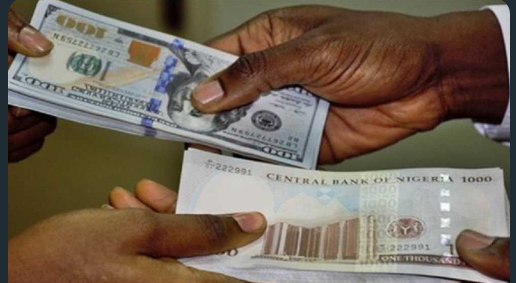
The naira on Thursday recorded its first depreciation against the United States dollar at the official foreign exchange market this week.
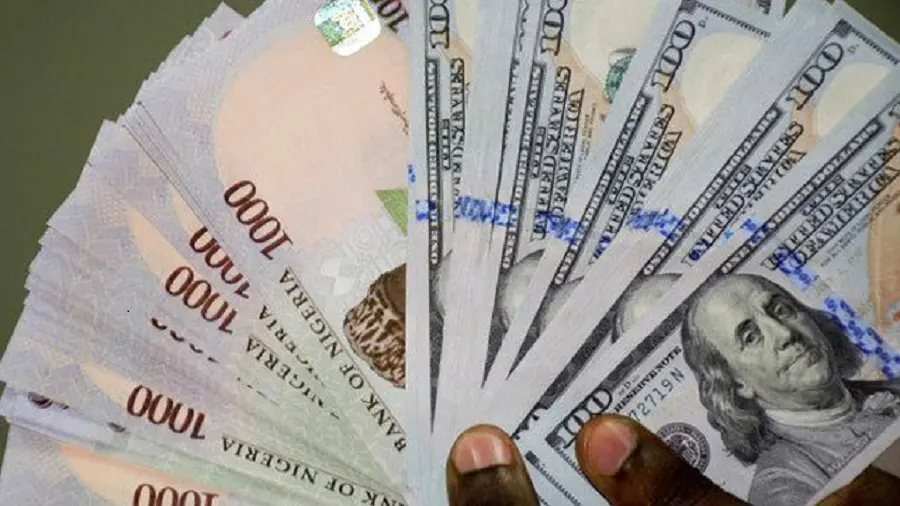
The Central Bank of Nigeria’s data showed that the Naira weakened on Thursday to N1,353.66 per dollar, down from N1,348.95.
This means that on a day-to-day basis the N4.71 dropped against the dollar.
The decline almost erased Naira’s N5.51 per dollar gain at the official exchange in the last three days.
However, at the black market, the Naira appreciated further by N5 to N1440 on Thursday per dollar, up from N1445 the previous day, owing to the apex bank’s latest intervention to Bureau De Change operators.
The development comes as Nigeria’s foreign debt grew further to $47.53 as of February 10, 2026, according to the apex bank data.
Economy
See Black Market Dollar To Naira Exchange Rate Today 13th February 2026
The Black Market Dollar-to-Naira Exchange Rate for 13th February 2026 Can Be Accessed Below.
NOTE: The exchange rate changes hourly. It depends on the volume of dollars available and the Demand. This means…you can buy or sell 1 dollar at a certain rate, and the price can change (high or low) within hours.
The official naira black market exchange rate in Nigeria today, including the Black Market rates, Bureau De Change (BDC), and CBN rates.
Please note that the exchange rate is subject to hourly fluctuations influenced by the supply and demand of dollars in the market.
What’s the dollar to naira black market today, 13th February 2026?
The exchange rate for a dollar to naira at Lagos Parallel Market (Black Market) players sell a dollar for ₦1440 and buy at ₦1420 on Friday 13th February, 2026, according to sources at Bureau De Change (BDC).
Please note that the Central Bank of Nigeria (CBN) does not recognize the parallel market (black market), as it has directed individuals who want to engage in Forex to approach their respective banks.
Dollar to Naira Black Market Rate Today
Dollar to Naira (USD to NGN) Black Market Exchange Rate Today
Selling Rate ₦1440
Buying Rate ₦1420
Dollar to Naira CBN Rate Today
Dollar to Naira (USD to NGN) CBN Rate Today
Highest Rate ₦1357
Lowest Rate ₦1350
Disclaimer:NEWSRAIN NIGERIA does not set or determine forex rates. The official NAFEX rates are obtained from the FMDQOTC website. Parallel market rates (black market rates) are obtained from various sources, including online media outlets. The rates you buy or sell forex may be different from what is captured in this article.
Economy
Central Bank Sends Strong Warning Against Naira Abuse
The Central Bank of Nigeria (CBN) has issued a strong warning against the mutilation and abuse of the Naira, urging Nigerians to respect the national currency and desist from practices such as spraying, counterfeiting, defacing, and hawking banknotes.
The call was made on Thursday during the CBN Special Day at the 47th Kaduna International Trade Fair, where Mrs Sidi Hakama, Deputy Director of Corporate Communications and Investor Relations, reaffirmed the bank’s commitment to ensuring a steady supply of clean currency notes in appropriate denominations.
She was represented at the event by Abbas Ahmed, a Deputy Director at the CBN Headquarters, Abuja.
Hakama said, “The Naira is a crucial symbol of our national identity. Please respect it keep it clean. Do not spray, counterfeit, mutilate, or hawk the Naira.”
She assured the stakeholders of the apex bank’s dedication to maintaining economic stability and strengthening structural reforms.
The event, organised by the Kaduna Chamber of Commerce, Industry, Mines and Agriculture (KADCCIMA), was themed ‘From Reforms to Results: Economic Transformation through Sustained Local Content Development’.
The theme, Hakama said, aligned with the CBN’s domestic reform agenda focused on sustainable growth, financial inclusion, and resilience against external shocks.
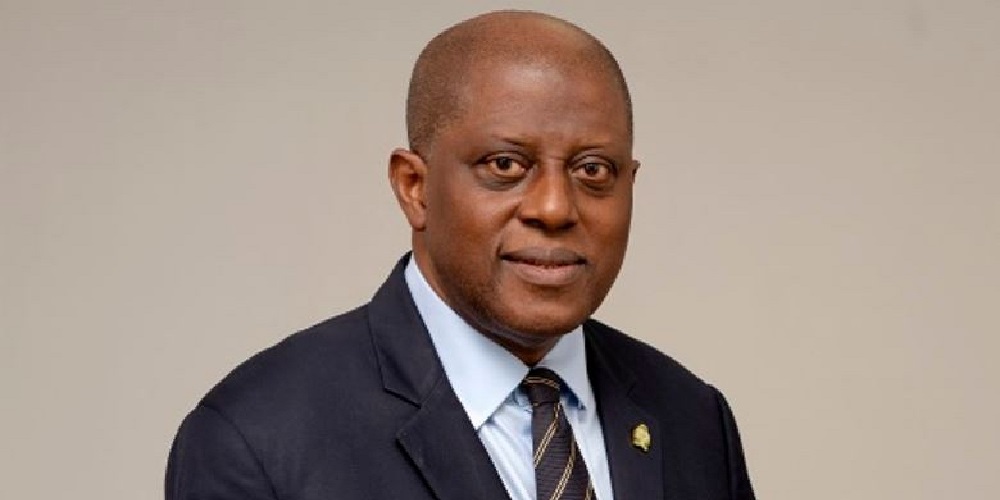
According to her, under the leadership of CBN Governor, Mr Olayemi Cardoso, the bank had introduced wide-ranging reforms aimed at repositioning Nigeria’s economy.
She said, “These include the unification of the foreign exchange rate, ongoing bank recapitalisation to support the vision of a $1 trillion economy by 2030.
“There was also the introduction of the Non Resident Bank Verification Number (BVN) to connect Nigerians in the diaspora, and the B Match system for foreign exchange trading.”
Other key initiatives highlighted included the Nigerian Payments System Vision 2028, a 75 per cent Cash Reserve Ratio on non Treasury Single Account public-sector deposits to enhance liquidity management, and regulatory clarity in emerging areas such as stablecoins and virtual assets.
According to the CBN, these reforms have improved transparency, strengthened monetary policy transmission, and reinforced macroeconomic stability, particularly following the discontinuation of deficit monetisation.
Hakama disclosed that Nigeria now ranks among Africa’s most advanced digital payments markets, with leading fintech applications recording between 10 and 50 million downloads and more than 12 million contactless cards currently in circulation.
-
News23 hours agoSecurity agents attempted to arrest El-Rufai at Abuja airport-Aide
-
News22 hours agoAtiku, Makinde Minna visit: Ask your aide to yank off his statement within 48hrs or “I will spill more beans”-Fayose warns Atiku
-
News15 hours agoShettima Arrives Ethiopia Ahead Of AU Summit
-
News7 hours agoReps Move to Bar NiMet, FHA, SON, Others from 2026 Budget Over Audit Failures
-
Economy10 hours agoSee Black Market Dollar To Naira Exchange Rate Today 13th February 2026
-
News15 hours agoElectricity supply gap: FG delivers 1 MW of clean energy to underserved Nigerians in Abuja
-
News10 hours agoChinese Illegal Miners Settle Fulani Militias With Money– US
-
Sports15 hours agoAdemola Lookman Scores As Atletico Madrid Humiliate Barcelona In Copa Del Rey Semi-Final

You must be logged in to post a comment Login