
News
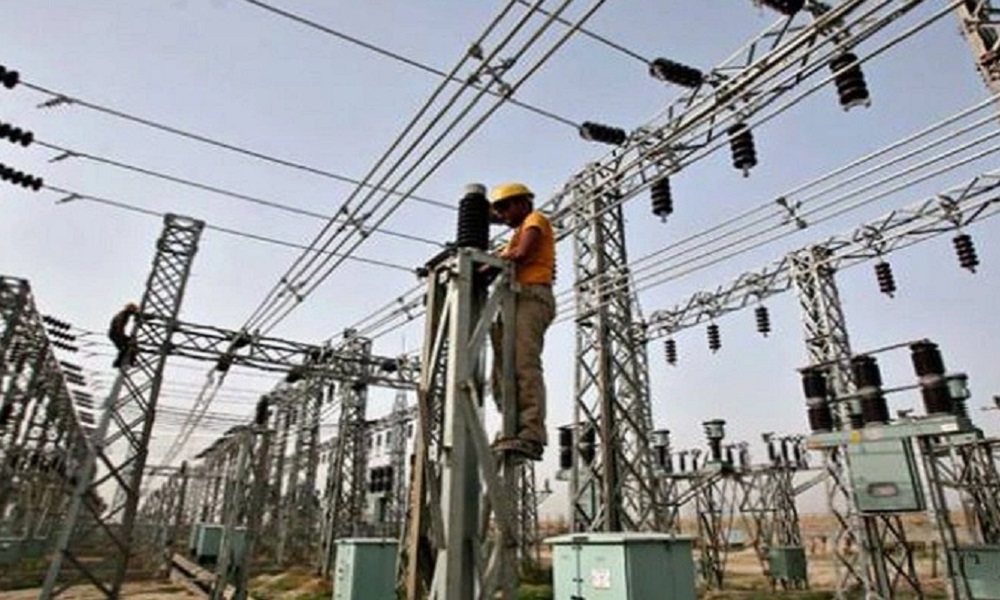
Inadequate power supplies for telecom services and others



By Sonny Aragba-Akpore.
By Wednesday December 11,2024 the National electricity grid had recorded 12 collapses within the year thus accounting for an average of one per month.
Apart from millions of customers whose homes and offices were cut off electricity supplies, many corporate organizations including telecommunications network providers, manufacturers among others had to cope with the situation making do with their more reliable alternatives which had become more regular than the national grid.
With a paltry 5,000 megawatts of electricity supply by the generating companies (gencos), for the nearly 250 million population, millions of people including corporate bodies have resigned to fate.
Resort to alternative sources of power supplies including renewable energy, solar and heavy duty generators have become a way of life.
Only recently, government officials announced that a tariff hike of upto 65% was underway,a situation the Manufacturing Association of Nigeria (MAN) frowns at saying this will further compound costs of doing business in general.
Director-General of MAN, Mr Segun Ajayi-Kadir, expressed serious concern in a statement issued in Lagos saying the frequent increases do not meet quality of service.
Ajayi-Kadir stressed that electricity is a crucial input in manufacturing, significantly affecting production costs and product prices.
He emphasised that no nation could achieve substantial industrial development without ensuring energy security.
According to him, any increase in tariff will harm the competitiveness of Nigerian products and businesses.
He warned that the such would worsen production costs, intensify inflationary pressure, and further reduce consumers’ disposable income.
Ajayi-Kadir added that it would increase manufacturers’ unsold inventory, erode profit margins, raise unemployment, and force more private businesses to shut down.
“It was due to the critical role of energy security in Nigeria’s industrial aspirations that the power sector was privatised in 2013. Unfortunately, this privatisation has not delivered the expected results.
But for telecommunications operators,it’s a tale of woes as power supplies account for about 40% of the operating expenditure (OPEX) as critical as equipment because even if equipment is available and no electricity supply to power them,quality of service suffers especially when there is down time.
Nigeria’s unstable electricity grid significantly contributes to telcos’ need for backup diesel generators, further increasing their energy expenses.
Recent reports indicate that Nigerian telecommunication companies (telcos) spend a significant amount on electricity, with estimates suggesting their monthly energy bill can reach up to N56 billion primarily due to reliance on diesel generators to power their network towers, as they often face unreliable grid access; many telcos are now actively exploring renewable energy options to reduce costs.
A major portion of telco electricity expenses is attributed to diesel consumption to power their base stations, with some reports stating that large operators like MTN can spend over N30 billion per month on diesel alone.
To mitigate high energy costs, many telcos are actively investigating and implementing renewable energy solutions like solar and wind power to reduce their reliance on diesel.
For telcos to be Successful and profitable there should be operational efficiency especially of the infrastructure companies or owned infrastructure.
About 40%, if not more , of the operational challenges of the infrastructure companies or operator owned and managed infrastructure is in the cost of energy : diesel or gas, or renewables.
Analysts reason that how the industry is able to survive the cost and access to energy supply, especially for the infracos in a safe and sustainable manner, is the solution that must be tackled in the long run for sustainability of the industry in its oprations, user experience and profitability.
One analyst said there are several generic intervention initiatives by government, local and foreign development agencies and financial institutions, including some commercial banks in the energy sector, especially aimed at promoting renewable energy supply and usage in support of the operational and cost efficiencies of the target sectors.
“These well-intentioned initiatives have been customised in some instances
such as the government policy of energy for the health sector (energise health) or energy for education (energise education) initiatives.”
“These commendable policies work to provide renewable energy solutions to institutions such as primary health centres, Universities, University Teaching Hospitals and Federal Medical Centres that are generally limited, discretionary, tied to yearly budgets of government, most times apply to federal institutions, and lack maintainance and sustainability instruments.”
Telecommunications sector contributes more than 15% to Nigeria’s GDP and is entirely private sector driven but has an impact on all growth and development direction of the country and because it is perceived as a private sector commercially profitable business there has never been any deliberate intervention to address the critical component of the cost and quality of energy supply to the sector.
Perhaps because of its ubiquitous nature and lack of knowledge of the structure of the sector, there was never an attempt to isolate and address this subject.
Yet the ability of the sector to continue its impact on national growth and development is tied to availability and affordability of energy sustainably.
The country’s telecoms sector, with around 154 mobile subscribers, needs a significant amount of energy. It relies on over 40 million litres of diesel per month, and 34,862 towers in 2022 were dependent on diesel generators due to unreliable grid power.
As more people come online, telcos need more power. Monthly internet usage increased by 579.39 percent from 125,149.86 terabytes (TB) in December 2019 to 850,249.09 TB in September 2024. The amount of energy needed to power data traffic is around 0.17 kWh globally.
However, GSMA noted that it is 0.24 kWh per GB, reflecting the lower energy efficiency of networks on the continent.
According to the Association of Licensed Telecommunications Operators of Nigeria (ALTON), diesel accounts for 35 percent of telecoms’ operating expenses. In October, the average cost of a litre of diesel was N1441.28, meaning telcos spent at least N57.65 billion.
As of the end of 2022, the Nigerian Communications Commission (NCC) said there were 34,862 towers and 127,294 base stations in the country. According to industry sources, each base station has two generators. The telecoms industry spent N2.09 trillion on operational costs in 2022, based on the last data uploaded by the NCC.
Gbenga Adebayo, Chairman of ALTON, confirmed the current diesel consumption, stating, “It will be over that now.” According to Harmanpreet Dhillon, Airtel Nigeria’s chief technical officer, the telco spent N28 billion on diesel in May 2024.
During a media roundtable, Dhillon said that the company was exploring hybrid solutions—lithium batteries and solar—to lower its energy bill.
Experts recently noted that companies could save up to 30 percent on energy costs by adopting renewable energy solutions and other technologies.
“The biggest constraint in the telecom industry is high energy cost. If the government had continued to fulfill its part of the bargain it made in the early 2,000s to provide 18 hours of electricity, the heavy logistics and the capital we spend today from powering sites would not be there,” said Adebayo of ALTON.
By January 13, 2025, Nigeria could boast of 23 power-generating plants that are connected to the national grid. These plants are known as generation companies (GenCos).
Some examples of GenCos in Nigeria include Egbin Power Plc: Located at Egbin Power Station, Egbin Town, Ikorodu, Lagos State
First Independent Power Limited: Located in Trans-Amadi Port-Harcourt, Afam, Omoku, and Eleme
Geregu Power Plc: Located on Itobe Ajaokuta expressway, Kogi State
Other power companies in Nigeria are Mainstream Energy Solutions Limited, Sapele Power Plc (SPP), and Transcorp Power Limited.
They are managed by the Transmission Company of Nigeria (TCN) a body responsible for managing the electricity transmission network in Nigeria. The TCN is fully owned and operated by the government.
In 2024, the power generation capacity in Nigeria was 5,528 megawatts (MW). This was an increase of 30% from the average generation capacity of 4,100 MW in 2023.
There are 11 distribution companies in Nigeria.These include Enugu Electricity Distribution Plc. (EEDC): One of the 11 distribution companies in Nigeria
Jos Electricity Distribution Company Plc: An indigenous electricity company that distributes and sells electricity ,
Kano Electricity Distribution Plc (KEDCO): A distribution company in the north-western geopolitical zone of Nigeria ,
Yola Electricity Distribution Company Plc (YEDC): A distribution company that supplies energy to Adamawa, Taraba, Borno, and Yobe states
BEDC Electricity PLC is a distribution company that supplies electricity to a wide range of customers in Southern Nigeria
These companies are supplied with electric energy by the transmission companies on a daily basis.


Nigeria’s economic reform programme under President Bola
Tinubu is steadily moving the country away from a cycle of economic vulnerability toward a more stable and growth driven path.
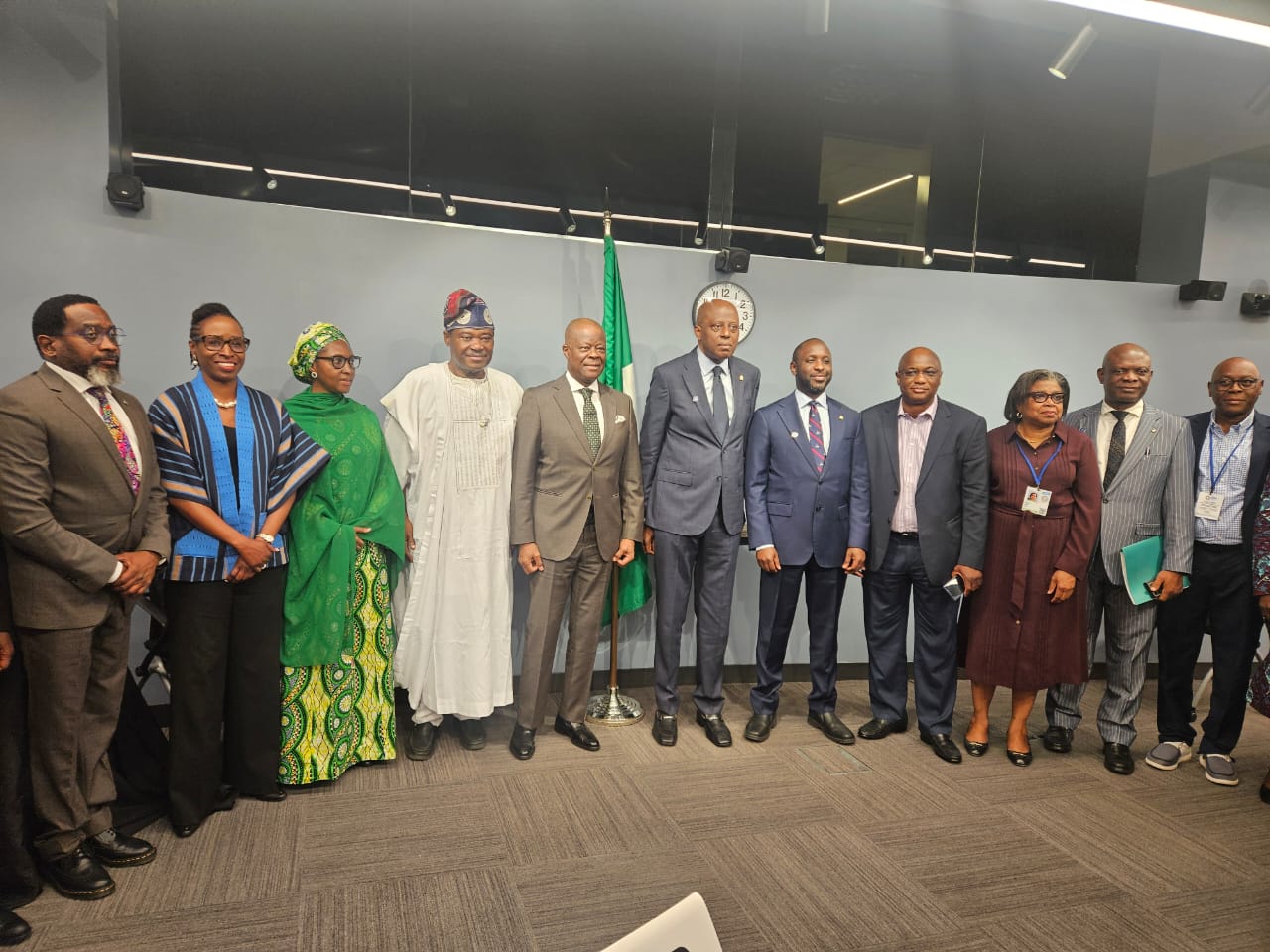
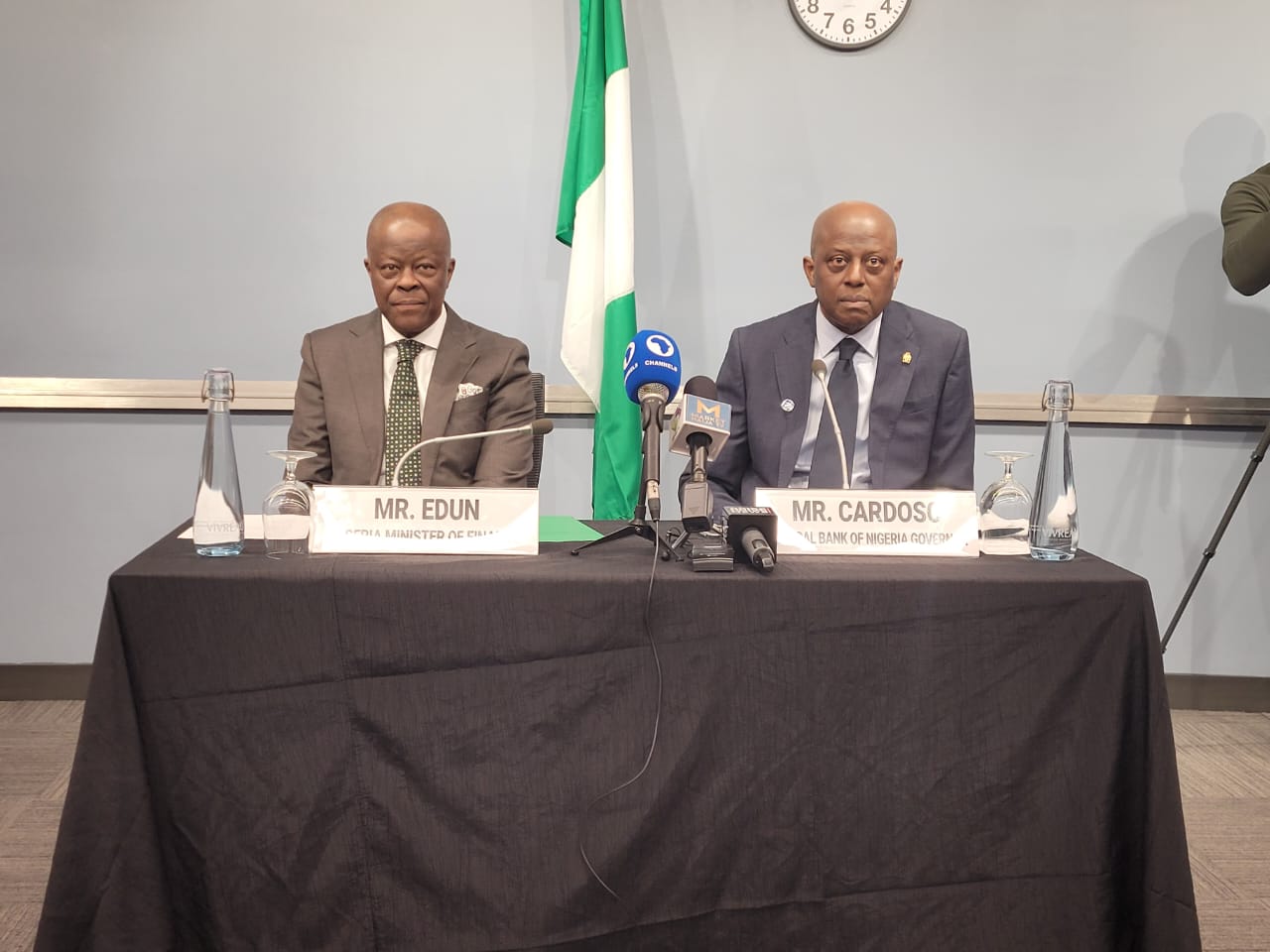
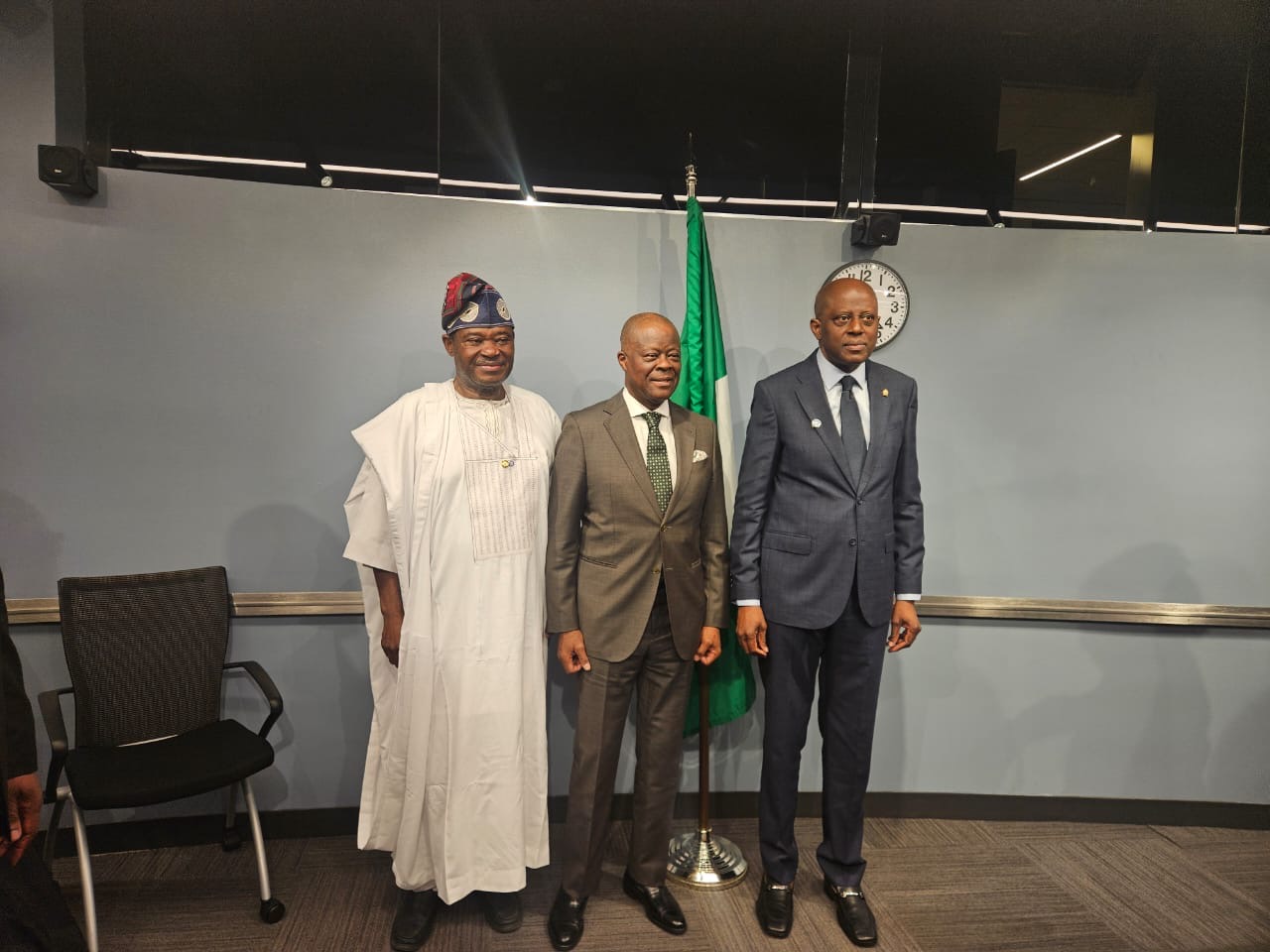
The Minister of Finance and Coordinating Minister of the Economy, Wale Edun, stated this during a press briefing at the Spring Meetings of the World Bank and the International Monetary Fund in Washington D.C.
He explained that the policy measures introduced since mid 2023 were designed not as temporary fixes but as structural changes that can sustain themselves over time while strengthening the economy against external shocks.
Edun noted that the global environment in which the meetings are taking place remains highly uncertain, with export tensions, trade disruptions and tightening financial conditions continuing to weigh on economies across the world.
Within this context, he said Nigeria’s approach is anchored on credible and disciplined macroeconomic management aimed at building lasting prosperity.
According to him, key reforms including the move to a market reflective foreign exchange system and the deregulation of fuel pricing are beginning to restore balance and reduce long standing distortions in the economy.
He added that these measures are already improving Nigeria’s capacity to absorb shocks that originate from outside its borders.
On inflation, Edun acknowledged that pressures remain, largely driven by energy costs, food prices and logistics challenges. However, he pointed out that government is responding through targeted social protection programmes and ongoing agricultural interventions to cushion the impact on citizens.
The Minister stressed that fiscal discipline remains central to the reform effort, with a clear departure from inefficient subsidy regimes and a renewed focus on prudent resource management.
Providing an update on key indicators, Edun said economic growth has exceeded four per cent, external reserves have risen to about 50 billion dollars and inflation is beginning to ease gradually. He added that public debt remains within sustainable limits.
Beyond the numbers, he said the reforms are unlocking domestic production and restoring confidence within the private sector.
The Minister cited major investments such as the Dangote Refinery as tangible evidence of renewed investor confidence, while noting that small and medium enterprises are benefiting from improved incentives.
He stated that Nigeria is now moving from stabilisation to a phase of accelerated growth and job creation, with power, agriculture, infrastructure and digital innovation expected to drive expansion.
Edun also disclosed that development partners at the meetings reaffirmed their support for Nigeria’s reform priorities, while investor interest continues to grow across energy, agribusiness and infrastructure sectors.
According to him, Nigeria is also pushing for reforms at the global level to reduce the cost of capital for developing countries, which remains a major constraint to growth.
The Minister expressed confidence that the country’s standing in the global economy is improving as its reform efforts gain recognition, adding that the policies will ultimately deliver sustainable growth and reduce poverty.
He further commended members of the Nigerian delegation and reaffirmed the Federal Government’s commitment to attracting investment and strengthening development partnerships.
In the same vein, the Governor of the Central Bank of Nigeria, Olayemi Cardoso, said the country remains firmly committed to sustaining reforms and preserving macroeconomic stability.
He explained that the meetings provided an opportunity to review Nigeria’s progress and reinforce institutional capacity needed to support long term economic resilience.
Cardoso noted that despite persistent global challenges, including geopolitical tensions and inflationary pressures, Nigeria has been able to contain external shocks through improved exchange rate stability and stronger reserves.
The Central Bank Governor emphasised that consistency in reform implementation is critical to building long term investor confidence.
Highlighting developments in the financial sector, he said the ongoing banking sector recapitalisation has mobilised 4.65 trillion naira in new capital.
As at the March 31 deadline, 33 banks had met the new capital requirements, significantly strengthening the resilience of the financial system and its ability to support economic growth.
He added that the exercise attracted strong participation from both domestic and international investors, reflecting sustained confidence in Nigeria’s banking sector.
Cardoso expressed optimism that continued reforms will reinforce stability, sustain growth and attract further investment into the economy.
News
Gov. Oborevwori, Prof. Osunbor, Sen. Dafinone, others to grace TheNewsGuru Editor’s book launch

Abuja, Nigeria – Organisers of the forthcoming public presentation of “Journalism NeXt: A Comprehensive Guide to Modern Journalism” have announced a distinguished lineup of eminent personalities expected to grace the book launch.
The book, authored by Editor of TheNewsGuru (TNG), Ediri Oyibo, is scheduled for official unveiling on Thursday, April 30, 2026, at the Secretariat of the Nigeria Union of Journalists (NUJ), FCT Council, Utako, Abuja at 2:00 pm.
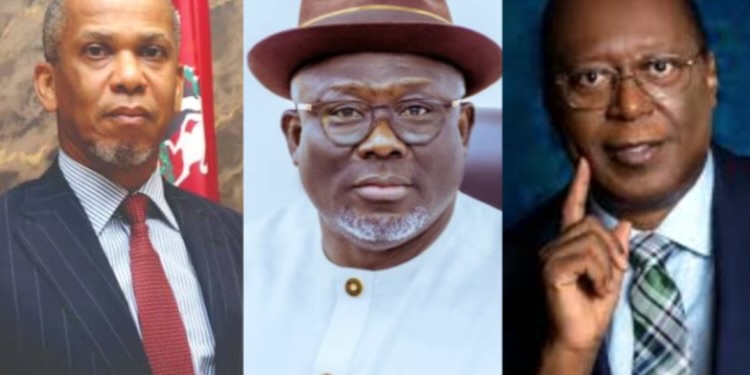
Leading the list of dignitaries is the Governor of Delta State, Rt. Hon. (Elder) Sheriff Oborevwori, who will attend as Special Guest of Honour, while former Governor of Edo State and two-term Senator, Prof. Oserheimen Osunbor, will serve as Chairman of the Occasion.
The book will be reviewed by Dr. Lemmy Ughegbe, Founder and Executive Director of the Make A Difference Initiative (MADI).
The event will also feature the presentation of research findings by the author on the state of journalism in Nigeria, with a focus on challenges faced by journalists in the Federal Capital Territory (FCT).
Other dignitaries expected at the event include Senator Ede Dafinone, Delta Central, Senator Joel-Onowakpo Thomas, Delta South; Senator Ned Nwoko, Delta North; Hon. Benedict Etanabene, Member representing Okpe/Sapele/Uvwie Federal Constituency, and Mr. Mideno Bayagbon, Publisher of TheNewsGuru (TNG).
Others are Dr. Dili Ezughah, Executive Secretary and CEO, Nigerian Press Council (NPC); Dr. Aminu Maida, Executive Vice Chairman, Nigerian Communications Commission (NCC), and Comr. Alhassan Yahya Abdul, National President of the Nigeria Union of Journalists (NUJ), among others.
“Journalism NeXt: A Comprehensive Guide to Modern Journalism” explores the transformation of journalism in the digital era, addressing issues such as media ethics, innovation, sustainability, and the evolving role of journalists in a rapidly changing information ecosystem.
Organisers say the event is expected to attract journalists, media entrepreneurs, academics, policymakers, students, and members of the public, providing a platform for robust engagement and networking.


Delta State Governor, Sheriff Oborevwori, on Saturday received two honours at the Silver Jubilee Awards of Independent Newspapers, in what is described as a recognition of his administration’s performance, particularly in urban development.
The awards—Outstanding Independent Governor and Best Independent Governor in Urban Renewal (2025)—were presented at a ceremony held at Eko Hotels and Suites, as part of activities marking the organisation’s 25th anniversary.
The awards were determined through a combination of public voting and rigorous assessment by a jury and the organisation’s board, Managing Director and Editor-in-Chief of Independent Newspapers, Steve Omanufeme, said.
He congratulated the recipients and disclosed that further activities to mark the silver jubilee would continue later in the year.
The governor, who was represented by his deputy, Monday Onyeme, described the awards as a reflection of the administration’s impact since assuming office in 2023.
Speaking with journalists after the event, Onyeme said, “It is very evident to all Nigerians, especially Deltans, that our governor has significantly changed the narrative since assuming office in 2023.
“Today, he stands out as one of the best governors in the area of urban renewal. The impact is visible and undeniable.”
He pointed to ongoing infrastructure development across the state, noting that Delta, as one of Nigeria’s most urbanised states, has witnessed rapid transformation within a short period.
According to him, projects such as flyovers in Ughelli, Warri, Effurun, and Enerhen Junction have improved traffic flow while enhancing the functionality of major urban centres.
Onyeme also disclosed that the administration had delivered about 300 kilometres of roads in the past year, describing it as a major step towards addressing infrastructure deficits.
“When organisations carry out independent assessments and recognise this administration, it does not come as a surprise. The results speak for themselves,” he said.
He added that the recognition would serve as motivation for the government to sustain its development efforts.
“We have not rested, and we will not rest. We were elected to serve the people of Delta State, and we remain committed to that promise. The more responsibility we are given, the more we will deliver,” he said.
The deputy governor further noted that Oborevwori remained focused on leaving a lasting legacy, driven by what he described as a strong commitment to service.
“His desire is to ensure that before he leaves office after his second tenure, the difference will be clear and undeniable. He aims to set a standard that future administrations must strive to meet or surpass,” he added.

Tinubu reforms shift Nigeria from fragility to growth as global pressures mount(Photos)

Gov. Oborevwori, Prof. Osunbor, Sen. Dafinone, others to grace TheNewsGuru Editor’s book launch

Iranian arrested in US for trafficking drones, bombs to Sudan




-

 News22 hours ago
Board cautions candidates after arrest of suspects over doctored UTME scores
-
 News13 hours ago
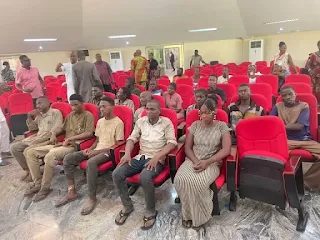
Rescued eight Benue bus kidnap victims identified as UTME candidates
-
 Economy24 hours ago
CBN, FMDA introduce the Nigerian Overnight Financing Rate
-
 News23 hours ago
How NDLEA operatives uncovered cocaine, loud in food flasks, snacks, nabs fashion designer, others(Photos)
-
 News22 hours ago
All 13 kidnapped Otukpo passengers, successfully rescued
-

 News15 hours ago
Hardship Not a Licence for Broken Homes – Abejide Tells Couples
-
 News5 hours ago
Full List: Items You can no longer Import into Nigeria
-

 News5 hours ago
SSANU plans indefinite strike as April 30 renegotiation deadline approaches
You must be logged in to post a comment Login