Connect with us

News

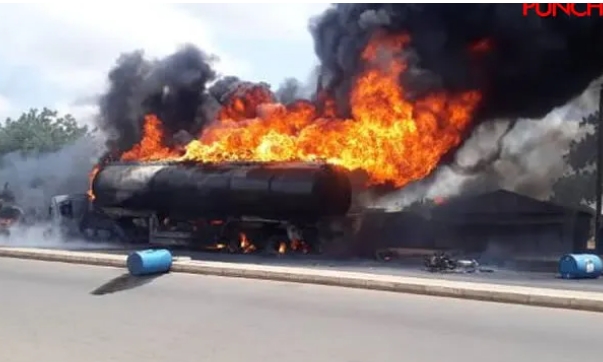
EXPLOSIONS! FG plans to ban fuel tankers on roads over death tolls

Published

on

ADVERTISEMENT
Zoom Ad
ADVERTISEMENT
Zoom Ad

By Kayode Sanni-Arewa

The Federal Government, FG, through the Nigerian Midstream and Downstream Petroleum Regulatory Authority, NMDPRA, has said that it might impose a ban on trucks with 60,000-litre capacity, preventing them from operating on federal highways.

This follows the increasing number of deaths resulting from petrol tanker accidents, which has led to the death of 493 persons in three years.

The government, in a proposal to stakeholders, wants tankers restricted to a maximum of 45,000 litres.

Advertisement

It said this ban is part of a potential recommendation aimed at reducing fatalities from petroleum tanker accidents to zero.

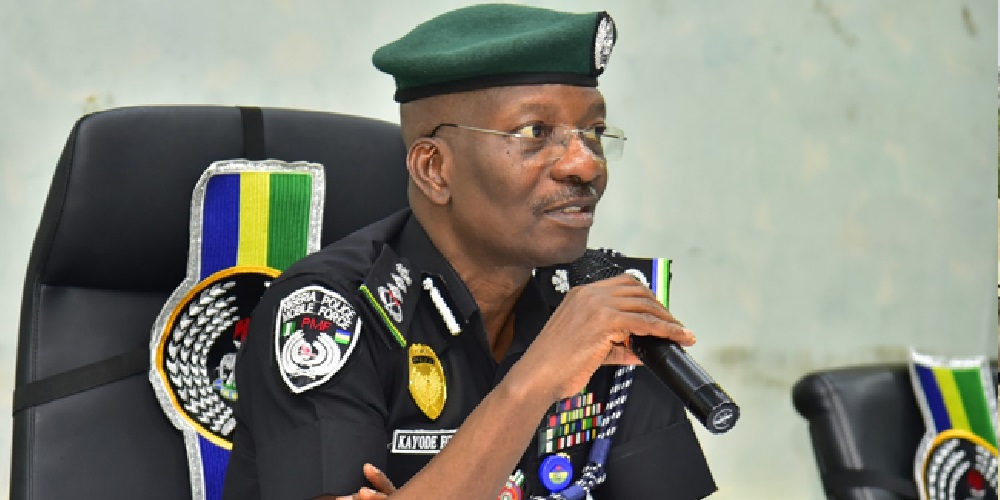
Chief Executive Officer, NMDPRA, Farouk Ahmed, disclosed this at a stakeholders’ engagement on the recurrence of road tanker accidents held at its headquarters in Abuja.

The meeting sought to provide lasting solutions to the frequent accidents involving petroleum tankers, which have resulted in loss of lives and property.

In his address, Ahmed said the public was seeking intervention to protect lives and properties as the government recorded 493 deaths from petroleum truck-related accidents from 2022 to date.

Advertisement

According to him, the carnage from the petroleum truck explosion has been on the increase from seven recorded in 2022 to 24 deaths in 2023, while 341 died in 2024; the carnage rate has already hit 121 in 2025, which is only two months from its beginning.

Ahmed, who described the rising number of accidents and fatalities as unacceptable, said urgent steps were needed to ensure safety in the transportation of petroleum products across the country.

He said, “We are here today to discuss the recent trend in road tanker accidents and the resultant fatalities and other consequences. The public is watching helplessly and looking forward to intervention to protect lives and properties.

“In the year 2022, four road tanker accidents were recorded that led to 7 fatalities and 3 injuries. The number of incidents decreased in the year 2023 to two, resulting in 24 fatalities and five injuries. By the year 2024, the number of accidents increased to 11 incidents leading to 341 fatalities and 124 injuries.

Advertisement

“This year to date, we have already recorded five road tanker accidents leading to 121 fatalities and 79 injuries. These incidents are unnecessary and unacceptable. They must be prevented and brought down to zero.”

Ahmed said the incidents were unnecessary and unacceptable since the authority had already put preventive measures in place

He said the measures include, “determination of an appropriate truck carrying capacity of (60,000 litres versus 45,000 litres) given the negative impact on the roads.”

He also noted that some of the measures put in place to prevent such accidents include Minimum Industry Safety Training for Downstream Operators, which includes training and retraining of drivers, motor boys, and all personnel involved in downstream operations.

Advertisement

He said there has been the mandatory installation of anti-spill safety valves on all petroleum product tanker trucks.

Ahmed also said there should be the implementation of safe-to-load initiatives, “Colour coding and branding of all tank trucks. Spot checks by FRSC on fatigued drivers and those under the influence. Broadcast post-crash emergency numbers and first responders to cordon off accident sites. Enlightenment and sensitization of the public about the dangers of scooping the volatile hydrocarbons at accident sites. Regular meetings with stakeholders. Regulating route management by designating routes and commuting times.”

The NMDPRA boss recalled that the requirements were arrived at by the industry collectively, pursuant to learnings from previous accidents and safety studies conducted to ensure that the business of energy provision and distribution is conducted safely and securely.

He stressed that it is, therefore, unacceptable for any operator to conduct business in contravention of established protocols and safety requirements.

Advertisement

He said it was the contraventions, coupled with the poor conditions of the transportation infrastructure that are leading to unnecessary accidents and unfortunate loss of lives and properties.

“It is therefore unacceptable for any operator to conduct business in contravention of established protocols and safety requirements. It is these contraventions, coupled with the poor conditions of our transportation infrastructure that are leading to unnecessary accidents and unfortunate loss of lives and properties.

“The fact that these accidents keep recurring is indicative of non-compliance by the industry with the established safety measures or that the measures are defective. Consequently, we demand that all parties should ensure strict compliance with the established safety requirements.

“In our deliberations today, we should examine the defects that are observed in these safety provisions and agree on necessary actions to close those gaps.

Advertisement

According to him, the fact that these accidents keep recurring is indicative of noncompliance by the industry with the established safety measures or that the measures are defective.

However, opposing the potential ban on 60,000-litre capacity tankers, the President of the National Association of Road Transport Owners, Yusuf Othman, said such a move would lead to a potential loss of over N300bn investment.

Othman explained that there are currently about 2,000 trucks with 60,000 litres capacity involved in the transportation of petroleum products with each costing over N150m.

He stated, “We are saddened by these occurrences and we believe measures need to be taken to avoid future occurrences. But, in doing that, we need to avoid being sentimental in making certain decisions so that we don’t throw the baby out with the bathwater.

Advertisement

I want to remind everybody here that transporters are investors and these investments are huge. Any truck that loads 60,000 litres must be a truck with a strong and sound engine at an average cost of N150m. By our estimation, we have 2,000 of them. We are talking about N300bn investments, some of which were financed by banks and other lenders.”

“We believe that necessary measures should be in place that are going to stop the occurrences. But in doing that, we need to be careful and avoid being sentimental in taking certain positions on this issue.”

He sought government intervention for the improvement of the condition of the highways. He said there is a strong correlation between the condition of the roads and accidents.

He urged the public to always avoid petroleum products laden trucks because they are highly inflammable.

Advertisement

News

Opposition Status Is Earned Through Electoral Victories, Not By Emergency Coalition — Wike

Published

on

ADVERTISEMENT
Zoom Ad
ADVERTISEMENT
Zoom Ad

Minister of the Federal Capital Territory (FCT) and the Leader of the Peoples Democratic Party (PDP), Nyesom Wike, on Friday declared that credibility as an opposition force must be earned through electoral victories, not mere rhetoric and emergency coalition, as he pledged loyalty to the newly elected National Working Committee (NWC) of the Peoples Democratic Party (PDP).

Speaking during a courtesy visit to the party’s national headquarters, Wadata House, Abuja, Wike dismissed claims by smaller political groups positioning themselves as leading opposition voices, insisting that performance at the polls remains the true test of relevance.

“You cannot become an opposition party without winning an election. Those who say they are leading the opposition have not contested any election successfully,” he said.

Wike’s remarks come amid ongoing realignments within Nigeria’s political space, with parties jostling for influence ahead of the 2027 general elections.

Advertisement

Reaffirming his commitment to the PDP, Wike said his visit was to demonstrate solidarity with the new leadership and encourage a united front as the party rebuilds after internal crises.

“My coming here is to reassure you of my support. I have come to pledge my loyalty to the National Working Committee,” he stated.

He acknowledged that the PDP had faced significant challenges but noted that the party was gradually emerging from its internal strife.

“Yes, we have crisis, and we have almost come out of it. It will require hard work and sacrifice to move the party forward,” he said.

Advertisement

The minister urged the NWC to prioritise reconciliation, particularly by engaging members who had defected, many of whom, he noted, still retain interest in the party.
“Reach out to them. Most are concerned about opportunities, including tickets. You know what to do,” Wike advised.

He also cautioned against distractions, especially ongoing legal battles, expressing confidence that the party would prevail.

“We have defeated them at the Federal High Court and the Court of Appeal. The same God will see us through. Stay focused and work as a team,” he added.

In his response, PDP National Chairman, Abdulrahman Mohammed, assured that the new leadership would reposition the party and restore public confidence.

Advertisement

“We have capable hands and we are determined to lead the party to a higher level. We will not disappoint Nigerians,” he said.

Mohammed stressed that the PDP remained a viable platform for national leadership and would intensify efforts to secure electoral victories in 2027.

Also speaking, National Secretary, Senator Samuel Anyanwu, commended Wike’s continued support, describing his visit as a significant boost to the morale of the party’s leadership.

The visit underscores growing efforts within the PDP to reassert its dominance as Nigeria’s foremost opposition party, amid increasing competition and shifting political alliances.

Advertisement
Continue Reading

News

Tragedy averted as man parks SUV on 3rd Mainland bridge jumps into lagoon

Published

on

ADVERTISEMENT
Zoom Ad
ADVERTISEMENT
Zoom Ad

Tragedy averted in Lagos on Tuesday after a 33-year-old man jumped into the lagoon from the Third Mainland Bridge but was rescued moments later.

The man, identified simply as Olu, reportedly parked his silver Lexus SUV around the Yaba axis of the bridge before plunging into the water.

Eyewitnesses said he was quickly spotted, prompting swift intervention. The Divisional Police Officer in Yaba, CSP Adegbemi Isiaka, was alerted and immediately mobilised a nearby fisherman, who pulled the victim out of the lagoon.

He was subsequently rushed to a hospital, where he received treatment.

Advertisement

Sources disclosed that Olu, said to be based in Ibadan, Oyo State, had travelled to Lagos with the intention of taking his own life.

According to accounts, he had suffered significant losses from cryptocurrency investments, which left him distressed and overwhelmed.

“He drove from Ibadan to Lagos just to jump from the bridge. He said he lost money in his investment and could not cope,” an eyewitness recounted.

The witness added that the DPO had to offer a token to the fisherman to ensure the rescue was carried out swiftly.

Advertisement

Confirming the incident, Lagos Police Command spokesperson, SP Abimbola Adebisi, said the man has since been discharged from the hospital and reunited with his family, who arrived from Ibadan after being contacted.

She added that the family has undertaken to get him professional help at a rehabilitation centre.

Adebisi also noted that the victim was counselled and warned against attempting suicide, which is considered an offence under Nigerian law.

The incident gained public attention after businessman Isaac Fayose shared a video online, urging people to check on loved ones.

Advertisement

In the now-viral clip, a witness narrated how Olu parked his vehicle, left his phones behind, and jumped into the lagoon, before help arrived just in time to save him.

Continue Reading

News

Hunger looming in Nigeria as Tinubu’s economic policies summersault- IMF cautions

Published

on

ADVERTISEMENT
Zoom Ad
ADVERTISEMENT
Zoom Ad

The International Monetary Fund (International Monetary Fund) has raised fresh concerns over Nigeria’s near-term economic outlook, warning that citizens may face even tougher living conditions as inflationary pressures, rising transportation costs, and persistent global shocks continue to strain household incomes across the country.

The warning comes at a time when Nigeria is experiencing a rare surge in crude oil prices, offering potential revenue relief for the government. However, the Fund cautioned that the benefits of higher oil earnings may be offset by rising debt levels, structural weaknesses in public finances, and ongoing global uncertainties.

Speaking during the Economic Outlook for Sub-Saharan Africa at the ongoing World Bank–IMF Spring Meetings 2026 in Washington D.C., Director of the IMF’s African Department, Abebe Selassie, said the impact of global geopolitical tensions is already being felt across African economies, including Nigeria.

He noted that rising transport and food costs were driving significant economic pressure on households.

Advertisement

“The immediate effect will be quite a bit of pressure, including on food security… transportation costs have gone up, it’s going to raise the cost of food and so quite a bit of dislocation,” Selassie said.

According to him, higher transportation expenses are already feeding into inflation, especially in urban centres where costs are rising sharply, while rural communities are also feeling the impact due to supply chain constraints.

We’re already seeing quite a lot of increase in transportation prices… Transportation costs are very high for people in urban areas, rural areas even more so,” he added, stressing that the situation is already placing visible strain on livelihoods.

Advertisement
Continue Reading

Trending

Copyright © 2024 Naija Blitz News