Connect with us

News

What marabout told us about IBB in 1952- Gen Abdulsalami reveals

Published

on

ADVERTISEMENT
Zoom Ad
ADVERTISEMENT
Zoom Ad

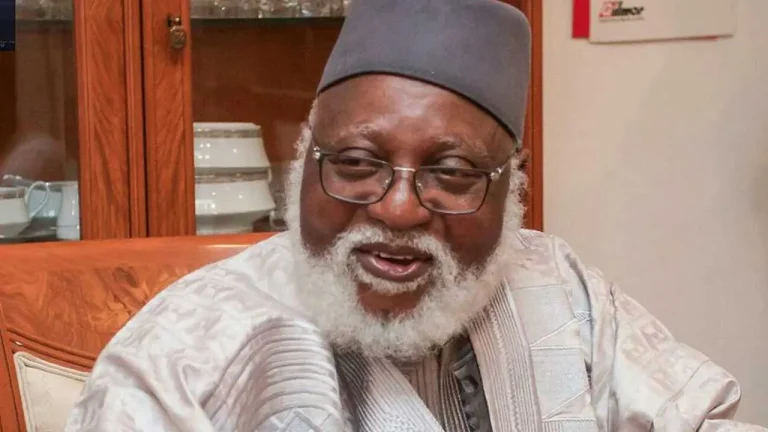
Former Military Head of State, Gen. Abdulsalami Abubakar has revealed how a soothsayer in 1952 predicted the emergence of Gen. Ibrahim Babamasi Babangida, IBB, as Nigeria’s Head of State.


He said the prediction was made 33 years before IBB became Nigeria’s leader.

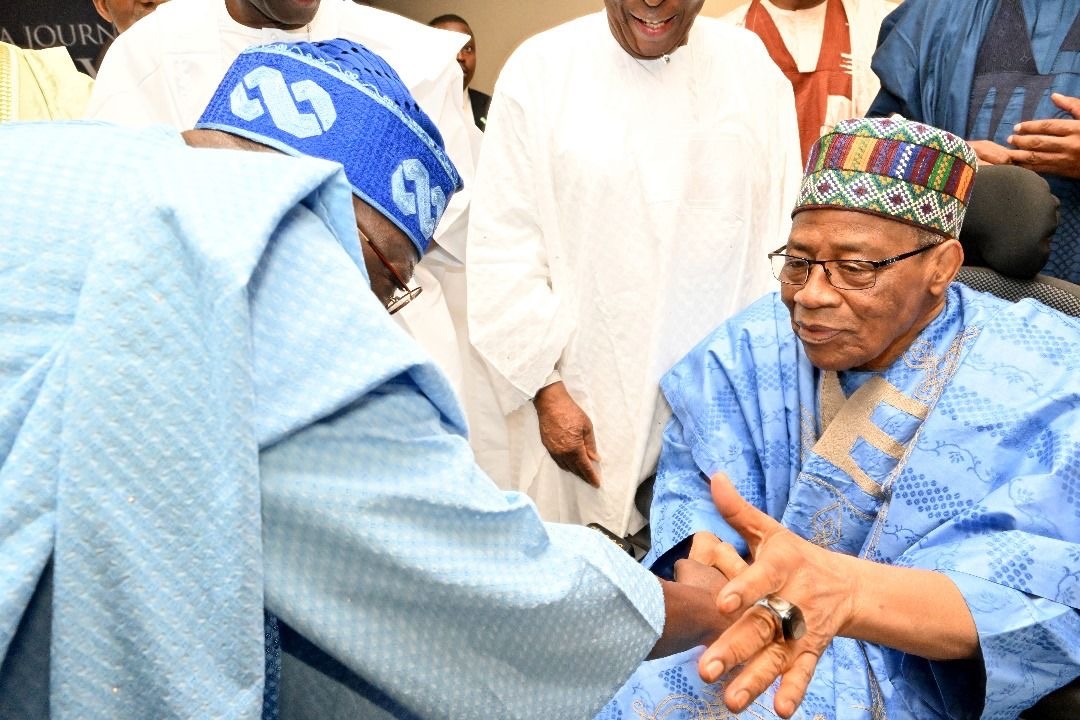
Abubakar spoke on Thursday in Abuja during the launch of IBB’s memoir titled, ‘A Journey In Service’.

The event was attended by President Bola Tinubu, former Head of State, Yakubu Gowon, ex-President Goodluck Jonathan, former Vice-Presidents Atiku Abubakar and Yemi Osinbajo, among others dignitaries.

Advertisement

Narrating the prediction in front of the audience, Abdulsalami, a neighbour of IBB in Minna, went down memory lane.

He explained that while they were growing up in Minna about 80 years ago, precisely in 1952, a soothsayer told them that IBB was going to rule the country.

According to him, “We never believed him. Then Captain Gowon, a young smart officer, lured us to join the military and when we joined the army, all our hope was to get to the rank of a captain and retire.”

He added that God in His mercy propelled them to become generals and by the grace of God, both of them later became heads of state, stressing that no moment goes by when they remember their escapades that it doesn’t bring smiles to their faces.

Advertisement

As it turned out, both leaders would go on to rule Africa’s most populous nation at different times as generals.

While lBB was Nigeria’s military ruler from 1985 to 1993, Abubakar served as head of state from 1998 to 1999 and midwifed the transition to civil rule.

News

Sad: Iconic ex-Super Eagles midfielder, Henry Nwosu dies at 62

Published

on

ADVERTISEMENT
Zoom Ad
ADVERTISEMENT
Zoom Ad

Ex-Super Eagles iconic midfielder Henry Nwosu has passed at the age of 62, leaving the nation’s football community in mourning.

Nwosu, a key player in Nigeria’s 1980 Africa Cup of Nations’ triumph, died on Saturday morning at Lagos State University Teaching Hospital, where he had been receiving intensive care since Wednesday.

His death was announced by former teammate Segun Odegbami, who described Nwosu as the “Youngest Millionaire” and expressed deep pain over the loss.

Odegbami wrote: “After 5 days in hospital battling for his life, the one I call ‘Youngest Millionaire’ passed on at 4:00 am this morning at the Lagos State University Teaching Hospital, Ikeja, Lagos where he had been in Intensive Care since Wednesday.

Advertisement

“It is with deep pain in my heart that I have to be the conveyor of the news of the death of Henry Nwosu MON.

“May he rest peacefully with our Creator in Heaven.”

Nwosu’s playing career spanned several notable clubs, including ASEC Mimosas, New Nigeria Bank FC, and African Continental Bank FC.

He also represented Nigeria in multiple AFCON tournaments and the 1980 Summer Olympics.

Advertisement

After retiring, Nwosu transitioned into coaching, leading Nigeria’s U-17 team and managing clubs like Ibom Stars and Gateway United.

His contributions to Nigerian football are immeasurable, and his legacy will be remembered for generations to come.

Continue Reading

News

Ekiti PDP fractured but We’ll rebuild It, Kolawole Assured, As Fayose’s Ally Omolase Emerges Chairman(Photos)

Published

on

ADVERTISEMENT
Zoom Ad
ADVERTISEMENT
Zoom Ad

A member of the People’s Democratic Party (PDP) National Caretaker Working Committee, Bisi Kolawole, has said plans are underway to rebuild the fractured structure of the party and reposition it for future political success.

Kolawole, who was the PDP Governorship candidate in the Ekiti State 2022 election made the statement on Saturday, in Ado-Ekiti during the state congress of the party.

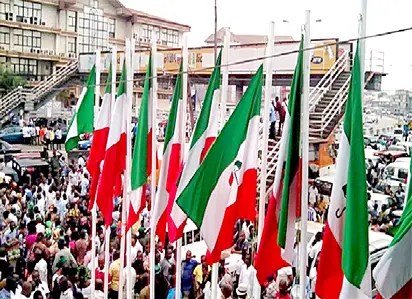
The congress, which was monitored by officials of the Independent National Electoral Commission (INEC) and security agencies produced Hon. Lanre Omolase, an ally of former Governor of Ekiti State, Ayodele Fayose, as the party Chairman while a former Commissioner in the State, Chief Tunde Ogunleye emerged as Secretary.

Others members of the State Working Committee elected at the congress were Babatunde Akande, Deputy Chairman; Femi Philips, Publicity Secretary; Lawrence Odunayo, Organizing Secretary, Olugbenga Agbede, Legal Adviser; Mrs. Ayodele Oluwatoyin Bosede, Women Leader; Banji Femi, Youth Leader; Gani Bakare, Financial Secretary; Anike Folasade, Treasurer; Ajayi Joseph, Auditor and Sunday Olowolafe, Adeniyi Adefemi and Segun Olatunji as Senatorial Chairmen South, Central and North respectively.

In his adress to the party delegates, Kolawole acknowledged that the party had experienced internal challenges in recent times but expressed confidence that the leadership at the national level was working diligently to restore unity, strengthen internal democracy, and rebuild the confidence of members across the country.

Kolawole said consultations were ongoing among party leaders and stakeholders to ensure that the PDP emerges stronger and more united.

He charged the newly elected state executives to remain loyal to the party, respect its elders, and work collectively to move the party forward.

According to him, discipline, unity and commitment to the ideals of the party are necessary for the PDP to regain its strength and effectively play its role as a major political force in the country.

Speaking on behalf of the newly elected State Working Committee members, the Chairman, Lanre Omolase, urged for commitment among party members, assuring that the party will rise again.

He said he will lead the party with the fear of God and ensure that the party regain its lost grounds in the State.

Advertisement
Continue Reading

News

Iranian Leaders Determined To Prove Islamic Republic’s Staying Power

Published

on

ADVERTISEMENT
Zoom Ad
ADVERTISEMENT
Zoom Ad

Iran’s leaders are seeking to show the staying power of their nearly half-century-old clerical-based system and prove that it can withstand the killing of its longtime ruler and war with the United States and Israel, analysts said.

Ayatollah Ali Khamenei, supreme leader since the death of revolutionary founder Ruhollah Khomeini in 1989, was killed along with several family members and top security figures in air strikes at the start of the US-Israeli attacks late last month.

But analysts said the system he led, based on Shia Islam and hostility to the West, remained firmly in place, even if it was likely to be adapted by his son and successor, Mojtaba Khamenei.

This was likely to mean even greater influence for the Revolutionary Guards, the ideological arm of the military created to ensure the survival of the system and whose influence is felt across Iran, including in the economy.
Thomas Juneau, a professor at the University of Ottawa, told AFP that “the system is resilient and it remains able to implement well-developed contingency plans”.

Advertisement

“Continuity is built into the system and its institutions, and so far, there is no indication that the collapse of the Islamic Republic is imminent.”

‘Dangerous Pattern’
While he has been a low-profile figure rarely seen in public, Mojtaba Khamenei is seen by analysts as a hardliner close to the Revolutionary Guards who took a lead role in the suppression of protests.

“The selection of Mojtaba as his father’s successor is an additional indication that the regime’s leadership intends to remain defiant and does not plan to compromise on what it perceives as its core values and interests,” said Juneau.
In a show of defiance, several key surviving figures in the government and security forces took to the streets of Tehran on Friday for a rally even as explosions went off nearby.
Sporting dark sunglasses despite heavy rain, national security chief Ali Larijani said US President Donald Trump did not understand that “the more he presses, the stronger the nation’s determination will become”.
Judiciary chief Gholam Hossein Mohseni Ejei, meanwhile, barely flinched as an explosion rocked an area close to the demonstration, in images widely broadcast on state TV.

Not present was Mojtaba Khamenei, who has not been seen in public since his appointment.
Another notable absentee from the rally was parliament speaker Mohammad Bagher Ghalibaf, a former Revolutionary Guards commander who some commentators believe is at the heart of the war effort.
Torbjorn Soltvedt, associate director at risk analysis firm Verisk Maplecroft, said that the conflict was “locked in a dangerous pattern that’s unlikely to change anytime soon” as Iran hits back with its own attacks in the region that have sent energy prices surging.

Advertisement

‘Highly Resilient’
“Right now, there are no clear off-ramps. Despite intense US and Israeli airstrikes, Iran is able to target shipping and critical energy infrastructure with concerning regularity,” Soltvedt told AFP.

“The regime has proved highly resilient so far, reflecting the extensive control and influence held by the office of the supreme leader and hardline factions in politics and the armed forces,” he added.
Barbara Slavin, a fellow at the US-based Stimson Center, said Mojtaba Khamenei’s authority would “depend heavily on continued backing from the Revolutionary Guards whose political and economic influence has expanded dramatically over the past two decades”.

“It is unlikely Mojtaba will be predisposed to make any concessions” to the United States and Israel, she said, given their responsibility for the killing of Iranians and the destruction of Iran’s infrastructure.
Should the Islamic Republic survive the war, it would be able to fall back on a narrative similar to that which followed the 1980-1988 war with Saddam Hussein’s Iraq, known in Iran as the “imposed war”.
“If it survives this war, which for now seems to be the case, it will be able to claim victory,” said Juneau.
“This would be a costly victory, however: its leadership has been decapitated, its military capabilities degraded, its economic infrastructure damaged,” he added.

AFP

Advertisement
Continue Reading

Trending

Copyright © 2024 Naija Blitz News