
News
Over 20,000 Stranded Nigerians Returned Home Through IOM Assistance



By Kayode Sanni-Arewa
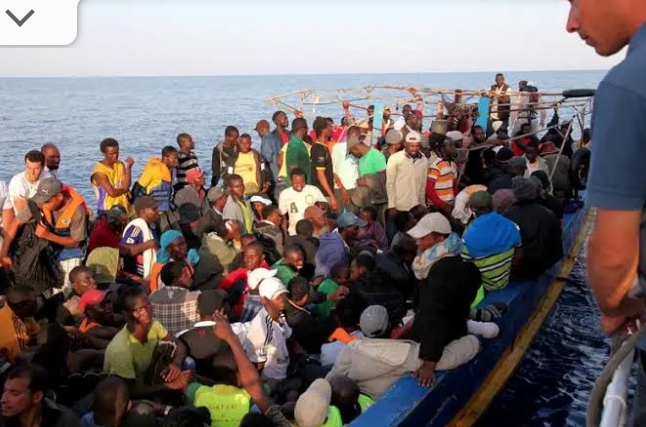
More than 20,197 Nigerians who were stranded in various countries have voluntarily returned home through repatriation exercises facilitated by the International Organization for Migration (IOM).
The returnees were assisted under the IOM’s Assisted Voluntary Return and Reintegration (AVRR) programme, which was supported by the Nigerian government and its diplomatic missions abroad.
Women and girls made up 88% of the returnees, while men accounted for 13%.
The majority of the victims of trafficking (VoTs) were between 18 and 39 years old, with those aged 18 to 25 being particularly vulnerable to human trafficking.
Many of them had been trapped in transit and destination countries along irregular migration routes, especially in Libya, Niger, and Mali.
Between April 2017 and May 2018, over 7,000 Nigerians were repatriated from Libyan detention centers and urban areas, while another 750 returned from neighboring countries. By February 2022, the total number of assisted returnees had risen to 19,452. In early 2024 alone, 167 victims were repatriated, 81% of whom were female. The trend is not new, as female victims peaked in 2022 with 908 cases, while male victims were significantly lower at 166.
Economic hardship remains the primary driver of irregular migration, with 94% of returnees citing the search for better opportunities as their motivation. Other reasons included job searches (2%), escaping family issues (1%), and factors such as education, family reunification, or fleeing violence (3%).
Italy, Libya, and Mali were among the most common destinations for these migrants, accounting for nearly 60% of all returnees. Italy alone accounted for 26%, while Germany, Spain, the UAE, France, Lebanon, Senegal, and Côte d’Ivoire were also listed as preferred destinations. Libya stood out as the main country of exploitation, with 53% of victims suffering abuse there, followed by Mali with 29%.
For years, Libya has been both a destination and a transit hub for Nigerians attempting to reach Europe via the Mediterranean. Since the fall of Muammar Gaddafi in 2011, the country has seen increasing cases of slavery and extortion, which have become a source of income for some Libyan communities.
Most victims of trafficking were subjected to forced labor and sexual exploitation. IOM data showed that 1,114 victims—82% of them female—were forced into labor in Libya, while Mali was known for sex trade exploitation, affecting 1,109 victims, 98% of whom were women. Traffickers used various control tactics, including physical and psychological abuse, deception, threats, and wage withholding. The majority of victims were trafficked by people they knew—friends or acquaintances—accounting for 46.6% of female victims and 53.2% of male victims.
The IOM has partnered with government agencies and NGOs to support reintegration efforts, with over 3,122 victims (64%) successfully reintegrated. Assistance provided includes medical care and vocational training to help returnees achieve economic stability. However, many returnees face uncertainty about their future, struggling with financial instability and reintegration into their communities. Vulnerable groups include survivors of gender-based violence, unaccompanied minors, those with severe mental and physical health needs, and individuals exposed to violence.
Former spokesperson for the National Agency for the Prohibition of Trafficking in Persons (NAPTIP), Zakaria Dauda, noted that despite the challenges returnees face, some still attempt to migrate again, believing life is better abroad. He explained that NAPTIP is working on sensitization to bridge this gap, but there is a strong push-and-pull factor. Many young people think the grass is greener on the other side, but they fail to realize that success requires effort.
Executive Director of the Women Trafficking and Child Labour Eradication Foundation, Imaobong Ladipo-Sanusi, emphasized the need for informed decision-making. “We cannot stop people from leaving, but we can educate them on the risks and help them make informed migration choices,” she said.



Minister of the Federal Capital Territory (FCT) and the Leader of the Peoples Democratic Party (PDP), Nyesom Wike, on Friday declared that credibility as an opposition force must be earned through electoral victories, not mere rhetoric and emergency coalition, as he pledged loyalty to the newly elected National Working Committee (NWC) of the Peoples Democratic Party (PDP).
Speaking during a courtesy visit to the party’s national headquarters, Wadata House, Abuja, Wike dismissed claims by smaller political groups positioning themselves as leading opposition voices, insisting that performance at the polls remains the true test of relevance.
“You cannot become an opposition party without winning an election. Those who say they are leading the opposition have not contested any election successfully,” he said.
Wike’s remarks come amid ongoing realignments within Nigeria’s political space, with parties jostling for influence ahead of the 2027 general elections.
Reaffirming his commitment to the PDP, Wike said his visit was to demonstrate solidarity with the new leadership and encourage a united front as the party rebuilds after internal crises.
“My coming here is to reassure you of my support. I have come to pledge my loyalty to the National Working Committee,” he stated.
He acknowledged that the PDP had faced significant challenges but noted that the party was gradually emerging from its internal strife.
“Yes, we have crisis, and we have almost come out of it. It will require hard work and sacrifice to move the party forward,” he said.
The minister urged the NWC to prioritise reconciliation, particularly by engaging members who had defected, many of whom, he noted, still retain interest in the party.
“Reach out to them. Most are concerned about opportunities, including tickets. You know what to do,” Wike advised.
He also cautioned against distractions, especially ongoing legal battles, expressing confidence that the party would prevail.
“We have defeated them at the Federal High Court and the Court of Appeal. The same God will see us through. Stay focused and work as a team,” he added.
In his response, PDP National Chairman, Abdulrahman Mohammed, assured that the new leadership would reposition the party and restore public confidence.
“We have capable hands and we are determined to lead the party to a higher level. We will not disappoint Nigerians,” he said.
Mohammed stressed that the PDP remained a viable platform for national leadership and would intensify efforts to secure electoral victories in 2027.
Also speaking, National Secretary, Senator Samuel Anyanwu, commended Wike’s continued support, describing his visit as a significant boost to the morale of the party’s leadership.
The visit underscores growing efforts within the PDP to reassert its dominance as Nigeria’s foremost opposition party, amid increasing competition and shifting political alliances.

Tragedy averted in Lagos on Tuesday after a 33-year-old man jumped into the lagoon from the Third Mainland Bridge but was rescued moments later.
The man, identified simply as Olu, reportedly parked his silver Lexus SUV around the Yaba axis of the bridge before plunging into the water.
Eyewitnesses said he was quickly spotted, prompting swift intervention. The Divisional Police Officer in Yaba, CSP Adegbemi Isiaka, was alerted and immediately mobilised a nearby fisherman, who pulled the victim out of the lagoon.
He was subsequently rushed to a hospital, where he received treatment.
Sources disclosed that Olu, said to be based in Ibadan, Oyo State, had travelled to Lagos with the intention of taking his own life.
According to accounts, he had suffered significant losses from cryptocurrency investments, which left him distressed and overwhelmed.
“He drove from Ibadan to Lagos just to jump from the bridge. He said he lost money in his investment and could not cope,” an eyewitness recounted.
The witness added that the DPO had to offer a token to the fisherman to ensure the rescue was carried out swiftly.
Confirming the incident, Lagos Police Command spokesperson, SP Abimbola Adebisi, said the man has since been discharged from the hospital and reunited with his family, who arrived from Ibadan after being contacted.
She added that the family has undertaken to get him professional help at a rehabilitation centre.
Adebisi also noted that the victim was counselled and warned against attempting suicide, which is considered an offence under Nigerian law.
The incident gained public attention after businessman Isaac Fayose shared a video online, urging people to check on loved ones.
In the now-viral clip, a witness narrated how Olu parked his vehicle, left his phones behind, and jumped into the lagoon, before help arrived just in time to save him.
The International Monetary Fund (International Monetary Fund) has raised fresh concerns over Nigeria’s near-term economic outlook, warning that citizens may face even tougher living conditions as inflationary pressures, rising transportation costs, and persistent global shocks continue to strain household incomes across the country.
The warning comes at a time when Nigeria is experiencing a rare surge in crude oil prices, offering potential revenue relief for the government. However, the Fund cautioned that the benefits of higher oil earnings may be offset by rising debt levels, structural weaknesses in public finances, and ongoing global uncertainties.
Speaking during the Economic Outlook for Sub-Saharan Africa at the ongoing World Bank–IMF Spring Meetings 2026 in Washington D.C., Director of the IMF’s African Department, Abebe Selassie, said the impact of global geopolitical tensions is already being felt across African economies, including Nigeria.
He noted that rising transport and food costs were driving significant economic pressure on households.
“The immediate effect will be quite a bit of pressure, including on food security… transportation costs have gone up, it’s going to raise the cost of food and so quite a bit of dislocation,” Selassie said.
According to him, higher transportation expenses are already feeding into inflation, especially in urban centres where costs are rising sharply, while rural communities are also feeling the impact due to supply chain constraints.
We’re already seeing quite a lot of increase in transportation prices… Transportation costs are very high for people in urban areas, rural areas even more so,” he added, stressing that the situation is already placing visible strain on livelihoods.

Opposition Status Is Earned Through Electoral Victories, Not By Emergency Coalition — Wike

Tragedy averted as man parks SUV on 3rd Mainland bridge jumps into lagoon
Hunger looming in Nigeria as Tinubu’s economic policies summersault- IMF cautions




-

 Opinion21 hours ago
DIAMOND DISTINCTIONS FOR THE PEOPLE’S MAN; DR. CHIDO ONUMAH
-
 News20 hours ago
Wike: Atiku a serial contestant, loser, he will still contest in 2031 (PHOTOS)
-
 News19 hours ago
BREAKING : Gunmen kidnap JAMB candidates, others in Benue
-
 News18 hours ago
Reps Open Fresh Probe into N1.12tn Farm Scheme, Summon Insurers Over Gaps
-

 News20 hours ago
Sacrifice to fatherland: Gov Okpebholo grants scholarships to Gen Braimah’s children
-

 News6 hours ago
Senator Abdulaziz Yari Accused of Using Billions to Secure Vice Presidential Ambition
-
 Economy6 hours ago
Nigerian stocks rally again as investors gain N1.66tn, market cap crosses N136tn
-

 News20 hours ago
South-East Startup Boom Gains Momentum as 210 Ventures Advance in Funding Race
You must be logged in to post a comment Login