
Economy
Overview of Dollar to Naira Exchange Rate: Key Insights, Trends as of March 11, 2025

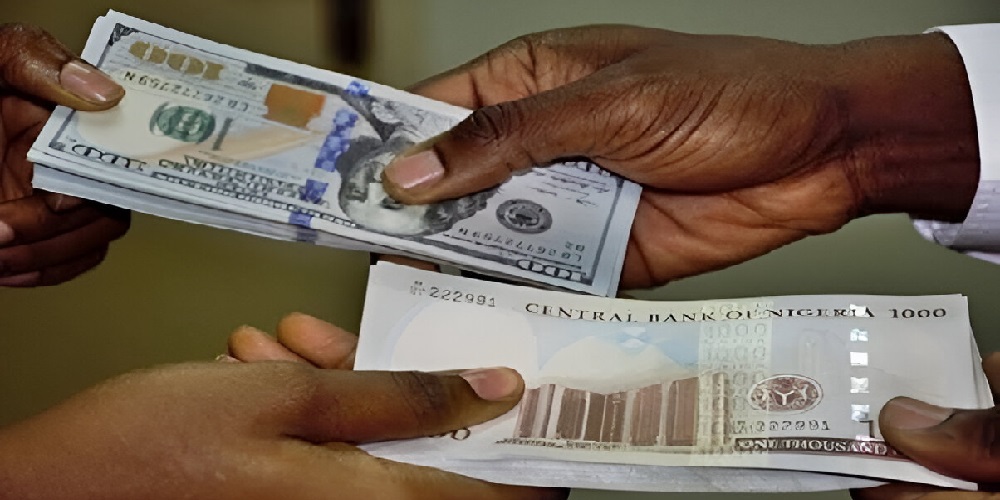


Understanding the dynamics of the foreign exchange market is crucial for individuals and businesses engaged in international transactions. The exchange rate between the U.S. Dollar (USD) and the Nigerian Naira (NGN) has experienced notable fluctuations in recent times. This article provides an overview of the current exchange rates, historical trends, and factors influencing these changes as of Tuesday, March 11, 2025.
Current Exchange Rates
As of March 11, 2025, the exchange rates are as follows:
Date Official Exchange Rate (USD to NGN): 1 USD = 1,559.65 NGN
Black Market Rate (USD to NGN): 1 USD = 1,561.00 NGN11-03-2025
Note: The official exchange rate is sourced from historical data, while the black market rate is based on user-reported information.
Recent Trends and Fluctuations
Over the past week, the USD/NGN exchange rate has exhibited the following movements:
High: 1 USD = 1,559.65 NGN on 11-03-2025
Low: 1 USD = 1,493.99 NGN on 04-03-2025
The most significant 24-hour change occurred on 11-03-2025, with a 2.118% increase in value.
Factors Influencing the Exchange Rate
Several factors have contributed to the recent fluctuations in the USD/NGN exchange rate:
Oil Prices: Nigeria’s economy is heavily reliant on oil exports. Variations in global oil prices directly impact foreign exchange earnings, influencing the Naira’s value.
Inflation Rates: Higher domestic inflation can erode the Naira’s purchasing power, leading to depreciation against the USD.
Monetary Policy: Decisions by the Central Bank of Nigeria regarding interest rates and foreign exchange interventions play a pivotal role in stabilizing the Naira.
Political Stability: Political events and policy decisions can affect investor confidence, thereby impacting currency value.
Implications for Stakeholders
Importers and Exporters: Fluctuating exchange rates can affect the cost of goods and services, influencing profit margins.
Investors: Currency volatility may impact returns on investments denominated in foreign currencies.
General Public: Exchange rate movements can affect the prices of imported goods, thereby influencing the cost of living.
Conclusion
Staying informed about exchange rate trends is essential for effective financial planning and decision-making. As of March 11, 2025, the USD to NGN exchange rate reflects both global economic conditions and domestic factors. Individuals and businesses are advised to monitor these trends closely and consult financial experts when making currency-related decisions.
Disclaimer: Exchange rates are subject to continuous change.

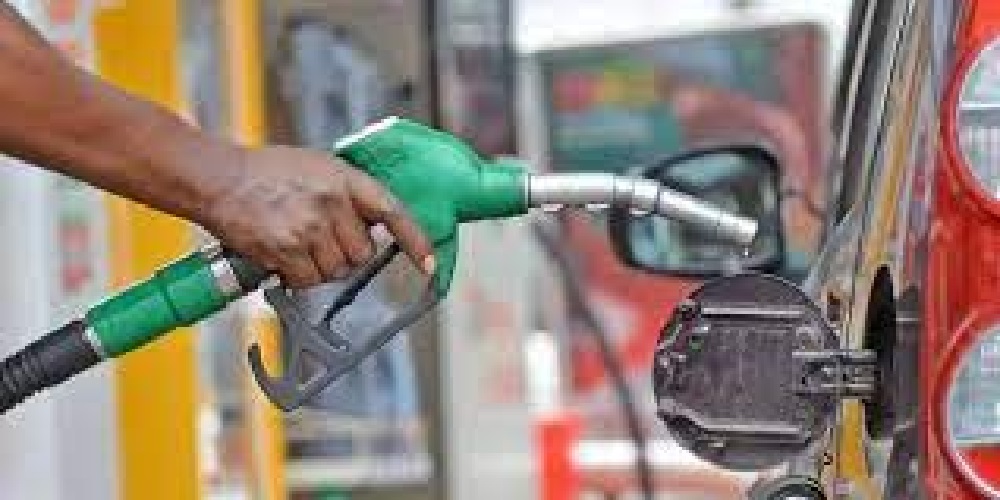
The Nigerian National Petroleum Company Limited, NNPCL, and other filling stations have increased their Premium Motor Spirit (PMS) pump price for the second time in less than 24 hours following Dangote Refinery’s gantry price hike.
The state-owned oil firm on Sunday adjusted its pump price from N967 to N1,082 per liter in Abuja and its environs, representing a N115 increase per liter.
This followed an earlier adjustment from N960 to N967. With the latest hike, NNPCL retail outlets have raised petrol prices by N207 in less than a week.
The latest prices have been implemented across NNPCL retail outlets in Kubwa Expressway, Gwarimpa, Wuse Zone 6, Zone 4, and Lifecamp.
Similarly, other filling stations, including MRS, AA Rano Ranoil, and Empire Energy, have adjusted their fuel pumps at least twice, with prices now ranging between N1,092 and N1,150 per liter, up from around N960 to N980 per liter.
Speaking on the fuel price hike, the National President of the Petroleum Products Retail Outlets Owners Association of Nigeria, Billy Gillis-Harry, said the domestic petrol price increase is linked to global crude oil price volatility.
“The Dangote Refinery gantry petrol price hike and retail price adjustment are due to crude price volatility caused by the Iran–US–Israel conflict affecting the Gulf region,” he said.
He, however, called on oil sector regulators in Nigeria to intervene to prevent further petrol price volatility.
Recall that Dangote Refinery had increased its petrol gantry price by N121, from N874 to N995 per liter, as crude oil prices surged above $90 per barrel.


The naira ended the second week in a significant depreciation against the dollar in official and parallel foreign exchange markets.
On Friday, the Central Bank of Nigeria’s data showed that the Naira further slipped to N1,393.26 per dollar, down from N1,387.45.
This means that on a day-to-day and week-on-week basis, the Naira dropped by N5.81 and N29.87, respectively, against the dollar. Meanwhile, in the last two weeks, the naira has slumped by N46.94 to the dollar at the official market.
Similarly, at the black market, the Naira dipped by N45 to N1,415 on Friday, down from around N1,370 per dollar on February 23, 2026, according to multiple Bureau de Change operators in Wuse Zone 4, Abuja.
The local currency decline across foreign markets comes after the apex bank mopped up dollars from the market by way of intervention, a move that was confirmed by President Bola Ahmed Tinubu in a recent remark.
The Nigerian naira on Tuesday continued to wobble against the dollar across official and parallel foreign exchange markets on Tuesday amid inaction by the Central Bank of Nigeria.
CBN data showed that it depreciated on Tuesday to N1,384.29 per dollar, down from N1,378.0246 on Monday.
This means that on a day-to-day basis, the Naira dipped by N6.26 against the dollar.
Similarly, at the black market, the Naira dropped by N10 to N1390 per dollar on Tuesday from N1380 traded on Monday.
Recall that the disparity between both foreign exchange markets stood at N5.71 per dollar as of Tuesday.
In more than eight days now, the naira has sustained depreciation against the dollar after the apex bank mopped up dollars from the market.
This comes despite the continued surge of the country’s external reserves, which stood at $49.69 billion as of February 27, 2026.
Recall that on Tuesday, President Bola Tinubu nominated Taiwo Oyedele, former of the Presidential Fiscal Policy and Tax Reforms Committee, as Minister of State, Finance, a ministry supervised by Minister of Finance Wale Edun.

Iran war ‘pretty much’ over – Trump

‘I’ve never fought my husband over infidelity’ – Omotola Jalade-Ekeinde

Petrol May Hit N2,000 per Litre Amid Refinery Price Hike, PETROAN Warns




-

 News23 hours ago
BREAKING: HoCS building in Abuja engulfed by fire(Video)
-

 News22 hours ago
Qatar LNG Shutdown Sends European Gas Prices Soars Over 50percent
-

 News22 hours ago
Bwala’s Al-Jazeera interview made a spectacle of Nigeria, disgraceful to Tinubu – Moghalu
-

 News21 hours ago
Energy supply crisis looming, crude price- rise above $110 as middle east war escalates
-

 Politics20 hours ago
Breaking,: PDP Leadership Dispute: Appeal Court nullifies Ibadan Convention
-

 News20 hours ago
BREAKING: Appeal Court Upholds judgment stopping 2025 PDP National Convention
-

 News13 hours ago
BREAKING! Finally, Zamfara gov, Lawal defects from PDP to APC
-

 News2 hours ago
Qatar Arrests 313 People For Sharing Iranian Missile Attack Footages
You must be logged in to post a comment Login