News
Hajj commission in trouble over N90bn subsidy as Reps insist there were infractions
- /home/naijuinz/public_html/wp-content/plugins/mvp-social-buttons/mvp-social-buttons.php on line 27
https://naijablitznews.com/wp-content/uploads/2024/12/hajj.jpg&description=Hajj commission in trouble over N90bn subsidy as Reps insist there were infractions', 'pinterestShare', 'width=750,height=350'); return false;" title="Pin This Post">
- Share
- Tweet /home/naijuinz/public_html/wp-content/plugins/mvp-social-buttons/mvp-social-buttons.php on line 72
https://naijablitznews.com/wp-content/uploads/2024/12/hajj.jpg&description=Hajj commission in trouble over N90bn subsidy as Reps insist there were infractions', 'pinterestShare', 'width=750,height=350'); return false;" title="Pin This Post">
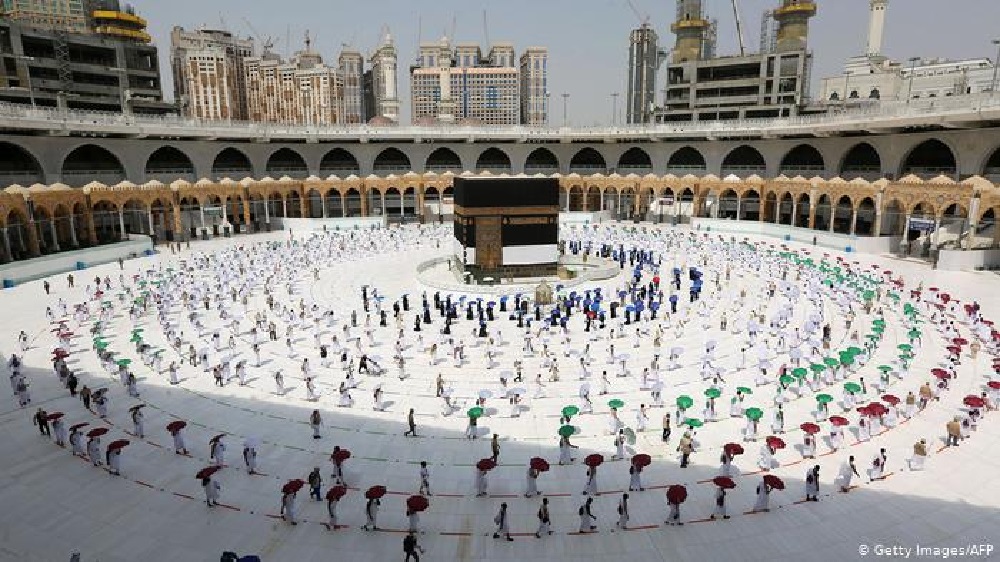
The House of Representatives ad hoc committee investigating the National Hajj Commission of Nigeria over the 2024 Hajj exercise has found the commission guilty of several infractions.

Chaired by the member representing Jibia/Kaita Federal Constituency in Katsina State, Sada Soli, the committee has submitted its report, outlining its findings and recommending reforms to prevent similar issues in future Hajj operations.
At a plenary on July 14, 2024, presided over by Speaker Tajudeen Abbas, the House set up the ad hoc committee to probe the operations of NAHCON and the Federal Capital Territory Administration Muslim Pilgrims Board following a motion sponsored by Mr. Omar Bio, representing Buruten/Kaima Federal Constituency of Kwara State.

In May 2024, the Bola Tinubu-led government provided a N90bn subsidy for the Hajj exercise.
This move sparked discontent among many Nigerians, particularly in light of the ongoing hardships exacerbated by the removal of the fuel subsidy.
Critics argued that the subsidy should have been directed toward addressing more pressing national issues rather than a religious obligation.
Despite the Federal Government’s intervention, state governors expressed dissatisfaction with NAHCON’s handling of the operation, particularly regarding accommodation in Muna and the inadequate Basic Travel Allowance for pilgrims.
In response to growing criticism, President Tinubu relieved NAHCON Chairman, Jalal Arabi, of his duties in August 2024, replacing him with Abdullahi Usman.
Prior to this, the Economic and Financial Crimes Commission had indicted Arabi and NAHCON’s secretary, Abdullahi Kontagora, in connection with an alleged multi-million-dollar fraud scheme.
The Reps committee accepted memoranda from key Hajj stakeholders, including the Association for Hajj and Umrah Operators of Nigeria, which represents licensed private tour operators, detailing severe challenges faced in dealings with NAHCON.
A copy of the report, exclusively obtained by The PUNCH, revealed a series of infractions, including financial mismanagement, logistical challenges, and a lack of transparency.
The committee uncovered serious deficiencies in the quality of accommodation provided to Nigerian pilgrims, particularly in Mina and Arafat, where tent allocations were inadequate despite the high fees paid.
Overcrowding in Tent A (VIP Tent) was exacerbated by a change in Saudi Hajj policy barring upgrades on the e-track platform, causing distress among high-profile pilgrims such as governors and traditional rulers.
Furthermore, many pilgrims who paid premium rates were housed in substandard facilities, leading to disputes and dissatisfaction.
The investigation revealed a lack of harmony between NAHCON and licensed tour operators, marked by poor communication and mutual distrust.
Tour operators raised concerns about discrepancies in NAHCON’s fee structure, citing inconsistencies in charges imposed on private operators versus state-sponsored pilgrims.
Hostility between the two entities hindered smooth coordination, leading to service failures that directly impacted pilgrims.
The exclusion of tour operators from key policy decisions deepened the divide.
The committee raised significant concerns regarding NAHCON’s financial management.
Pilgrims paid as much as N9m each, yet there was no clear breakdown of charges or justification for the high costs.
The N90bn federal subsidy was not transparently distributed, with some pilgrims benefiting more than others without clear criteria.
There were allegations of financial mismanagement within NAHCON, which contributed to the dismissal of its chairman over fraud-related concerns.
Additionally, NAHCON transferred the entire subsidy amount into its offshore accounts in Saudi Arabia, but there was no tracking mechanism to verify how these funds were spent.
The committee also examined Nigeria’s Bilateral Air Agreement with Saudi Arabia, which mandates that a Saudi airline airlift 50% of Nigerian pilgrims.
This arrangement was seen as potentially disadvantageous to Nigerian airlines, limiting their participation and affecting the local aviation industry.
The committee recommended that the Nigerian Civil Aviation Authority and the Aviation Ministry clarify the terms of this agreement to protect Nigerian airlines’ interests.
The report also highlighted significant gaps in NAHCON’s regulatory oversight, citing a lack of uniform service delivery across different states.
Coordination failures between NAHCON and state pilgrims’ welfare boards resulted in varying levels of service quality for pilgrims from different states.
Accommodation arrangements posed a major challenge, with pilgrims facing overcrowding and poor living conditions in Medina and Mina.
Transportation logistics were another area of failure, with delays in movement between Makkah, Mina, and Jeddah causing severe distress to pilgrims.
Elderly pilgrims were forced to walk long distances due to poor coordination of buses, while others were left stranded at checkpoints. Financial mismanagement within the FCT Muslim Pilgrims Welfare Board was also exposed, particularly overspending on staff delegation.
Although only 20 officials were budgeted for, 54 were sent on Hajj, leading to unpaid estacodes and additional financial strain.
The report also examined the role of the Central Bank of Nigeria in handling the Personal Travel Allowance for pilgrims.
The CBN highlighted the challenges posed by fluctuating exchanged rates between May 15 and May 30, 2024, and the resistance among pilgrims to electronic card payments.
The committee noted that the CBN recommended NAHCON submit the full list of intending pilgrims at least 30 working days before departure to allow banks sufficient time to process payments and avoid last-minute pressures.
To prevent a repeat of the 2024 issues, the committee recommended publishing a detailed breakdown of Hajj fees, justifying each charge.
The Personal Travel Allowance system should be reviewed to ensure fair and adequate disbursement to pilgrims, with an upward review of the $500 PTA to a more reasonable amount.
An independent audit of NAHCON’s financial records should be conducted to identify and address financial mismanagement.
Stricter penalties for service providers who fail to meet their contractual obligations were also suggested.
Furthermore, the committee recommended a review of the Bilateral Air Agreement to protect Nigerian airlines’ interests and the creation of an independent complaints resolution mechanism for pilgrims.
The committee also proposed the establishment of a Hajj Tribunal to resolve disputes promptly.
The breakdown of the subsidy expenditure lacked proper transparency, with NAHCON
Officials providing conflicting figures during the investigation. According to NAHCON, N79bn was allocated to 48,414 state pilgrims, while N7bn was given to 1,884 Hajj Savings Scheme (HSS) pilgrims.
However, there was an unaccounted balance of N4bn, which NAHCON failed to properly explain. The commission claimed to have used the funds to sponsor one thousand officials to the hajj; it was however unable to provide verifiable records of these officials to authenticate this position. This raised serious red flags about whether the full subsidy was utilized for its intended purpose or if portions were mismanaged.
The committee also found that NAHCON transferred the entire subsidy amount into its offshore accounts in Saudi Arabia, but there was no clear tracking mechanism for how these funds were spent.
This lack of accountability made it difficult to verify whether the funds were used strictly for subsidy purposes or diverted for other expenses. Furthermore, there were inconsistencies in how much each pilgrim actually benefited from the subsidy, with reports suggesting that some pilgrims received little or no reduction in their total Hajj fees.
Another critical issue was the absence of a structured refund mechanism for surplus funds. Some state pilgrims were downgraded in accommodation or received lower-quality services than promised, yet there was no evidence that excess funds were refunded to them.
Additionally, the committee discovered that some service providers had refunded certain amounts to NAHCON, but there was no clear record of these refunds reaching the affected pilgrims. This raised further questions about the handling of surplus funds and the overall accountability of NAHCON’s financial operations.
Meanwhile, the spokesperson for the National Hajj Commission of Nigeria, Fatima Usara has pledged the readiness of the agency to continuously seek ways to improve on Hajj operations for intending pilgrims.
In an interview with The PUNCH, Fatima denied knowledge of NAHCON’s indictment, saying, “What I read on the pages of newspapers are resolutions and recommendations for further action. Personally, I am yet to see the full report so I cannot ascertain your claims.
“However, NAHCON has always reiterated its readiness to continue working on improving Hajj operations for Nigerian pilgrims and will continue to work closely with relevant stakeholders interested in improving the welfare of Nigerian pilgrims.” [The Punch]
News
Group Urges NASS to Speedily Pass Child Online Safety Bill
…say Nigerian children face growing threats of cyberbullying, grooming and oline exploitation
By Gloria Ikibah
Child rights advocates have called on the National Assembly to fast-track the passage of a bill aimed at protecting Nigerian children from online abuse, cyberbullying, exploitation and other digital threats.
The appeal was made during a stakeholders’ roundtable in Abuja on Friday, where campaigners, legal experts and education stakeholders expressed concern over the increasing dangers facing children in the digital space.
At the centre of the discussions was the proposed “Child Online Access Protection and Online Violence Against Nigerian Child Bill”, which seeks to criminalise various forms of online abuse targeting minors and establish stronger safeguards for children using the internet.
The proposed legislation also seeks to introduce a 0.02 per cent levy on the assessable profits of search engines, telecommunications service providers, artificial intelligence companies, gaming platforms, streaming services and social media application vendors operating in Nigeria to support implementation of the law.
The call comes against the backdrop of a 2018 UNICEF report which revealed that a new child goes online every half second globally. The report also highlighted the scale of the challenge in Nigeria, where about 90 per cent of children are exposed to online risks, including cyberbullying, inappropriate content and exploitation.
Speaking at the event, the Country Director of Lawyers Without Borders in Nigeria, Ms Angela Uzoma, said the proposed legislation will have a direct impact on the lives of millions of Nigerian children.
According to her, widespread access to digital devices has increased children’s exposure to online dangers, making legal protection more urgent than ever.
She said: “So every Nigerian, whether you are a biological parent or not, whether you are an aunt or an uncle, whether you are a child or an adult, you should be interested and should support this bill.
“When we talk about online harms that children are exposed to, it ranges from issues around cyber bullying, grooming, child exposure to sexualual violence, sexual abuse.
“We have children being groomed, we have children, being threatened online. We have children, we have predators, pretending to be children and targeting children.
“We have sextortion going on, children are being tricked into exposing intimate parts of their bodies, to adults, who are hiding and pretending to be children.
“So everyone in Nigeria should be interested in having joining their voices to call on the Nigerian Senate to pass this bill.”
Uzoma noted that nearly 90 per cent of Nigerian children now have access to digital devices either at home, in school or through friends, exposing them to a broad range of online threats and abuse.
Also speaking, Coordinator of the General Unit at the National Assembly, Ms Christiana Eguma, said the bill was designed to improve online safety for children in an increasingly digital world.
She observed that many children access the internet without adequate supervision, making them vulnerable to harmful content and online predators.
Eguma explained that the legislation would also place responsibility on digital platforms to proactively prevent abuse and harmful content targeting children.
“It puts accountability on the platform themselves so that they can take responsibility of putting down some of these negative things early enough.
“It seeks to ensure that from the parents to the school, to the children, everybody is responsible enough to protect children online.
“So the bill seeks to ensure children are protected from the adult, and from even their own peers that are bullies, and we are calling on the National Assembly to pass the bill so that the Nigerian children can be protected from all harm,” she said.
On his part, education advocate Mr Oluwasesan Ifegbesan stressed that safeguarding children online should be a collective responsibility.
He called on parents, educators and the wider public to remain vigilant and actively guide children on the safe use of the internet and social media platforms.
Stakeholders at the roundtable agreed that while technology offers significant opportunities for learning and development, stronger legal protections and greater public awareness are needed to shield children from growing online threats.
They expressed optimism that the proposed legislation, if passed, would strengthen Nigeria’s child protection framework and help create a safer digital environment for millions of young internet users across the country.
News
Breaking: Finally police rescue Adelabu’s sister, her twins
By Kayode Sanni-Arewa
Operatives of the Nigeria Police Force have rescued Olaide Busayo Adegoke John-Paul, the sister of a former Minister of Power, Adebayo Adelabu, and her 12-year-old twin sons: Peter and Paul.
According to available information, they were rescued at about 7:30pm on Saturday in a heavy gun duel with their abductors.
Sources revealed that no fewer than two of the kidnappers were neutralised, while others escaped with gunshot wounds.
Recall that John-Paul and her twins were kidnapped on June 3, 2026 around 7:30am while she was driving them to school.
Details shortly…
News
‘If You Can’t Halt Insecurity, Step Aside’ — Apostle Suleman
The General Overseer of Omega Fire Ministries International, Johnson Suleman, has urged President Bola Ahmed Tinubu to consider stepping down if his administration is unable to effectively tackle the growing insecurity threatening lives and livelihoods across Nigeria.
The outspoken cleric made the remarks while addressing members of his congregation during a church service, where he expressed concern over the persistent wave of terrorism, banditry, kidnappings, and violent attacks in different parts of the country.
Suleman argued that the government’s approach to combating insecurity must shift from targeting only armed attackers to identifying and dismantling the networks of individuals allegedly financing and sustaining terrorist activities.
According to him, the true challenge facing Nigeria is not merely the criminals carrying out attacks but the powerful sponsors who provide them with resources, weapons, logistics, and financial support.
The preacher stressed that any serious effort to defeat terrorism must begin with exposing and prosecuting those behind the scenes who enable extremist groups to operate.
“The sponsors of terrorism are the real problem confronting the nation. The government should focus on them. If the President cannot deal decisively with those people, then he should resign and allow someone else to take over the responsibility,” Suleman declared.
He further claimed that many of the young men currently involved in violent activities are products of extremist networks that have existed for years and were allegedly allowed to expand unchecked.
According to him, some of the individuals now seen carrying sophisticated weapons were children during the early stages of insurgent activities and have since grown into active participants in criminal and terrorist operations.
Suleman maintained that arresting or eliminating foot soldiers alone would not end insecurity, insisting that authorities must trace and neutralize those who recruit, fund, and arm violent groups.
“The young boys carrying assault rifles today did not emerge overnight. There are people empowering them, financing them, and providing the resources that sustain their activities. Until those sponsors are identified and brought to justice, the problem will persist,” he said.
Despite his criticism of the government’s handling of the security situation, the cleric praised Nigeria’s security institutions, describing them as highly professional and capable of confronting the country’s challenges when adequately supported.
Drawing from his international travels, Suleman said he has confidence in the abilities of the Nigerian military, the police, and the Department of State Services (DSS), arguing that the country possesses competent personnel capable of delivering results.
“I have visited many countries around the world, and I can confidently say that the Nigerian Army, the Nigeria Police Force, and the DSS rank among some of the finest security institutions globally. The issue is not necessarily a lack of capacity but the willingness to take bold action against those driving insecurity,” he stated.
The cleric emphasized that stronger political resolve is required to dismantle criminal and terrorist networks operating across the country. He warned that insecurity would continue to worsen unless those allegedly sponsoring violence are exposed, arrested, and prosecuted under the law.Politics
His comments come at a time when many Nigerians are increasingly concerned about the security situation, particularly in regions affected by recurring kidnappings, terrorist attacks, communal violence, and banditry.
Citizens, civil society groups, religious leaders, and political stakeholders have repeatedly called on the Federal Government to intensify efforts aimed at restoring safety and public confidence.
Suleman’s remarks are likely to add to the growing national conversation on security and governance, as pressure mounts on the Tinubu administration to deliver lasting solutions to the country’s security challenges.
The cleric concluded by urging the government to stop treating insecurity as a routine criminal issue and instead confront what he described as the broader network allegedly sustaining terrorist operations throughout Nigeria.
-
News21 hours agoNigerians Outraged As Bandits Release Videos Of R@pe Of Female Victims
-
Metro21 hours agoDSS And Forest Guards Intercept Medical Supplies Suspected To Be Meant For Injured ISWAP Fighters In Borno State
-
News21 hours agoDoris Ogala Hospitalised After Collapse
-
News21 hours ago397 Nigerians undergo screening to leave S’Africa
-
Metro21 hours agoN36m fraud trial: Court adjourns judgment on Blessing CEO’s bail
-
News21 hours agoSupreme Court upholds death by hanging for kidnapper
-
Foreign21 hours agoTrump says Iran has 22% of missiles left
-
News21 hours agoBandits destroy houses, kidnap pastor’s nine-year-old son in Ondo

Warning: Undefined variable $user_ID in /home/naijuinz/public_html/wp-content/themes/zox-news/comments.php on line 49
You must be logged in to post a comment Login