
Foreign
EU says it prefers negotiations, but proposes first tariffs on US imports


- /home/naijuinz/public_html/wp-content/plugins/mvp-social-buttons/mvp-social-buttons.php on line 27
https://naijablitznews.com/wp-content/uploads/2025/03/European-Union-EU.jpg&description=EU says it prefers negotiations, but proposes first tariffs on US imports', 'pinterestShare', 'width=750,height=350'); return false;" title="Pin This Post">
- Share
- Tweet /home/naijuinz/public_html/wp-content/plugins/mvp-social-buttons/mvp-social-buttons.php on line 72
https://naijablitznews.com/wp-content/uploads/2025/03/European-Union-EU.jpg&description=EU says it prefers negotiations, but proposes first tariffs on US imports', 'pinterestShare', 'width=750,height=350'); return false;" title="Pin This Post">


The European Commission said on Monday it had offered a “zero-for-zero” tariff deal to avert a trade war with U.S. President Donald Trump as EU ministers agreed to prioritise negotiations, while striking back with 25% tariffs on some U.S. imports.
The 27-nation bloc faces 25% import tariffs on steel and aluminium and cars and broader tariffs of 20% from Wednesday for almost all other goods under Trump’s policy to hit countries he says impose high barriers to U.S. imports.
On Monday evening, the Commission proposed its first retaliatory tariffs at 25% on a range of U.S. imports in response to Trump’s steel and aluminium tariffs rather than the broader levies.
However, the list was shortened after the EU executive bowed to pressure from member states and removed bourbon, wine and dairy after Trump threatened a 200% counter-tariff on EU alcoholic drinks. France and Italy, major exporters of wine and spirits, were particularly concerned.
EU trade chief Maros Sefcovic said earlier on Monday the retaliation would impact less than the previously announced 26 billion euros ($28.4 billion). The tariffs for most of the goods will go into effect May 16 and some from December 1.
Ministers overseeing trade met in Luxembourg on Monday to debate the EU’s response and discuss relations with China. Many said the priority was to launch negotiations to remove Trump’s tariffs, rather than fight them.
Michal Baranowski, deputy economy minister of Poland, told a press conference after the meeting that his EU counterparts did not want to be “trigger-happy”.
Sefcovic said discussions with Washington were at an early stage and that he had offered “zero-for-zero” tariffs for cars and other industrial products, expressing hope that discussions could begin.
However, Trump’s top trade adviser on Monday dismissed tech-billionaire Elon Musk’s push for “zero tariffs” between the U.S. and Europe, calling the Tesla CEO a “car assembler” reliant on parts from other countries.
“While the EU remains open to – and strongly prefers – negotiation, we will not wait endlessly,” Sefcovic said, adding the bloc would push ahead with countermeasures and steps to avoid floods of diverted imports.
The EU is set to approve the first retaliatory measures this week. The bloc will start collecting the tariffs on April 15, with a second tranche starting a month later.
The removal of bourbon from the list of items subject to the EU’s retaliatory tariffs on U.S. imports “would be great news, and we are hopeful this is the case,” said Chris Swonger, chief executive of the Distilled Spirits Council of the United States. “It would be the first step toward getting the U.S.-EU spirits sectors back to zero-for-zero tariffs and untangling distilled spirits products from these wider trade disputes.”
EU KEEPS ALL RETALIATION OPTIONS OPEN
The bloc is expected to produce a larger package of countermeasures by the end of April, as a response to U.S. car and broader tariffs.
Sefcovic said the EU was ready to consider all retaliatory options. One is the EU’s Anti-Coercion Instrument, which allows it to target U.S. services or to limit U.S. companies’ access to EU public procurement tenders.
“We are prepared to use every tool to protect (the) single market,” he said, echoing the views of French Trade Minister Laurent Saint-Martin.
In a war of tariffs on goods, Brussels has less to target than Washington, given EU goods imports from the U.S. totalled 334 billion euros ($366.2 billion) in 2024, against 532 billion euros of EU exports to the U.S.
Some EU countries, particularly those exposed to trade with the United States, urged caution. Irish Foreign Minister Simon Harris described the Anti-Coercion Instrument as “very much the nuclear option.”
Baranowski of Poland said EU members were willing to keep options open, with a stress on proportionality.
“There were various ideas put on the table. Some countries mentioned services. Others didn’t. Some countries mentioned digital services, others didn’t,” he said.
Outgoing German Economy Minister Robert Habeck said the EU should realise it was in a strong position – if it was united.
“The stock markets are already collapsing and the damage could become even greater … America is in a position of weakness,” he said in Luxembourg.
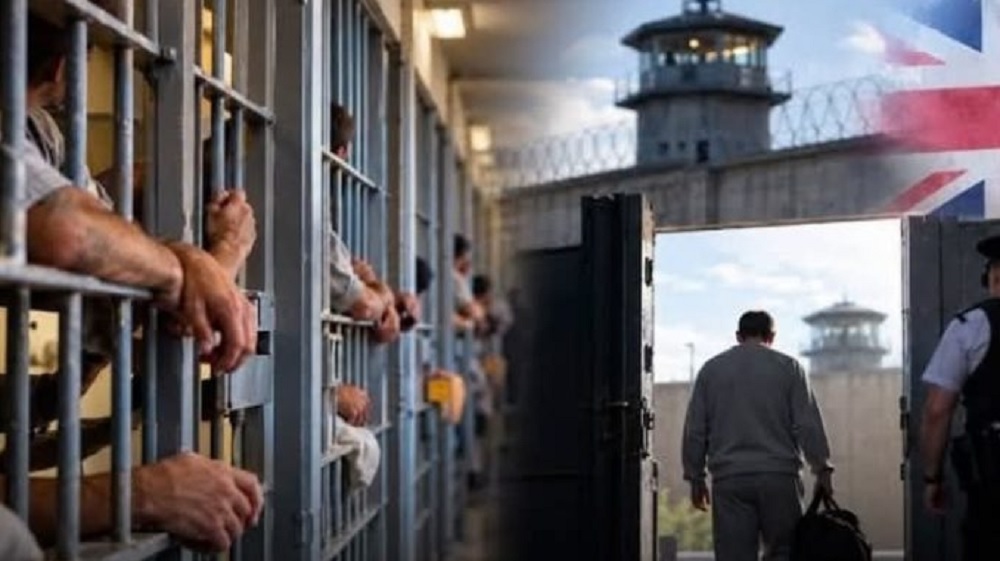
Hundreds of inmates across England and Wales are expected to walk free from prison on Thursday under an expanded early release programme, amid concerns that many could be left homeless and the probation system may struggle to supervise them.
About 2,000 offenders, including domestic abusers and violent criminals, are scheduled for release over the next month, while another 3,000 will be freed in phases over the following year to ease prison overcrowding. The initial target of 6,000 was reduced following Prime Minister Keir Starmer’s intervention.
However, probation officers have warned that accommodation shortages could force some former inmates onto the streets, despite evidence that securing housing after prison helps reduce reoffending.
A probation source told The Guardian: “We have a handful of places for ex-offenders and they are full. We are now looking at releasing some people straight on to the street.”
Enver Solomon, chief executive of charity Nacro, warned that homelessness after incarceration could increase the likelihood of offenders returning to prison.
Meanwhile, probation officers’ union Napo accused prison authorities of ignoring the challenges facing the service, including staff shortages, excessive workloads and problems with electronic monitoring.
Its national chair, Ben Cockburn, described the situation as absolute denial.
The expanded scheme, introduced under the 2026 Sentencing Act, allows eligible prisoners serving fixed-term sentences to qualify for release after serving one-third instead of 40%.
However, certain offenders, including those convicted in child grooming gang cases, indecent a§§ault and mansla¥ghter, are excluded.
The Ministry of Justice also announced plans to expand electronic tagging, but a recent watchdog report revealed that some offenders waited up to five months for monitoring devices, with only 55% of GPS and radio frequency tags installed on schedule.
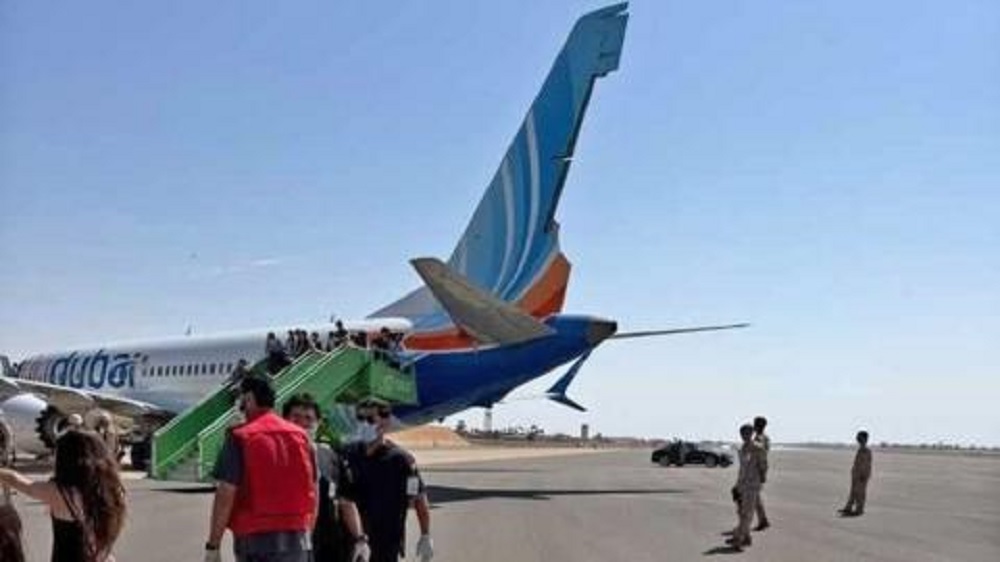
Passengers aboard a Flydubai flight from Dubai to Israel were thrown into panic on Wednesday after one of the pilots allegedly stabbed his co-pilot and attempted to take control of the aircraft.
The incident occurred aboard Flydubai Flight FZ1073, carrying about 150 Israeli passengers, as the Boeing 737 was travelling from Dubai to Israel.
According to flight-tracking data cited in reports, the aircraft dramatically lost approximately 13,000 feet in about 30 seconds and veered off its course, triggering fears that the plane could crash.
The situation reportedly escalated when passengers heard screams coming from the cockpit. Some passengers subsequently rushed toward the cockpit after it was opened and found one of the pilots bleeding.
A passenger who spoke to Israel’s Channel 12 described the terrifying moments aboard the aircraft.
“We heard screams on the plane. Then they opened the cockpit and we saw blood, and someone had stabbed the pilot with a pocketknife.”
The passenger added: “We prayed. There were also moments when we thought we weren’t going to make it out alive.”
According to the reports, two other pilots who were aboard the flight intervened and took control of the aircraft, preventing a potentially catastrophic outcome.
The aircraft was subsequently diverted and made an emergency landing at Tabuk Airport in northwestern Saudi Arabia, where security personnel took charge of the situation.
The passengers were later safely evacuated from the aircraft.
Israeli officials described the incident as one in which a “major disaster was narrowly avoided.”
Israeli security agencies, including the Israel Defense Forces (IDF), Mossad and Shin Bet, are reportedly examining the incident as a possible act of terrorism.
The circumstances surrounding the alleged stabbing, including the identity and motive of the attacker and how the cockpit was accessed, remain subject to investigation.
NewsMediaNG will continue to monitor developments as authorities provide further details.
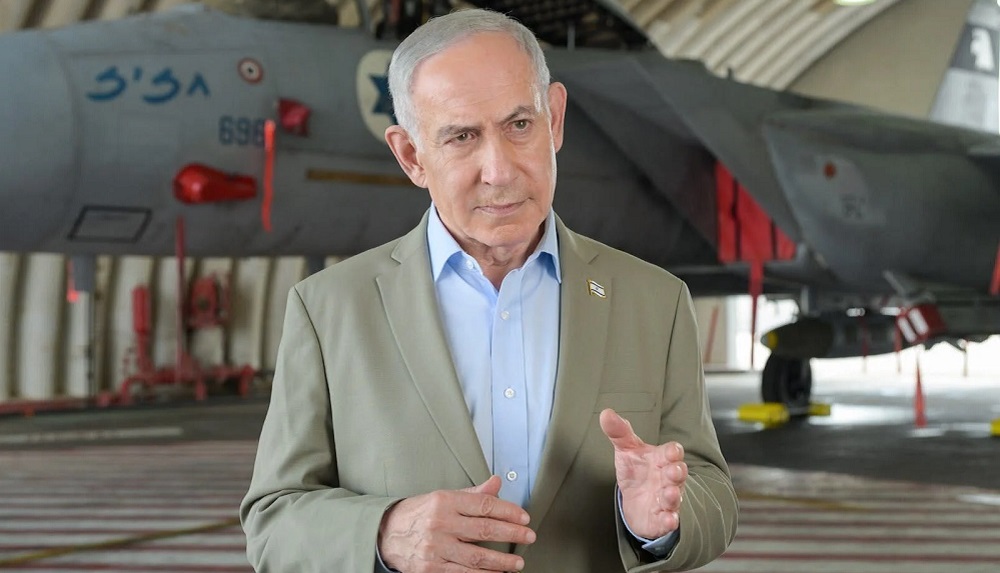
Israeli Prime Minister, Benjamin Netanyahu on Tuesday issued a stern warning to Israel’s enemies, declaring that the country’s military will continue to operate on all fronts and will reach any threat anywhere, at any time.
The Prime Minister spoke during a visit to the IDF Air Force Tel Nof base, where he met with pilots and ground crews. Flanked by members of the Israeli Air Force, Netanyahu said Israel’s operations have achieved significant results in recent weeks, particularly in Gaza and Lebanon.
“I am here at the Air Force base with our heroic pilots and our outstanding ground crews. We are operating constantly on all fronts,” Netanyahu said.
He disclosed that Israeli forces have eliminated key terrorist figures in Gaza in recent days. According to the Prime Minister, two days ago, forces killed the terrorist responsible for kidnapping Noa Argamani and Avinatan Or.
Argamani, who became one of the most recognized faces of the October 7th hostage crisis after video of her abduction went viral, was rescued in a special operation in June 2024 alongside three other hostages. Or was also rescued.
“We brought them home, and we eliminated him. Last night, we eliminated the commander of Hamas’s Northern Gaza Brigade. He joined his predecessors, whom we also eliminated,” Netanyahu stated.
He said the latest operations are part of a broader offensive that has seen more than 100 terrorists eliminated in Gaza in recent weeks alone.
“All told, in recent weeks we have eliminated more than 100 terrorists — and that is just in Gaza. Of course, we are also operating in Lebanon. You remember what we did to the Ali Taher Ridge,” he asked, referring to recent Israeli strikes in southern Lebanon targeting Hezbollah infrastructure.
The Prime Minister acknowledged that despite military achievements, Israel is facing mounting international and domestic pressure to scale back operations and agree to withdrawals.
“There have been tremendous achievements, but there are also tremendous pressures — pressure to withdraw, to give up the great achievements secured through the heroism of our fighters. I am not allowing that to happen, and I will not allow it to happen,” he vowed.
Netanyahu also issued a direct warning to hostile actors he said may attempt to attack Israel ahead of the country’s upcoming elections. He said intelligence indicates that Israel’s enemies may seek to exploit the election period.
“We have indications that, ahead of the elections, our enemies will try to attack us. So from here, from this Air Force base, from the long arm of the State of Israel, I have a message for them: Don’t mess with us — not now, and not ever. Our long arm will reach you anywhere, at any time,” the Prime Minister boastfully declared.
The visit to Tel Nof, one of the Israel Defense Forces’ principal air bases and home to several fighter squadrons and transport units, comes as the IDF continues to maintain high alert across multiple fronts, including Gaza, the northern border with Lebanon and Syria, and the West Bank.
Tel Nof has played a central role in Israel’s recent long-range operations, which Netanyahu described as proof of Israel’s ability to project power far beyond its borders.
The Prime Minister also praised the airmen and ground crews, calling them “heroic” and “outstanding” and credited them with securing the achievements on the battlefield.

Political Earthquake in Zamfara as Eight APC Lawmakers Quit Party, Reportedly Eye Wike-Backed Rainbow Coalition

Five nabbed for allegedly destroying Tinubu’s posters in Kano

Tinubu’s lawyers agree there are errors in U.S. Court filing on 1990s drug probe, demand amendment



-

 News14 hours ago
Imo Police Locate Kidnappers’ Camp, Reveal Why Abducted Corps Members Are Yet to Be Rescued
-
 News13 hours ago
Was Tinubu’s Speech AI-Generated? Elon Musk’s Grok AI Makes Strong Revelation
-
 News21 hours ago
Confusion As Abductors Of Oyo Corps Members Demand ₦50m Ransom For Each Victim
-

 News13 hours ago
Edo 2027: APC Chairman ‘AK-47’ threat – Amnesty International Makes Strong Demand
-

 News13 hours ago
How I Hired Cars To Get Drivers Abducted By My Gang, Kidnap Suspect Reveals
-

 News13 hours ago
INEC Alerts Nigerians To Fake Voter Registration Website
You must be logged in to post a comment Login