News
NELFUND’s disbursements to students hit N53b
- /home/naijuinz/public_html/wp-content/plugins/mvp-social-buttons/mvp-social-buttons.php on line 27
https://naijablitznews.com/wp-content/uploads/2024/08/NELFUND.jpg&description=NELFUND’s disbursements to students hit N53b', 'pinterestShare', 'width=750,height=350'); return false;" title="Pin This Post">
- Share
- Tweet /home/naijuinz/public_html/wp-content/plugins/mvp-social-buttons/mvp-social-buttons.php on line 72
https://naijablitznews.com/wp-content/uploads/2024/08/NELFUND.jpg&description=NELFUND’s disbursements to students hit N53b', 'pinterestShare', 'width=750,height=350'); return false;" title="Pin This Post">
More than N53 billion has been disbursed by the Nigerian Student Loan Fund (NELFUND) to students in upkeep institutional fees.

A breakdown of the N53, 036,673,649.40 disbursed under the Student Loan scheme showed that the agency paid N23, 173,240.000.00 as upkeep allowance to beneficiaries and N29, 863,433,649.40 as institutional fees.
Details of the disbursement were obtained from the X handle (formerly Twitter) of NELFUND as of yesterday.

According to NELFUND, 497,717 students have applied for the loan while 561,174 have registered for the loan.
It added that 88 per cent of registrants have successfully applied for the loan.
In its projection, the agency said it hopes to disburse N112,153,680,000 as student upkeep allowance and pay N52,873,195,826 as institutional fees totalling N165,026,607,326 (N165,026,875,826 as calculated by our reporter).
Some beneficiaries of the scheme have however appealed to NELFUND for the payment of their upkeep allowances.
According to them, since they changed/updated their bank details, they have not received the upkeep allowance for close to eight months.
Responding, Director, Strategic Communications, NELFUND, Oseyemi Oluwatuyi said: “The issue with that is a bit complex. It’s a security issue.
“Anybody can come and change account details.”
What we try to do is do a lot of checks to be sure it’s safe. This is being done for the sake of the students themselves. But it will be resolved soon.”
The Student Loan scheme was launched by President Bola Ahmed Tinubu on July 17 after signing the Bill on April 3, last year.
According to the law, repayment will commence two years after the completion of the National Youth Service Corps (NYSC) programme.
The ambitious programme will be funded with one per cent of the total annual collectable revenue by the Federal Inland Revenue Service (FIRS).
It is one of the key initiatives of the Tinubu administration.
News
Sad! Nigerian pilgrim dies in auto crash while returning from Holy Mosque in Saudi Arabia
A 43-year-old pilgrim from Niger, Alhaji Salisu Ibrahim, has been confirmed dead in Makkah after performing the Hajj rites.
The Public Relations Officer (PRO), Niger Pilgrims’ Welfare Board, Jibrin Usman-Kodo, told the News Agency of Nigeria (NAN) on Monday that Ibrahim, who hailed from Kontagora LGA, died from injuries sustained in a road crash in Makkah.
He said the deceased was involved in the crash while returning from the Holy Mosque.
According to the PRO, the late pilgrim died on Saturday, June 13, and was buried in Makkah in accordance with Islamic rites and the sanctity of the holy land.
“The Board expresses deep sorrow over this tragic loss and extends heartfelt condolences to the family of the deceased, the people of Kontagora Local Government Area, and the entire Muslim Ummah,” he said.
Usman-Kodo said a total of 343 pilgrims from the state had been transported back in the first batch, while the second batch of 345 was expected to arrive on Monday, June 15.
He said the second batch comprises pilgrims drawn from Kontagora, Rijau, Mashegu and Chanchaga LGAs.
“The second batch of 345 returning pilgrims from Niger has arrived at King Abdulaziz International Airport, Jeddah, where they are undergoing screening and boarding formalities ahead of their return journey home,” he said.
(NAN)
News
Sokoto under siege as bandits bar farmers from farms impose new levies
Residents of at least 26 communities in Sabon Birni Local Government Area of Sokoto State have begun contributing money to pay fresh levies imposed by bandits who have also barred them from accessing their farms ahead of the wet season farming activities.
Residents told Daily Trust that the armed groups issued a three-day ultimatum, warning farmers not to visit their farmlands until the levies demanded from the affected communities were paid.
According to the sources, the affected communities include; Garin Faji, Cina Barka, Zululu, Dan Gari, Garin Maigayya, Gardi, Katsira, Garin Baushe, Sulmawa, Zakin Ganga, Dan Kware, Garje, Dogon Faru, Son Allah, Garin Galadima, Kafchi, Matabaya, Garin Labo, Zango, Kaifin Aska, Tsauna Dogo, Tudun Wada, Rambadawa, Ga Itace, Nasarawa and Garin Idi.
A resident who maintains close contact with people in the affected villages said the bandits threatened to kill or abduct anyone found farming during the period.
“The communities were given three days. They said nobody should go to the farms until the money is paid. Anyone caught farming would either be killed or kidnapped and would not regain freedom until a ransom of N500,000 is paid,” he said.
He said residents had already started contributing money to meet the demands.
A resident of Zululu village, who spoke on condition of anonymity, said he was preparing to go to his farm on Friday when he learnt of the directive.
“We were told that the bandits had banned farming activities for three days until the villages paid the levies they impose every year.
“They said they could have allowed people to go to their farms and then kill some and abduct others, but they wanted the money instead.
According to them, security operatives have been seizing their livestock, so no farming would take place until the levies were paid,” he said.
He said traditional rulers and Islamic clerics from the affected communities were expected to meet with the bandits to determine how much each village would pay before residents could resume farming.
The resident said the communities had been subjected to such payments for years.
“We pay before planting and sometimes every two or three months. Even after paying now, they may return in about three months and say nobody should harvest millet until another levy is paid.
“They usually demand between N4 million and N6 million from a community. Villagers contribute according to their means. Some households pay N1,500 or N2,000, while in some villages farmers contribute as much as N5,000 each depending on the population,” he said.
Another source, who is an indigene of Garin Idi village and currently residing in Sabon Birni town, who visited the community on Friday to sympathise with residents following the abduction of about 20 people in the early hours of the day, confirmed that the affected communities had already started raising money to pay the levies.
He alleged that when the bandits felt the payments were being delayed, they stormed Garin Idi and abducted about 20 people on Friday.
“They later told community leaders that N600,000 must be paid before the victims could be released. The money was raised and paid, leading to the release of the abductees on Friday,” he said.
The source added that five other persons were still being held captive.
“As of now, there are still five people in their custody. They said they will not release them until the levy is paid. Even after farming, they may still prevent people from harvesting until fresh payments are made,” he said.
He further alleged that farmers are often compelled to surrender part of their harvest to the bandits before they are allowed to store food in their barns.
“Every year, after harvesting, they demand part of the produce from farmers before allowing them to store their crops. This has become a recurring burden on our communities,” he said.
When contacted, the Police Public Relations Officer in Sokoto State, DSP Ahmad Rufai, said the command was not aware of the development.
“We are not aware of such a situation. Most times, communities do not report these kinds of incidents to security agencies,” he said.
Efforts to get the reaction of the Sokoto State Government were unsuccessful. Text and WhatsApp messages sent to the governor’s spokesman, Abubakar Bawa, and the Special Adviser to the Governor on Security Matters, Col. Ahmad Usman (rtd), seeking their comments on the allegations had not been responded to as of the time of filing this report.
News
Reps Launch Defence Reform Hearings as Push Grows for Stronger Military, Better Veterans’ Welfare
…as ex-servicemen call for a greater voice in proposed support structures
By Gloria Ikibah
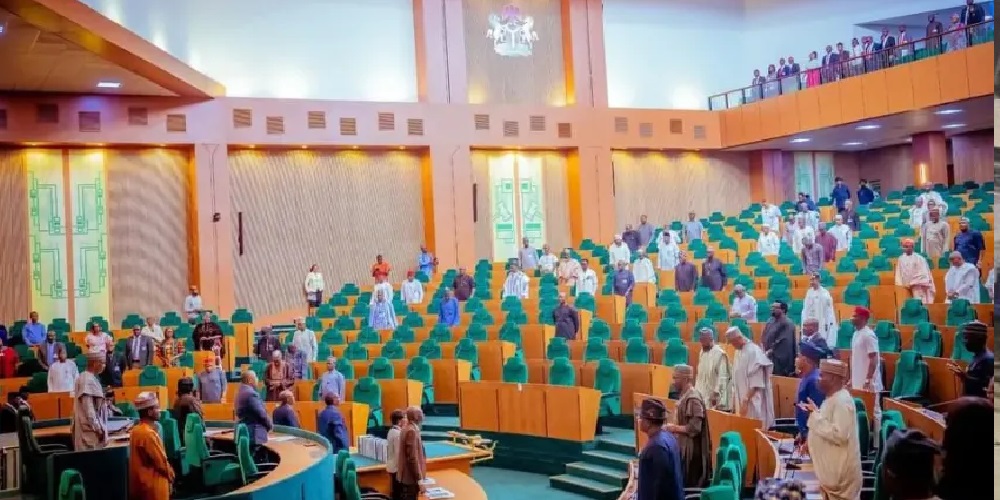
The House of Representatives has begun deliberations on a package of defence-related bills aimed at overhauling Nigeria’s military framework, enhancing the welfare of serving and retired personnel, and improving the Armed Forces’ capacity to confront the country’s increasingly complex security challenges.
The two-day public hearing, which opened on Monday at the National Assembly Complex, attracted lawmakers, military personnel, veterans, civil society groups and policy experts. Discussions centred on legislative proposals designed to modernise military operations, strengthen accountability and address emerging threats to national security.
Opening the hearing, Speaker of the House of Representatives, Rt. Hon. Tajudeen Abbas, said the proposed reforms were a direct response to the changing nature of insecurity across the country and formed an important part of the legislative priorities of the 10th House.
He pointed to the persistent threats facing Nigeria, including insurgency in the North-East, banditry and kidnappings in the North-West, farmer-herder clashes in the North-Central, separatist agitations in the South-East, as well as newer challenges such as cyber warfare, maritime piracy and organised criminal networks with links to terrorism.
“We cannot pretend that our nation is at ease. Our Armed Forces are stretched, yet they remain our first and last line of defence,” the Speaker said.
According to Abbas, the bills seek to strengthen the legal and institutional foundations of the military, ensuring that the Armed Forces become more effective, accountable, inclusive and adaptable to contemporary security realities.
Among the key proposals before lawmakers is a bill to establish an Armed Forces Farms and Ranches Scheme aimed at boosting food security, particularly in areas affected by conflict. Other measures include legislation to improve gender representation within the military, a proposal to repeal and replace the Armed Forces Act with a new Nigerian Military Force Bill, and a bill seeking the creation of a Veterans’ Federation of Nigeria to enhance support for retired service personnel.
The issue of veterans’ welfare featured prominently during the proceedings, with retired military personnel advocating stronger representation in the proposed welfare framework and greater involvement in decisions affecting former members of the Armed Forces.
Abbas assured participants that the public hearing will not be treated as a mere formality, stressing that all contributions would receive careful consideration before the bills return to the House.
“I give you my word every memorandum will be read, every oral presentation will be noted, and all relevant contributions will be considered and, where applicable, incorporated into the final reports and bills,” Abbas assured stakeholders.
He encouraged active participation from serving and retired military officers, civil society organisations, legal practitioners, gender advocates and members of the public, noting that innovative legislation would be essential in responding to the country’s multifaceted security concerns.
The Speaker also commended the House Committee on Defence for organising the hearing and expressed confidence in the committee’s ability to manage an open, transparent and inclusive process.
“We are here to serve the Nigerian people and to produce legislation that will make our Armed Forces more professional, more accountable, more gender-sensitive, and more effective in protecting lives and property,” he said.
In his welcome address, Chairman of the House Committee on Defence, Babajimi Benson, described the public hearing as a critical democratic exercise designed to ensure stakeholder participation in the lawmaking process.
According to Benson, defence legislation directly impacts national sovereignty, military effectiveness, operational readiness and the safety of Nigerians, making public input essential.
“The importance of public participation becomes even more significant when dealing with matters of defence and national security,” he said.
He explained that the bills address key areas including military education and professional development, joint operational effectiveness, medical training and healthcare support, strategic research and doctrine development, military governance reforms, food security initiatives, veterans’ welfare and inclusiveness within the Armed Forces.
“Collectively, these proposals represent an important effort to build a stronger, more professional, innovative and future-ready military institution,” Benson stated.
The lawmaker encouraged stakeholders to make oral presentations and submit memoranda, assuring them that all submissions would be carefully reviewed by the committee.
He also paid tribute to officers and soldiers of the Armed Forces of Nigeria for their dedication and sacrifices in safeguarding the nation despite difficult operating conditions.
The hearing also witnessed strong reactions from some veterans who expressed reservations about aspects of the proposed Veterans’ Federation of Nigeria Bill.
Supporters of the proposed (VFN) Bill urged lawmakers to adopt a framework they said aligns with international best practices for veterans’ welfare and representation.
In a policy brief submitted to the Committee, G.A Olonisakin speaking on behalf of veteran stakeholders argued that the debate surrounding the bill should focus on facts, global standards and the welfare of Nigerian veterans rather than on institutional sentiments or nomenclature.
The memorandum noted that in countries such as the United States, the United Kingdom, Canada and Australia, veterans’ organisations such as the American Legion, the Royal British Legion and the Royal Canadian Legion operate as non-governmental charitable associations rather than statutory government bodies.
According to the submission, responsibility for veterans’ welfare in those countries rests with dedicated government agencies, including the United States Department of Veterans Affairs, Veterans Affairs Canada, the United Kingdom’s Office for Veterans Affairs and Australia’s Department of Veterans Affairs.
The stakeholders further argued that Nigeria’s current arrangement, in which the Nigerian Legion combines the roles of both an association and a statutory government body, is uncommon internationally.
They maintained that the proposed VFN model would bring Nigeria closer to global standards by creating a government-driven umbrella body for veterans while preserving the identities of existing associations.
“The proposed Veterans Federation of Nigeria follows international practice by creating one umbrella body for all veterans and veterans’ associations, ensuring inclusiveness across Army, Navy and Air Force veterans, strengthening welfare coordination and improving engagement with government,” the memorandum stated.
The submission also sought to allay fears that the bill would undermine the Nigerian Legion, stressing that the federation would not erase the Legion’s history, traditions or identity.
Rather, it said, the Nigerian Legion would continue to exist as one of the recognised constituent bodies within the proposed federation alongside other veterans’ associations.
The position contrasted with concerns raised by some retired personnel who argued that the bill concentrates leadership positions in the hands of senior officers and called instead for the establishment of a standalone Ministry of Veterans Affairs headed by veterans.
The differing perspectives highlighted the intense interest among stakeholders in shaping the future structure of veterans’ welfare and representation in Nigeria, one of the key issues under consideration during the two-day public hearing.
Also a retired non-commissioned officer and legal practitioner, Sadiqe Nwabuezeh who identified himself as a former sergeant in the Nigerian Army, argued that the draft legislation was overly tilted in favour of senior military officers and failed to adequately accommodate the interests of rank-and-file veterans.
According to him, provisions of the bill appeared to reserve key leadership positions for retired senior officers, including the office of the Director-General, which he said was proposed to be occupied by a retired major general.
He urged lawmakers to reject the bill in its current form and instead consider the establishment of a dedicated Ministry of Veterans Affairs that would be managed by veterans themselves.
“The bill was not properly prepared. It was rushed and concentrates power in the hands of senior officers. We want a level playing ground where all veterans, regardless of rank, can participate in leadership and decision-making,” he told the hearing.
The retired soldier further questioned the involvement of serving military personnel and civilians in handling veterans’ affairs, arguing that retired personnel were best positioned to manage issues affecting former service members.
He maintained that veterans should have greater control over institutions established for their welfare and called for reforms that would guarantee broader representation across all ranks of retired military personnel.
The submission added to a range of perspectives presented by stakeholders as lawmakers continued deliberations on proposals aimed at reforming military administration, strengthening veterans’ welfare and enhancing the effectiveness of Nigeria’s defence sector.
The two-day hearing is expected to produce recommendations that will guide the House Committee on Defence in finalising the bills before their consideration by the House of Representatives.
The hearing is expected to continue on Tuesday, with stakeholders presenting memoranda and recommendations that could shape the future of Nigeria’s military and veterans’ support systems.
-
News22 hours agoNot Diabetes And hypertension, Son Reveals Shocking Details About General Rabe’s death
-
News22 hours agoI risked Abacha’s wrath to push for Abiola’s release, says Abubakar
-
Metro22 hours agoPolice Launch Massive Manhunt As Gunmen Abduct Ondo Community Leader
-
News22 hours agoAt least 30 Yoruba Monarchs Flee Palaces After Bandits Abduct 11th Oba
-
Sports22 hours agoDebutants Curaçao Score First-Ever World Cup Goal In 8-goal Thriller Against Germany
-
News15 hours ago2025 Capital Budget Gets New Lease of Life as Reps Push Deadline to September
-
Foreign22 hours agoIran Agrees US Peace Deal, To Reopen Strait Of Hormuz
-
News22 hours agoFamily Reveals How General Abubakar Died, Says Wife Still In Bandits’ Custody

Warning: Undefined variable $user_ID in /home/naijuinz/public_html/wp-content/themes/zox-news/comments.php on line 49
You must be logged in to post a comment Login