Connect with us

News

Oborevwori /Okowa: PDP experiencing a rebirth and will soon bounce back-Saraki declares

Published

on

ADVERTISEMENT
Zoom Ad
ADVERTISEMENT
Zoom Ad

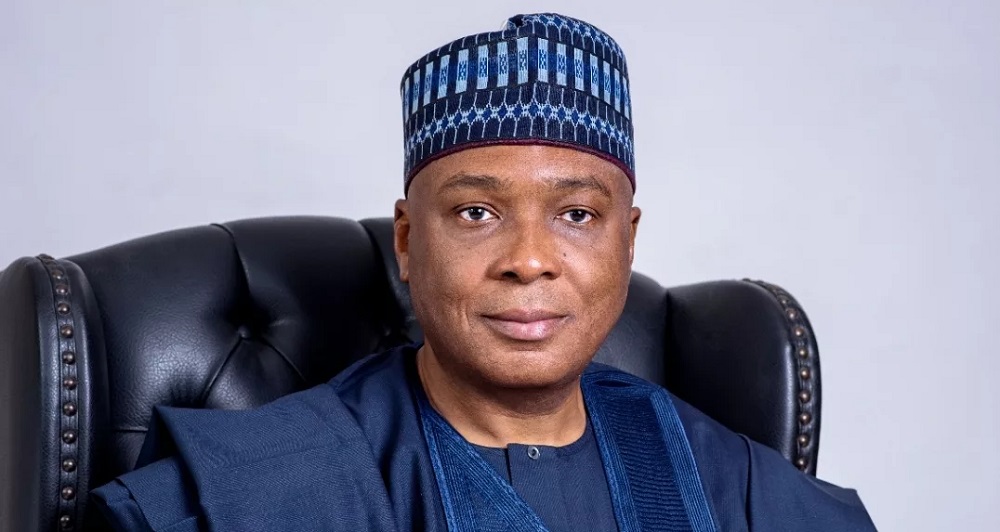
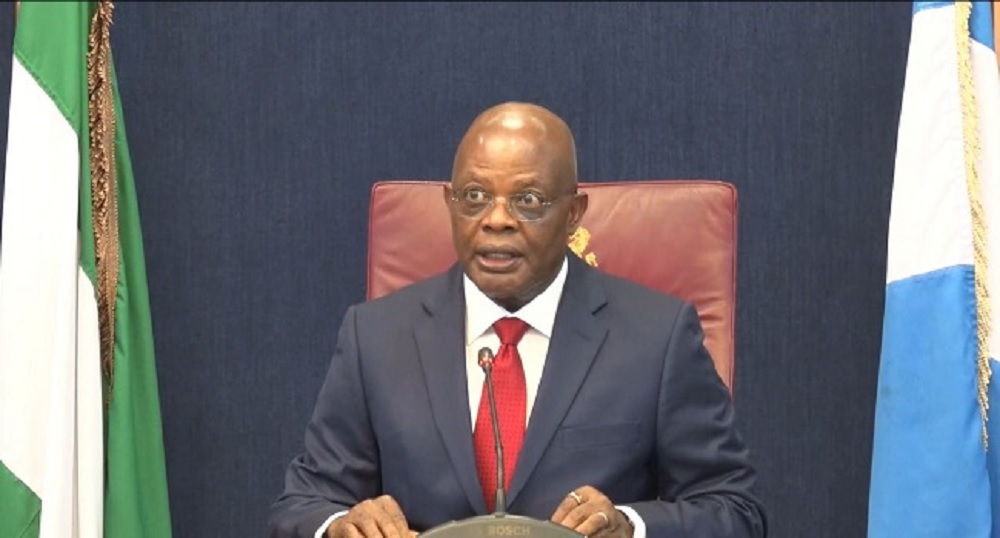
Former Senate President, Dr Bukola Saraki has said
Peoples Democratic Party PDP is experiencing a rebirth and would soon bounce back.


He said those who want to leave should be allowed to go to enable the party reposition itself.

Saraki made this disclosure in a statement he personally signed on Thursday night saying:

“Following the development in the Delta State Chapter of our party, the Peoples Democratic Party (PDP), I have been inundated with phone calls from leaders and members of our party as well as various youths who have been active in promoting democracy and good governance in our country.

Advertisement

“Many of the callers want to know what my reaction is to the defection of top PDP leaders in Delta State and its impact on our party.

“My view is that those who want to leave the PDP should leave now and let the rest of us who want to stay concentrate on rebuilding the party and refocusing it to play the role of a viable opposition that will provide a better alternative for the good people of Nigeria.

“I am convinced that it is important for all Nigerians to work for the sustenance of democracy. And to sustain democracy, there must be viable choices for people at every point. Also, there must be a viable opposition to keep people’s hope alive and create credible alternatives to keep the government on its toes.

” A one-party state as being disingenuously designed by some people will not augur well for a multi-ethnic, multi-lingual, multi-cultural, multi-religious, and highly diversified society like ours. It is even more dangerous when we eliminate alternatives and make people hopeless.

Advertisement

“Therefore, it is in the interest of Nigeria and the survival of our democracy for the opposition to be vibrant and strong enough with the capacity to replace the ruling party at any point.

“Thus, my charge to our party members is that the PDP is merely experiencing a rebirth. Those who want to leave the party should go and let those of us remaining have a clear view of who we are talking to and where their political loyalty lies. All we need is for those who want to stay back in PDP to show commitment and we can all work to rebuild the party.

“This development has vindicated the stance of people like me who have decided to remain silent and watch events unfold. I have seen that there was no sincerity with supposed leaders of the opposition. One was not sure of the next person one was talking to.

“My appeal to PDP members nationwide is that we should know that the sustenance of democracy is not a sprint. Rather, it is a marathon. It is not a knock-out football match series. It is a league. 24 hours is a long time in politics and nobody can predict how the dynamics will evolve in the coming weeks and months.

Advertisement

” That is why PDP members across the country should not be discouraged, disillusioned, disappointed, or demoralised by the development in Delta State. We should stay strong and focus on strengthening the party. It is not necessary at this point to lament why they left.

“Our party members should also refrain from blaming our woes on the ruling party. That would be a lazy approach. They are playing politics to win elections. It is our responsibility as party members to ignore their antics and seize the moment and momentum to make our party stronger and better.

“Yes, it is unbecoming and shocking for the running mate to the standard bearer of a leading party to abandon ship to join the ruling party. This is unprecedented and nobody should try to justify such an act with the talk of being put under pressure. It is simply a sign of how low we have sunk as a polity. The country is experiencing a collapse of leadership values.

“These developments in the polity are the reason why I have always canvassed the idea that we should emphasize building and strengthening our institutions and not individuals. With the defection of the governor of Delta State, even if the party has only ten governors in its fold, the PDP is still in a good position to win the next round of elections..

Advertisement

“Our numerous party members should know that the PDP is better with fewer members who are loyal, sincere, determined, dedicated, and committed to its ideas, ideals, and progress than to have so many who will identify with us in the afternoon and be romancing the ruling party in the night.

“We still have about two years before the next election. That is a long time in politics. We have enough time to brace up to the challenge. There is nothing that prevents us from getting some governors from the other parties to join our ranks.

“My appeal to our young party members is that this defection is just a mere challenge to us to further mobilize and put our house in order. Also, our women’s wing should seize the opportunity to help in the rebuilding mission. The PDP will come out stronger from this development.

“I am very sure the various leadership organs of our party will soon make public their reaction to this development and convey the necessary meetings to strategize on how to strongly and strategically respond to it. Therefore there is no cause for alarm.

Advertisement

“Our party members should not lose focus, hope, or the determination to win. We should see the current development as a challenge to rebuild and refocus the party. Tomorrow is very bright.

Continue Reading
Advertisement
Click to comment

Warning: Undefined variable $user_ID in /home/naijuinz/public_html/wp-content/themes/zox-news/comments.php on line 49

You must be logged in to post a comment Login

Leave a Reply

News

Court defers hearing of appeals by ADC, four others over parties deregistration

Published

on

By

ADVERTISEMENT
Zoom Ad
ADVERTISEMENT
Zoom Ad

The Court of Appeal, Abuja, has deferred until July 7, the hearing of substantive appeals seeking to set aside the judgment that ordered the Independent National Electoral Commission to deregister the African Democratic Congress (ADC) and four other political parties.

A three-member panel of the appellate court, led by Justice Abba Mohammed, agreed to a full-blown hearing of the appeals after house-keeping proceedings that enabled parties in the matter to identify and regularise all the processes they filed in the matter.

Aside from the ADC, the other parties seeking the nullification of the Federal High Court judgment are the Action Peoples Party (APP), Action Alliance (AA), Accord Party (AP), and Zenith Labour Party (ZLP).

The appellate court panel held that all the appeals would be heard on the scheduled date.

Advertisement

The court had on June 16 ordered the stay of execution of the high court judgment, even as it slammed the trial judge for disrespecting the judicial hierarchy.

The panel berated Justice Peter Lifu of the Federal High Court in Abuja for disobeying an order it made on May 22, which directed him to stay proceedings in the case pending the outcome of an appeal by the parties.

According to the appellate court, even though the trial judge’s attention was drawn to the order for stay of proceedings, he intentionally flouted it and went ahead to deliver the judgment.

It held that Justice Lifu’s action was “a form of judicial impertinence,” stressing that the Supreme Court had previously held that a judge who acted in such a manner “is unfit for the bench, as the conduct amounts to judicial rascality”.

Advertisement

The high court had directed INEC to deregister the five political parties it said failed to meet the constitutional requirements to warrant their continued existence and participation in future elections.

It also barred INEC from further according recognition to the parties, accepting nominations of candidates from the affected parties, or giving effect to their activities for the purpose of participating in the 2027 general elections.

Justice Lifu ordered the defendants to stop parading themselves as registered political parties in the country, saying he found merit in a suit that was filed against them by the National Forum of Former Legislators (NFFL).

The NFFL had, in the suit, prayed the court to determine whether INEC has a constitutional obligation to remove political parties that fail to meet the electoral performance thresholds set out in Section 225A of the 1999 Constitution (as amended), as reinforced by the Electoral Act 2022 and INEC’s regulations.

Advertisement

It was the position of the plaintiffs that the five political parties listed as defendants had persistently failed to meet the constitutional benchmarks required to retain their registration.

The former legislators stressed that the requirements included winning at least 25 per cent of votes in a state during a presidential election or securing at least one elective seat at the national, state, or local government level.

They told the court that the ADC and the four other parties performed poorly in both the 2023 general elections and the by-elections conducted by INEC, thereby failing to win seats across key tiers of government.

However, dissatisfied with the trial court’s verdict, all the defendants, including INEC, urged the appellate court to set it aside.

Advertisement
Continue Reading

News

State Police Will Not Address Insecurity Without Tackling Poverty — Falana

Published

on

By

ADVERTISEMENT
Zoom Ad
ADVERTISEMENT
Zoom Ad

Human rights lawyer, Femi Falana, SAN, has warned that the creation of state police will not resolve insecurity in Nigeria unless the government addresses poverty and unemployment.

Falana, who appeared on Channels Television’s Politics Today on Thursday, said the country’s insecurity challenge was often narrowly reduced to questions of security architecture, without adequate attention to social security and the conditions driving young people into crime.

“We always reduce the problem of insecurity to security architecture, in fact structure. How do we have more police stations? How do we employ more policemen and women without considering social security?” Falana queried.

“Why are more young men taking to criminality? Why are we not talking about creating employment for young people? Why are we not giving assistance to Nigerians that are vulnerable, extremely poor or dimensionally poor? And unless you address these problems holistically, creating a state police or local government police will not address the crisis of insecurity in the country.”

Advertisement

His comments came after President Bola Tinubu on Tuesday transmitted to the Senate a bill seeking to amend the 1999 Constitution to provide for the establishment of state police services across the federation.

The Senate passed the bill on Wednesday after Senate Leader Opeyemi Bamidele presented its general principles. The bill subsequently scaled second reading, was considered clause-by-clause and passed third reading, with more than two-thirds of senators voting in support.

When assented to by the President, the legislation will replace the existing Nigeria Police Force framework with a dual structure comprising a Federal Police Service and State Police Services.

A key provision of the bill empowers state governors to appoint commissioners of police for their respective states, subject to confirmation by the state Houses of Assembly.

Advertisement

Lawmakers also incorporated safeguards aimed at protecting political freedoms and civil liberties, in response to concerns about possible abuse of the proposed policing structure.

Falana said regional police was not new to Nigeria, noting that the country operated a decentralised policing system during the First Republic.

However, he said the system was abolished due to what he described as the gross abuse of police powers by regional leaders.

He said Nigeria must address the issues that led to the abolition of the dual policing system if it intends to return to it.

Advertisement

“If we now want to go back to the status quo ante bellum, we must ask questions. The fears that were entertained, the problem that led to the abolition of the dual policing system, have they been taken care of? I haven’t seen any signs. I have seen the bill passed by both chambers of the National Assembly, the bill is so sketchy,” he said.

Falana also raised concerns about checks and balances in the operation of state police, as well as the ability of some state governments to fund the proposed police services.

He said some state governments could barely pay salaries and pensions.

Advertisement
Continue Reading

News

NCDC Raises Red Flag Over Proposed Health Institute, Cautions Lawmakers on Overlapping Roles

Published

on

ADVERTISEMENT
Zoom Ad
ADVERTISEMENT
Zoom Ad

By Gloria Ikibah

The Nigeria Centre for Disease Control and Prevention (NCDC) has expressed strong reservations about a proposed bill seeking to establish a National Institute for Public Health and Infectious Diseases, warning that the move could create institutional overlap and undermine the country’s disease control system.

The agency’s concerns were presented during a public hearing on the National Institute for Public Health and Infectious Diseases (Establishment) Bill, 2025 (HB 2629), organised by the House of Representatives Committee on Infectious Diseases at the National Assembly in Abuja on Thursday.

In its submission to lawmakers, the Director-General of NCDC, Dr. Jide Idris acknowledged the need to continually strengthen Nigeria’s health security architecture, including disease surveillance, epidemic preparedness and outbreak response. However, it maintained that the proposed institute will replicate responsibilities already assigned to the agency under existing legislation.

Advertisement

According to him, establishing another body with similar mandates risks creating administrative conflicts, duplicating public resources and blurring lines of authority during public health emergencies.

The NCDC boss argued that Nigeria already has a statutory institution responsible for coordinating infectious disease surveillance, prevention and emergency response, and that efforts should focus on strengthening existing structures rather than creating parallel agencies with potentially competing functions.

The development comes as lawmakers consider measures aimed at reinforcing the country’s capacity to prevent, detect and respond to emerging health threats. Supporters of the bill believe a dedicated public health institute could enhance research, coordination and preparedness for future disease outbreaks.

However, Idris insists that any reform intended to improve Nigeria’s public health system must avoid weakening existing institutions or creating uncertainty over leadership and accountability during health crises.

Advertisement

He urged lawmakers to carefully review the provisions of the bill to ensure that any new framework complements, rather than duplicates, the functions currently performed by the nation’s foremost disease control authority.

“The core responsibilities proposed for the new institute are substantially the same as those currently assigned to the NCDC,” Idris said, warning that the Bill raises serious concerns over duplication of mandates, institutional overlap, governance conflicts and fiscal sustainability.

He argued that public health emergencies require a single, clearly recognised national authority, stressing that creating another federal institution with overlapping responsibilities would generate uncertainty over leadership, accountability and operational command during disease outbreaks.

The NCDC further noted that the Bill designates the proposed institute as Nigeria’s National Focal Point for the International Health Regulations (IHR) and empowers it to coordinate national responses to infectious disease outbreaks functions that are already assigned to the NCDC under the NCDC Act and recognised by the World Health Organization (WHO).

Advertisement

According to the agency, such overlapping mandates could create confusion among state governments, development partners and international organisations that currently work through the NCDC as Nigeria’s official public health authority.

Drawing lessons from Nigeria’s successful response to Ebola, COVID-19, Lassa fever, cholera, meningitis, diphtheria, Mpox and other disease outbreaks, Idris maintained that the country’s public health system has evolved around a unified command structure, warning that introducing parallel institutions could fragment emergency response efforts when coordination is most critical.

The Director-General also questioned the financial implications of establishing a new federal institution with headquarters, zonal offices, state structures, governing councils and extensive staffing requirements at a time of competing national priorities.

He expressed concern over proposals to allocate part of the Basic Health Care Provision Fund to the proposed institute, warning that such a move would further stretch an already limited funding mechanism and reduce resources available for existing health priorities.

Advertisement

Idris noted that the Federal Government has invested significantly over the years in building the NCDC’s laboratory network, surveillance systems, emergency operations centres, genomic sequencing capacity, workforce development programmes and outbreak response infrastructure.

According to him, creating another institution with similar responsibilities would duplicate existing investments and undermine the Federal Government’s ongoing policy of streamlining public institutions.

He added that international best practice supports the existence of a single national public health institute responsible for disease surveillance, preparedness and emergency response, noting that Nigeria adopted the same model through the establishment of the NCDC.

The agency therefore urged the National Assembly to strengthen existing public health structures instead of creating parallel institutions.

Advertisement

While reiterating its support for upgrading the National Tuberculosis and Leprosy Training Centre, Saye, Zaria, into a tertiary institution dedicated to teaching, clinical services and research, the NCDC urged lawmakers to review provisions of the Bill that establish what it described as a parallel public health command structure.

The Director-General disclosed that the agency had submitted a detailed clause-by-clause analysis identifying areas of conflict between the proposed legislation and the NCDC Act, 2018, noting that several provisions of the Bill appeared to have been reproduced almost verbatim from the existing law.

He concluded that the issue before lawmakers was not whether Nigeria should strengthen its public health capacity, but whether that objective would be better achieved by strengthening the National Public Health Institute already established by law or by creating another institution with substantially overlapping responsibilities.

Earlier, Speaker of the House of Representatives, Rt. Hon. Tajudeen Abbas, described the proposed institute as a strategic investment in Nigeria’s health security and preparedness against future disease outbreaks.

Advertisement

Represented by Hon. Bashir Zubair, the Speaker said Nigeria’s experiences with Ebola, COVID-19, Lassa fever and other infectious disease outbreaks exposed significant vulnerabilities within the country’s health system and demonstrated the urgent need for stronger institutions capable of anticipating, preventing and responding effectively to emerging public health threats.

He stressed that a country of Nigeria’s population and strategic importance could no longer afford a reactive approach to disease outbreaks but must invest in scientific innovation, research, surveillance and sustainable preparedness.

According to Abbas, the proposed institute would provide a comprehensive framework for integrating disease prevention, surveillance, diagnosis, research, control and management within a coordinated national system while empowering Nigerian scientists to develop home-grown solutions to infectious diseases.

He maintained that the objective of the legislation was not simply to establish another government institution but to build a functional, agile and world-class institute capable of delivering measurable health outcomes for Nigerians and contributing to global public health.

Advertisement

In his opening remarks, Chairman of the House Committee on Infectious Diseases, Rep. Amobi Godwin Ogah, represented by Hon. Mark Esset, said the public hearing was organised to gather views and recommendations from stakeholders on two key pieces of legislation currently before the Committee — the National Institute for Public Health and Infectious Diseases (Establishment) Bill and the Tuberculosis Anti-Discrimination Bill.

Ogah explained that the proposal to establish a national public health institute was informed by findings from an oversight visit by members of the Committee to the National Tuberculosis and Leprosy Training Centre in Saye, Zaria, in October 2025. During the visit, lawmakers observed what he described as vast but underutilised human and infrastructural resources within the facility.

According to him, the discovery prompted the Committee to recommend the transformation of the centre into a national public health institute. It also influenced the decision to expand the Committee’s scope of responsibilities, leading to its renaming from the House Committee on HIV/AIDS, Tuberculosis and Malaria Control to the House Committee on Infectious Diseases.

The lawmaker disclosed that the Presidency had already granted approval for the upgrade of the Zaria-based training centre into a public health institute, expressing confidence that the proposed legislation would enhance Nigeria’s ability to prevent, detect, diagnose, treat and manage infectious diseases more effectively.

Advertisement

Speaking on the Tuberculosis Anti-Discrimination Bill, Ogah said the proposed law is designed to safeguard the rights and dignity of people living with or affected by tuberculosis. He noted that the legislation seeks to tackle stigma and discrimination, while promoting early testing, prompt diagnosis and access to treatment as part of broader efforts to reduce the burden of the disease across the country.

The hearing also featured submissions from representatives of the Federal Ministry of Health and Social Welfare, development partners, civil society groups, professional associations and public health institutions, as lawmakers continue deliberations on the two proposed laws.

Continue Reading

Trending

Copyright © 2024 Naija Blitz News